


How to Maximize Fat Graft Retention After Breast Augmentation2025.11.12
— Caring for Your Body from the Inside During Recovery —
Fat graft breast augmentation creates natural volume by transferring your own fat to the breasts.
However, no matter how successful the surgery itself is, the long-term result depends largely on how you care for your body afterward.
Below are key medical insights on how to enhance fat survival and reduce the risk of complications such as fat necrosis or hard lumps.
1. Nutrition: What You Eat Determines Fat Survival
Fat cells are living cells. Their survival depends on whether new blood vessels can form and deliver enough oxygen and nutrients after surgery.
One of the most effective habits is drinking 1 liter of soy milk per day.
Soy is rich in isoflavones and plant-based protein, which help regulate hormones and support stable fat metabolism.
Other important nutrients include:
- Vitamin C, E, and Omega-3 fatty acids: reduce inflammation and promote healing
- Iron and zinc: support collagen production and improve circulation
- Avoid excessive sugar or saturated fats: they trigger inflammation and increase the risk of fat necrosis
In short, a balanced, nutrient-rich but moderate diet is ideal after fat transfer.
2. Avoid Smoking and Secondhand Smoke
Nicotine causes constriction of small blood vessels, reducing oxygen supply to the transferred fat.
This can result in fat necrosis, hardening, or poor graft retention.
Electronic cigarettes and secondhand smoke can have similar effects, so a minimum of 1.5 months of complete abstinence is strongly recommended.
3. Exercise: Gentle Movement Helps Circulation
While intense workouts should be avoided, light walking or stretching can improve blood circulation,
enhancing oxygen delivery to grafted fat and reducing swelling.
However, any exercise that causes strong chest movement or pressure should be postponed until after the first month.
4. Sleep: Support Hormonal Balance and Recovery
During sleep, your body releases growth hormones that promote tissue healing and cellular repair.
Aim for at least 6–7 hours of high-quality sleep per night during the recovery period.
5. Do Not Touch or Compress the Breasts
The grafted fat remains fragile in the early stages of healing.
Massaging, pressing, or lying on your chest may disturb the newly forming microcirculation, leading to poor retention.
Avoid pressure during sleep—especially face-down or side sleeping—for at least several weeks.
Summary: Postoperative Care Is the “Second Half” of Surgery
The success of fat graft breast augmentation is determined not only by surgical technique but also by how you care for your body afterward.
At AVAN TOKYO GINZA LIPOSUCTION CLINIC, we provide detailed postoperative nutrition and lifestyle guidance to help each patient achieve optimal fat survival at the cellular level.
Fat transfer is not “complete” once the surgery ends—
it’s the beginning of a process where your body must nurture and sustain the newly grafted fat.
Create the right internal environment, and your results will last beautifully.
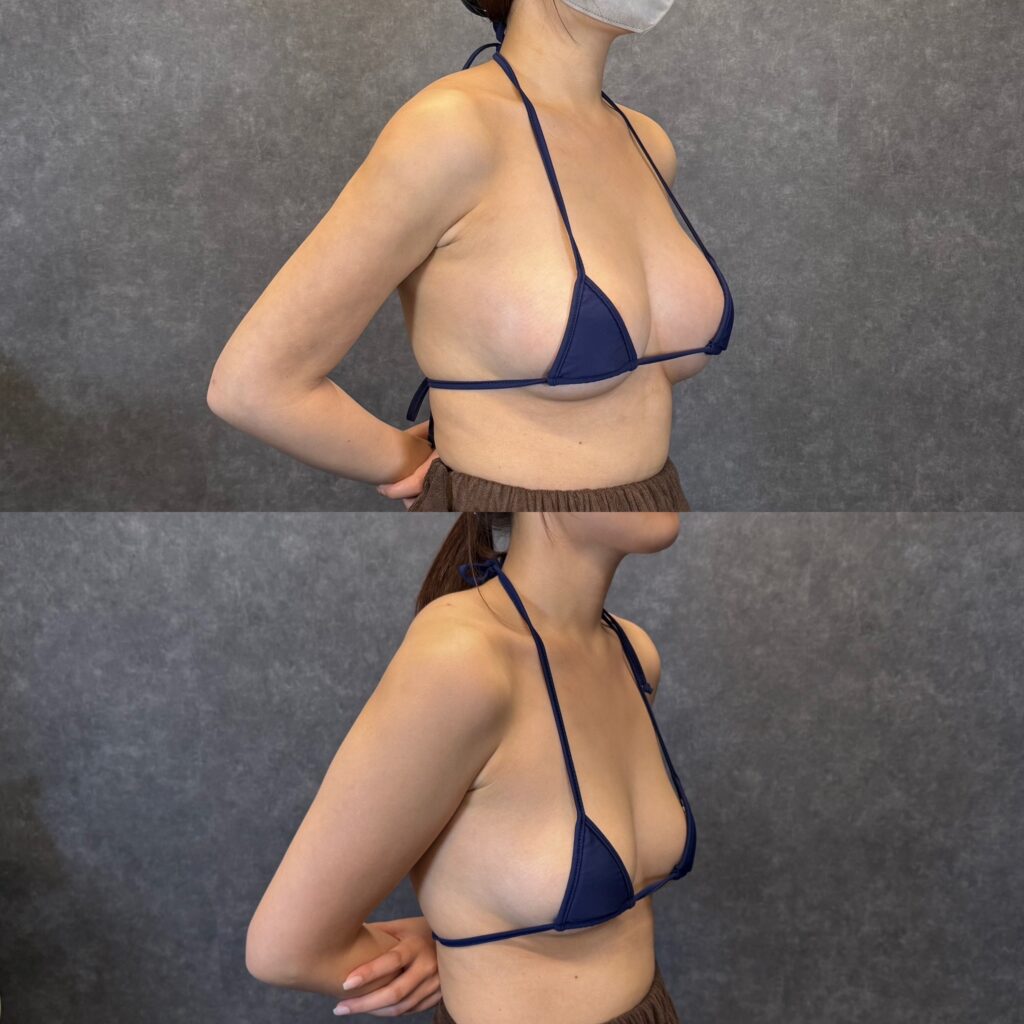
26years old, Arm liposuction& Fatgrafting Breastaugmentation