


Hybrid Breast Augmentation Is a Strong Option If You Do Not Strongly Dislike Implants2026.03.19
It offers a practical balance of shape, volume, and natural contour
When patients consider breast augmentation, the biggest question is often whether to prioritize natural softness or reliable volume.
Fat grafting alone offers softness and a natural feel, but the amount that survives can vary from person to person, and the volume gain from a single session is limited.
Implants alone provide more predictable volume, but in thinner patients they may be more visible or feel less natural. Composite or hybrid breast augmentation is described in the literature as a way to combine the stable volume of implants with the contour-softening effect of fat grafting.
At AVAN TOKYO, we often recommend hybrid breast augmentation because it allows us to design both size and shape more precisely.
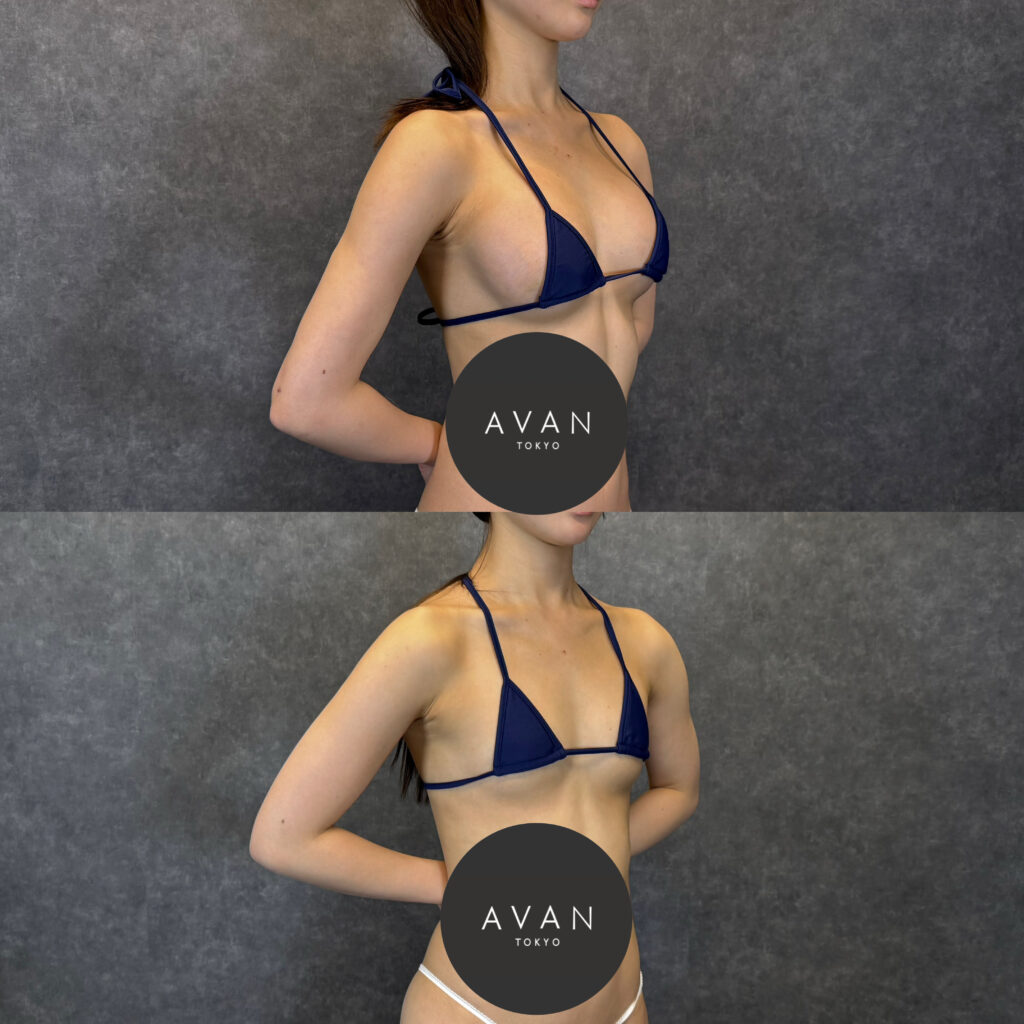
One of the biggest advantages is that volume and contour can be designed at the same time
In hybrid breast augmentation, the implant creates a stable lower-pole foundation, while fat grafting helps refine areas such as:
- the décolletage
- the cleavage area
- the implant edges
- the lateral contour
This allows the breasts to look not only larger, but also more natural and more elegant. Reviews describe composite augmentation as especially useful for improving soft-tissue coverage and camouflaging implant visibility.
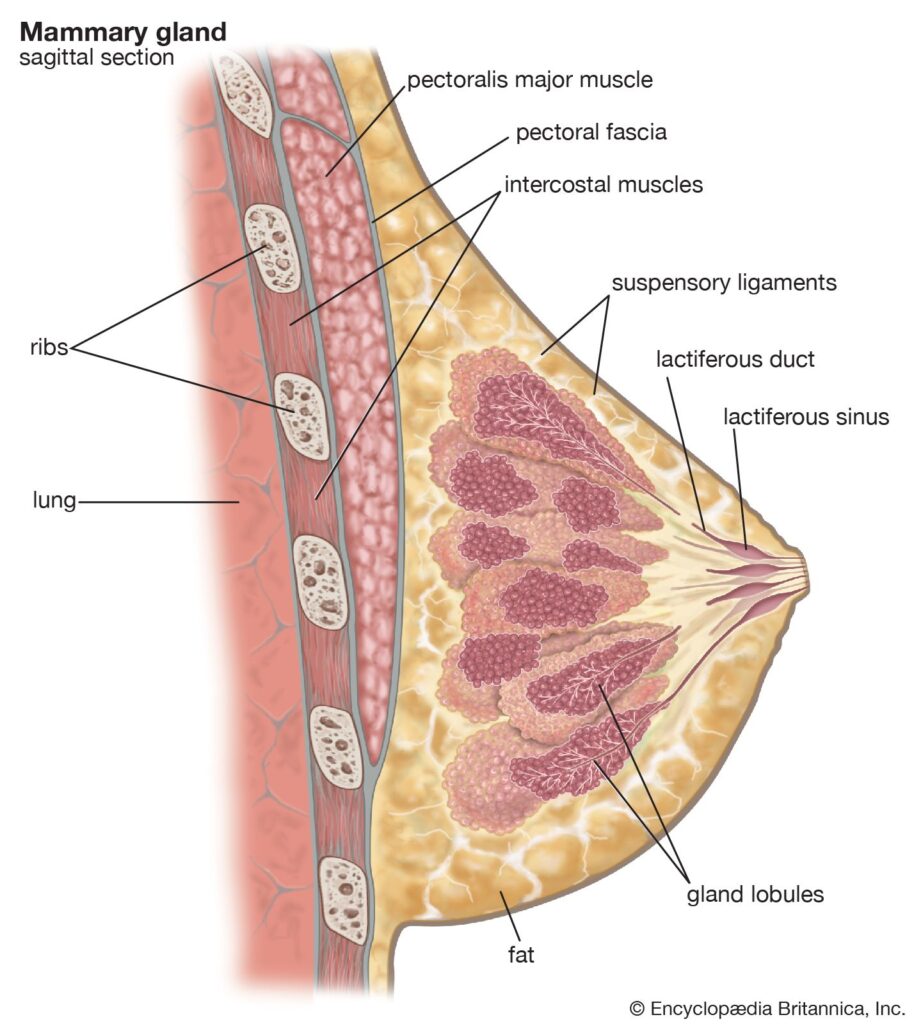
The concept is medically rational because the implant and fat serve different roles
The implant provides reliable structural volume.
The fat graft helps soften transitions and improve soft-tissue coverage where needed.
This means we can separately plan:
- where to create volume
- where to maintain softness
- how much projection is desired
- how much lateral fullness is acceptable
That is one of the reasons hybrid breast augmentation can be such a powerful option for patients who want both a beautiful cleavage and satisfying volume.
Hybrid breast augmentation does not remove risk
But it can help compensate for the weaknesses of each method
Hybrid breast augmentation still carries risks from both implant surgery and fat grafting, including:
- infection
- lumps or fat necrosis
- capsular contracture
- contour irregularity
- skin tethering
- asymmetry
- the possibility of revision surgery
Published reviews report generally low complication rates, but complications such as fat necrosis and capsular contracture still occur.
The strength of hybrid augmentation is not that risk disappears, but that fat grafting can help soften some of the visual drawbacks of implants, especially in thin patients with limited soft-tissue coverage. It is particularly useful for reducing the visibility of implant edges or rippling.
Some reports, especially in reconstruction settings, suggest that fat grafting may be associated with lower capsular contracture rates, but in primary aesthetic augmentation this should still be described cautiously rather than as a guaranteed reduction.
It offers better reproducibility when the goal is a very specific breast line
With fat grafting alone, results are influenced by donor fat quality, graft take, chest anatomy, and other patient-specific factors.
With implants alone, size is easier to reproduce, but contour can be less forgiving in slim patients.
Hybrid augmentation allows us to pursue both:
- predictable volume
- natural contour
- better control of shape
- a more individualized final breast line
At AVAN TOKYO, we focus on details such as:
- how far forward the breast should project
- how much lateral fullness is acceptable
- how natural the upper chest should look
- how the cleavage should be shaped
In other words, we do not simply think about enlargement.
We think about reproducing the ideal breast line.
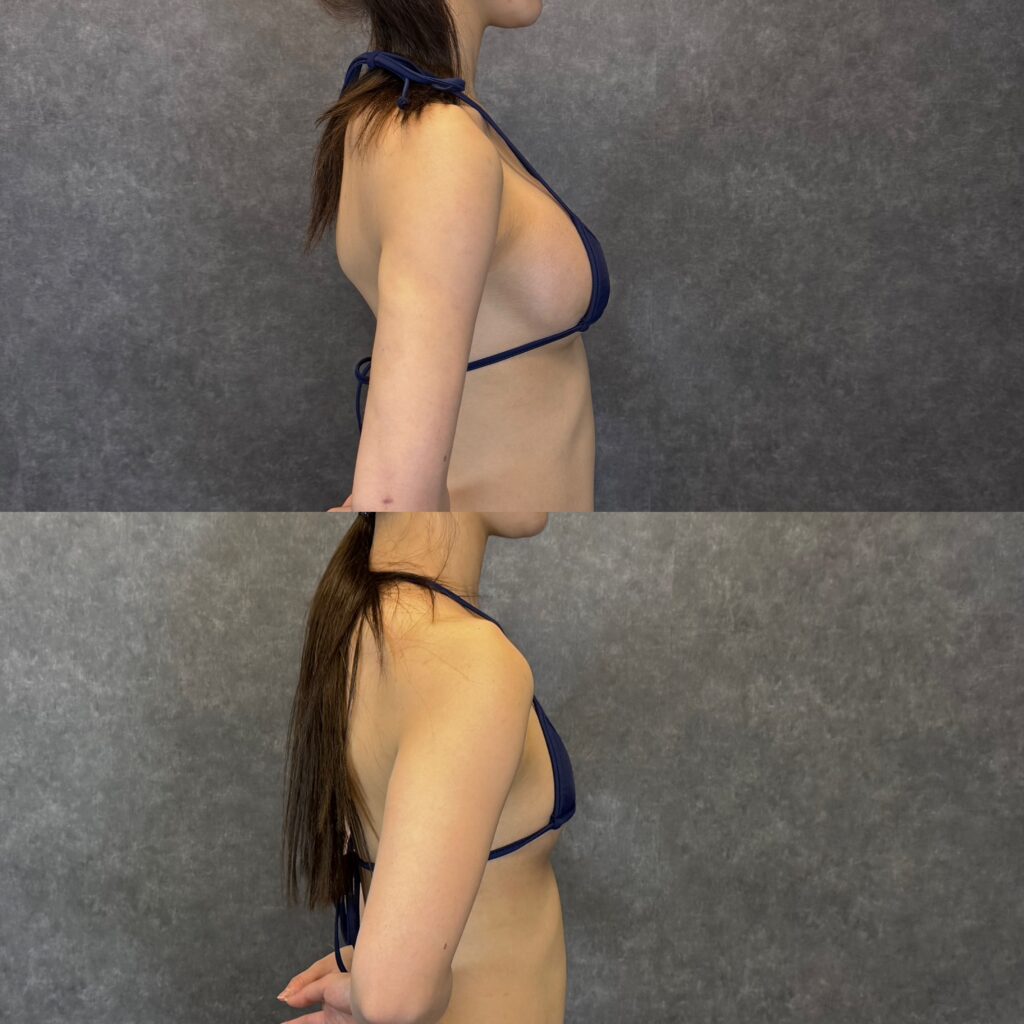
For patients who truly do not want any artificial material, fat grafting alone remains an option
Of course, some patients strongly dislike the idea of any implant.
For them, fat grafting alone is still a valid option.
However, when a patient wants a stronger and more reproducible size change, hybrid augmentation is often the more suitable choice.
At AVAN TOKYO, our recommendations are often:
- If you strongly dislike implants
→ consider fat grafting breast augmentation as the main approach - If you are comfortable with implants
→ hybrid breast augmentation may offer the best balance for pursuing an ideal result
Conclusion
If you do not strongly dislike the presence of an implant, hybrid breast augmentation is a very attractive option because it offers a practical balance of natural appearance, satisfying volume, and reproducibility.
At AVAN TOKYO, what matters most is not simply how many cc to use, but what kind of breast line to create.
For patients who want both a natural-looking cleavage and meaningful volume, hybrid breast augmentation can be an excellent choice.