


The Results of Hybrid Breast Augmentation Depend Not Only on Surgery2026.03.09
Postoperative Diet Matters for Both Recovery and Body Contour
Hybrid breast augmentation is a sophisticated procedure that combines the volume of silicone implants with the softness and natural contour created by fat grafting.
Because of this, it is one of the most refined breast augmentation techniques available today.
At the same time, achieving a beautiful and lasting result depends not only on the surgery itself, but also on how patients take care of themselves after surgery.
One of the most overlooked factors is postoperative diet.
Some patients may think:
“I already had liposuction, so fat will not come back easily.”
“I already had breast surgery, so now I just need to wait for the final result.”
However, postoperative eating habits can have a major impact on both body contour and recovery.
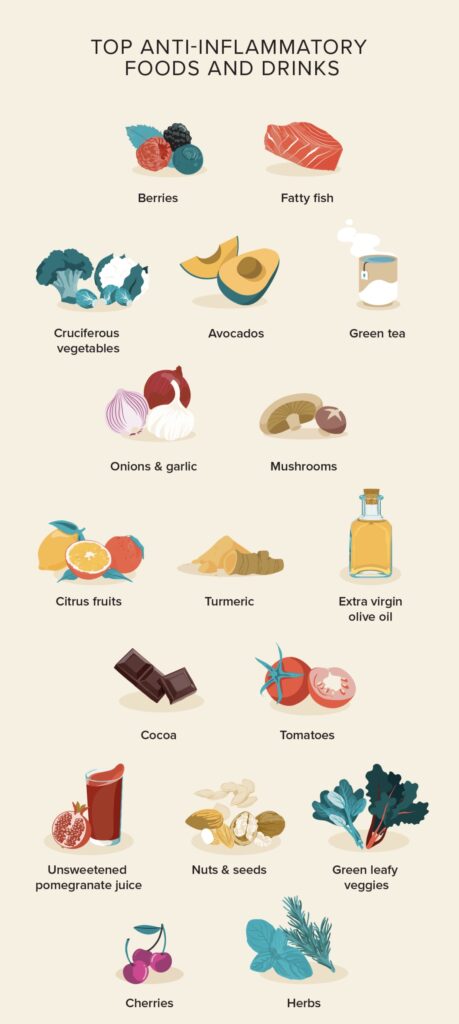
Liposuction Does Not Mean You Can Eat Without Limits
Liposuction reduces the number of fat cells in the treated area.
For example, after thigh liposuction, that area generally becomes less likely to accumulate fat than before.
But this does not mean that overeating or eating junk food has no consequences.
If calorie intake remains excessive, fat can still accumulate in other places, such as:
- visceral fat
- other subcutaneous fat areas
- blood lipid levels
- intramuscular fat
Intramuscular fat can create a so-called “marbled” appearance, which may make the body look less defined.
In some cases, this is one reason why muscles may appear uneven or bumpy rather than sharp and clean.
In other words, even after liposuction, frequent overeating or a diet centered on unhealthy foods can still negatively affect the overall body line.
In Hybrid Breast Augmentation, It Is Important to Consider the Whole Body Balance
Hybrid breast augmentation is not simply a procedure to enlarge the breasts.
In reality, it is a full body design procedure that also involves:
- where the fat is harvested from
- how the donor area is shaped
- how the breasts balance with the rest of the body
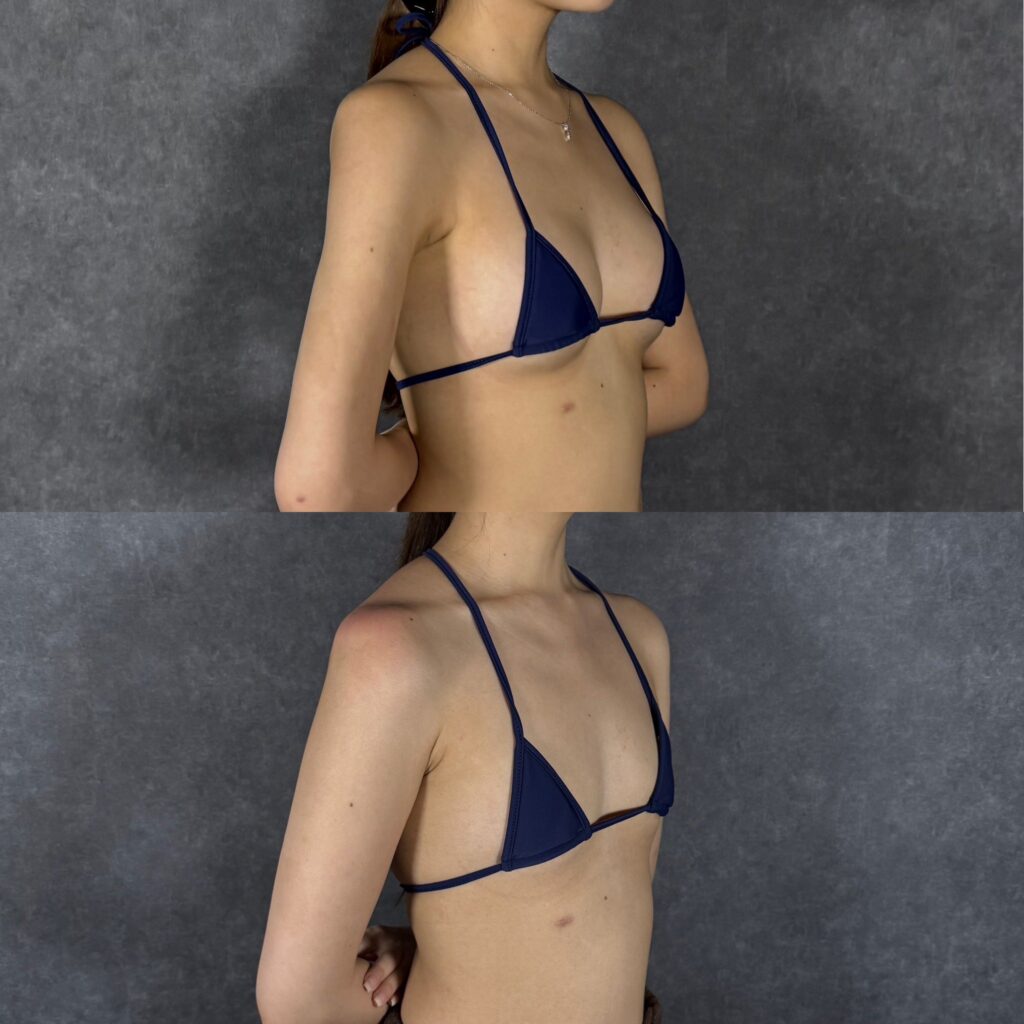
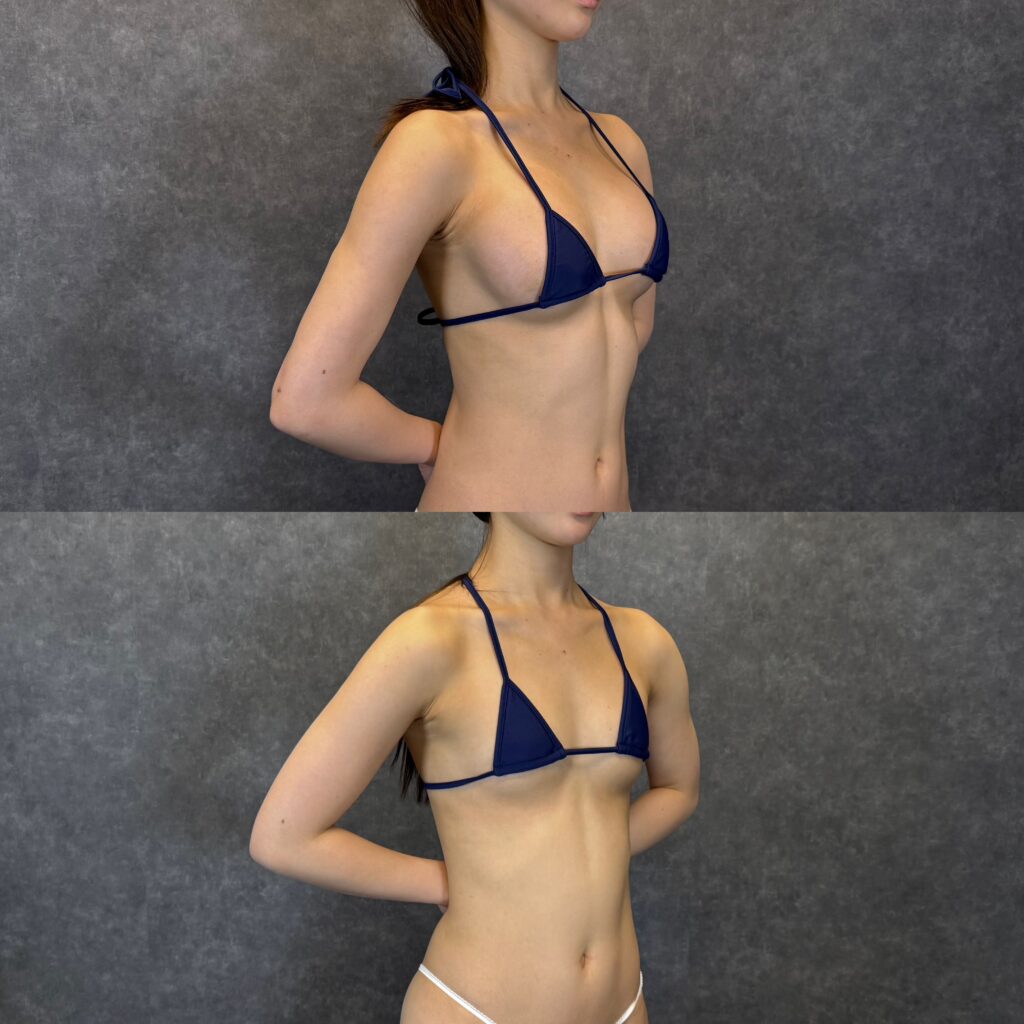
When thigh liposuction is combined with hybrid breast augmentation, the final result is not only about breast volume.
It also includes the relationship between the thighs, hips, waistline, and breast contour.
If postoperative eating habits are poor and body fat distribution changes, it can affect not only the breasts, but also the overall silhouette that was carefully designed during surgery.
In aesthetic medicine, what matters is not only one area, but the harmony of the whole body.
Postoperative Diet Also Affects Recovery
After surgery, the body goes through a complex healing process.
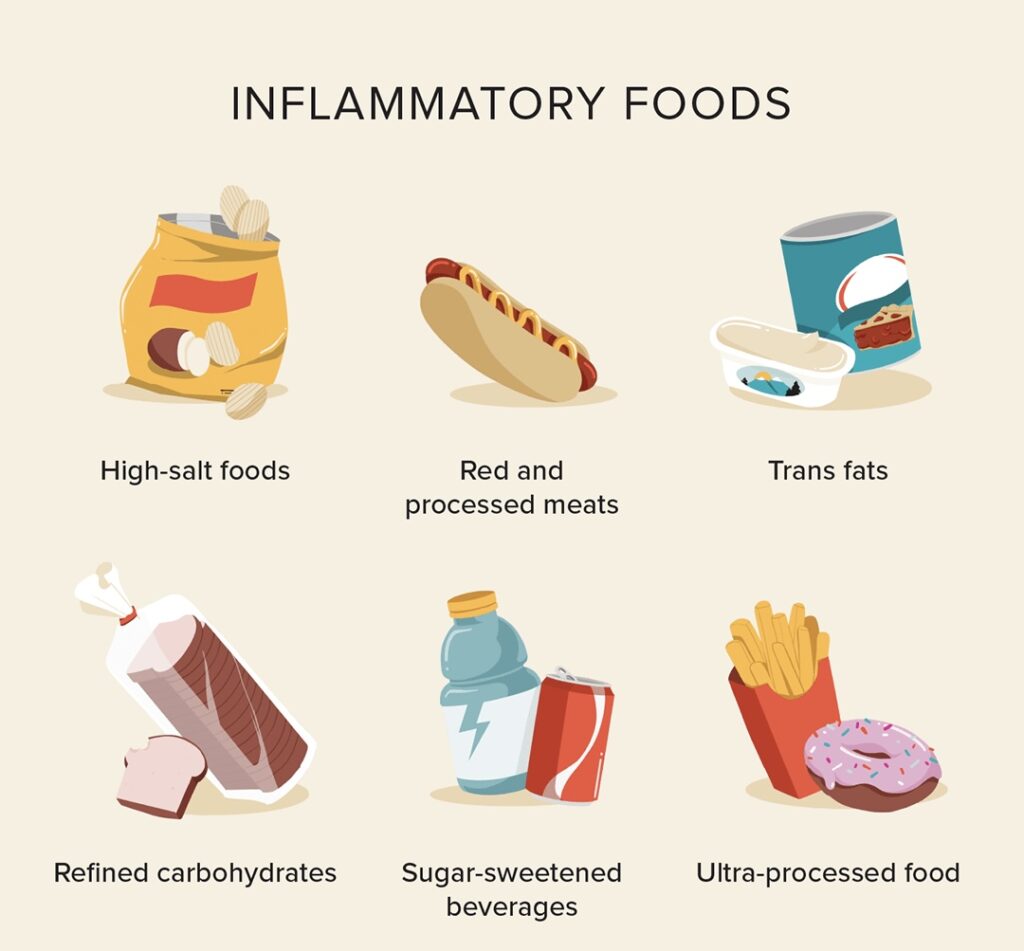
One important goal during recovery is to avoid prolonged or excessive inflammation.
A diet high in fat, sugar, salt, or alcohol, as well as poor nutritional balance, may worsen swelling, affect metabolism, and make recovery feel slower or heavier.
By contrast, patients who maintain a well-balanced diet after surgery often experience:
- swelling that improves more smoothly
- less unwanted weight gain
- body contour that settles more quickly
- better overall recovery habits
Of course, there are individual differences.
However, in clinical practice, patients who recover quickly and appear to settle beautifully at an early stage are often those who are also very careful with their postoperative lifestyle.
The Relationship Between Fat Graft Survival and Diet Is Not Simple
In hybrid breast augmentation, fat grafting is often performed not to dramatically increase breast volume, but rather to softly coat and smooth the implant contour.
In these cases, fat survival is not necessarily determined by diet alone.
It is not as simple as saying that eating more will dramatically improve fat retention, or that eating less will clearly reduce graft survival.
Fat graft survival depends on many factors, including:
- injection technique
- injection plane
- the amount placed in each area
- blood supply in the recipient tissue
- postoperative inflammation
- pressure on the treated area
For this reason, telling patients to “eat a lot so the fat survives” is not medically accurate.
What matters more is maintaining a stable recovery environment that supports circulation and tissue healing.
The Major Benefits of Good Eating Habits After Hybrid Breast Augmentation
A healthy postoperative diet is not only about weight control.
It can also provide major advantages such as:
- smoother recovery
- less swelling and heaviness
- better maintenance of the liposuctioned areas
- less disruption in overall fat distribution
- a more stable healing environment
In addition, patients who are careful with diet are often also more careful with other postoperative measures, such as compression, skin care, smoking cessation, and gradual return to activity.
As a result, the overall quality of recovery and final contour often becomes noticeably better.
The AVAN TOKYO Approach to Hybrid Breast Augmentation
Breast augmentation is not simply a procedure to make the breasts larger.
Especially in hybrid breast augmentation, the final result depends on many elements, including:
- implant size selection
- design of fat graft volume
- contouring of the donor areas
- how naturally the breasts settle
- scar care and recovery management
At AVAN TOKYO, we focus not only on the breasts, but on the beauty of the entire body, including the liposuctioned areas.
That is why we believe surgery alone is not enough.
We place great importance on postoperative support, including diet, compression, and lifestyle guidance.
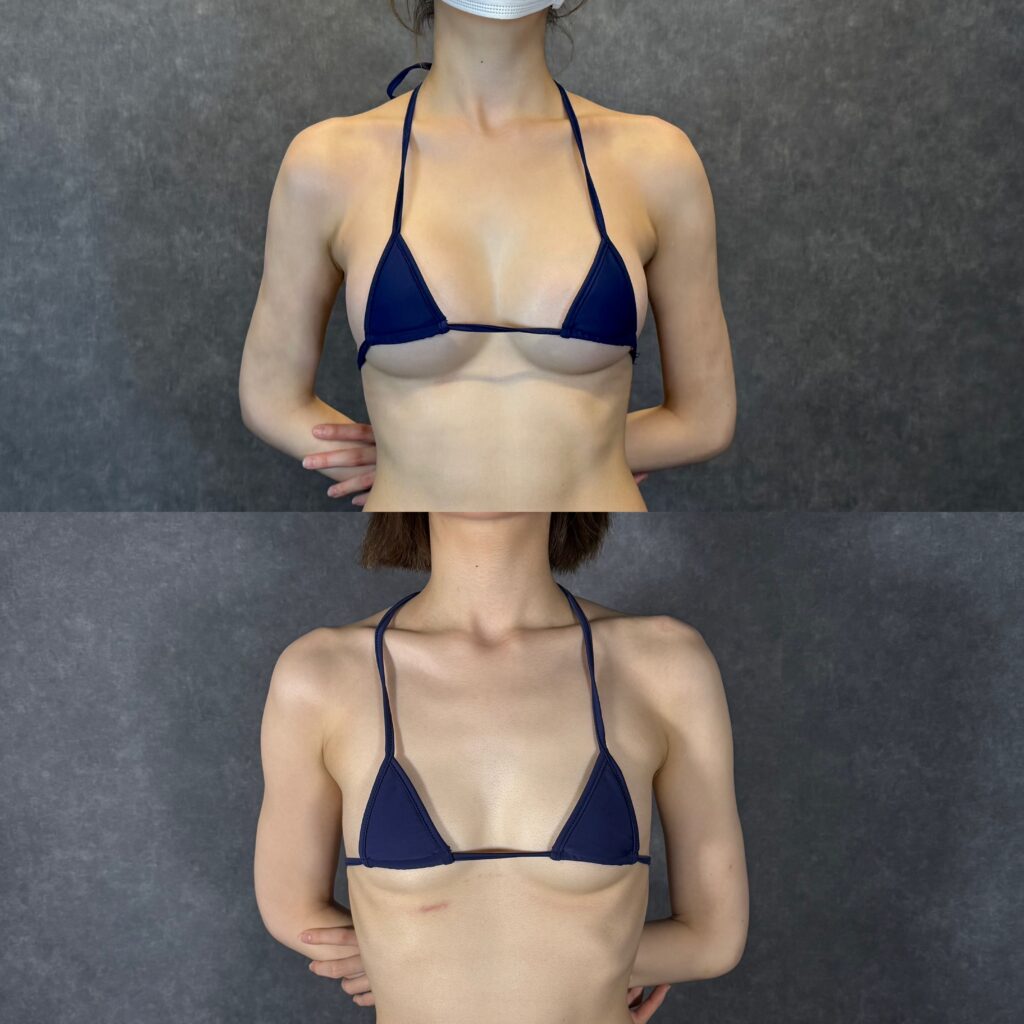
In fact, some patients who undergo thigh liposuction and hybrid breast augmentation, and who carefully follow postoperative care instructions, show remarkably fast and natural-looking improvement even at just one month after surgery.
This is not due to body type alone.
It is the result of careful surgical planning combined with meticulous postoperative care.
Conclusion
Dietary Management Is Essential Even After Hybrid Breast Augmentation
Even in hybrid breast augmentation, postoperative dietary management is essential.
Because fat grafting is part of the procedure, some patients may assume they should eat more after surgery.
In reality, what matters is not overeating, but maintaining a diet that supports healing and preserves body contour.
If a patient continues eating junk food or overeats after liposuction, fat may still accumulate in untreated areas, disrupting the overall body line.
On the other hand, careful eating habits and proper postoperative care can help reduce downtime and improve the final aesthetic result.
Hybrid breast augmentation is not completed by surgery alone.
Beautiful results are created by meticulous surgery and meticulous postoperative care together.
At AVAN TOKYO, we provide hybrid breast augmentation with a focus not only on surgical quality, but also on the recovery process that follows.