


Scars: One of the Most Overlooked Downsides of Hybrid and Implant Breast Augmentation2026.03.08
When patients think about hybrid breast augmentation or silicone implant breast augmentation, they often focus on size, softness, and shape.
However, one point that is sometimes underestimated is scarring.
In hybrid breast augmentation and implant-based augmentation, the incision is generally larger than in fat grafting alone. For that reason, how the scar heals is an important part of the final outcome.
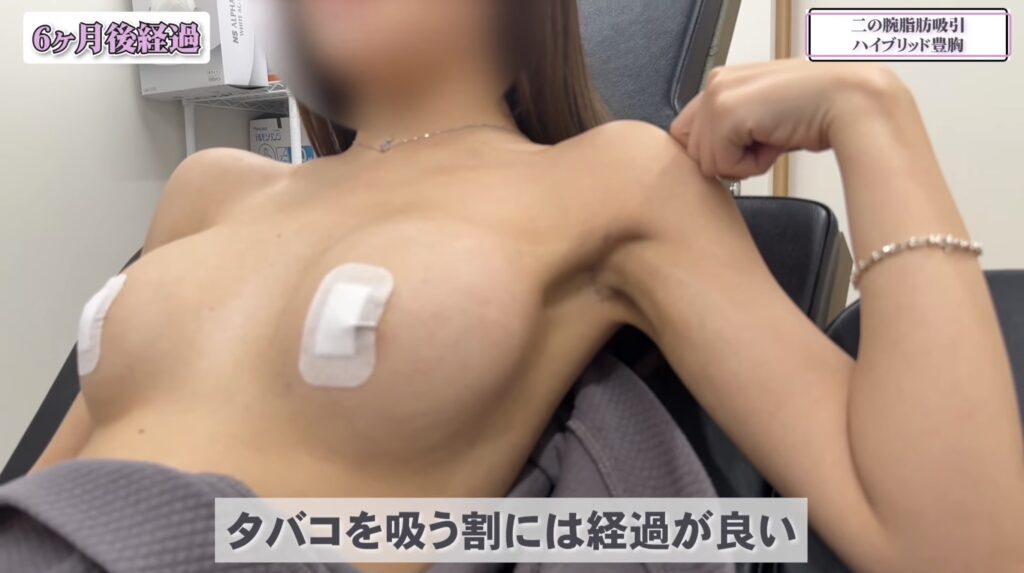
Scars in Fat Grafting Are Usually Very Small
In fat grafting breast augmentation, the incisions used for fat injection are usually very small, often around 5 mm or less, and are commonly placed around the areola or in the axilla.
With proper technique and postoperative care, these small incisions often heal very well and become far less noticeable over time.
Of course, healing varies from person to person, but in general, these are considered relatively favorable scars.
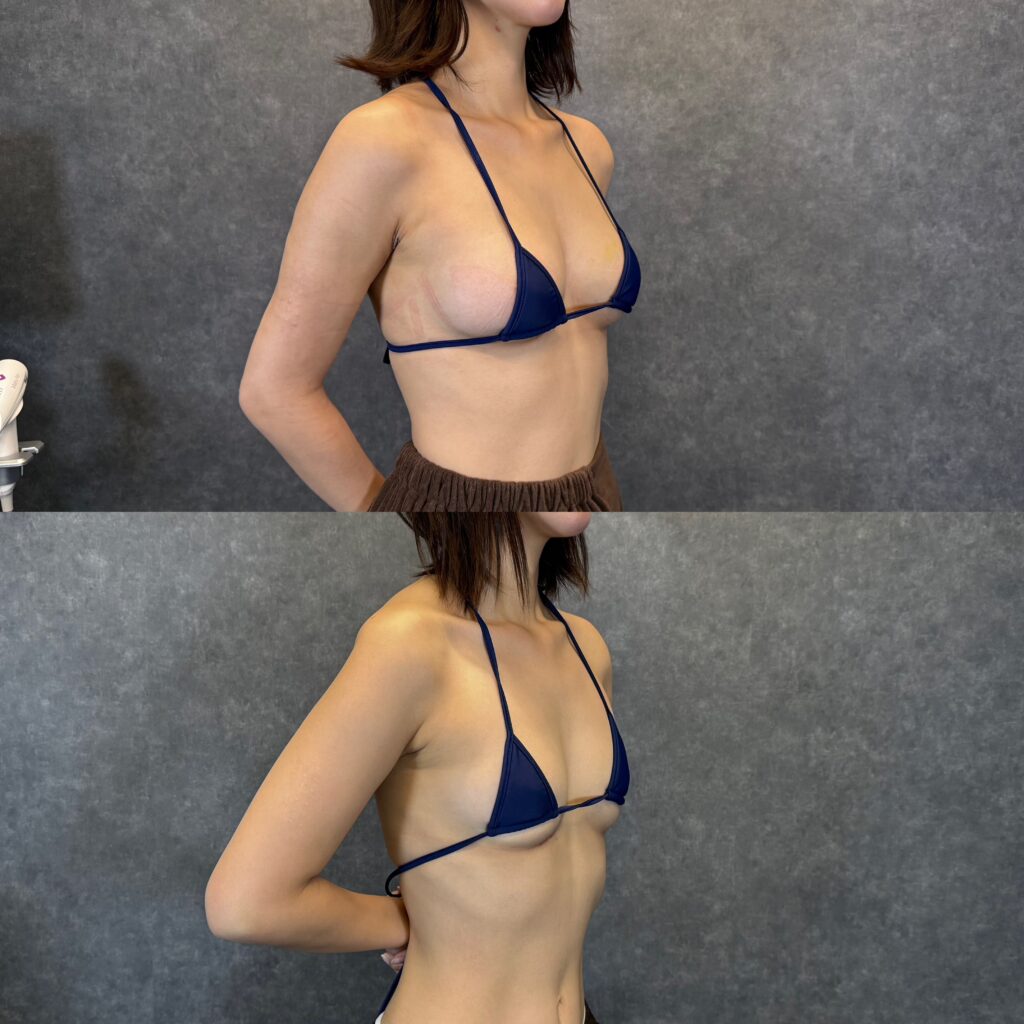
Implant Breast Augmentation Requires a Larger Axillary Incision
In contrast, silicone implant placement may require an incision of about 3.5 to 4 cm in the axilla in order to insert the implant safely.
This difference is significant.
Even though both are technically “breast augmentation scars,” there is a major difference between:
- a tiny incision for fat injection, and
- a several-centimeter incision for implant insertion.
The axilla is also an area that moves constantly in daily life. Arm movement, friction from clothing, moisture, and sweat can all affect wound healing.
As a result, even with meticulous surgery, some patients may still be left with a noticeable scar depending on their skin type and postoperative care.
Why Do Scars Heal Differently?
Scar quality is not determined by suturing alone.
Medically, several factors affect how a scar matures.
One major factor is tension on the wound. When a healing incision is repeatedly pulled, the scar can widen.
Another factor is prolonged inflammation. If redness or irritation continues for a long time, the scar may become more visible or thicker.
A patient’s individual tendency toward hypertrophic scarring or keloid formation also matters.
In other words, the final scar depends on a combination of:
- surgical method
- location of the incision
- individual skin characteristics
- postoperative care
Two Key Factors in Postoperative Care: No Smoking and Avoiding Physical Irritation
Proper postoperative care has a major impact on scar healing.
Among the most important factors are smoking cessation and avoiding unnecessary physical irritation.
Why Smoking Matters
Nicotine causes blood vessels to constrict, which reduces blood flow to the skin.
Because wound healing depends on adequate circulation, smoking can:
- delay healing
- prolong redness
- worsen the appearance of scars
This is why smoking cessation is strongly emphasized in aesthetic surgery. It is not just a general recommendation. It directly affects wound healing from a medical standpoint.
Why Physical Irritation Should Be Avoided
Axillary scars are easily exposed to repeated irritation in daily life.
Arm movement, friction from undergarments or clothing, and frequent touching can all influence healing.
Especially in the early postoperative period, it is important to avoid:
- strong stretching
- repeated rubbing of the underarm area
- movements that place tension on the scar
Beautiful Scars Depend on Both Meticulous Suturing and Meticulous Care
Achieving a fine scar begins in the operating room.
It is important to close the wound carefully in layers and minimize unnecessary tension on the skin.
However, surgery alone is not enough.
Even if the wound is closed meticulously, scar quality may worsen if the patient smokes or repeatedly irritates the area after surgery.
In other words, scar healing depends on:
meticulous surgical technique × meticulous postoperative care
What Patients Should Understand Before Hybrid Breast Augmentation
Hybrid breast augmentation is an excellent procedure because it combines:
- the volume provided by implants, and
- the softness and natural contour created by fat grafting.
At the same time, if an implant is used, patients should understand that a several-centimeter scar in the axilla may be necessary.
It is important to think not only about breast shape after surgery, but also about:
- where the scar will be
- how large the incision will be
- how to help the scar heal as well as possible
This understanding leads to better satisfaction after surgery.
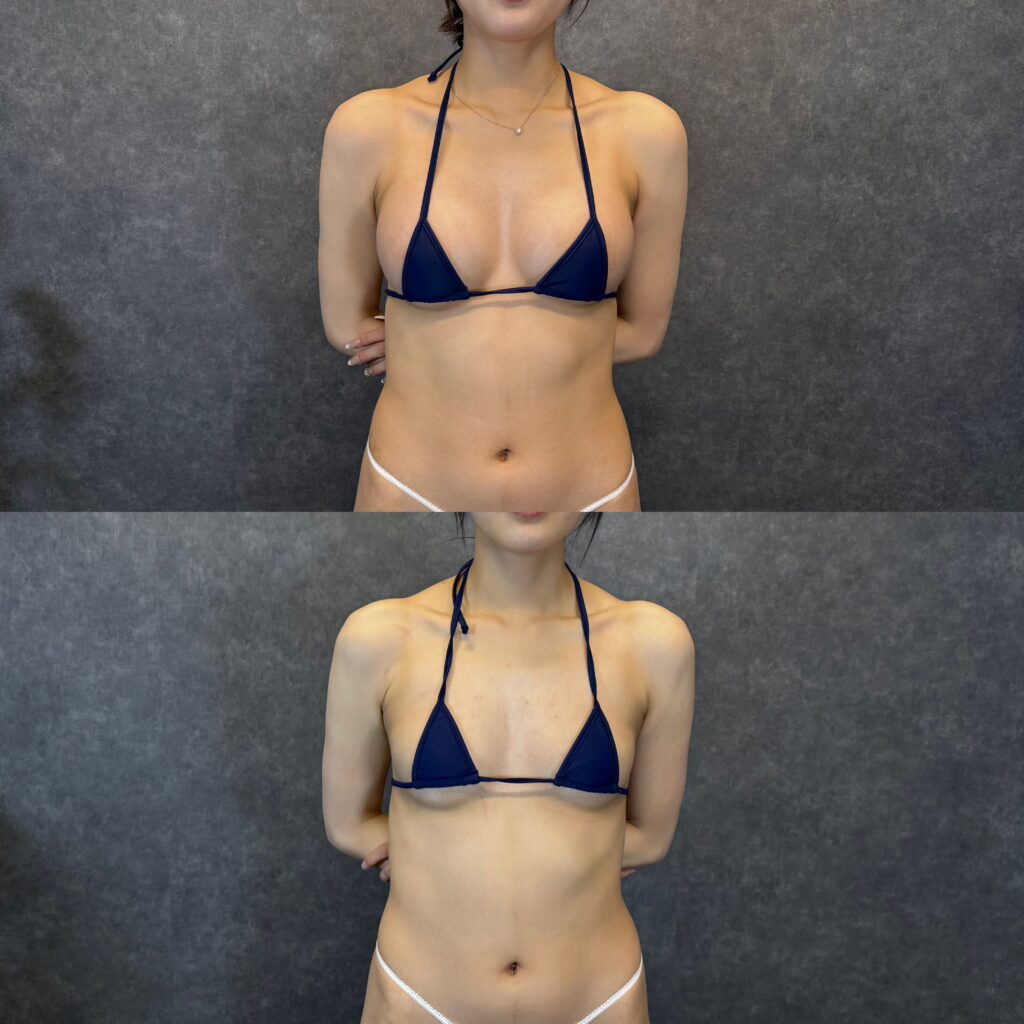
Conclusion
One of the main disadvantages of hybrid and silicone implant breast augmentation is the axillary scar.
While the tiny incisions used in fat grafting often heal beautifully, the 3.5 to 4 cm incision required for implant insertion may remain visible depending on the patient’s skin type and postoperative healing process.
That is why the following are so important:
- careful surgery
- meticulous suturing
- smoking cessation
- avoiding physical irritation during healing
Breast augmentation is not only about making the breasts larger.
It is also about how carefully the scar is managed until the final result is complete.