


Full-Body Liposuction Is Not Just About “Getting Slimmer”2026.05.18
Understanding the physical changes after large-volume liposuction and the unique advantages of fat transfer breast augmentation
“I want to slim down my entire body at once.”
Many patients seeking full-body liposuction have this goal.
In reality, simultaneously treating areas such as:
- Arms
- Back
- Abdomen
- Waist
- Thighs
- Calves
- Face
can dramatically change the overall body silhouette.
By improving the balance of the entire body rather than only one area, patients can achieve:
- A slimmer appearance
- Better skeletal definition
- A more defined waistline
- Improved upper and lower body proportions
and overall better contour harmony.
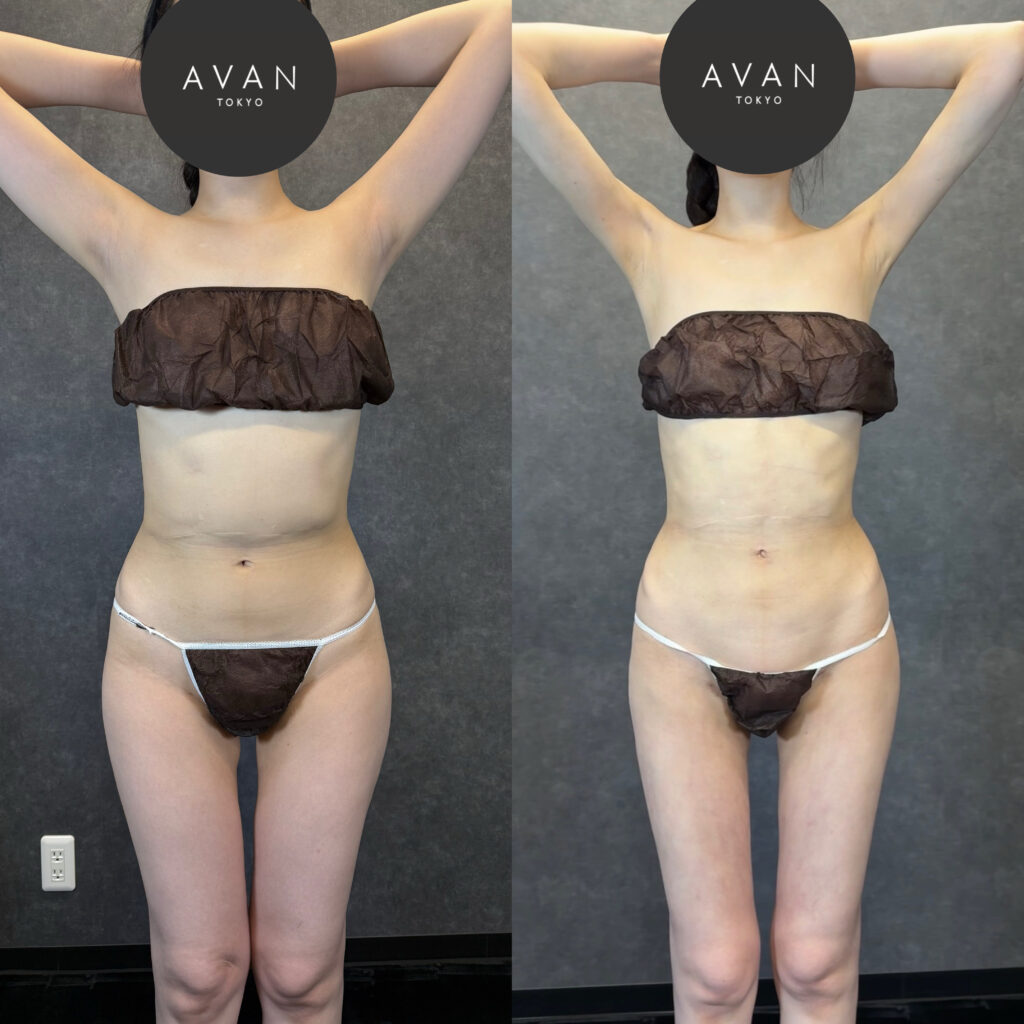
However, full-body liposuction is also an extremely physically demanding procedure.
At AVAN TOKYO, we focus not simply on:
“How much fat can be removed?”
but also on:
- How much can safely be performed
- Which areas should be prioritized
- Whether surgery should be done in one session or divided into stages
Full-Body Liposuction Is Physically Very Demanding
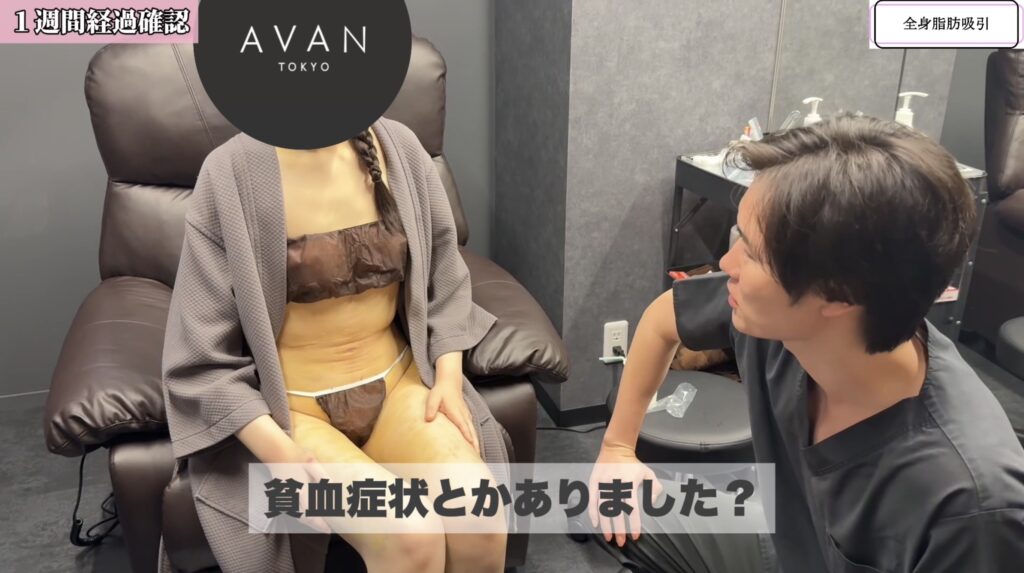
The first week after full-body liposuction can be particularly difficult.
Especially in cases involving:
- Large-volume liposuction
- Multiple simultaneous areas
- Revision surgery
- Fibrotic or firm tissues
the physical burden becomes significant.
Patients commonly report:
- Severe fatigue
- Weakness
- Difficulty getting out of bed
- Exhaustion with simple movement
This is because liposuction causes not only fat removal, but also:
- Inflammation
- Bleeding
- Fluid shifts
- Tissue dissection
throughout the body.
Large-Volume Liposuction Over 5000cc Requires Careful Consideration
Particular caution is required when more than 5000cc of pure fat removal is expected.
At this level, patients may experience:
- Anemia
- Decreased hemoglobin levels
- Palpitations
- Shortness of breath
- Delayed recovery
For this reason, AVAN TOKYO often prioritizes safety by dividing procedures into stages, such as:
- Upper body and lower body separately
- Thighs on a separate day
- Abdomen and waist separately
depending on the patient’s condition.
Metabolic Changes After Large-Volume Liposuction
An often-overlooked topic after liposuction is:
“Post-operative metabolic change.”
Fat cells are not simply “stored fat.”
They are involved in:
- Lipid metabolism
- Energy storage
- Absorption of free fatty acids
throughout the body.
When several thousand cc of fat are removed at once, poor post-operative management of:
- Diet
- Exercise
- Weight control
may potentially affect cholesterol and triglyceride levels.
Why Cholesterol Levels May Be Affected
Fat cells normally act as:
“Storage containers” for excess energy.
After large-volume liposuction, the body has fewer fat cells available.
As a result, free fatty acids that would normally be stored in fat cells may instead accumulate in:
- The bloodstream
- Visceral fat
- Around internal organs such as the liver
Of course, this varies between individuals.
However, it is important not to assume:
“Liposuction automatically makes future weight gain harmless.”
For this reason, AVAN TOKYO strongly emphasizes:
- Post-operative nutrition
- Exercise
- Anti-inflammatory management
- Weight control
after surgery.
Fat Transfer Breast Augmentation Has a Unique Advantage
This leads to an interesting aspect of fat transfer breast augmentation.
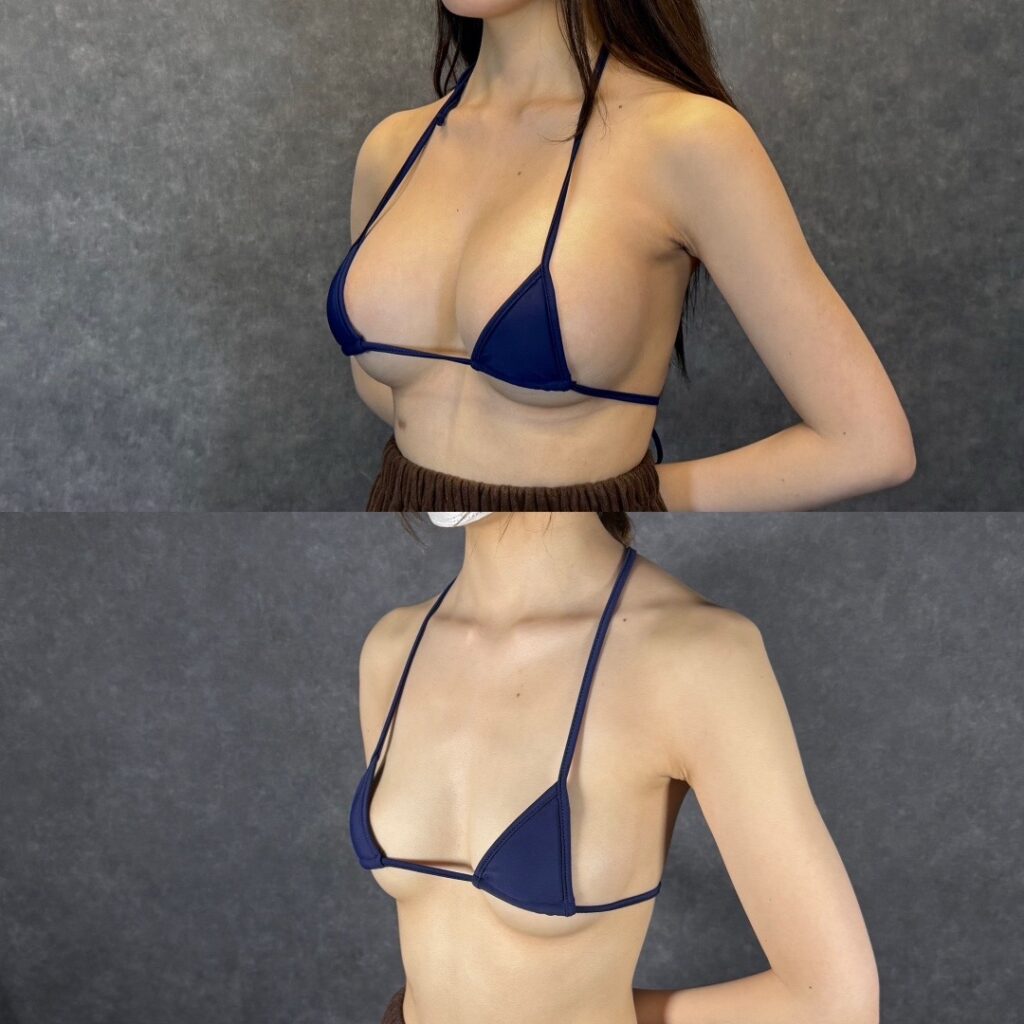
During fat grafting breast augmentation, harvested fat cells are transferred into the breasts.
In other words:
“The number of fat cells in the breasts actually increases.”
What Happens When Fat Cells Increase?
Fat cells naturally enlarge when body weight increases.
Therefore, after fat transfer breast augmentation, patients may become more likely to gain fat volume in the breasts during future weight gain.
This may contribute to:
- Natural breast fullness
- Softer décolletage
- Better upper breast volume
Especially when fat survives well in areas such as:
- The décolletage
- Cleavage
- Upper breast
the result can look extremely natural.
Why Excessive Weight Loss After Fat Transfer Is Dangerous
On the other hand, excessive weight loss after fat transfer breast augmentation may reduce breast volume.
Examples include:
- Extreme dieting
- Excessive GLP-1 weight loss medication use
- Poor nutrition
Because fat grafting outcomes are strongly influenced by post-operative lifestyle.
At AVAN TOKYO, we strongly emphasize during the first 1–1.5 months after surgery:
- Smoking cessation
- High-protein nutrition
- Anti-inflammatory diet
- Adequate sleep
AVAN TOKYO’s Philosophy on Full-Body Liposuction and Fat Transfer
At AVAN TOKYO, we do not simply focus on removing fat.
We carefully design:
- Which areas should become slimmer
- Where harvested fat should be transferred
- Upper and lower body balance
- Long-term body contour harmony
By combining:
- Arm liposuction
- Full-body liposuction
- Hybrid breast augmentation
- Fat transfer breast augmentation
we focus on creating:
“A slimmer yet feminine body contour.”
Conclusion
Full-body liposuction is a powerful procedure capable of dramatically changing the entire body silhouette.
However, large-volume and wide-area liposuction also create significant physical stress and metabolic changes.
Particularly in cases involving over 5000cc of fat removal, careful consideration must be given to:
- Anemia
- Delayed recovery
- Lipid metabolism changes
At the same time, fat transfer breast augmentation has the unique characteristic of:
“Transferring fat cells into the breasts.”
This may contribute to softer, more natural breast volume over time.
At AVAN TOKYO, we emphasize not only:
- Surgical technique
- Body contour design
but also:
- Safety
- Post-operative management
- Long-term body balance
for full-body liposuction and breast augmentation procedures.