


The Key to Successful Fat Transfer Breast Augmentation Is Not Injection Volume — It’s Blood Supply2026.06.09
One of the most common misconceptions about fat transfer breast augmentation is that injecting more fat automatically leads to larger breasts.
In reality, the most important factor is not how much fat is injected.
The true key is whether each transferred fat cell receives enough blood supply to survive.
Why Blood Supply Determines Fat Graft Survival
During fat transfer breast augmentation, fat cells are harvested from areas such as the arms, abdomen, or thighs and transferred into the breasts.
However, these cells do not survive automatically.
Each fat cell must establish a new blood supply to receive oxygen and nutrients.
Without adequate circulation, fat cells may:
- Be absorbed by the body
- Lose volume over time
- Develop inflammation
- Form oil cysts or lumps
For this reason, fat graft survival depends much more on vascularization than on injection volume.
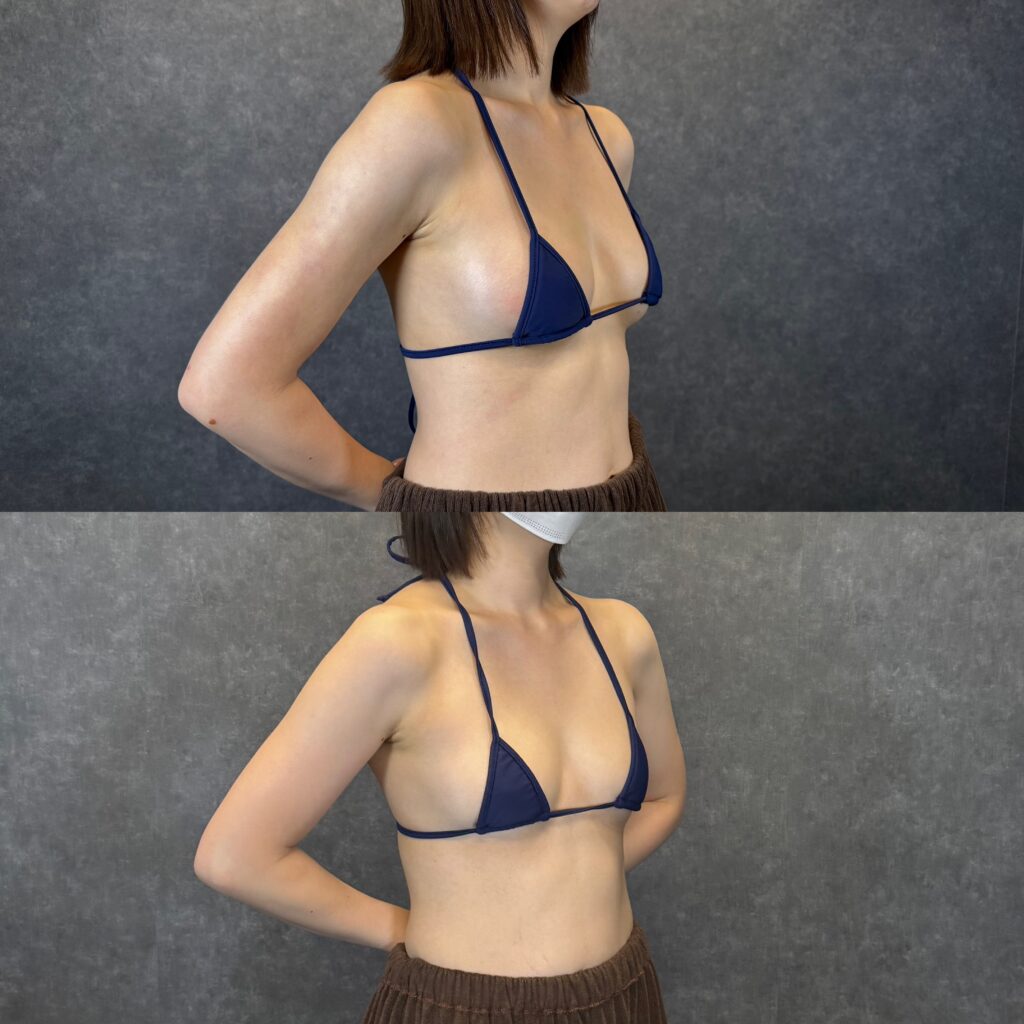
How We Improve Fat Survival at AVAN TOKYO
1. Removing Fibrous and Low-Quality Tissue
Not all harvested fat is suitable for transfer.
We carefully process the fat through purification and centrifugation to remove:
- Fibrous tissue
- Blood components
- Excess fluids
This helps improve the quality of the transferred fat.
2. Micro-Droplet Fat Injection Technique
Large-volume deposits can prevent blood vessels from reaching the center of the graft.
Instead, we distribute fat into multiple small layers and planes to maximize blood supply around each graft.
3. Avoiding Poorly Vascularized Areas
Successful breast fat grafting requires understanding which tissues can support fat survival and which cannot.
Careful patient selection and injection planning are essential.
Surgery Is Only Half of the Process
Fat transfer breast augmentation does not end when surgery is completed.
Postoperative management plays a major role in long-term results.
Smoking Cessation
Nicotine constricts blood vessels and significantly reduces circulation.
Avoiding smoking and secondhand smoke is one of the most important factors for fat graft survival.
Light Exercise
Gentle walking promotes circulation without compromising recovery.
Nutrition Matters
Patients with the highest fat survival rates almost always pay close attention to their diet.
Adequate protein intake and sufficient calories support healing and vascular growth.
Case Example
This patient underwent:
- Circumferential arm liposuction
- Fat transfer breast augmentation
Injection volume:
- Right breast: 230cc
- Left breast: 210cc
Although the injected volume was relatively conservative, she maintained approximately a 1.5-cup increase at one month postoperatively.
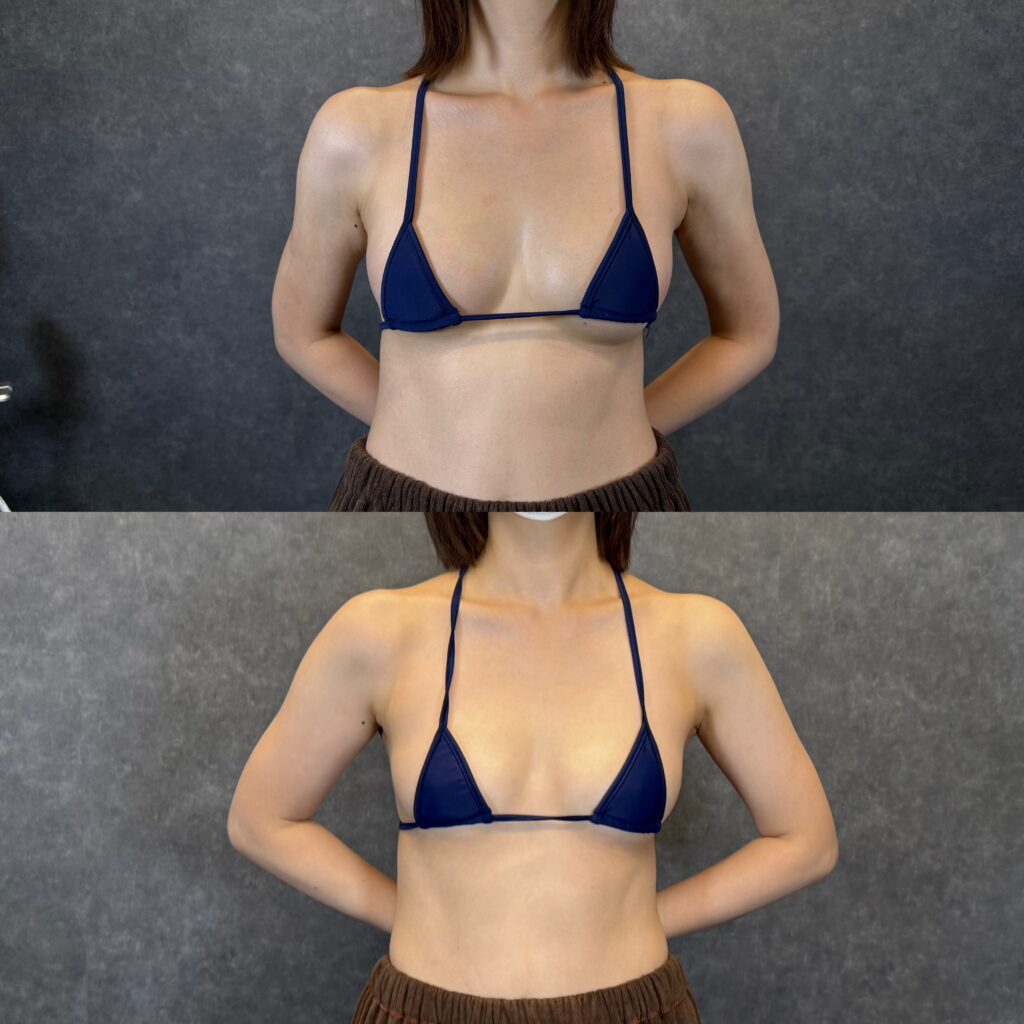
Her success was supported by:
- Strict smoking cessation
- Careful nutritional management
- Appropriate postoperative care
This highlights an important principle:
The goal is not how much fat is injected.
The goal is how much fat survives.
What If You Want More Than Two Cup Sizes?
Many patients ask whether larger injections can achieve a greater increase.
Unfortunately, increasing volume alone may increase the risks of:
- Fat necrosis
- Lumps
- Infection
- Lower survival rates
For patients seeking a larger and more predictable increase, we often recommend:
Secondary Fat Transfer
A staged approach after the first graft has stabilized.
Hybrid Breast Augmentation
Combining implants with fat grafting allows both reliable volume enhancement and natural contouring.
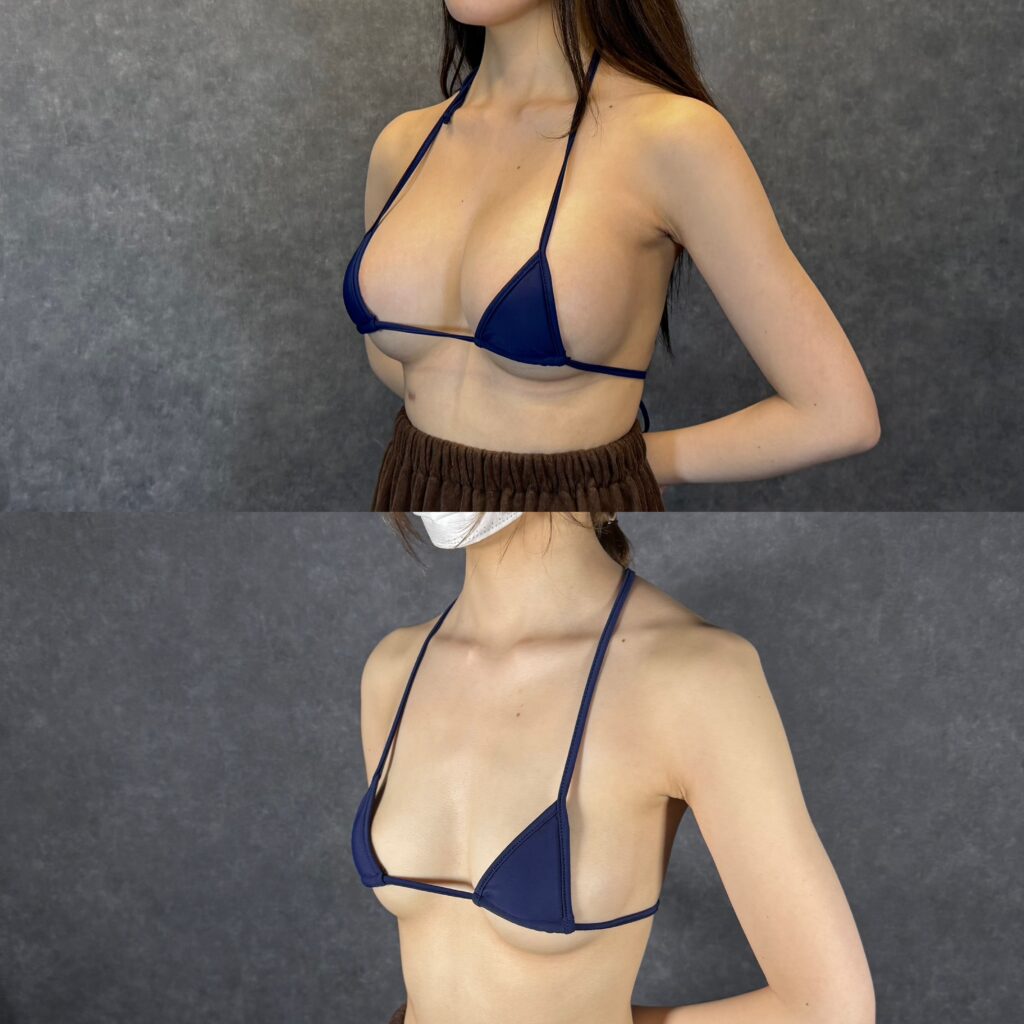
The AVAN TOKYO Philosophy
Successful fat transfer breast augmentation is not about maximizing injection volume.
It is about maximizing fat survival.
At AVAN TOKYO GINZA LIPOSUCTION CLINIC, we focus on:
- High-quality fat harvesting
- Blood-supply-oriented injection techniques
- Long-term postoperative management
Our goal is to create natural, beautiful, and long-lasting breast augmentation results.