


What Determines Fat Survival After Fat Transfer Breast Augmentation?2026.06.28
Successful Results Depend on More Than Just the Amount of Fat Injected
“How much of the transferred fat will survive?”
This is one of the most common questions we receive during consultations.
The reality is that fat survival varies significantly from patient to patient.
Even when the same surgical technique is used, some patients maintain excellent breast volume over the long term, while others experience greater fat resorption or have a higher risk of developing palpable fat nodules.
At AVAN TOKYO, we believe that successful fat grafting depends not only on surgical technique but also on careful patient selection, individualized treatment planning, and appropriate postoperative care.
Patients with Better Fat Retention Often Share Certain Characteristics
Although many factors influence fat survival, we frequently observe better outcomes in patients who have:
● Good skin elasticity of the breasts
● Healthy soft tissue with adequate blood supply
● An appropriate injection volume based on their anatomy
● Good compliance with postoperative care
In contrast, very lean patients with tight skin may have less available space for the transferred fat.
Injecting excessive volumes into these patients may increase tissue pressure, potentially reducing fat survival and increasing the risk of fat necrosis or palpable lumps.
For this reason, selecting the appropriate graft volume for each patient is more important than simply injecting as much fat as possible.
More Fat Does Not Always Mean Better Results
Many patients request the largest possible increase in breast size.
However, fat grafting is different from implant surgery.
Transferred fat survives only after new blood vessels grow into the grafted tissue.
If too much fat is injected at one time, some fat cells may not receive an adequate blood supply, increasing the likelihood of volume loss or fat necrosis.
At AVAN TOKYO, we prioritize predictable long-term outcomes rather than simply maximizing injection volume.
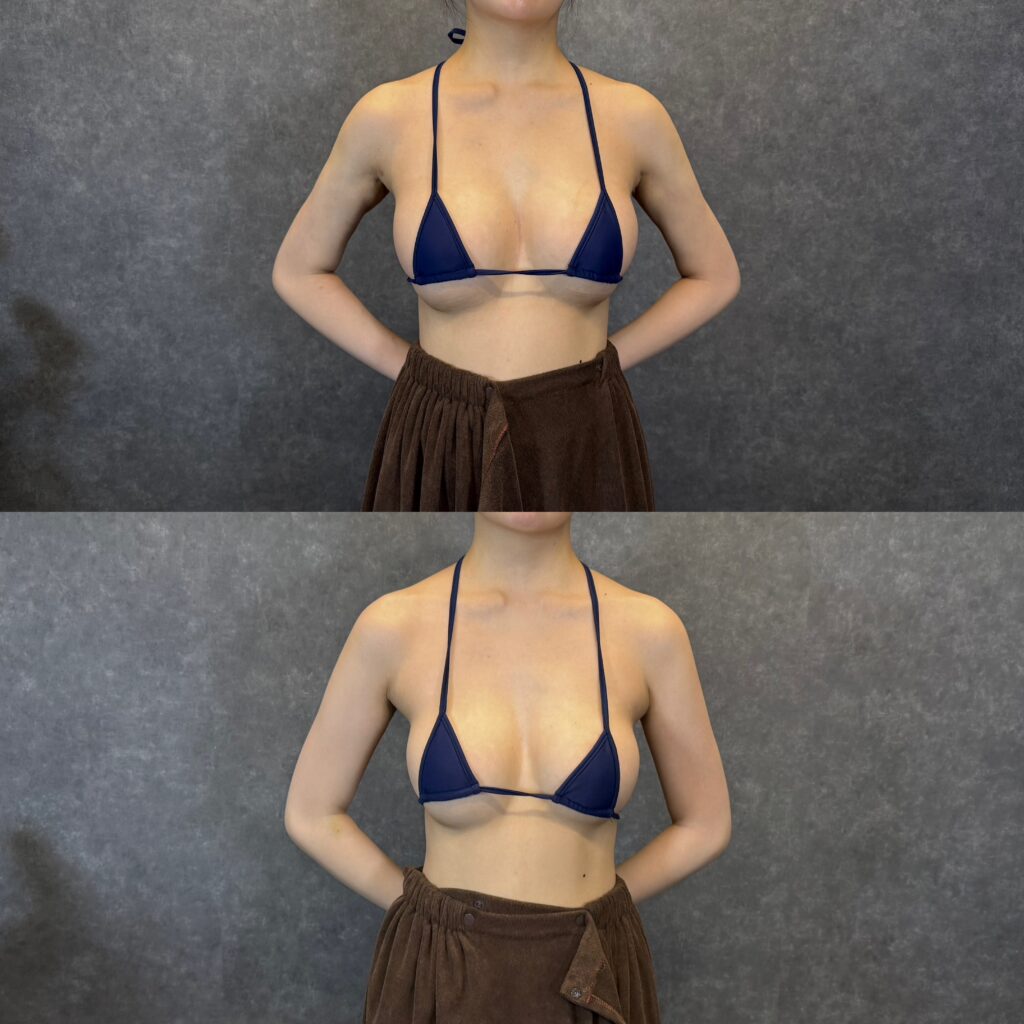
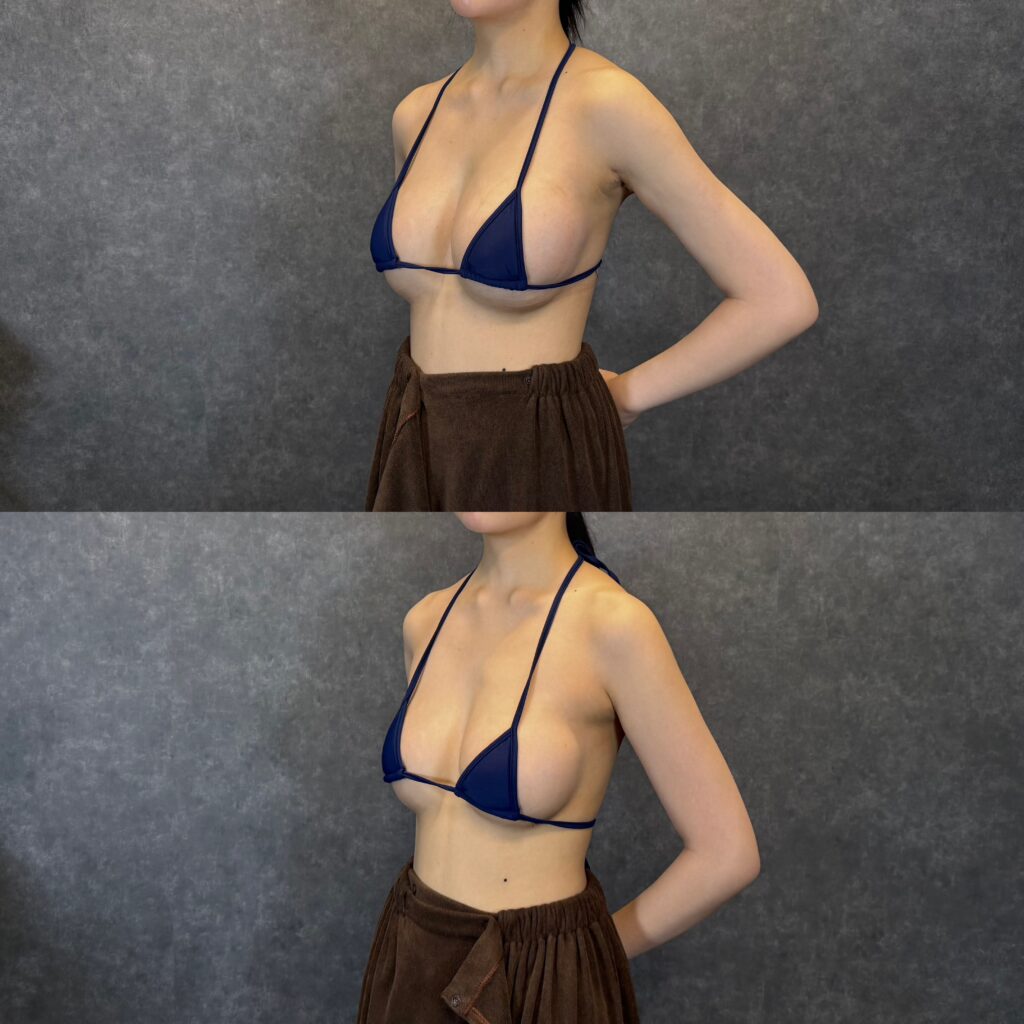
Case Study
This patient is a 20-year-old woman who underwent:
● Circumferential Arm Liposuction
● Accessory Breast and Axillary Fat Liposuction
● Autologous Fat Transfer Breast Augmentation
Approximately 450cc of purified fat was harvested.
The breasts received:
● Right: 230cc
● Left: 190cc
A relatively conservative injection volume was intentionally selected based on her anatomy.
Because she had good breast skin elasticity and carefully followed our postoperative recommendations—including nutrition and lifestyle management—excellent breast volume has been maintained at 3 months after surgery.
While every patient heals differently, this case demonstrates the importance of individualized treatment planning.
Postoperative Care Is Equally Important
Fat graft survival depends not only on surgery but also on recovery.
During the first 4–6 weeks, we recommend:
● No smoking
● A high-protein diet
● Adequate vitamins and minerals
● An anti-inflammatory diet
● Avoiding excessive weight loss
These measures may help support normal healing and optimize long-term results.
The AVAN TOKYO Philosophy
Our goal is not simply to inject the largest possible amount of fat.
Instead, we focus on:
● Careful evaluation of each patient’s anatomy
● Appropriate graft volume
● Natural breast contour
● Long-term fat survival
● Comprehensive postoperative care
Every patient is different.
For this reason, every fat transfer breast augmentation at AVAN TOKYO is individually planned to achieve the safest, most natural, and longest-lasting result possible.
Case Information
Procedure
Circumferential Arm Liposuction + Accessory Breast Liposuction + Axillary Fat Liposuction + Fat Transfer Breast Augmentation
Fat Harvested
Approximately 450cc (Purified Fat)
Fat Injected
Right 230cc / Left 190cc
Follow-up
3 Months Postoperative
Risks and Complications
Infection, fat necrosis, palpable lumps, calcification, partial fat resorption, asymmetry, bruising, swelling, sensory changes, and scarring.
This article is intended for medical education purposes.