


Tumescent Anesthesia in Liposuction: How Concentration Design Shapes Bleeding, Pain, and Swelling2026.06.29
The single most important technique for safe and beautifully sculpted liposuction is tumescent anesthesia. This specialized infiltrative solution, injected into the fat layer before suction, dramatically influences blood loss, pain, postoperative swelling, and fibrosis. In this article, Dr. Moriwaki explains the concentration design of tumescent anesthesia and why it determines the quality of liposuction results.
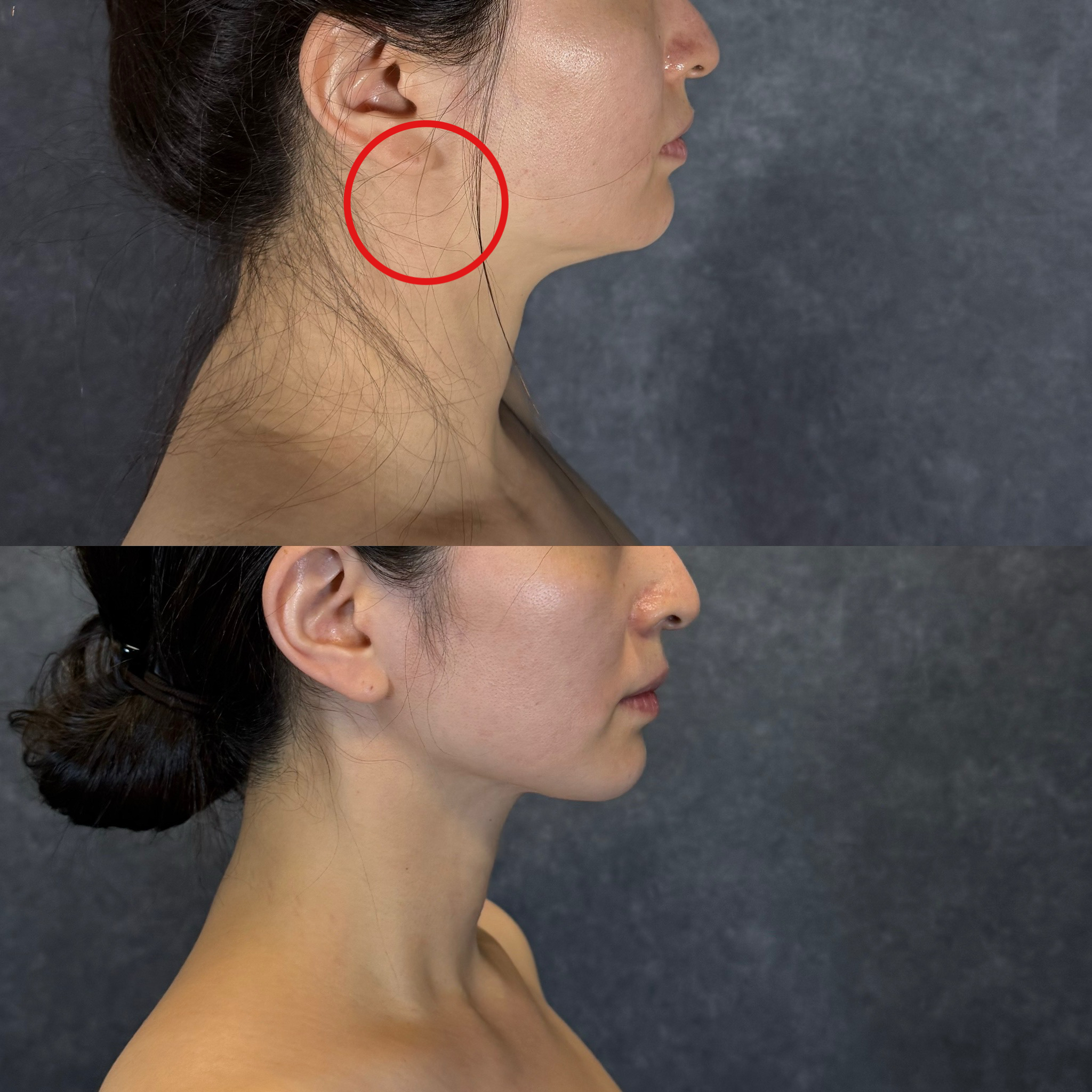
What is Tumescent Anesthesia?
Basic composition
Tumescent anesthesia is an infiltrative solution typically composed of saline or Ringer’s lactate as a base, lidocaine (a local anesthetic), epinephrine (a vasoconstrictor), and sometimes sodium bicarbonate. By swelling (tumescing) the fat layer, the solution loosens the connections between adipocytes and allows the cannula to glide through smoothly.
Historical background
Introduced in 1987 by dermatologist Jeffrey Klein, the tumescent technique dramatically reduced blood loss compared to earlier liposuction methods and revolutionized safety in body contouring. Virtually all modern liposuction relies on this foundation.
How Concentration Design Controls Blood Loss in Liposuction
Vasoconstriction with epinephrine
The heart of tumescent anesthesia is epinephrine-induced vasoconstriction. Typical dosing is 0.5–1.0 mg of epinephrine per liter of infiltrate. After injection, capillaries constrict over 10–20 minutes, allowing aspiration with minimal bleeding.
Too dilute means more bleeding
If the epinephrine concentration is too low, vasoconstriction is insufficient and intraoperative bleeding increases. More bleeding means stronger postoperative bruising and swelling, and a noticeably longer downtime.
Lidocaine Design Behind Pain Control
Standard lidocaine concentration
A typical tumescent anesthesia solution contains 0.05–0.1% lidocaine. Because it is delivered in large diluted volumes into the fat layer, it acts gradually and over a wide area compared with conventional local anesthesia.
Risk of lidocaine toxicity
However, lidocaine can cause toxicity (tinnitus, seizures, cardiac arrest) at overdose levels. When delivered in this diluted form, up to 45–55 mg/kg of body weight is generally considered tolerable, but only because absorption is slow. For wide-area liposuction, total dosing must be calculated precisely.
Infiltrate-to-Aspirate Ratio
The 1:1 Super Wet rule
The ratio of infiltrate to aspirated fat is internationally standardized at roughly 1:1 (Super Wet technique). To remove 1000 mL of fat, around 1000 mL of solution is infiltrated. This minimizes intraoperative bleeding while avoiding excessive fluid retention.
Wet vs. Dry techniques
Older Dry (no infiltrate) and Wet (low-volume) methods produced unacceptable blood loss and are no longer recommended. The Super Wet protocol offers the best balance of safety and aesthetic outcome.
How Concentration Design Affects Swelling and Fibrosis
Overinfiltration prolongs swelling
Injecting excessive solution prolongs postoperative swelling. Retained fluid is absorbed gradually, but during that period tissues remain in an inflammatory state, encouraging stronger contracture and fibrosis.
Proper dosing is part of the design
Tumescent anesthesia design is inseparable from the surgical plan—where and how much fat will be removed. At AVAN TOKYO, infiltrate volume and concentration are customized by region and patient profile to minimize both intraoperative bleeding and recovery time.
AVAN TOKYO’s Approach
We regard tumescent anesthesia not as “merely a pain-relief preparation” but as “a structural part of the surgical technique that determines outcome and downtime.” In particular:
• Total lidocaine is strictly calculated based on weight, body fat percentage, and surgical zone.
• Concentration is varied by region; fibrotic areas like the back or masculinized zones receive higher concentration.
• Sufficient waiting time after infiltration is preserved to maximize epinephrine-mediated vasoconstriction.
• Even under general anesthesia, blocking local pain signaling dramatically reduces the need for postoperative analgesics.
For information on cosmetic surgery safety standards, we reference the guidelines of the Japan Society of Aesthetic Surgery (JSAS).
Conclusion
Tumescent anesthesia is far more than just anesthesia—it directly determines bleeding, pain, swelling, fibrosis, and ultimately the contour outcome of liposuction. Two procedures that look identical on paper can differ enormously based on the precision of the infiltrate’s concentration and volume. To achieve safe and beautiful results, choose a clinic that treats this invisible component as a craft.
See related liposuction columns here
──────────────
【監修】森脇 進 / Shin Moriwaki(監修医師)
日本美容外科学会(JSAS)会員 / American Academy of Aesthetic Medicine 会員
ECFMG Certificate
──────────────
📍AVAN TOKYO 銀座脂肪吸引クリニック
AVAN TOKYO GINZA LIPOSUCTION CLINIC
English / 中文 / Tiếng Việt 対応可能
ご予約・ご相談は
DM / LINE / Website / Phone より承っております。