


Round vs Anatomical Silicone Breast Implants: A Doctor Explains How to Choose for a Slim Chest2026.06.28
“I’m considering a silicone breast implant, but I have no idea whether a round or an anatomical implant is right for me.” This is one of the most common questions slim patients ask during consultations at AVAN TOKYO GINZA LIPOSUCTION CLINIC. The final result of a silicone breast implant procedure is determined less by “size” than by “shape” and how the implant blends with the patient’s chest wall. In this column, we organize the differences between round and anatomical silicone implants from an anatomical and physical perspective, and discuss which shape truly flatters a slim chest, from Dr. Moriwaki’s point of view.
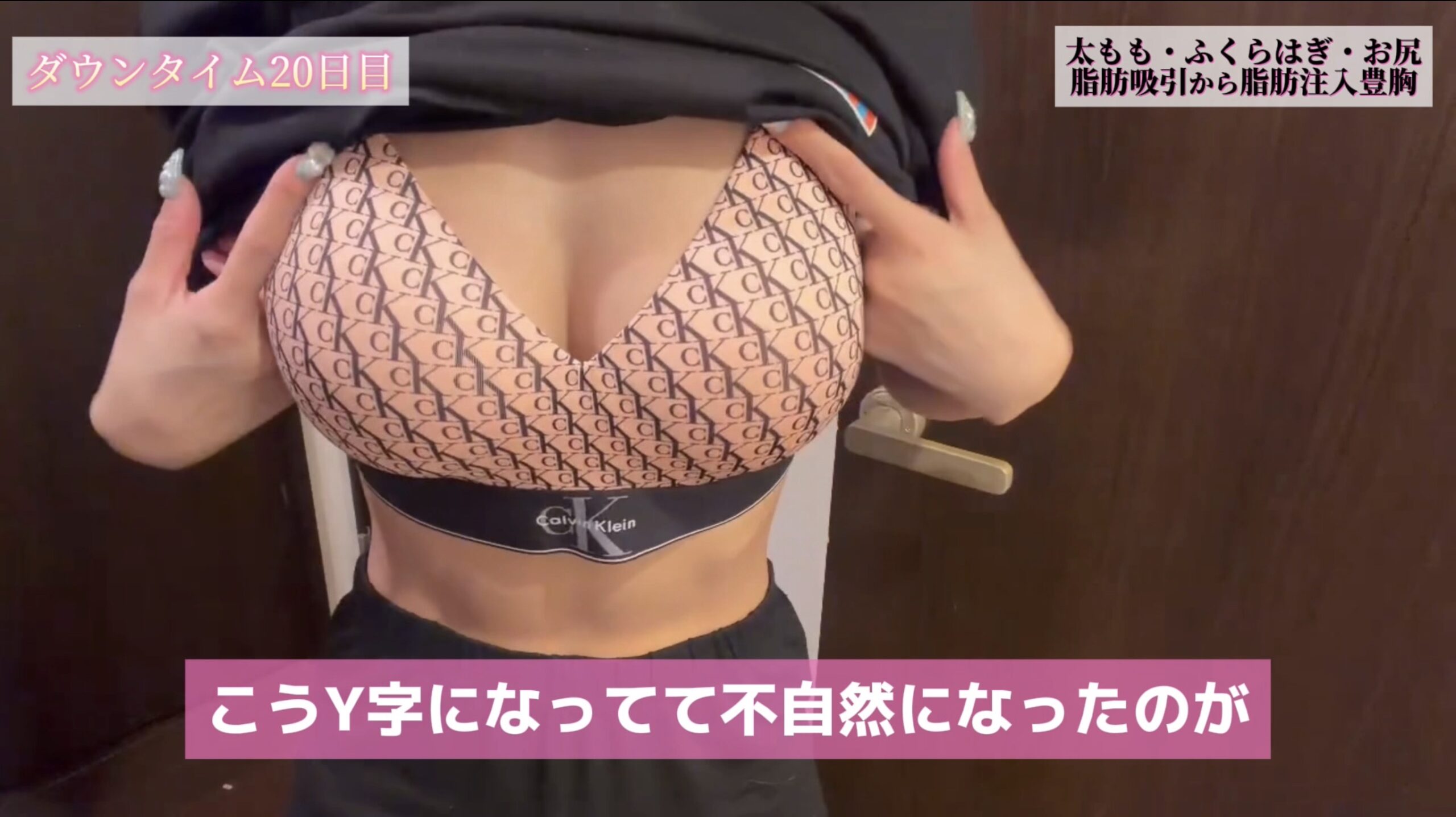
Round vs Anatomical: How Silicone Breast Implant Shapes Differ
Silicone breast implant devices used today fall broadly into two categories. One is the hemispherical “round” implant; the other is the teardrop-shaped “anatomical” implant. As the name suggests, a round implant is symmetric front-to-back and top-to-bottom, so the shape of the implant itself does not change much whether the patient is standing or lying down. An anatomical implant, by contrast, is thin at the upper pole and fuller at the lower pole — a teardrop shape that mimics the natural breast as it settles under gravity. In other words, the anatomical implant pre-builds the “breast shape that gravity would naturally produce” into the device itself.
Filler and Surface Texture Also Affect the Result
Modern silicone breast implant devices are filled with cohesive silicone gel, which resists leakage even if the shell is damaged. Implant surfaces are also classified as smooth or textured (micro/nano), and surface texture influences the rate of capsular contracture and the tendency of the implant to rotate within the breast pocket. Shape selection should therefore always be discussed together with surface texture and capsule behavior.
Is an Anatomical Implant “Less Detectable” in a Slim Chest?
In a slim chest — particularly when the pinch test shows less than 2 cm of subcutaneous tissue — the contour of the implant itself easily shows through the skin. This is what causes “rippling” (wave-like ripples in the skin) and the visible step-off at the upper edge of the cleavage.
For such slim patients, an anatomical implant with its tapered upper pole is theoretically advantageous, because the upper edge of the implant is less likely to create an abrupt step at the décolletage. The breast contour also approaches a natural teardrop, making it easier to avoid the unnatural “only the upper chest is bulging” look seen from the side. For slim patients who want a feel and appearance that is as natural as possible, the anatomical implant is often the preferred option.
However, Anatomical Implants Carry a Rotation Risk
Because the anatomical implant has a defined “up” and “down,” if the pocket (dissection space) is even slightly too large, the implant can rotate after surgery, leaving the teardrop pointing sideways or upside down and distorting the breast. This is called “rotational deformity,” and revision surgery (capsulorrhaphy) to tighten the pocket may be required. When choosing an anatomical implant, precise pocket dissection that matches the implant shape exactly, together with careful post-operative compression management, becomes critically important.
When a Round Silicone Breast Implant Is the Right Choice
A round implant, being symmetric on every axis, carries no inherent rotation risk. The shape of the implant does not collapse meaningfully even in the supine position, and it tends to give the décolletage a sense of fullness and lift. For patients who say, “I want the upper part of the breast to look really full,” or “I want a firm, glamorous décolletage,” a round implant is generally a better match.
In hybrid breast augmentation — placing fat over the implant to soften its contour — round implants often pair best with “cover-fat grafting.” Because the implant’s edges are easier to predict, the surgeon can design where and how much fat to layer with greater precision. Whereas the anatomical implant aims to achieve naturalness through its shape, the round-plus-hybrid approach achieves naturalness through the layered combination of “shape + cover fat.”
For Slim Patients, the Implant Alone Should Not Finish the Job
For slim patients in particular, our clinic strongly recommends hybrid breast augmentation rather than a silicone breast implant on its own. The reasoning is simple: in a slim chest, the implant outline shows through the skin, and problems such as rippling, edge step-off, and a firm, unnatural feel are far more likely. Switching to an anatomical implant alone rarely eliminates these issues completely.
By layering cover fat into the décolletage, axilla, and lateral breast, even a round implant can be made to taper smoothly at the upper pole, producing a silhouette close to that of an anatomical implant. In other words, what truly determines the result is less the implant shape itself than “which implant, into which chest, with what design, and where the fat is layered on top.”
For standards of safety in aesthetic surgery, we also recommend referring to the Japan Society of Aesthetic Surgery (JSAS).
The Silicone Breast Implant Decision Is About Total Design, Not Just the Implant
The choice between round and anatomical is undeniably one of the important decisions in a silicone breast implant procedure. But what truly determines the result is the total design for each patient: the shape of the chest wall, the volume of subcutaneous fat, the thickness of breast tissue, the presence or absence of rib flare, and whether or not fat will be layered on top. At AVAN TOKYO, we perform pinch testing and simulation at consultation and propose the optimal implant choice — round or anatomical — together with a complete surgical plan. Rather than rushing to a conclusion based only on implant shape, considering full-body balance and the downtime plan is what truly drives the outcome.
Please also see related articles: liposuction and breast augmentation column index.
──────────────
Medical Supervisor: Shin Moriwaki, MD
Member, Japan Society of Aesthetic Surgery (JSAS) / Member, American Academy of Aesthetic Medicine
ECFMG Certificate
──────────────
📍AVAN TOKYO GINZA LIPOSUCTION CLINIC
English / 中文 / Tiếng Việt support available
For reservations and inquiries, please contact us via
DM / LINE / Website / Phone.