


Why Rippling Is More Common in Thin Patients | Cover Fat, Rib Flare, and Implant Placement Explained by a Doctor2026.07.17
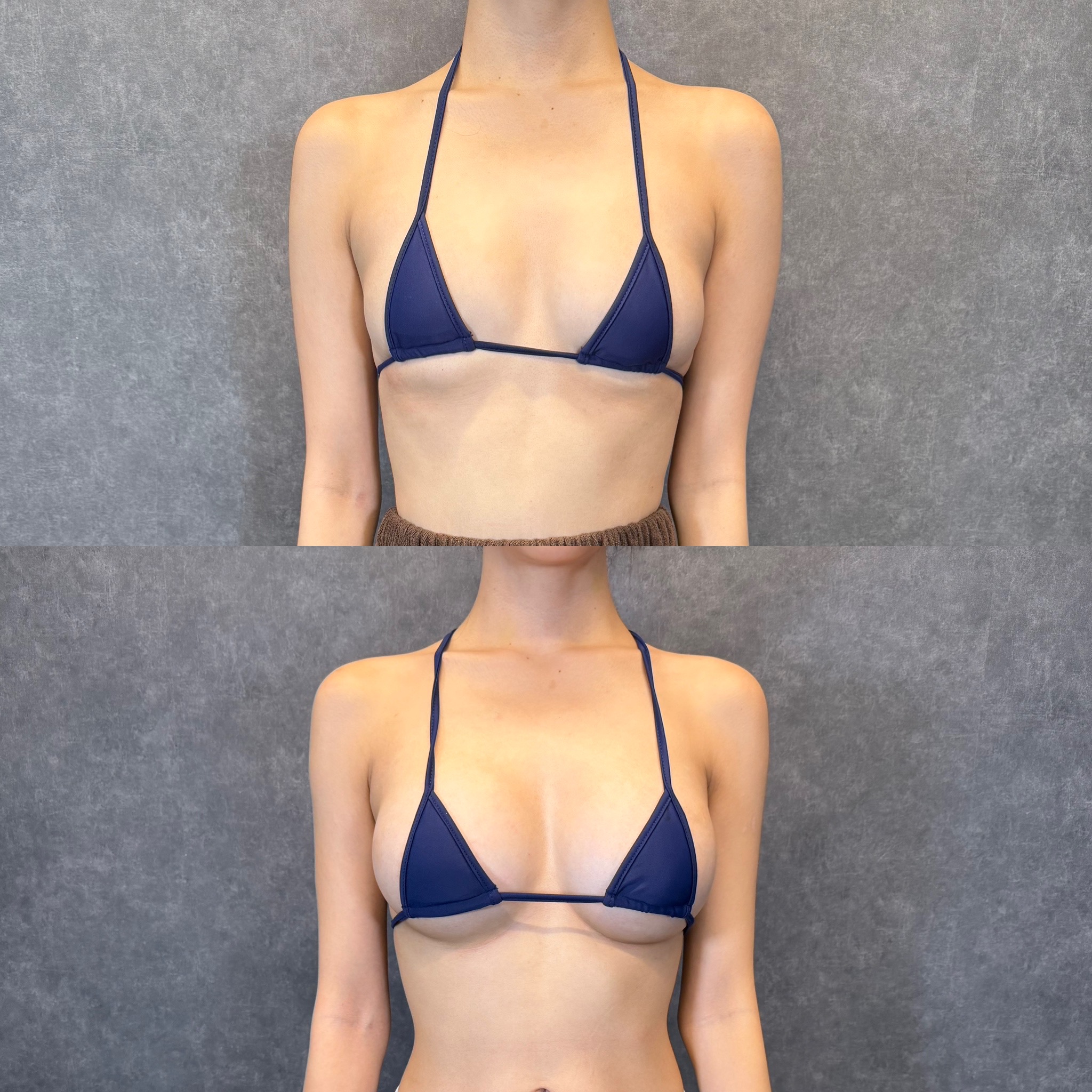
Thin patients considering silicone implant breast augmentation increasingly ask us, “I’m worried the outline or wrinkles of the implant will show through my skin.” This phenomenon is called breast implant rippling, and it is medically well recognized that it occurs more often in patients with thin subcutaneous fat. In this article, Dr. Shin Moriwaki of AVAN TOKYO explains why breast implant rippling stands out more in thin patients, examining three factors: the thickness of the subcutaneous cover, the plane in which the implant is placed, and the shape of the chest wall.
Key Points of This Article
– Breast implant rippling is a phenomenon in which surface wrinkles of a silicone implant show through thin skin, and it is more common in thin patients.
– The core cause is that the subcutaneous fat that acts as a “cover layer” over the implant is simply too thin.
– Anatomical features such as rib flare and a flat, sunken decolletage also make wrinkles more visible.
– Prevention strategies include cover-fat grafting via hybrid breast augmentation and careful selection of a subpectoral placement.
– Even when rippling has already appeared, add-on fat grafting or changing the placement plane can improve it.
The Basic Mechanism of Breast Implant Rippling
A silicone implant is made of a shell and gel; once implanted, small folds and surface wrinkles inevitably occur. In a well-covered breast, these surface changes are absorbed both optically and to touch by the “cover layer” of subcutaneous fat, mammary gland, and pectoralis major, and are invisible from the outside. But when the cover layer is thin, the fine irregularities of the implant surface transfer directly to the skin and become visible as edges or folds under certain lighting or body positions. This is the essence of the transparency issue that is common in thin patients.
Reason #1 in Thin Patients: A Thin Subcutaneous Cover Layer
The subcutaneous fat between the implant and the skin plays a role in “blurring” the implant’s surface changes both optically and to touch. Patients whose pinch test (measuring subcutaneous fat at the decolletage or lateral chest) yields less than 2 cm have an absolute shortage of protective fat over the implant. Thin patients not only start with less subcutaneous fat but also have what little they have stretched further by the implant, so the risk of surface transparency rises synergistically.
Reason #2 in Thin Patients: Rib Flare and a Flat Decolletage
Thin women often show “rib flare,” in which the lower ribs protrude anteriorly, together with a sunken, flat decolletage. When rib flare is present, the lateral edge of the implant is pressed against the curved lower ribs, tension on the implant surface concentrates locally, and wrinkles or folds become more likely. The decolletage also has inherently little subcutaneous fat, so when the upper edge of the implant sits there, this is the area where surface transparency is easiest to spot.
Reason #3 in Thin Patients: The Choice of Placement Plane
Implants are typically placed in one of three planes: “subglandular,” “subfascial,” or “subpectoral.” Subglandular placement gives a natural range of motion, but the cover layer consists only of subcutaneous fat and mammary gland, which is disadvantageous for thin patients. Subpectoral placement adds the muscle layer as extra cover and reduces visible wrinkling, but comes with the trade-off of dynamic deformity (the shape changes with movement). Choosing a plane that matches body type and lifestyle is a key preventive decision. For safety standards and technique selection in aesthetic surgery, please also refer to the Japan Society of Aesthetic Surgery.
How Hybrid Breast Augmentation Prevents Breast Implant Rippling
For thin patients, our first recommendation is “hybrid breast augmentation,” which combines a silicone implant with fat grafting. In this technique, after the implant is placed, cover fat is grafted in separate layers: the superficial subcutaneous plane, deep subcutaneous plane, and supra-fascial plane. Layered grafting not only improves fat survival, but also smooths the pattern of shadows visible through the skin, so the surface wrinkles of the implant become optically “blurred” and invisible. Selectively covering the decolletage and lateral chest — the areas most prone to rippling — is what most influences the postoperative satisfaction of thin patients.
Options for Patients Who Are Already Concerned
If surface transparency is already noticeable after implant surgery, add-on cover-fat grafting (a delayed hybrid) can often improve it. Switching the implant surface from smooth or low-texture, or changing the placement from subglandular to subfascial or subpectoral, are also revision options. That said, revision surgery is more affected by scar tissue and vascular changes than the primary procedure, so it is important to consult a surgeon with substantial revision experience. For related downtime and case progression, please also see our liposuction column archive here.
Self-Check for Patients Prone to Surface Transparency
We recommend that patients who meet several of the following criteria consider hybrid breast augmentation rather than an implant alone:
– Slim body type with BMI 18 or lower
– Pinch test showing less than 2 cm of subcutaneous fat
– Pronounced rib flare
– Flat, sunken decolletage
– Wish for an implant that is large relative to body size
Rather than deciding on your own, having a doctor perform palpation, visual inspection, and measurement during a preoperative consultation — so that risks are made explicit before choosing a technique — leads to a safer decision you will not regret.
Frequently Asked Questions
Q. Does breast implant rippling naturally fade over time?
Around 3–6 months after surgery, when the implant position stabilizes, it may settle down slightly, but if the underlying cause is insufficient subcutaneous cover, complete natural resolution cannot realistically be expected. When it is prominent, add-on cover-fat grafting is a realistic option.
Q. Do I have to choose hybrid breast augmentation as prevention?
Not necessarily. Patients with sufficient subcutaneous fat have a low transparency risk with an implant alone, and there is no need to add fat grafting unnecessarily. The proper flow is for you and your doctor to evaluate the pinch test, chest wall shape, and desired size together, and to consider a hybrid only when risk is judged to be high.
Q. Does a larger implant make transparency more noticeable?
Yes. As the implant gets larger, surrounding tissues are stretched more and the cover layer becomes relatively thinner, so transparency becomes more visible. Thin patients tend to see higher long-term satisfaction by choosing “an appropriate size for their body” rather than “the maximum size that can be inserted.”
Q. Is there any pain or health risk?
The symptom itself is not accompanied by pain or health harm and is essentially a cosmetic issue. However, when patients keep touching the area or find that self-consciousness disrupts daily life, the psychological burden warrants a consultation regarding revision.
Q. Can revision bring it completely to zero?
Depending on body type and implant choice, many cases can be improved to a level that is not noticeable in daily life. Rather than guaranteeing physical elimination to zero, the honest realistic goal is to make it inconspicuous.
──────────────
[Medical Supervision] Shin Moriwaki, MD (Supervising Physician)
Member, Japan Society of Aesthetic Surgery (JSAS) / Member, American Academy of Aesthetic Medicine
ECFMG Certificate
──────────────
📍AVAN TOKYO GINZA LIPOSUCTION CLINIC
English / 中文 / Tiếng Việt available
Appointments and consultations are accepted via
DM / LINE / Website / Phone.