


Why the Hip Crease Is the Most Critical Part of Thigh Liposuction | A Doctor’s Anatomical Guide2026.06.09
Thigh liposuction is one of the most popular body contouring procedures in cosmetic surgery. Yet what truly determines the outcome of thigh liposuction is not “how much fat is removed,” but “how the hip crease (upper junction) is sculpted” — a fact that is surprisingly under-appreciated. In this column, supervised by AVAN TOKYO Ginza Liposuction Clinic, we explain in depth why the design of the upper thigh junction is the most important element in circumferential thigh contouring, from anatomical, aesthetic, and technical perspectives.
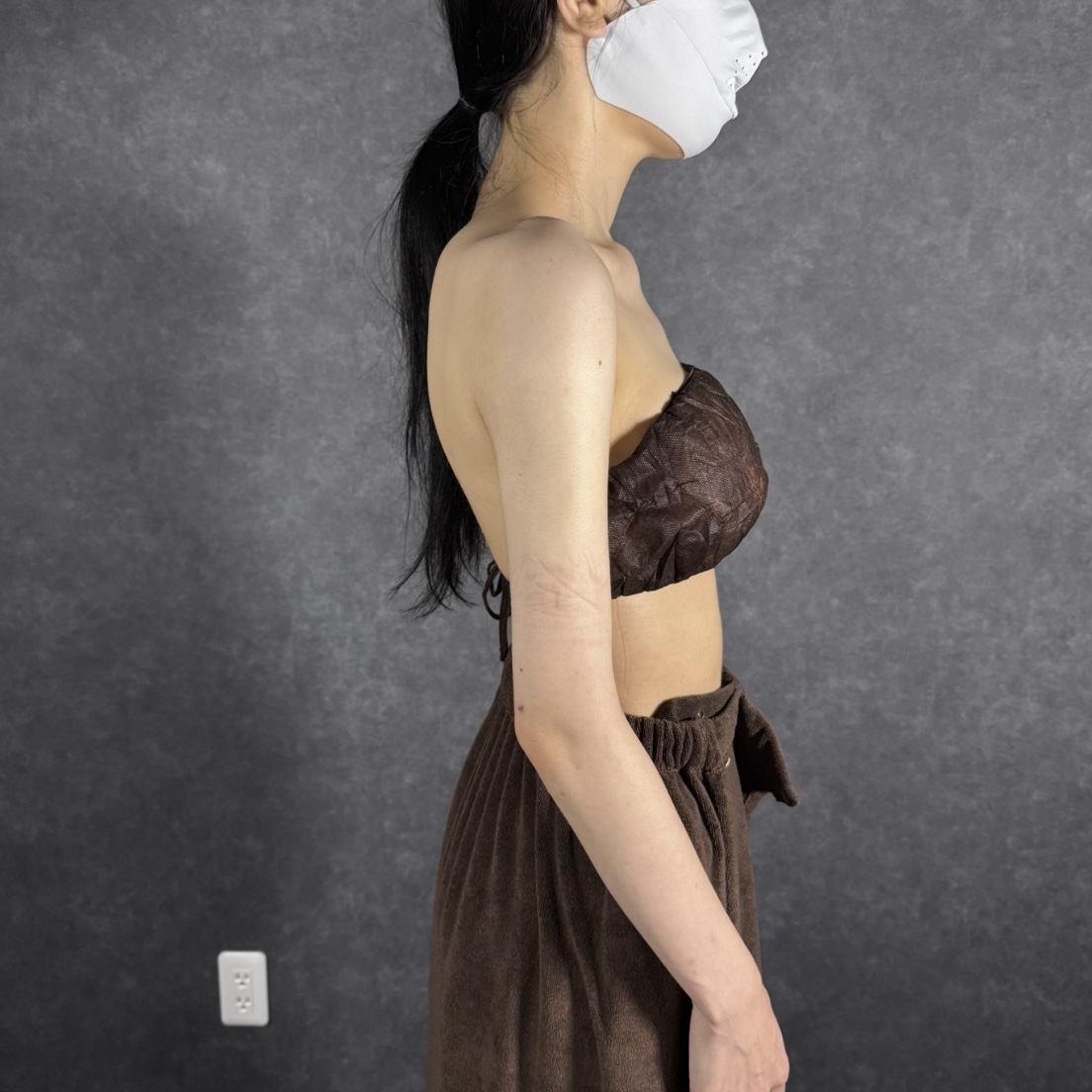
Why the Hip Crease Is the Most Critical Element of Thigh Liposuction
The thigh has one of the most complex anatomical structures in the body. It has four surfaces — front, inner, outer, and posterior — plus the boundary with the hip, the area above the knee, and the inner adductor line, all of which require highly three-dimensional design. Among these, the upper junction with the hip is the single most influential zone, and how it is shaped determines the entire silhouette.
The Anatomical Reason Fat Accumulates at the Hip Crease
The upper thigh region contains lymph nodes, blood vessels, and nerves in dense concentration, with fat layers stacked around them. Both the outer area (the saddlebag region) and the inner area (the inner thigh) are particularly prone to subcutaneous fat accumulation under the influence of female hormones, and they tend to gain volume with age. Pelvic tilt and hip joint mobility also significantly affect how fat distributes here.
Why an Uneven Hip Crease Makes the Whole Leg Look Larger
When the upper thigh has bulges or steps, the entire leg appears thicker — even when the rest of the leg is slim. This is a matter of light and shadow: when the hip crease casts strong shadows, the whole thigh appears shorter and wider. Conversely, when the upper junction is cleanly designed, the leg can appear several centimeters slimmer and longer at the same actual circumference.
Three Typical Failures from Poor Hip Crease Sculpting
1. Loss of the Natural Hip–Thigh Boundary
Over-aspirating the posterior junction (the boundary with the buttocks) can make the buttocks appear droopy, or erase the boundary entirely, leaving a “flat lower body.” Aspirating too shallowly leaves a residual step. Preserving the right shadow at this junction is decisive for the lifted-hip effect.
2. Disappearance of the Inner Adductor Line
When the inner upper thigh is sculpted carelessly, the natural vertical adductor line — which gives the leg its visual youthfulness — is lost, producing a “core-less” thigh. This is a failure of quality, not just size, and tends to age the appearance of the leg in standing posture.
3. Persistent Outer Bulge and Loss of the Y-Silhouette
The outer hip bulge (saddlebag) requires meticulous design to avoid leaving subtle irregularities after thigh liposuction. The ideal is a gentle, near-straight Y-silhouette flowing from below the hip down to above the knee. Simply increasing the aspiration volume without correcting the bulge will not eliminate the awkward rear view.
The Three Design Principles of Thigh Liposuction at AVAN TOKYO
At AVAN TOKYO, we strictly follow three principles when sculpting the hip crease.
First, “capture the surface, finish with the line.” Thigh liposuction is not merely about removing fat — it requires aspiration guided by the intended silhouette line. Second, “design in continuity with the hip, waist, and knee.” Treating the thigh in isolation never produces a natural full-body balance; preserving vertical continuity does. Third, “calculate the aspiration volume around expected skin retraction.” Over-aspiration leads to laxity and prolonged contracture.
For information on safety standards in cosmetic surgery, please refer to the guidelines of the Japan Society of Aesthetic Surgery (JSAS).
Recovery and Contracture After Thigh Liposuction
After thigh liposuction, most patients experience strong subcutaneous contracture (firmness and tightness) for the first 2 to 3 weeks. This is a normal healing process in which the skin adapts to a new body shape, and it gradually softens over the following 3 to 6 months.
The upper junction is especially prone to contracture, but this is a normal reaction. Proper massage and consistent use of compression garments lead to a far more refined final result. In fact, areas with stronger contracture tend to retract better and ultimately deliver sharper definition. Anxiety during recovery can be significantly reduced through proper preoperative counseling.
Summary: Design of the Hip Crease Determines the Final Outcome
The most important factor in thigh liposuction is not the aspiration volume but the design of the upper hip junction. Anatomical understanding, three-dimensional aesthetic judgment, and refined surgical technique must all align to achieve a truly artistic body line.
If you have concerns about your circumferential thigh shape, please consult AVAN TOKYO Ginza Liposuction Clinic. Browse our related articles here: List of liposuction columns.
──────────────
【監修】森脇 進 / Shin Moriwaki(監修医師)
日本美容外科学会(JSAS)会員 / American Academy of Aesthetic Medicine 会員
ECFMG Certificate
──────────────
📍AVAN TOKYO Ginza Liposuction Clinic
AVAN TOKYO GINZA LIPOSUCTION CLINIC
English / 中文 / Tiếng Việt available
Reservations and consultations are welcome via
DM / LINE / Website / Phone.