


Induration Isn’t Bad — The Medical “Process” Required for a Beautiful Liposuction Result2026.05.15
“My skin has become hard a few weeks after surgery.” “My abdomen feels stiff like a board and is hard to move.”—Many patients become anxious when these symptoms appear after liposuction.
This phenomenon is called “induration” (kōshuku in Japanese), and it is one of the most misunderstood processes during liposuction downtime.
But to state the conclusion first: induration is by no means a bad thing.
On the contrary, it is a medically necessary “transition point” on the path to a beautiful outcome, and it is also evidence that the skin and tissue are tightening.
By correctly understanding what induration truly is, post-operative anxiety eases significantly, and your expectations for the final result will change.
What Is Induration — The Medical Mechanism
Induration refers to the phenomenon in which, as repair of the subcutaneous tissue progresses after liposuction, the skin and the layers beneath it temporarily become hard or feel uneven and bumpy.
Medically, it is a natural biological response observed during the period when “tissue remodeling” is most active.
Why Induration Occurs
In liposuction, a thin tube called a cannula is used to remove fat tissue.
At this time, “gaps” are created where the subcutaneous fat has been removed, and new connections must form between the skin and the deeper tissues.
During this repair process, cells called fibroblasts work actively, secreting collagen fibers as they reconnect the tissues.
These collagen fibers are initially formed in an irregular and dense pattern, which is why the surface of the skin feels hard and as if it is pulled taut.
This is the true nature of induration.
In other words, induration is a sign that tissue is being repaired and reconstructed — it is by no means an abnormal state.
The Typical Course of Induration
Induration generally begins around 2 to 3 weeks after surgery and peaks at 1 to 2 months.
After that, it gradually softens over the course of 3 to 6 months, and eventually the skin’s elasticity is restored, settling into a smooth line.
During the peak period, sensations of tightness, unevenness, and numbness may appear, but this is because the new tissue is still in an immature state.
Over time, the collagen fibers realign and regain a uniform thickness and softness, so excessive worry is unnecessary.
However, the course varies between individuals — skin thickness, age, and the area treated all significantly affect how induration manifests.
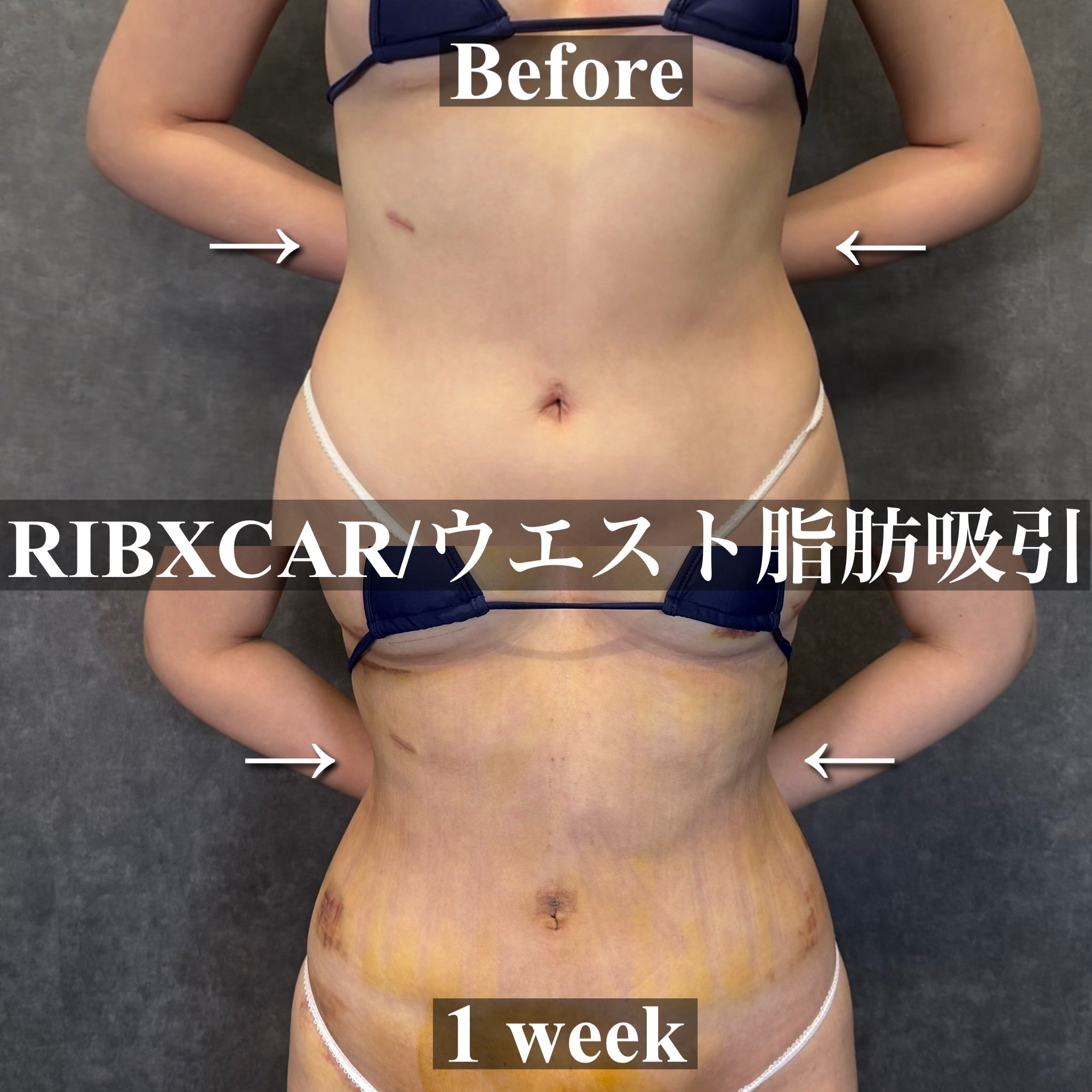
Why Induration Is a “Process Toward Beauty”
Whether you view induration as something negative or as a necessary process — this difference in perception greatly influences both your psychological burden during recovery and your satisfaction with the final result.
Medically as well, induration is an indispensable “tightening step” toward a beautiful outcome.
Skin Tightening and the Formation of a Three-Dimensional Line
When subcutaneous fat is reduced through liposuction, the skin must contract to match that reduction.
At this time, the fibrosis caused by induration promotes the tightening of the skin, preventing sagging and helping to form a smooth line.
In fact, when induration does not occur at all, the skin may not keep up with the reduction in fat, leaving sagging or visible steps on the surface.
Induration is the “shrinking process” necessary to sculpt the body line three-dimensionally — when it occurs sufficiently, the final tightened silhouette is completed.
Asian women’s skin in particular is thinner and more delicately elastic than that of Westerners, so skillfully managing induration is the key to a beautiful finish.
Care for Getting Through the Induration Period
There is no need to fear induration, but proper care will make the process smoother.
Specifically, it is effective to continue compression garments according to your doctor’s instructions, to promote blood flow by keeping the area warm, and to receive professional post-operative massage.
In particular, massage helps the realignment of collagen fibers and quickly evens out irregular firmness.
However, vigorous self-administered massage carries the risk of internal bleeding and uneven fat redistribution, so always perform it under the guidance of your clinic.
At AVAN TOKYO, alongside post-operative follow-up, we propose a care plan tailored to each patient’s constitution and treatment area, supporting you so you can pass through the induration period with peace of mind.
Summary
Induration is the most misunderstood phenomenon during liposuction downtime, but medically it is “evidence that tissue is being rebuilt toward a beautiful line.”
It is an indispensable “transition point” for tightening the skin, preventing sagging, and achieving a smooth result — it is never a negative state.
The hardness and pulled, taut sensation you feel from 2 to 3 weeks through 1 to 2 months after surgery is a sign that tissue is changing.
By patiently continuing appropriate care and compression, a beautifully tightened silhouette will emerge in 3 to 6 months.
The induration period can be the most psychologically difficult time for patients, but your ideal body line is waiting on the other side.
If you have concerns, do not judge alone — consult a trusted specialist.
With the right knowledge and proper care, induration is not something to fear, but a natural process on the path to beauty.
📍AVAN TOKYO 銀座脂肪吸引クリニック
AVAN TOKYO GINZA LIPOSUCTION CLINIC
English / 中文 / Tiếng Việt available
For reservations and consultations,
we accept inquiries via DM / LINE / Website / Phone.