


Why Liposuction Unevenness Isn’t Caused by ‘Missed Fat’ — A Surgeon’s Explanation2026.06.22
The Real Cause of Liposuction Unevenness
When patients notice ridges or dimples on the skin surface after liposuction, many immediately assume the surgeon left fat behind. After years of performing revision surgery, however, I can confidently state that liposuction unevenness is rarely caused by simple missed suctioning. The real cause lies in the structural anatomy of the subcutaneous tissue and the postoperative wound-healing process. This column explains the true mechanism of liposuction unevenness from a medical perspective.
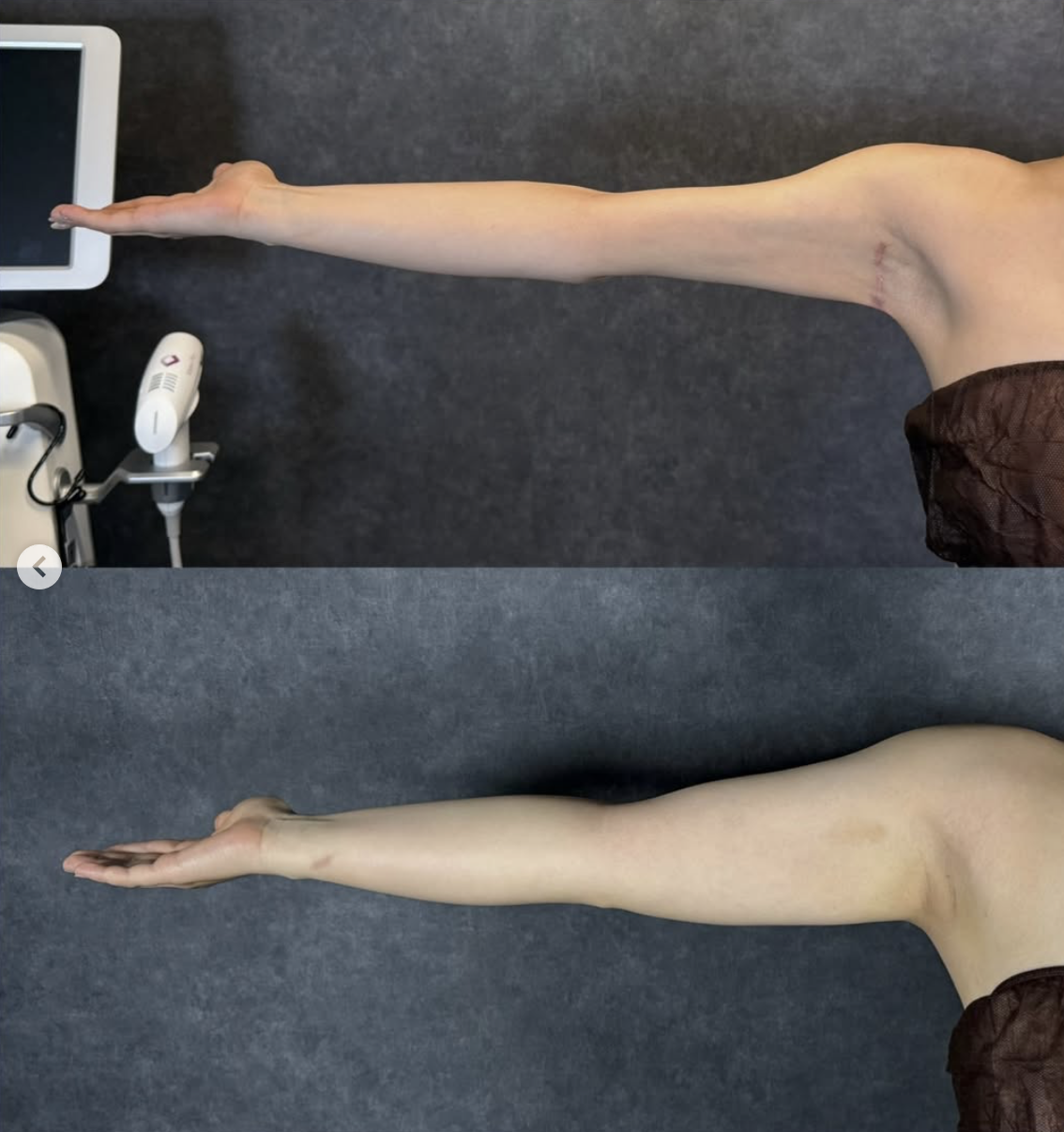
Why ‘Unevenness Equals Surgeon Skill’ Is an Oversimplification
Liposuction involves inserting a thin metal cannula beneath the skin to physically remove fat cells. But subcutaneous tissue is not composed solely of fat. Fibrous septa (Cooper’s ligaments), subdermal vessels, lymphatic channels, and nerves form an intricate three-dimensional network that supports the fat lobules and anchors the skin to the underlying skeleton.
Unevenness results from a combination of these fibrous structures, uneven fat distribution, skin elasticity, and the postoperative contracture process. This is precisely why such irregularities cannot be dismissed as merely a ‘skill issue.’
Five Structural Factors That Cause Liposuction Unevenness
1. Differences in Subcutaneous Fat Layer Structure
Subcutaneous fat is divided into a superficial layer and a deep layer, each with distinct fibrous septa density and orientation. Suctioning too much from the superficial layer reduces the tissue cushion beneath the skin, producing a wavy unevenness. This is not ‘over-suctioning’ but rather a ‘layer selection error’ requiring anatomical expertise.
2. Adhesion Patterns of Fibrous Septa
Fibrous septa support the skin from within and vary in pathway and strength based on age and obesity history. Areas with locally rigid septa retain fat more stubbornly, causing relative depressions in surrounding zones. This too is anatomical variation, not residual fat.
3. Skin Elasticity (Retraction Capacity)
Even with perfectly uniform fat removal, differences in the skin’s retraction capacity between sides or regions can lead to mixed areas of tightness and laxity. Age, pregnancy history, rapid weight fluctuation, and UV damage all influence skin elasticity.
4. Uneven Progression of Contracture
Post-liposuction contracture is a natural healing response that forms new fibrous tissue beneath the skin. Its progression is rarely uniform, however, and asymmetries may emerge between two and six months postoperatively. Areas where contracture is unusually strong are often perceived as ‘dents.’
5. Residual Edema and Asymmetric Resorption
For several months after surgery, lymphatic fluid and plasma components remain beneath the skin. The uneven recession of this edema can present as temporary step-offs that improve with time and must be distinguished from ‘true unevenness.’
Three Situations Often Mistaken for ‘Missed Fat’
Step-offs Visible Within Three Months Postop
During this period, edema and contracture coexist and the subcutaneous state changes daily. Even when a patient feels ‘fat remains here,’ it is often simply localized edema, and the area typically smooths out between six and twelve months postoperatively. Hasty revisions in this window can worsen the result.
Unevenness That Changes Shape with Position
When the contour shifts significantly with body position, the issue is not fat volume but tension balance between fibrous septa and skin. Patterns that appear prominent supine and disappear when seated (or vice versa) are textbook examples of structural factors.
Hard Lump-Like Step-Offs on Palpation
Indurations from bruise resorption or asymmetric fibrosis are frequently misread as unevenness. The majority soften with post-op massage and time.
How to Identify True Unevenness That Requires Revision
Only a limited subset of liposuction unevenness cases truly require revision surgery. The criteria are as follows.
– Unevenness persists beyond twelve months postoperatively
– Contour remains fixed regardless of body position
– Depression does not resolve when skin is stretched
– Asymmetry with the contralateral side is clearly visible
When these apply, revision via fat grafting or subcutaneous release for redistribution is considered. For safety standards in aesthetic surgery, see the Japan Society of Aesthetic Surgery.
How AVAN TOKYO Minimizes Liposuction Unevenness
Our clinic takes the following precautions to minimize liposuction unevenness.
– Three-dimensional preoperative design: assessing fat distribution and septal anatomy in multiple body positions
– Cautious control of superficial suction: intentionally preserving fat directly beneath the skin via layer-selective technique
– Cannula selection: varying caliber and tip shape by region to ensure uniformity
– Postoperative care: compression and massage guidance to promote even contracture
These measures significantly reduce postoperative unevenness risk. Patients concerned about liposuction unevenness should undergo a thorough anatomical risk assessment during preoperative consultation.
View related liposuction columns
──────────────
Supervising Physician: Shin Moriwaki, MD
Member, Japan Society of Aesthetic Surgery (JSAS) / Member, American Academy of Aesthetic Medicine
ECFMG Certificate
──────────────
📍AVAN TOKYO GINZA LIPOSUCTION CLINIC
English / 中文 / Tiếng Việt supported
Reservations and inquiries via
DM / LINE / Website / Phone.