


Fat Transfer Breast Augmentation Is Not Just About “Injecting Fat”2026.05.21
AVAN TOKYO’s philosophy on fat quality and long-term fat survival
Many people think fat transfer breast augmentation is simply:
“Remove fat and inject it into the breasts.”
However, in reality,
the quality of the fat cells themselves
can dramatically change the final result.
At AVAN TOKYO, we focus not only on:
“how much fat is injected,”
but also on:
“what kind of fat is being injected.”
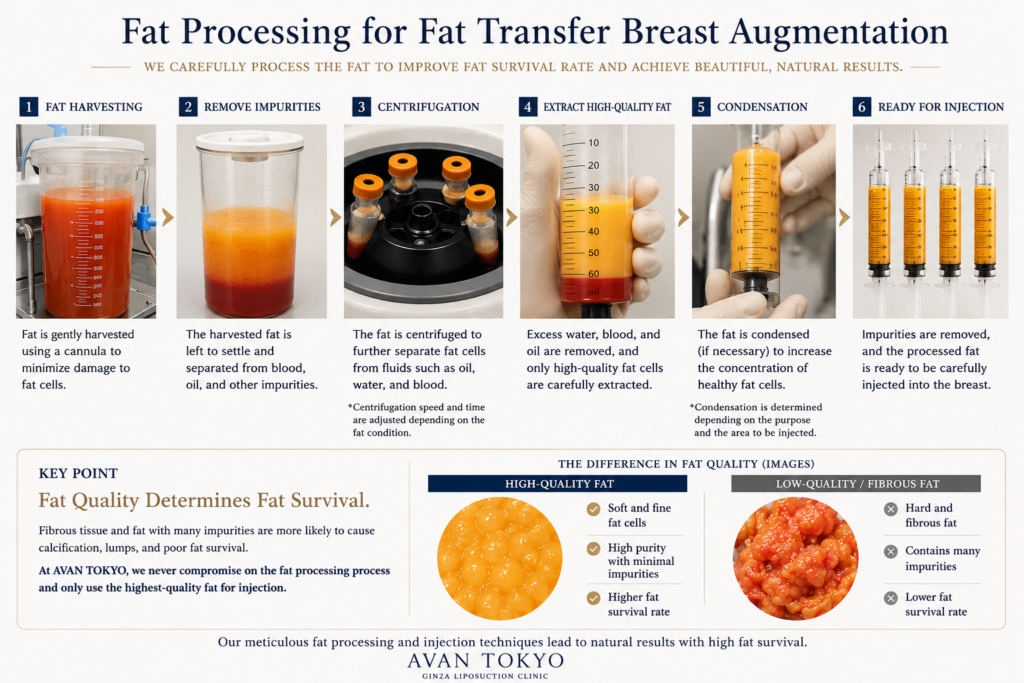
Why Fat Quality Matters
Fat grafting only succeeds when the transferred fat cells survive and establish new blood supply.
In other words, the key is:
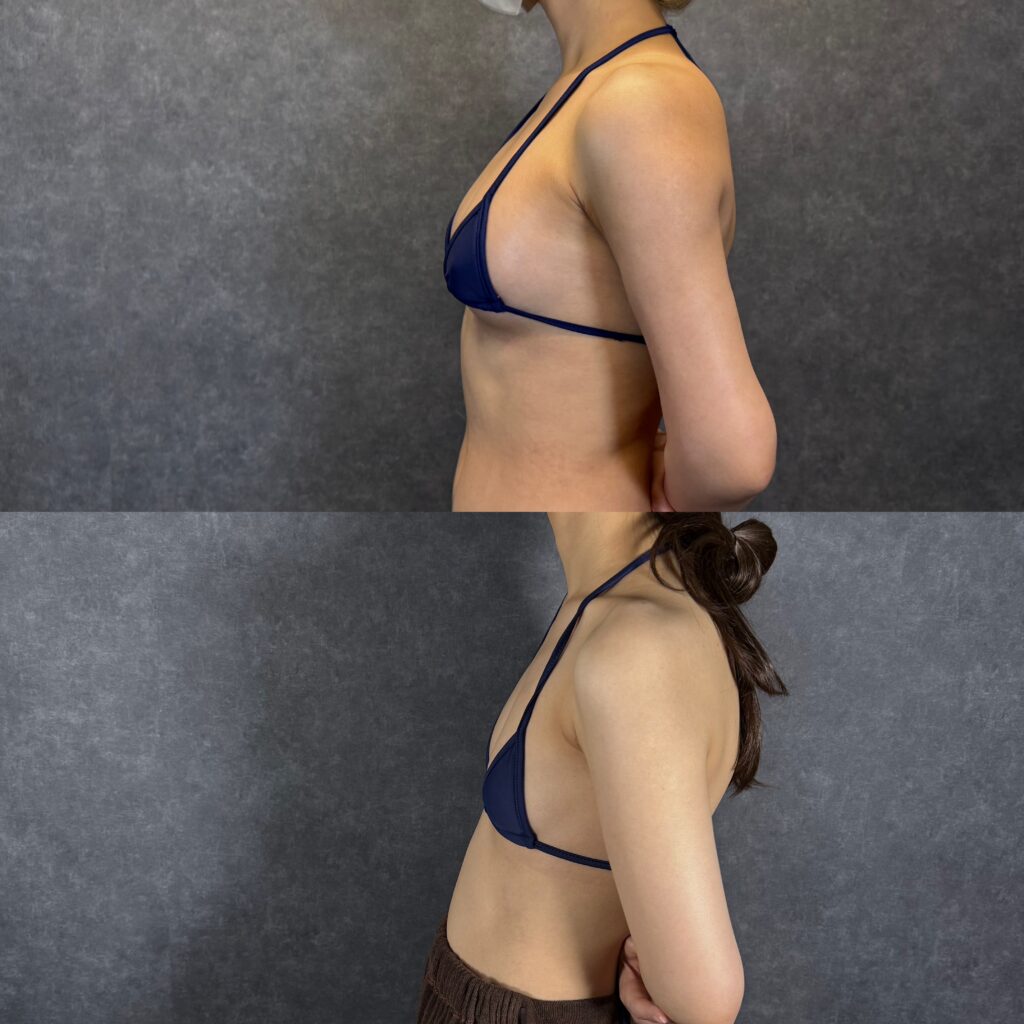
“Can the fat survive?”
Fibrotic or damaged fat tissue tends to have poorer survival rates.
Examples include:
- Hard fibrotic fat
- Fat damaged during harvesting
- Fat mixed with excessive blood or fluid
- Low-quality processed fat
These factors may reduce fat retention and increase the risk of irregularities or lumps.
What I Learned from Watching Overseas Surgeons
I personally enjoy watching surgical videos from plastic surgeons around the world on YouTube.
Especially surgeons from:
- Miami
- Beverly Hills
- Colombia
- Brazil
who are globally famous for body contouring.
However, after watching many procedures, I began to understand:
why fat transfer breast augmentation is less aggressively pursued in some Western countries.
Even highly famous surgeons sometimes inject:
- very fibrotic fat
- minimally processed fat
- large fat clusters directly into the breast
Of course, body structure and beauty standards differ between cultures.
But for Asian patients, who often have:
- thinner body frames
- thinner skin
- greater emphasis on décolletage and cleavage aesthetics
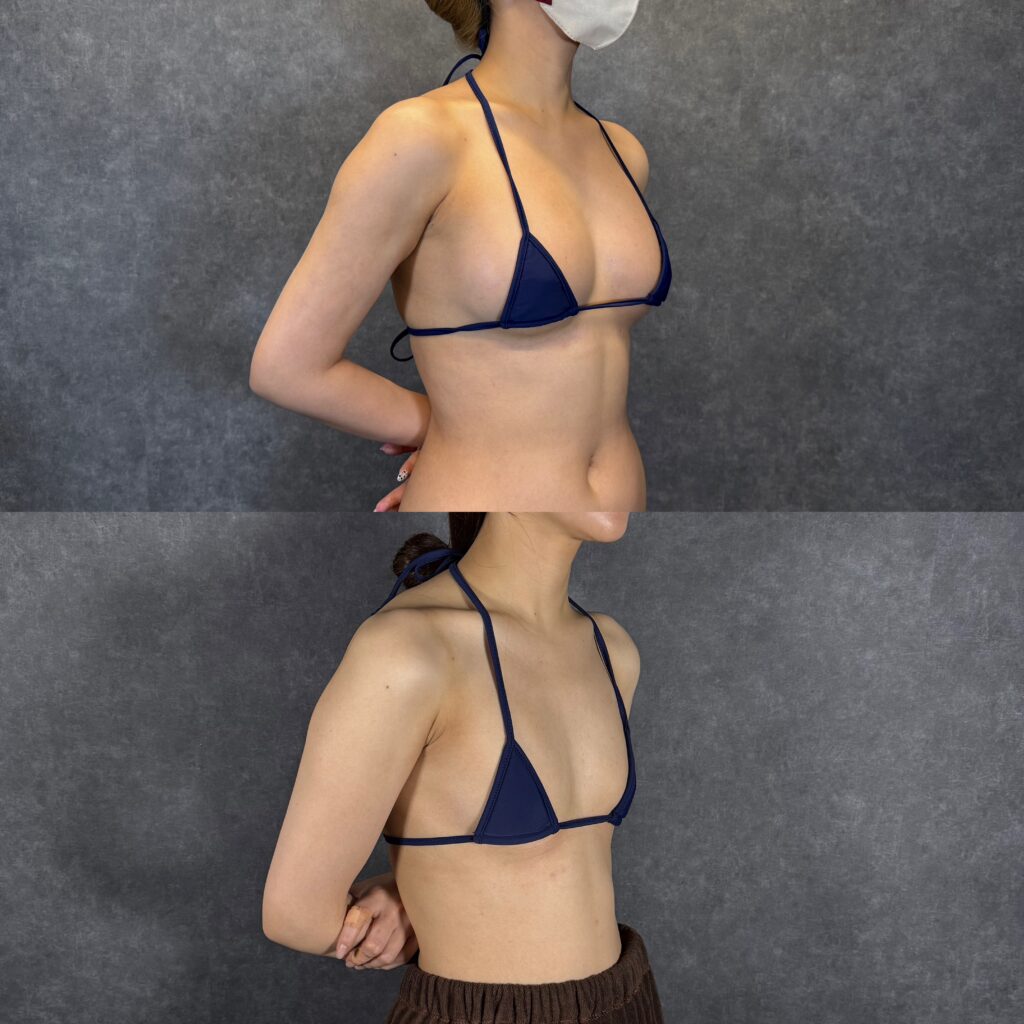
delicate fat handling becomes extremely important.
Asian Fat Grafting Requires Precision
At AVAN TOKYO, we pay special attention to areas such as:
- Décolletage
- Cleavage
- Upper breast
- Central chest line
These are areas with thinner skin and more visible contour changes.
Simply injecting large amounts of fat does not necessarily create beautiful results.
Instead, excessive or poorly processed fat may increase risks such as:
- Lumps
- Irregularities
- Hardness
- Poor survival
This is why:
“How the fat is processed and injected”
matters so much.
Fat Quality Differs from Person to Person
Not all fat is the same.
Some patients naturally have:
- Soft fat
- Fibrotic fat
- Inflamed tissue
- Dense scar tissue from previous liposuction
Factors such as:
- Previous surgeries
- Smoking
- Chronic inflammation
- Tissue stiffness
can significantly affect fat quality.
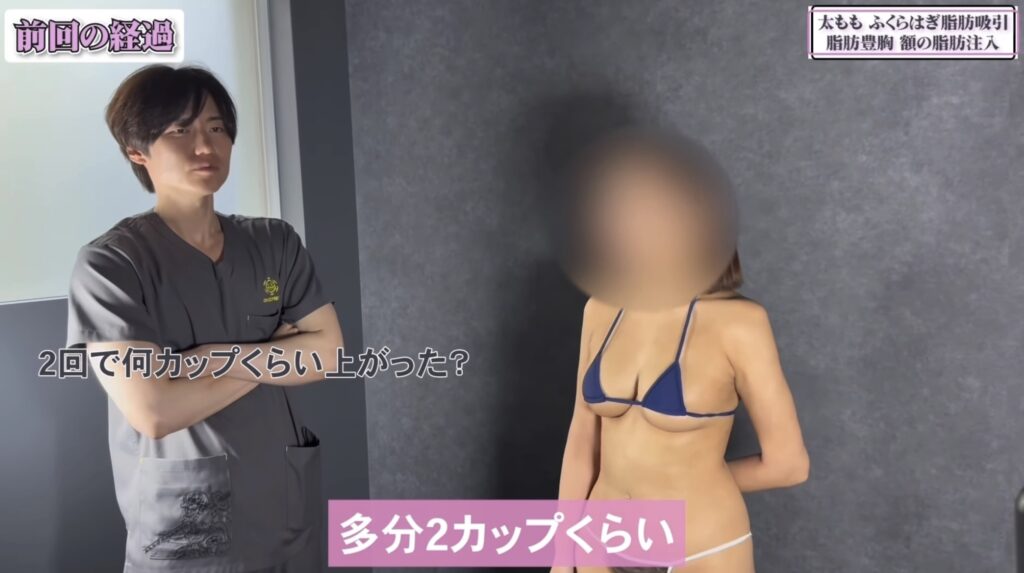
What AVAN TOKYO Focuses On
At AVAN TOKYO, fat grafting is not simply:
“harvest and inject.”
We carefully focus on:
“how the fat cells are handled.”
This includes:
- Fat processing techniques
- Centrifugation speed
- Removal of impurities
- Condensing methods
- Injection layer selection
- Fine distribution techniques
Fat transfer breast augmentation may appear to be a bold procedure,
but in reality,
it is an extremely delicate surgery.
Bigger Is Not Always Better
Many people focus only on:
“How many cc were injected?”
However, what truly matters is:
“How beautifully the fat survives.”
At AVAN TOKYO, we especially prioritize:
- Natural décolletage
- Soft cleavage
- Avoiding excessive lateral fullness
- Reducing an artificial implant appearance
because our goal is not simply larger breasts,
but:
“a beautiful and feminine upper body silhouette.”
Hybrid Breast Augmentation and Fat Quality
Hybrid breast augmentation combines:
- Silicone implants for structural volume
- Fat grafting for softness and natural contour
This allows us to refine:
- Décolletage
- Cleavage
- Implant edges
in a more natural way.
Therefore,
the quality of the transferred fat directly affects how natural the final result appears.