


How Reliable Are Preoperative Simulations for Breast Augmentation and Liposuction? Limits and Correct Interpretation Explained by a Doctor2026.07.19
Have you ever looked at a preoperative simulation image shown to you at consultation and thought “So this is the shape I can achieve”? In reality, the preoperative simulation used in breast augmentation and liposuction is only a “predictive model,” and there is no guarantee that the actual result will be a 100% reproduction. Taking the simulation at face value when deciding on surgery can create a gap between expectation and outcome. In this article, Dr. Moriwaki of AVAN TOKYO explains the technical limits of the preoperative simulation, the range that is medically reliable, and how patients should correctly interpret what they see.
Key Points of This Article
・The preoperative simulation is only a “predictive model” and cannot fully reproduce skin elasticity, fat survival rate, or tissue healing dynamics
・3D morphing tools help capture the direction of shape change, but do not guarantee millimeter-level accuracy
・The correct way to read a simulation is to focus on “balance change” rather than absolute size numbers
・The key to bringing the simulation closer to real results lies in the surgeon’s anatomical knowledge and intraoperative judgment
・When you are shown an excessively perfect CG image, that is precisely when you should ask about the realistic limits
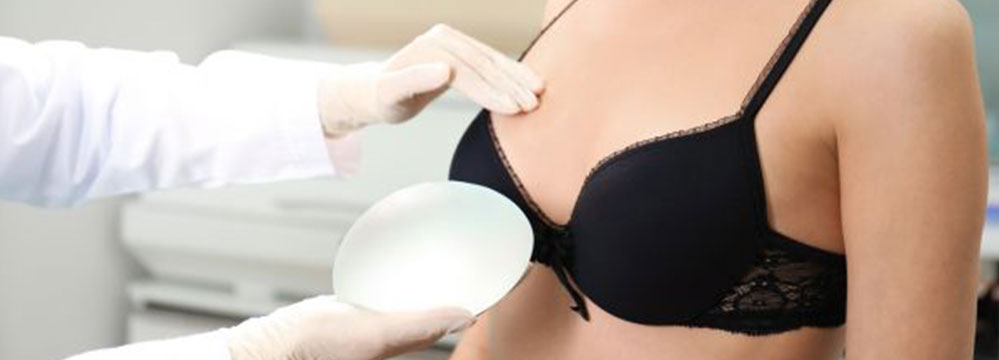
Why the Preoperative Simulation Never Perfectly Matches Reality
Simulations for breast augmentation and liposuction calculate a predictive model from front and side photographs. However, the human body is not a static sculpture — skin elasticity, subcutaneous fat thickness, fascial adhesions, and fat cell survival rate interact in layered ways as individual differences. In fat grafting breast augmentation especially, only 30–70% of the injected fat finally engrafts while the rest is absorbed, so the preoperative simulation must be read not as “how much will be injected” but as “the predicted final shape after engraftment.”
Skin Elasticity Changes the Prediction
In liposuction, there is a clear difference in dermal collagen recontraction between patients in their 20s and those in their 40s and beyond. Even when an image of a “perfectly flat abdomen” is shown, patients with reduced skin elasticity will not achieve the same shape. Your age group, skin firmness, and history of weight fluctuation must be evaluated together with your surgeon.
Fat Survival Rate Cannot Be Fixed Before Surgery
Even when a breast simulation displays “equivalent to a C cup,” the percentage of injected fat that will engraft cannot be determined preoperatively. Depending on the donor site, injection layer, and postoperative management, the final volume carries a range of roughly ±15–25%. For further reading, please also see the liposuction and breast augmentation column archive.
Tissue Healing Falls Outside the Predictive Model
Postoperative contracture (fibrosis), edema, and skin recontraction are dynamic processes that change over time. A preoperative simulation cannot express these processes in a static image and should be understood as “a predicted image of the settled state” only.
Three Perspectives for Correctly Reading a Preoperative Simulation
To use the simulation without treating it as absolute — but also without dismissing it entirely — these three viewpoints are helpful.
1. Look at “Balance Change,” Not “Size Numbers”
Numbers like “the bust will increase by X cm” carry a margin of error, but the direction of balance change — the position of the cleavage, the flow from decolletage to bust, the bust-to-waist ratio — is genuinely valuable to read from the simulation. Training your eye to focus on ratios rather than numbers makes expectations more realistic.
2. Add the “Imagined Motion,” Not Just the “Still Image”
Simulation images capture a static pose, but daily life adds motion — raising arms, lying down, turning over. How the result looks in motion is a domain that must be filled in by the surgeon’s anatomical knowledge and cannot be fully expressed by the simulation alone.
3. The More “Perfect” the CG, the More You Should Be Cautious
When a simulation is unnaturally perfect, it may be closer to a “marketing image” than to a realistic prediction. A medically honest simulation usually presents its limits at the same time. For standards and information on aesthetic surgery safety, please also refer to the guidelines of the Japan Society of Aesthetic Surgery (JSAS).
How to Close the Gap Between Simulation and Actual Result
Minimizing the gap between simulation and postoperative result requires effort from both the surgeon and the patient.
Surgeon Side: Anatomical Evaluation and Intraoperative Judgment
What Dr. Moriwaki emphasizes is that, before creating any preoperative simulation, subcutaneous fat thickness must be confirmed by palpation and the fat-fascia relationship mapped with ultrasound. Without this primary data, a simulation is merely a visual transformation image. Only when grounded in this data does the prediction become medically meaningful.
Patient Side: Reference Photos and Verbalized “No-Go” Lines
By showing multiple reference photos of the “desired shape” and clearly verbalizing the “absolutely-must-avoid” outcomes, the direction the simulation aims for becomes much clearer. Vague wishes produce large predictive errors.
Postoperative Care: Downtime That Fills the Prediction Gap
In fat grafting breast augmentation, postoperative nutrition, non-smoking, and compression method all shape the engraftment rate — and this is a major factor in the gap between simulation and reality. To maximize the result of surgery, the way you spend the 3–6 months after surgery is essential.
Frequently Asked Questions
Q. If my result is completely different from the preoperative simulation, can I have revision surgery?
If the gap between the prediction and the final result is judged to exceed the medically acceptable range, revision surgery may be an option. However, scar maturation requires at least 6 months to 1 year, and waiting through that period is medically safer. Rushing into re-operation, before adhesions and blood flow have matured, can make the outcome even more difficult to control.
Q. Which is more accurate, 3D simulation or 2D simulation?
3D excels at predicting three-dimensionality, but it does not reproduce skin elasticity or fat engraftment either. 3D is useful when you want to check the direction of how something will look three-dimensionally, but in absolute accuracy it remains, like 2D, a prediction. Please understand that technological novelty and medical accuracy are separate axes.
Q. My consultation did not include any simulation — is that a problem?
A clinic that does not present a simulation is not necessarily inferior. In fact, surgeons who carefully explain in words the “elements that a simulation cannot capture” tend to leave smaller postoperative gaps. Judge by the quality of the explanation, not by whether an image was shown.
Q. Is it useful to compare simulations across clinics when choosing?
The way simulations are presented varies greatly between clinics, so direct comparison is not meaningful. It is medically more meaningful to compare the depth of explanation and reasoning that lead up to that simulation.
Q. At what point during consultation should the simulation be shown?
Ideally, it should be presented not at the very beginning of the first consultation, but after medical evaluation — palpation of subcutaneous fat thickness, ultrasound imaging, and so on — is complete. A prediction image that is not grounded in data can only serve as a rough directional reference.
──────────────
【監修】森脇 進 / Shin Moriwaki(監修医師)
日本美容外科学会(JSAS)会員 / American Academy of Aesthetic Medicine 会員
ECFMG Certificate
──────────────
📍AVAN TOKYO 銀座脂肪吸引クリニック
AVAN TOKYO GINZA LIPOSUCTION CLINIC
English / 中文 / Tiếng Việt 対応可能
ご予約・ご相談は
DM / LINE / Website / Phone より承っております。