


Preoperative Ultrasound Before Liposuction: How AVAN TOKYO Enhances Safety and Achieves Natural Results2026.07.14
For Medical Education Purposes
This article is intended for medical education to help patients better understand the role of preoperative ultrasound (ultrasonography) in liposuction and fat grafting procedures. Treatment plans are individualized, and the most appropriate surgical approach is determined after a comprehensive consultation, physical examination, and imaging assessment.
Successful Liposuction Begins Before Surgery
Many people believe that the outcome of liposuction depends solely on the surgeon’s technical skill.
While surgical expertise is undeniably important, we believe that one of the most critical factors influencing both safety and aesthetic outcomes is thorough preoperative planning.
At AVAN TOKYO, we routinely perform preoperative ultrasound examinations for all patients undergoing liposuction or fat grafting procedures, including breast fat transfer.
Although ultrasound is often associated with detecting breast lumps or evaluating previous fat grafting, its value extends far beyond that.
Ultrasound allows us to visualize each patient’s unique anatomy before surgery, helping us develop a personalized surgical plan that prioritizes both safety and consistent aesthetic results.
What Is Preoperative Ultrasound?
Ultrasound is a non-invasive imaging technique that uses high-frequency sound waves to visualize structures beneath the skin in real time.
Unlike CT scans or X-rays, ultrasound involves no radiation exposure and is painless.
Before liposuction, ultrasound allows us to evaluate:
● Thickness of the subcutaneous fat layer
● Relationship between fat and underlying fascia
● Arteries and veins
● Major nerves
● Degree of fibrotic change within the fat
● Anatomical variations caused by previous surgery
In other words, ultrasound helps us create a personalized anatomical “map” before entering the operating room.
Why Does AVAN TOKYO Perform Ultrasound for Every Patient?
Liposuction removes fat through a small incision using a thin cannula.
To perform this safely and precisely, it is important to understand:
● Where fat is concentrated
● How much fat can safely be removed
● Which fat layers should be preserved for smooth body contours
● The location of important blood vessels and nerves
Even patients with the same BMI often have very different fat distribution and anatomy.
Previous surgeries such as cesarean sections, abdominal operations, or prior liposuction may also significantly alter normal anatomy.
Rather than relying only on textbook anatomy, we believe every surgical plan should be based on the patient’s own anatomy.
Five Important Things We Evaluate Before Liposuction
- Thickness of the Fat Layer
One of the most valuable pieces of information obtained by ultrasound is the precise thickness of the subcutaneous fat layer.
Although experienced surgeons can estimate fat thickness by physical examination, ultrasound provides objective measurements.
This information helps determine:
● Expected fat volume available for removal
● Body contour design
● Side-to-side differences
● Appropriate thickness of remaining fat
At AVAN TOKYO, liposuction is not simply about removing as much fat as possible.
Instead, we focus on creating smooth, natural body contours by carefully balancing fat removal and preservation. - Degree of Fat Fibrosis
Not all fat tissue is the same.
Previous surgery, aging, inflammation, or individual biology may lead to fibrosis, making fat denser and more difficult to remove.
Recognizing fibrosis before surgery allows us to modify:
● Cannula selection
● Surgical technique
● Suction strategy
● Estimated operative time
This individualized planning may help minimize tissue trauma while improving surgical efficiency. - Location of Major Nerves
Nerve injury is an uncommon but recognized complication of liposuction.
Although ultrasound cannot visualize every small nerve, it can help identify important anatomical landmarks and surrounding structures.
Understanding each patient’s anatomy allows us to plan safer treatment areas while minimizing unnecessary risk. - Arteries and Veins
Blood vessels vary significantly among individuals.
Identifying larger arteries and veins before surgery helps us better understand the anatomy of each treatment area and supports careful surgical planning.
While no imaging modality can eliminate all surgical risks, preoperative ultrasound provides valuable information that contributes to safer procedures. - Previous Surgical Changes
Ultrasound is also highly valuable for patients undergoing fat grafting or revision surgery.
It allows us to assess:
● Fat necrosis
● Oil cysts
● Calcifications
● Existing breast implants
● Scar tissue from previous operations
These findings help us determine appropriate injection planes and treatment strategies.
Why Ultrasound Matters in Different Treatment Areas
Chin and Neck Liposuction
Although the treatment area is relatively small, the neck contains important blood vessels, nerves, and structures related to the airway.
Ultrasound allows us to evaluate the anatomical relationship of major vessels before surgery, supporting careful operative planning.
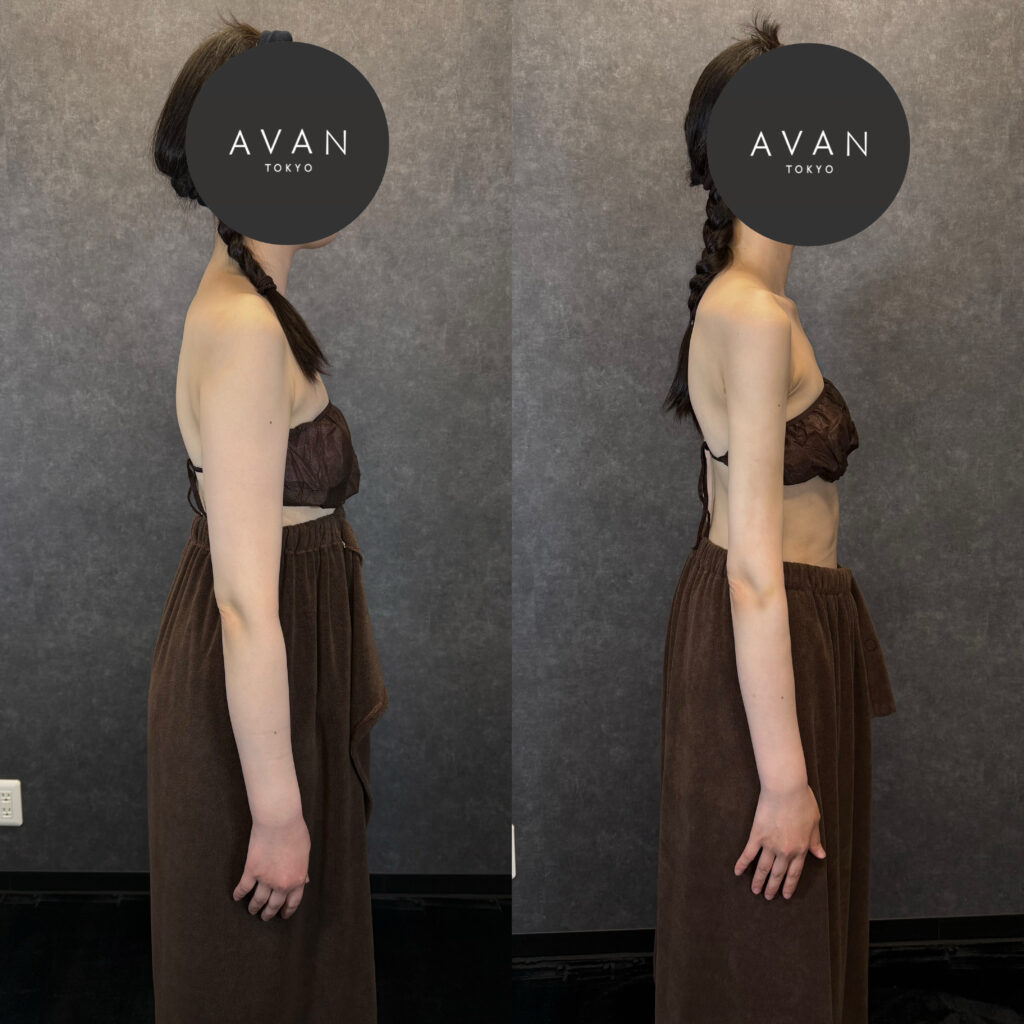
Arm Liposuction
Arm liposuction is one of AVAN TOKYO’s signature procedures.
Our approach extends beyond simply reducing arm circumference.
We carefully sculpt the transition from:
● Upper arm
● Axillary fat
● Accessory breast tissue
● Underarm
● Upper chest
Preoperative ultrasound helps us evaluate fat thickness and surrounding anatomy while paying close attention to important neurovascular structures.
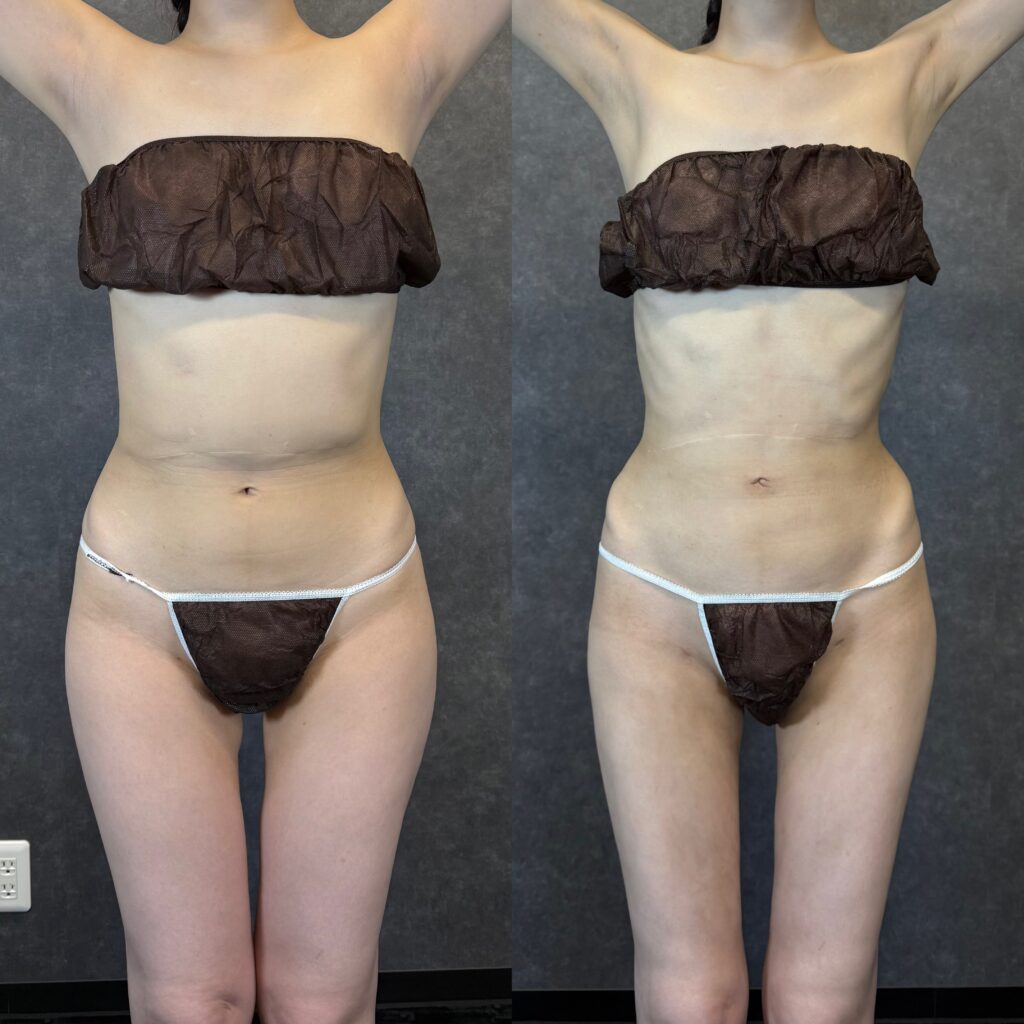
Abdominal Liposuction
For abdominal procedures, ultrasound helps evaluate:
● Possible abdominal wall hernias
● Blood vessels
● Changes caused by previous surgeries such as cesarean sections
Patients with prior abdominal operations often have altered anatomy, making individualized planning especially important.
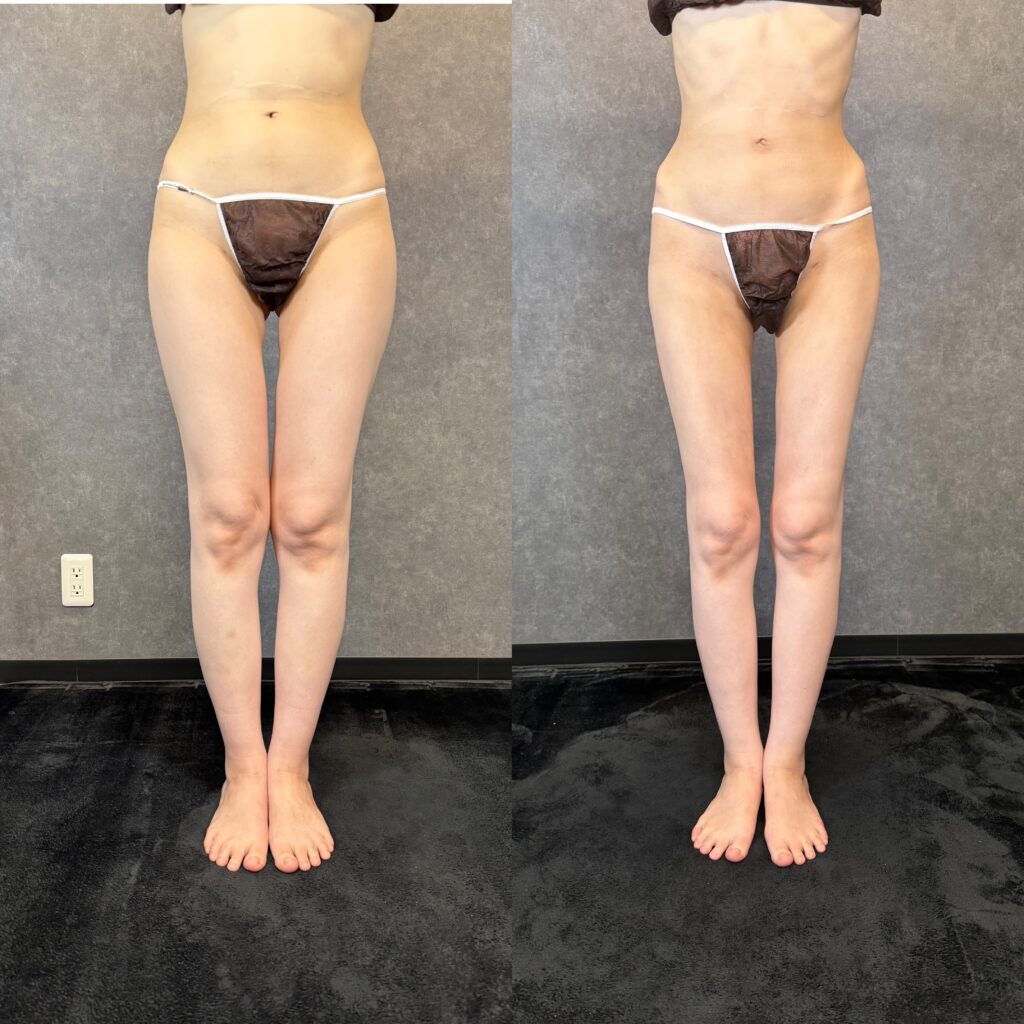
Thigh Liposuction
The thighs often contain large fat deposits but also present challenges related to body contour and symmetry.
Ultrasound assists in evaluating fat distribution and anatomical variations before surgery.
Calf Liposuction
The calves require particularly delicate surgical planning.
Major veins and nerves may run relatively close to the subcutaneous fat layer.
Rather than pursuing aggressive fat removal, we prioritize balanced, natural contours while respecting the functional anatomy of the lower leg.
Why Ultrasound Is Also Important for Fat Transfer Breast Augmentation
Preoperative ultrasound plays an important role in breast fat grafting as well.
Before surgery, we evaluate:
● Previous fat graft-related lumps
● Oil cysts
● Calcifications
● Existing implants
● Overall breast tissue condition
These findings help determine appropriate injection layers and treatment strategies for each patient.
Our Philosophy Toward Liposuction
Liposuction is not simply a weight-loss procedure.
It is a body contouring operation.
For this reason, we believe the most important question is not:
“How much fat can be removed?”
Instead, it is:
“Where should fat be preserved?”
Beautiful body contour depends on maintaining smooth transitions and natural proportions.
For example, arm liposuction should be planned together with the contour of the accessory breast, underarm, upper chest, and breast—not as isolated treatment areas.
Ultrasound provides valuable information that supports this individualized design process.
Ultrasound Is One Part of Comprehensive Safety
Although ultrasound is an extremely useful tool, it cannot prevent every complication.
Safe liposuction also depends on:
● Appropriate patient selection
● Thorough knowledge of anatomy
● Careful surgical technique
● Experienced anesthesia management
● Comprehensive postoperative care
At AVAN TOKYO, we believe every step of the treatment process contributes to patient safety.
The AVAN TOKYO Approach
For every patient undergoing liposuction or fat grafting—including procedures involving the face, chin, arms, forearms, back, abdomen, thighs, calves, and breast fat transfer—we routinely perform preoperative ultrasound evaluation.
We assess fat thickness, tissue quality, fibrosis, neurovascular anatomy, and previous surgical changes to create an individualized surgical plan.
Rather than simply making patients thinner, our goal is to create harmonious, natural body proportions while maintaining the highest possible level of safety.
Who May Benefit from This Approach?
This approach may be particularly beneficial for patients who:
● Are considering liposuction for the first time
● Prioritize surgical safety
● Desire natural-looking body contouring
● Are seeking revision liposuction
● Are planning fat grafting procedures
● Prefer comprehensive preoperative evaluation
Conclusion
Excellent liposuction results begin long before the first incision.
Understanding each patient’s unique anatomy through preoperative ultrasound allows us to plan surgery more precisely and tailor treatment to the individual.
At AVAN TOKYO, we believe personalized planning, meticulous surgical technique, and continuous attention to safety are essential components of achieving natural, long-lasting results.
If you are considering liposuction or fat grafting and would like a treatment plan based on detailed anatomical evaluation, we welcome you to schedule a consultation with our team.
Risks and Potential Complications
Potential risks include swelling, bruising, pain, temporary numbness or altered sensation, contour irregularities, asymmetry, skin laxity, infection, hematoma, seroma, fat necrosis, palpable nodules, deep vein thrombosis, fat embolism, and complications related to anesthesia. Preoperative ultrasound provides valuable information to assist surgical planning but cannot eliminate or guarantee the prevention of all complications. Final treatment decisions are made individually after comprehensive medical evaluation.