


Revision Hybrid Breast Augmentation: Ultrasound & Fat Grafting Design2026.10.05
Patients who have had breast augmentation in the past often return years later wanting to reshape their breasts again, whether due to body changes, implant aging, or an evolving aesthetic goal. The key to a second-time procedure is understanding what the previous surgery has left behind inside the breast and designing on top of that reality. In this article, drawing on a case of a woman in her 20s who received simultaneous full-arm, accessory breast, and flank liposuction together with a revision hybrid breast augmentation, our supervising surgeon explains the role of preoperative ultrasound and how we design the implant and fat grafting components.
Key Points of This Article
– In a revision hybrid breast augmentation for a patient with a prior augmentation history, preoperative ultrasound to assess the breast tissue, capsule, and any fluid collection is the starting point of safe planning.
– A silicone implant alone can show its edge in slim patients, so adding a layered fat graft creates a subcutaneous cushion that camouflages the implant border.
– Harvesting fat from the full arm circumference, accessory breast, and flank allows the breast reshaping and upper-body contouring to be completed in a single operation.
– Hybrid augmentation is not finished on the operating table; it settles into its final texture over roughly six months of fat resorption and capsule maturation.
– Outcomes vary between individuals; candidacy and risks should be weighed carefully in consultation.
Why Hybrid Is Often Chosen for Revision Cases
Breast augmentation can be done with an implant alone, fat grafting alone, or a hybrid combining both. In patients who have already had one augmentation, residual capsule, scar tissue, and subtle fibrosis may remain inside the breast, meaning any new surgery must be designed on top of those changes.
In slim patients especially, choosing an implant-only revision again can leave the implant edge palpable or create a visible step at the decolletage because of thin subcutaneous tissue. Adding fat grafting builds a cushion of the patient’s own tissue above the implant, softening its contour. This is the medical rationale for favoring a hybrid approach in revision planning.

Procedure Content, Fee, and Risks of This Case
The procedure performed was a hybrid breast augmentation: a Motiva Mini 235cc silicone implant was inserted via a transaxillary incision into the subglandular pocket, and fat harvested from the full arm circumference, accessory breast, and flank was centrifuged and injected into both breasts in subcutaneous and submuscular layers. Botulinum toxin was also used at the arm liposuction wounds to reduce tension around the scars.
The fee varies depending on the liposuction areas combined, the implant type, and the amount of fat injected. Please refer to our price page for details.
Known risks and side effects include swelling, bruising, asymmetry, infection, capsular contracture, fat necrosis, oil cysts, implant malposition, rippling, and temporary changes in nipple sensation. In revision cases, downtime can be longer than usual depending on the condition of prior scarring and capsule. Results vary between individuals, and the photos in this article represent one example.
What Preoperative Ultrasound Checks
For a revision candidate with a prior augmentation history, we take a detailed history of the previous procedure (years elapsed, implant used, any symptoms) at the consultation and then perform an ultrasound examination. The probe is simply placed on the skin, with no radiation exposure, and allows us to quickly check:
– Breast lumps, cysts, or microcalcifications
– Capsule thickness and any fluid collection (seroma)
– Position, shape, or suspected rupture of a remaining implant
– Thickness and fat distribution in the subglandular, submuscular, and subcutaneous layers
These findings directly inform the plan: which plane to place the next implant in, and where to deliver the fat. In this case the ultrasound was unremarkable, allowing the hybrid plan to proceed as scheduled.

How We Choose the Implant in Revision Hybrid Cases
For a slim patient, implant size, shape, surface, and placement plane must all be considered together. In this case we selected the Motiva Mini 235cc. Its soft shell helps the contour remain gentle even in smaller sizes.
The incision was placed in the axilla, where the scar hides within the natural fold of the armpit. Placement was subglandular. Subglandular pockets tend to look more natural in slim patients than submuscular placement, but the trade-off is that the implant edge is more visible when subcutaneous tissue is thin. Simultaneous fat grafting is what compensates for that weakness.
Where We Harvest Fat and Where We Place It
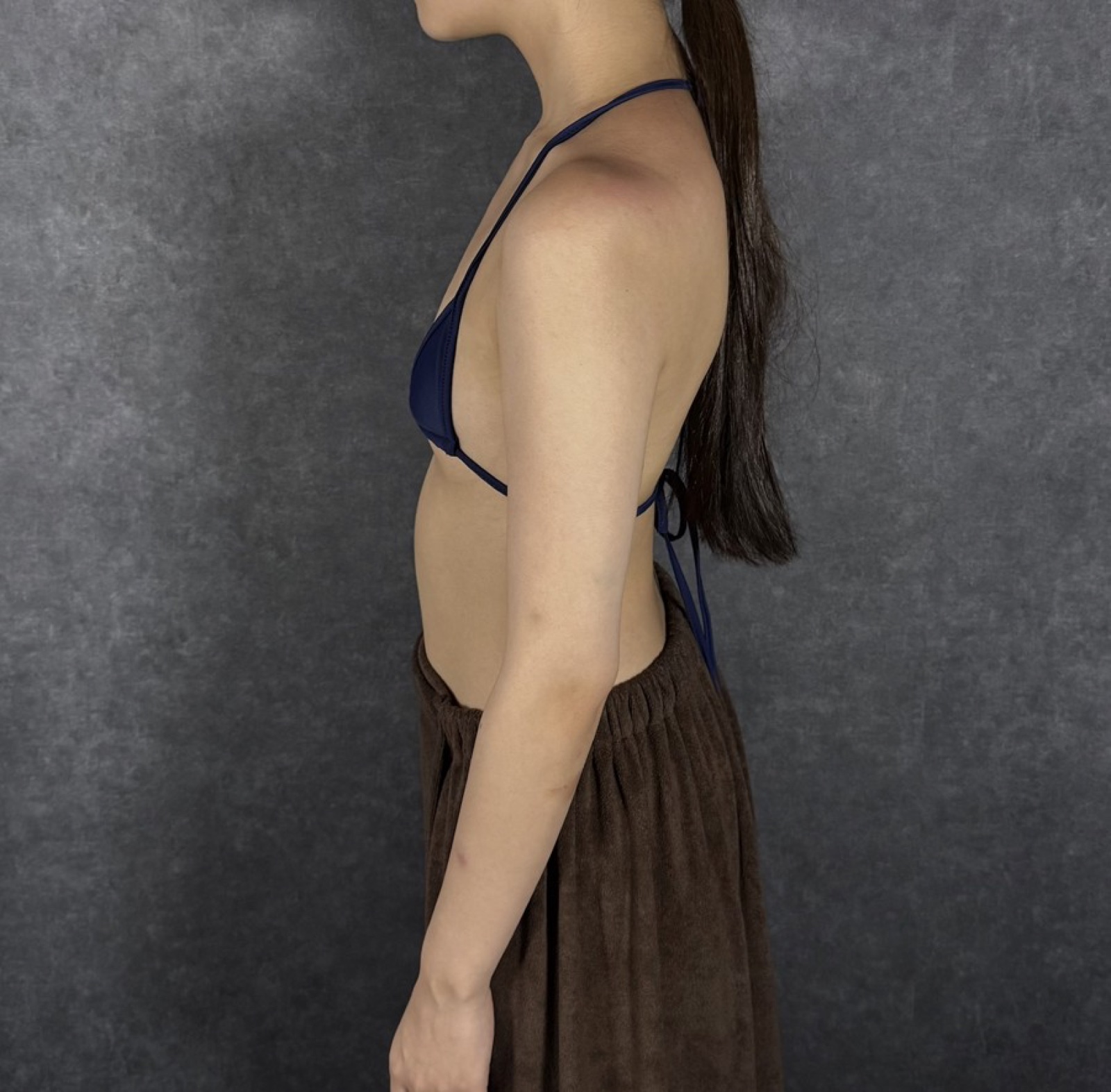
The donor sites in this case were the full arm circumference (back, shoulder, front), the accessory breast, and the flank. Combining these three sites brings two advantages. First, the fat harvested goes directly into the breasts, letting us reshape the upper body in the same operation. Second, reducing the accessory breast and flank smooths the contour around the axillary incision and allows a continuous line with the lateral border of the implant.
The harvested fat is centrifuged to remove fluid and blood components, leaving only tissue with better graft potential. In this case, 100 ml was injected into the right breast (80 ml subcutaneous, 20 ml submuscular) and 110 ml into the left (90 ml subcutaneous, 20 ml submuscular). Natural breasts almost always have some asymmetry, so volumes are matched to both donor availability and implant shape to maximize final symmetry.
Why Layered Injection Determines How Natural the Result Looks
Depth matters. Fat placed in the subcutaneous layer builds forward thickness from the decolletage to the cleavage, hiding the implant edge. Fat placed in the submuscular (sub-pectoralis) space supports the overall base of the breast.
In revision cases, there is also the decision to avoid forcing fat into a scarred plane and to prioritize layers with preserved vascularity. Pushing bulk indiscriminately raises the risk of fat necrosis, oil cysts, and asymmetry, so each pass delivers a small volume at a time.

Six-Month Follow-Up and Hybrid-Specific Remodeling
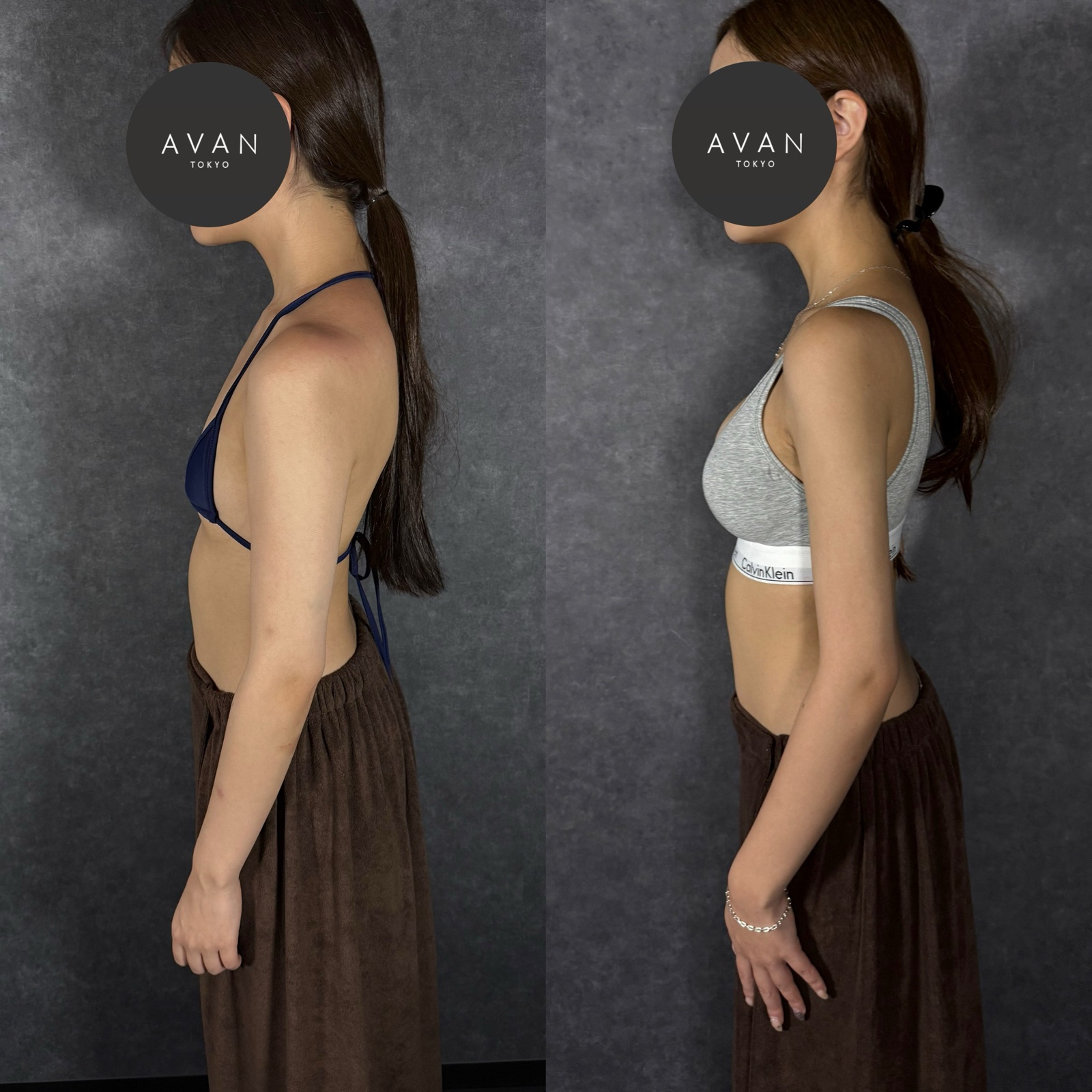
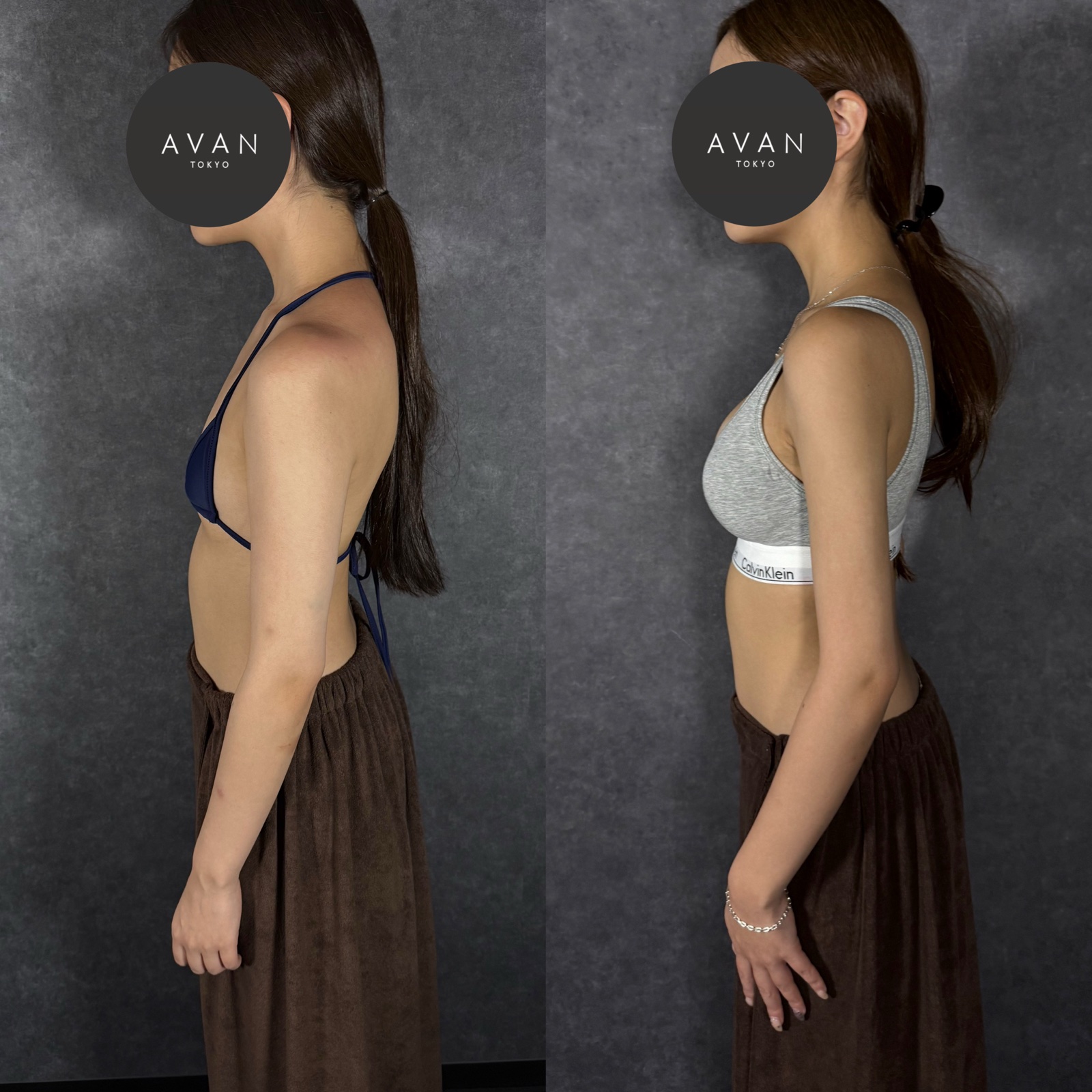
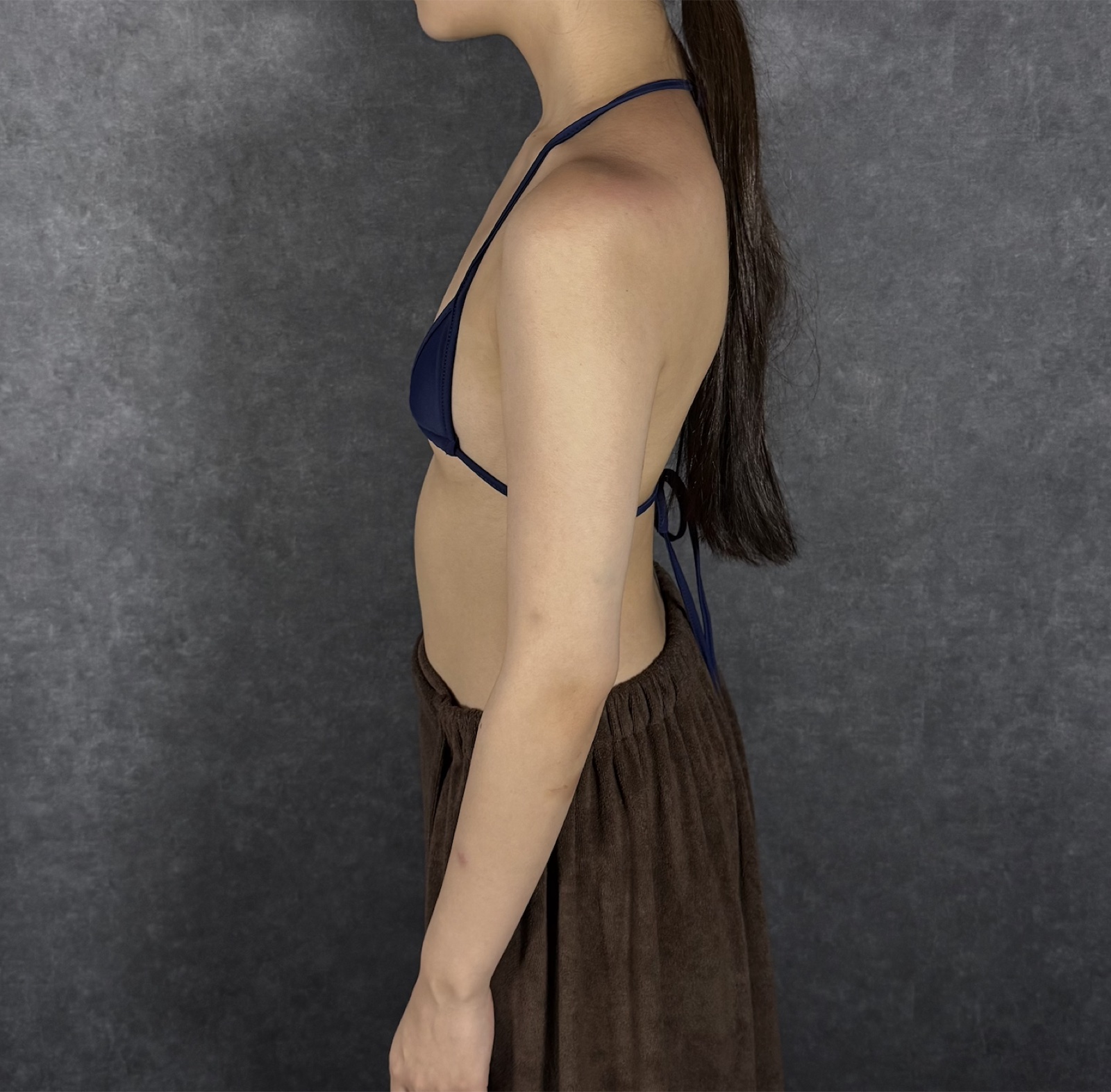
The 6-month postoperative photo in this case shows natural forward projection from the decolletage down to the lower pole, with a rounder lateral breast line. Compared to the immediate postoperative state, part of the fat has been resorbed and the breast overall has settled into a more integrated texture.
Hybrid breast augmentation generally follows this course: swelling and bruising peak in the first one to two weeks, tissue feels firm and tight for one to three months, and from three to six months the capsule matures and fat resorption stabilizes, bringing the appearance and feel close to the final result at around the six-month mark. These timelines vary between patients.
The Arm and Underarm Result
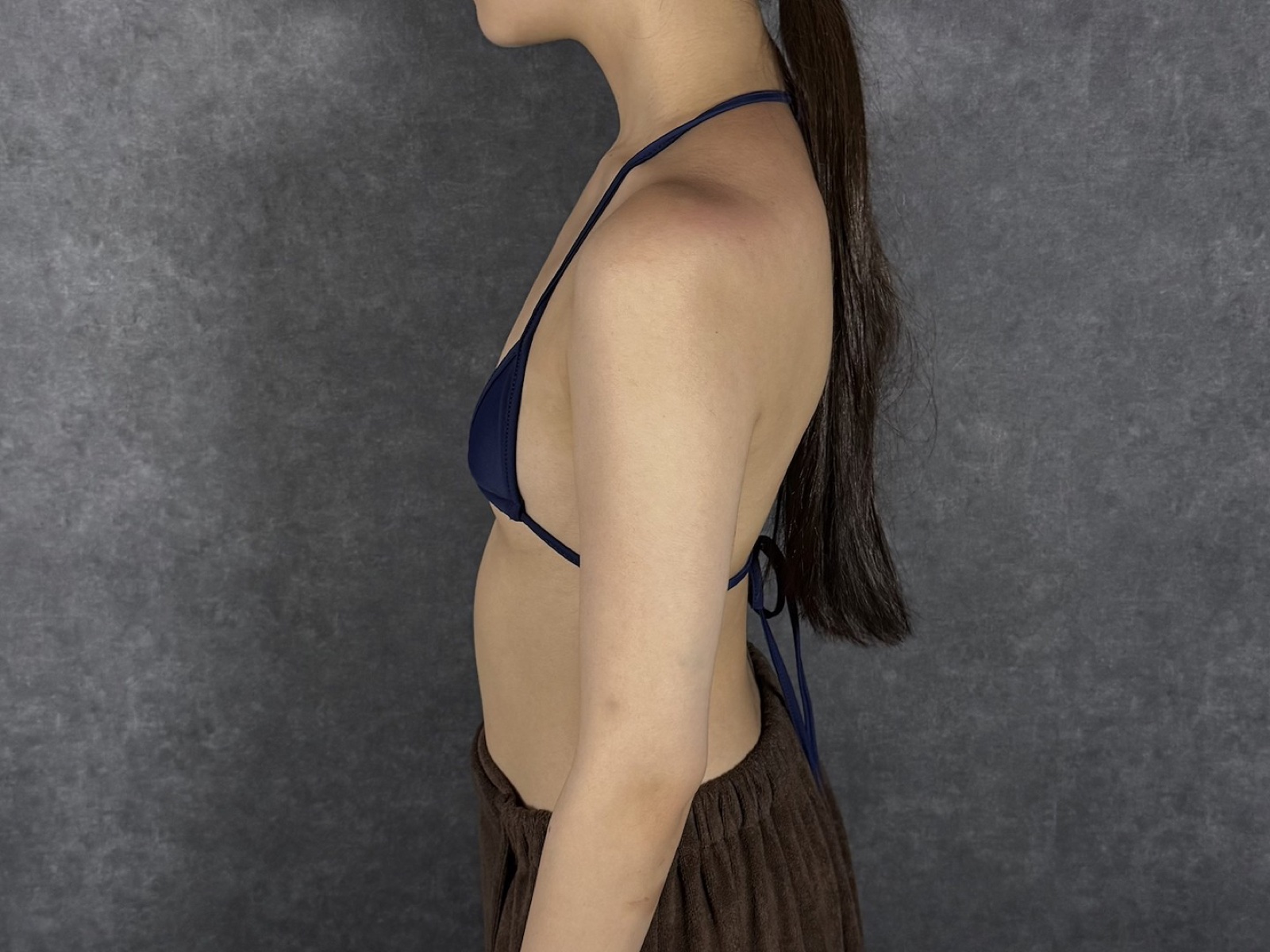
The arm, accessory breast, and flank are both the donor sites and part of the silhouette we want to improve. In this case the sag on the back of the upper arm diminished and the vertical line from shoulder to elbow became cleaner. Reducing the accessory breast and flank also softened the step that often shows outside the bra line, changing the silhouette seen through a T-shirt or thin top.
The outcome at the donor sites is never dictated by harvest volume alone. Skin retraction, the course of fibrosis, and how well the compression garment is worn all shape the final appearance.
Considering Revision Hybrid Breast Augmentation
A revision hybrid breast augmentation is not simply about making the breast larger again; it is about redesigning the breast on top of what the previous surgery left behind, in line with the patient’s current body and goals. At consultation we therefore review together:
– The prior procedure, timing, implant used, and any symptoms
– The current state of the breast and parenchyma on ultrasound
– Available donor fat volume and preferred donor sites
– Options for implant size, placement plane, and incision site
– How the downtime fits with the patient’s lifestyle
Safety standards and academic guidance in aesthetic surgery are summarized by the Japan Society of Aesthetic Surgery (JSAS). Related articles are collected on our liposuction and breast augmentation column index.

Frequently Asked Questions
Q. Can I have the implant from another clinic removed and then undergo revision hybrid breast augmentation?
Yes. After removing the existing implant, we assess the capsule and scar tissue and then decide whether to proceed with hybrid augmentation on the same day or in a staged manner. When there is capsular contracture or a history of infection, staging the procedures is often safer than combining them.
Q. Is ultrasound mandatory if I have a prior augmentation history?
In practice, we treat it as mandatory. Designing the next procedure without knowing about breast lumps, fluid collection, or capsule thickness can lead to the wrong choice of injection plane or missed complications.
Q. Can slim patients still have enough fat?
Combining the arms, accessory breast, and flank often provides around 80 to 110 ml of injectable fat per breast. Total volume and quality are confirmed with the pinch test and ultrasound, and if the volume is insufficient we rebalance toward a larger implant.
Q. How long does the texture of the breast take to settle?
It varies, but tightness tends to ease after three months, and both texture and shape generally settle around six months. Changes in nipple sensation and skin discomfort usually fade over the same time frame.
Q. Will the transaxillary scar be visible?
Because the incision follows a natural fold in the armpit, the scar typically becomes inconspicuous as it matures. In this case we also used botulinum toxin to reduce tension at the scar, and we continue scar care postoperatively.
──────────────
Supervising Physician: Shin Moriwaki, M.D.
Member, Japan Society of Aesthetic Surgery (JSAS) / Member, American Academy of Aesthetic Medicine
ECFMG Certificate
──────────────
📍AVAN TOKYO Ginza Liposuction Clinic
AVAN TOKYO GINZA LIPOSUCTION CLINIC
English / 中文 / Tiếng Việt available
Reservations and consultations are accepted via DM / LINE / Website / Phone.