


Lower Body Continuous Liposuction: Seamless Design from Abdomen to Calves2026.10.03
Even after losing weight, many patients tell us their lower body line is the one thing that will not change. This article follows a woman in her late twenties who had her abdomen, waist, buttocks, full-circumference thighs, knees and calves treated in a single operation. In large-range surgery, how one zone blends into the next matters even more than how each zone looks on its own. Here we outline the design principles of lower body continuous liposuction and how we avoid step edges through layer selection, cannula choice and post-operative compression, written from the operating surgeon’s point of view.
Key points of this article
・In lower body continuous liposuction, the finish is decided by how borders are blended, not by how much is removed in each zone.
・The abdomen and waist are worked mostly in the deep layer, while thighs, knees and calves are shaped in the superficial layer.
・Because calf skin is thin, over-aspirating the shallow plane leaves irregularities that persist beyond the contracture phase.
・In large-volume surgery, aspirated volume, operating time and compression management jointly determine both safety and finish.
・Recovery and final results vary by patient; the indication and extent are decided at consultation.
Why step edges appear in continuous lower-body work
When several zones are treated on different days, the most common complication is a visible step at the border between treated and untreated areas. Abdomen alone, thigh alone, calf alone—done piece by piece, the subcutaneous fat tends to differ in thickness exactly where the two zones meet.
Human subcutaneous fat is continuous along the skeleton and the fascia. Abdominal fat flows into waist fat, which flows into upper buttock, into the thigh root, into the knee and down into the calf. Ignoring that continuity and treating each zone in isolation turns the planned border into a surface step.
In lower body continuous liposuction we design in “lines” rather than parts. Markings are done standing, so gravity-driven fat distribution and skin laxity are visible, and the aspirated volume is gradually tapered towards each border rather than cut off abruptly.
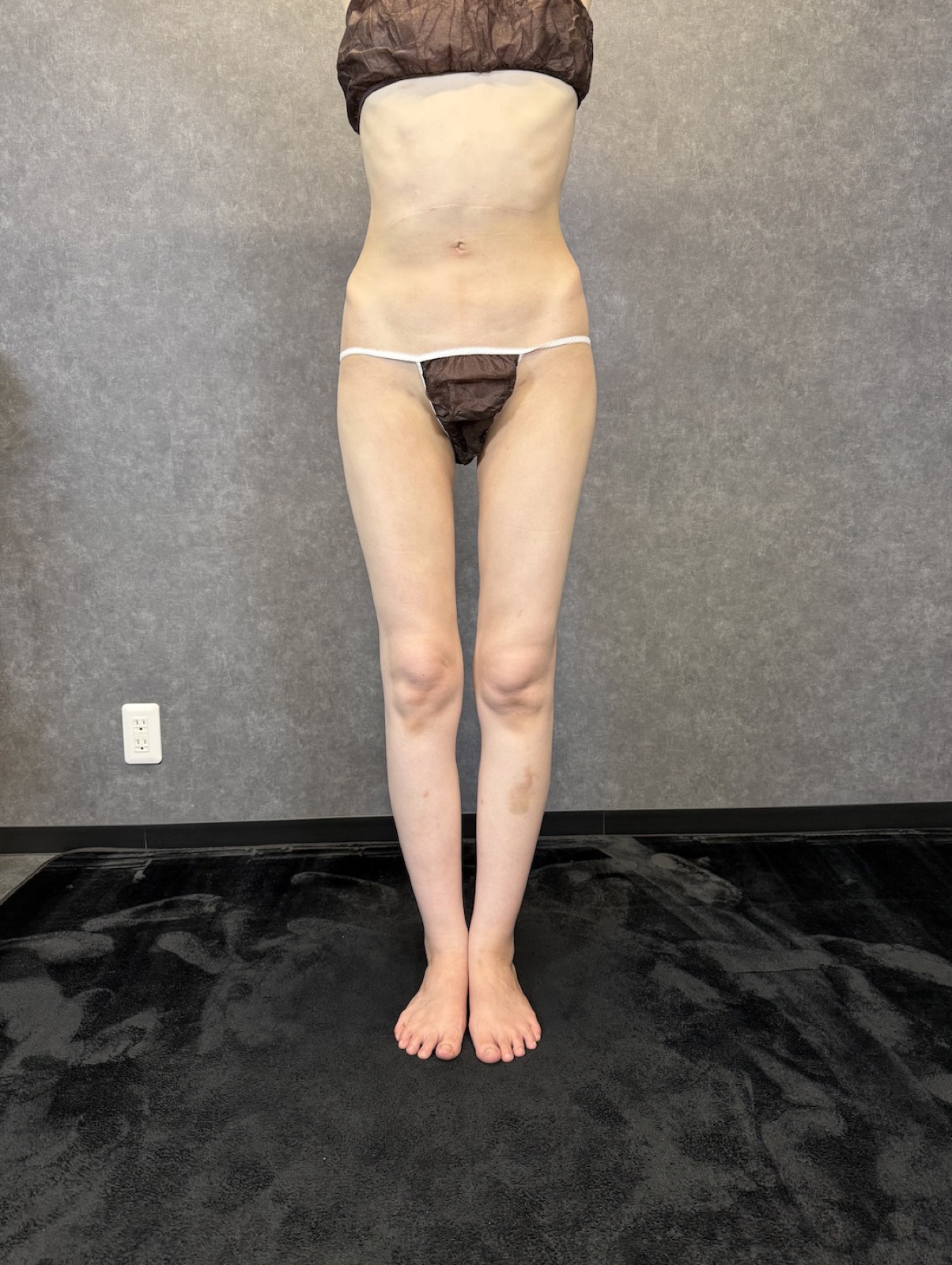
Line design across abdomen, waist and lower buttocks
The abdomen is conceptually divided into upper, lower and flank zones, but in practice it is treated as a single continuous sheet. Over-aspirating only the upper abdomen leaves a step at the epigastrium, and over-aspirating only the flank creates an unnatural depression on the back.
Fat on the waist sits deeper than on the abdomen and often contains a fibrous component. Softening the fat first lets us reach the deep layer without damaging the superficial skin. Treating the waist correctly produces both a visible frontal waistline and a sweeping back curve at the same time.
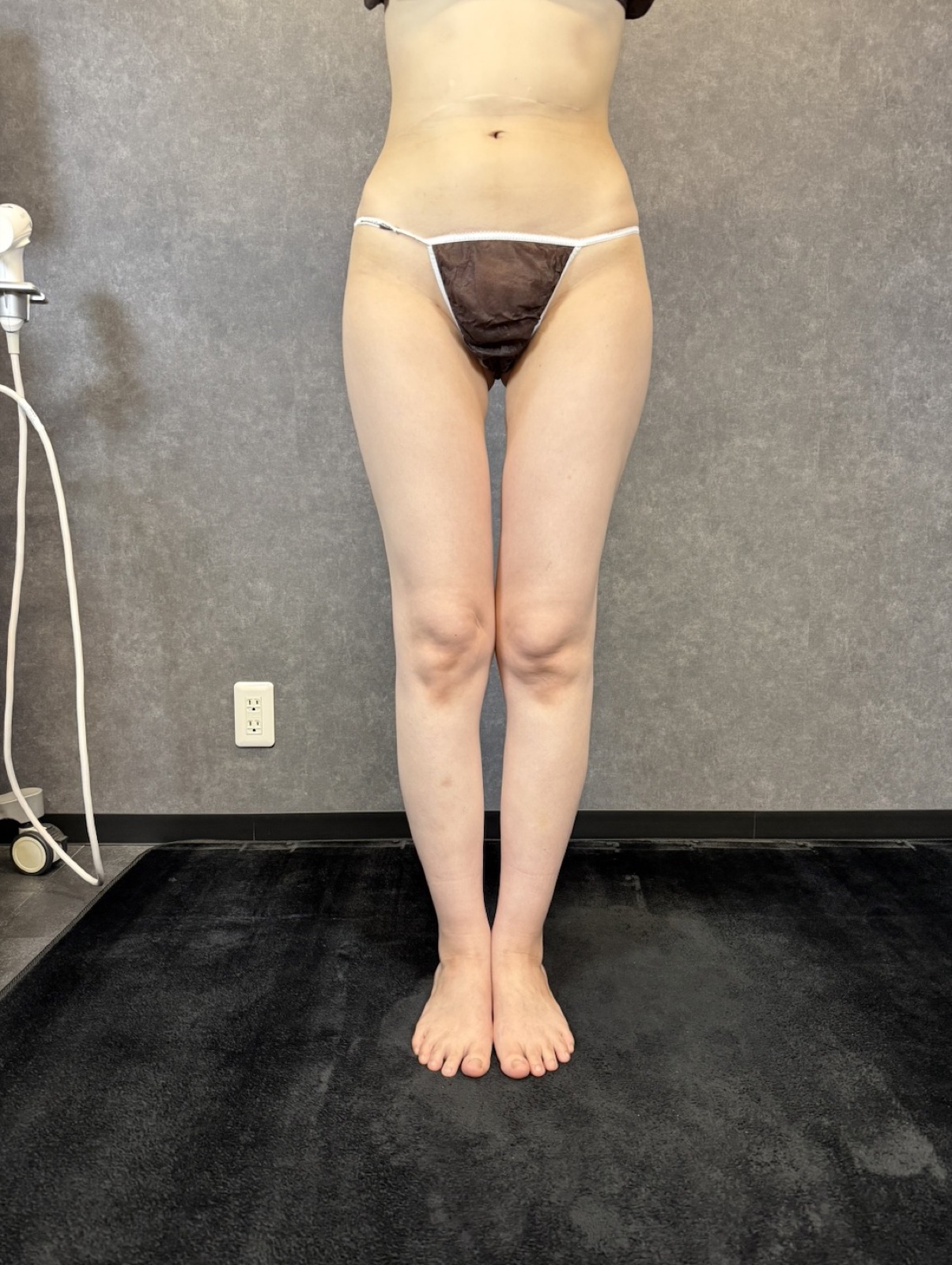
The lower-buttock crease is pivotal in how the thigh-to-hip border reads. If this area stays full, no amount of thigh aspiration will prevent a horizontal line below the buttock, and the legs look shorter. We preserve buttock volume itself and thin only the transition zone into the thigh. Adding the inframammary and waist zones lets the entire posterior read as a single long vertical flow.
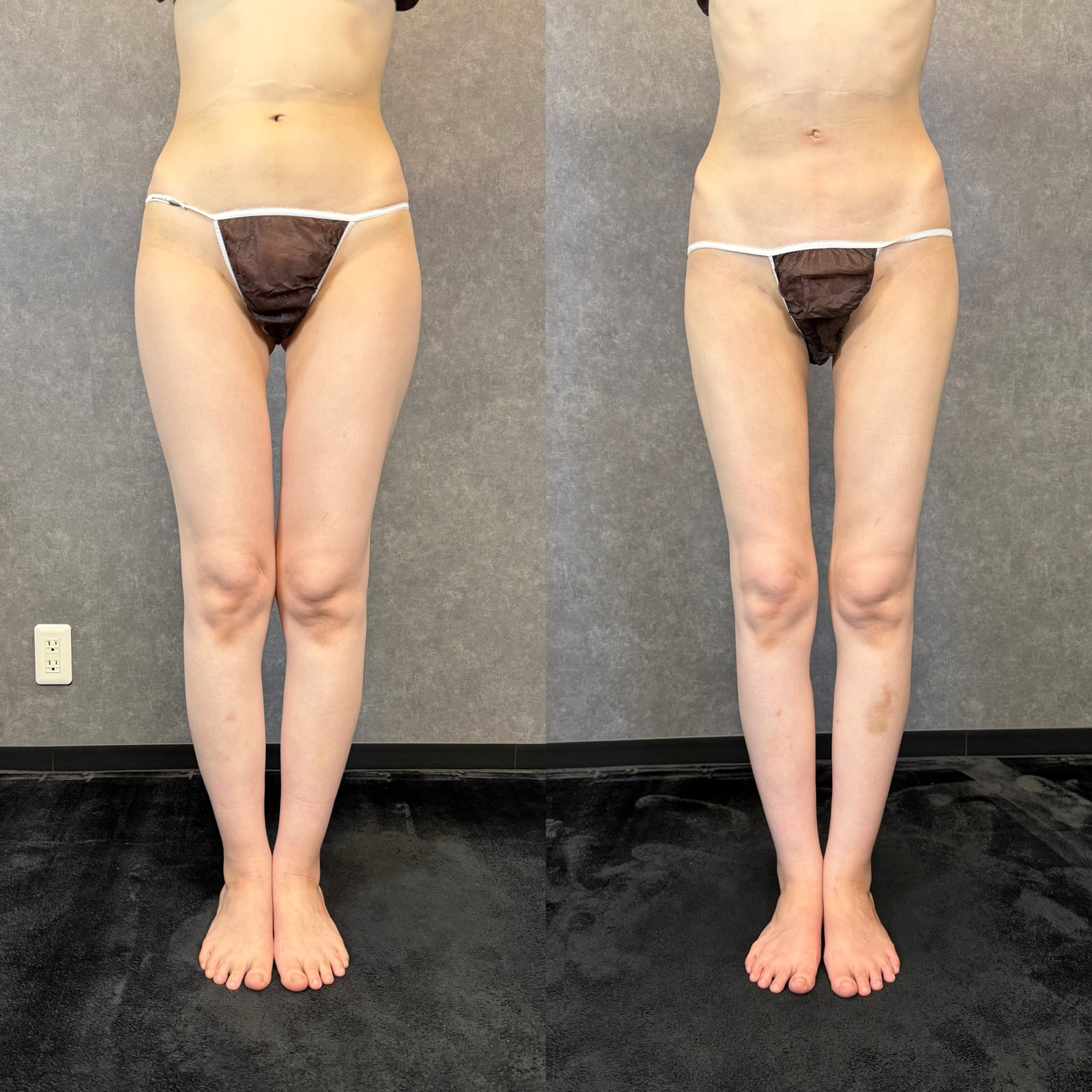
Treating thighs, knees and calves as one vertical line
The thigh has four very different faces: inner (soft), outer (firmer), front (fascia close to skin) and back (prone to cellulite). Using a single setting around the full circumference inevitably leads to over-aspiration or under-aspiration somewhere, so layer and volume must be adjusted face by face.
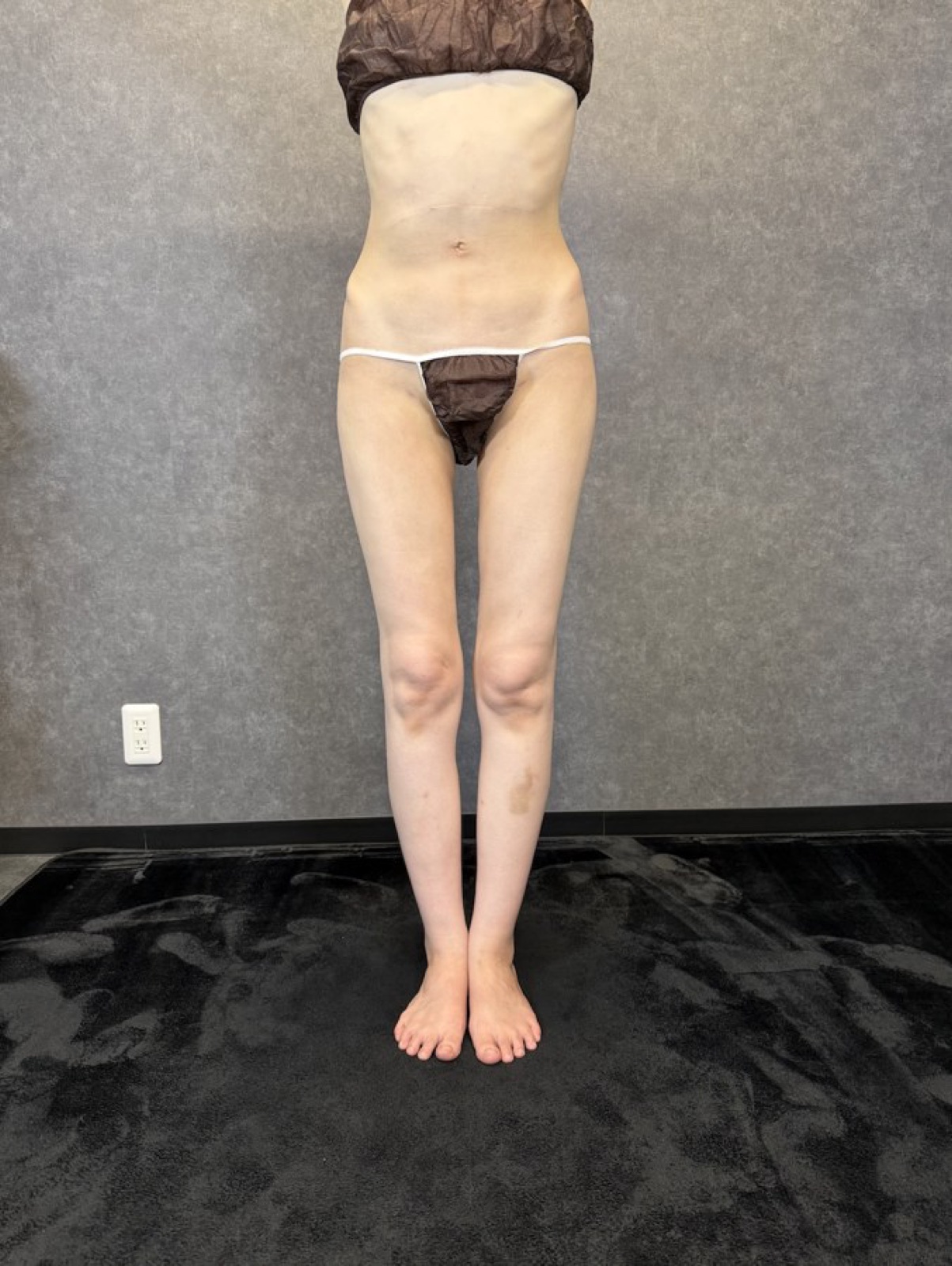
The knee is the “joint fat” that bridges thigh and calf. There is not a large volume of fat here, but if the inner suprapatellar fullness is left in place while only the thigh is slimmed, a step appears at the thigh-knee border and the leg looks shorter. Anterior and medial thigh aspiration must be planned together with medial knee aspiration.
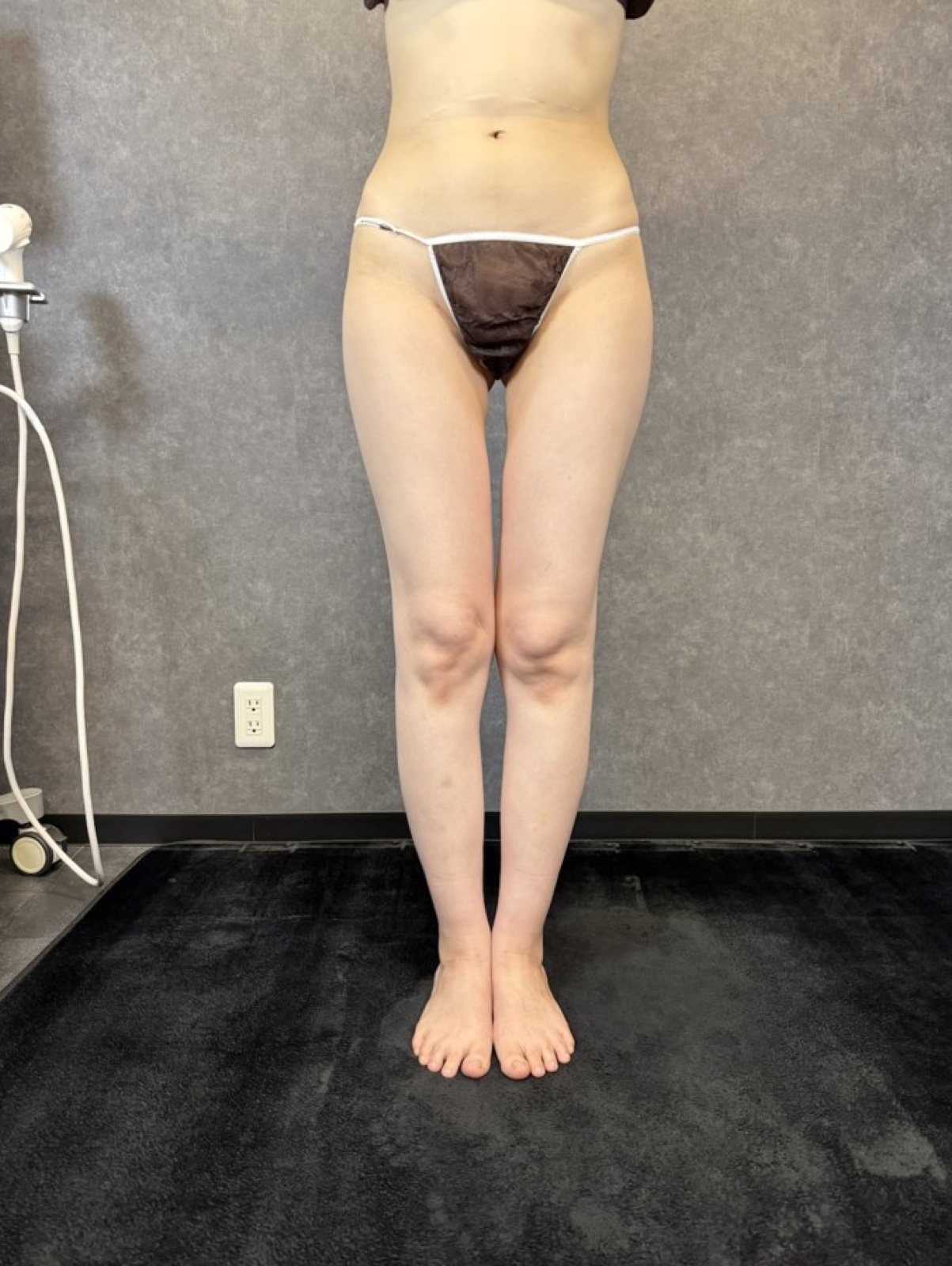
Calves demand the most cautious design in lower body continuous liposuction. The skin is thin, with the gastrocnemius and soleus muscles sitting just below the fat, so a cannula pushed too deep risks fascial injury while one placed too shallow leaves surface irregularities.
Keeping the calf’s superficial layer intact
Calf subcutaneous fat is only a few millimetres thick in many patients. A fine cannula is passed in a feathering motion along the shallow plane. Chasing a thinner result by shaving the superficial layer tends to leave visible irregularities and skin tethering that outlast the contracture phase.
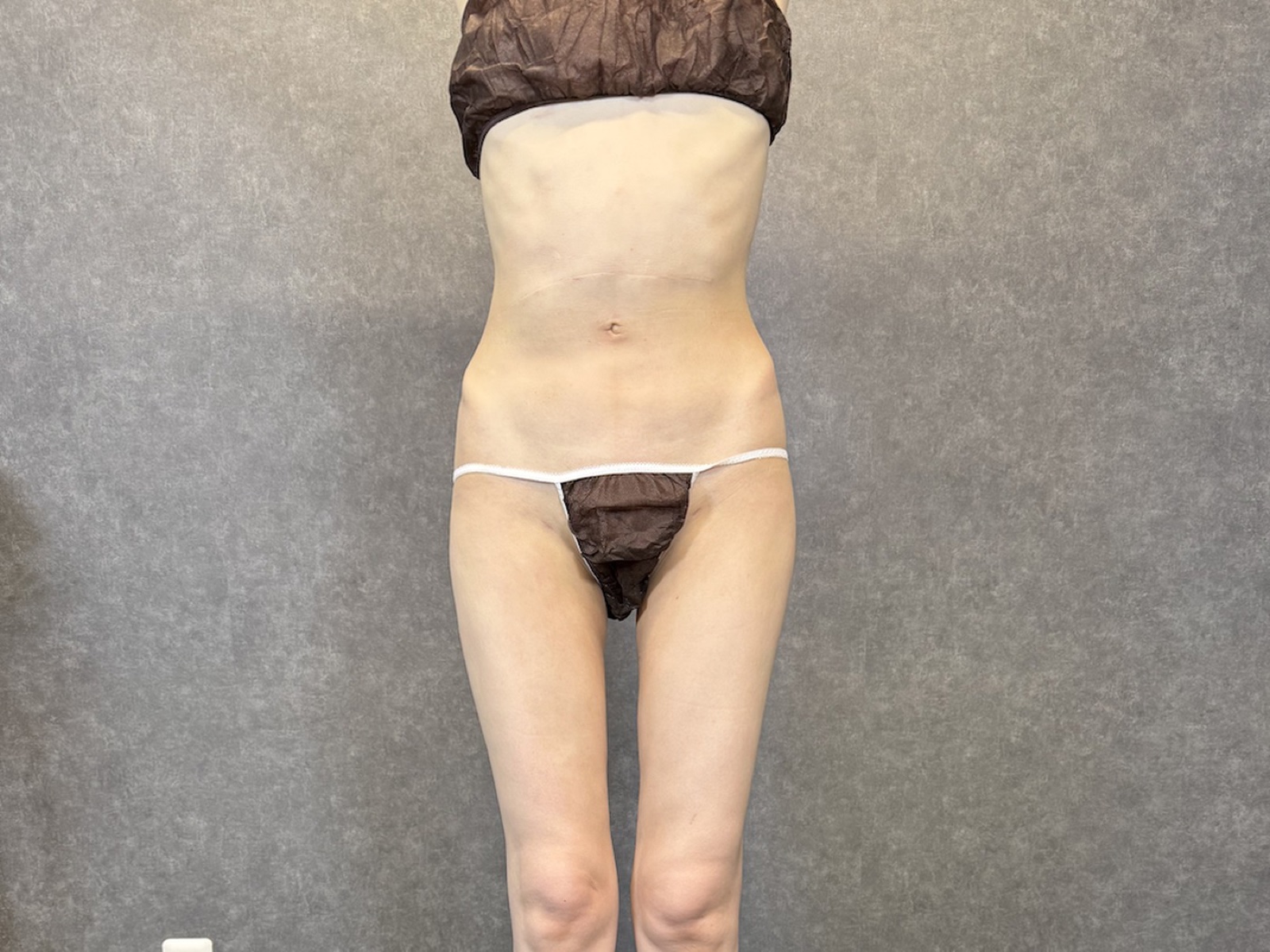
From the medial malleolus up to just below the knee is treated as a single continuous line, with no abrupt narrowing anywhere along the way, which is what makes the whole leg read as vertically longer. In this case we processed only the shallow plane with a fine cannula and tempered the fullest part of the calf. Because muscle cannot be reduced, the realistic end point is “reducing fat until the shape of the muscle begins to show.”
Compression and downtime in large-volume surgery
Lower body continuous liposuction inevitably means a larger aspirated volume and a longer operation. In this case the total aspirated volume was 4,700 ml and the operating time was about 5 hours 30 minutes. Anaesthetic management, fluid balance and post-operative compression matter just as much as the surgery itself.
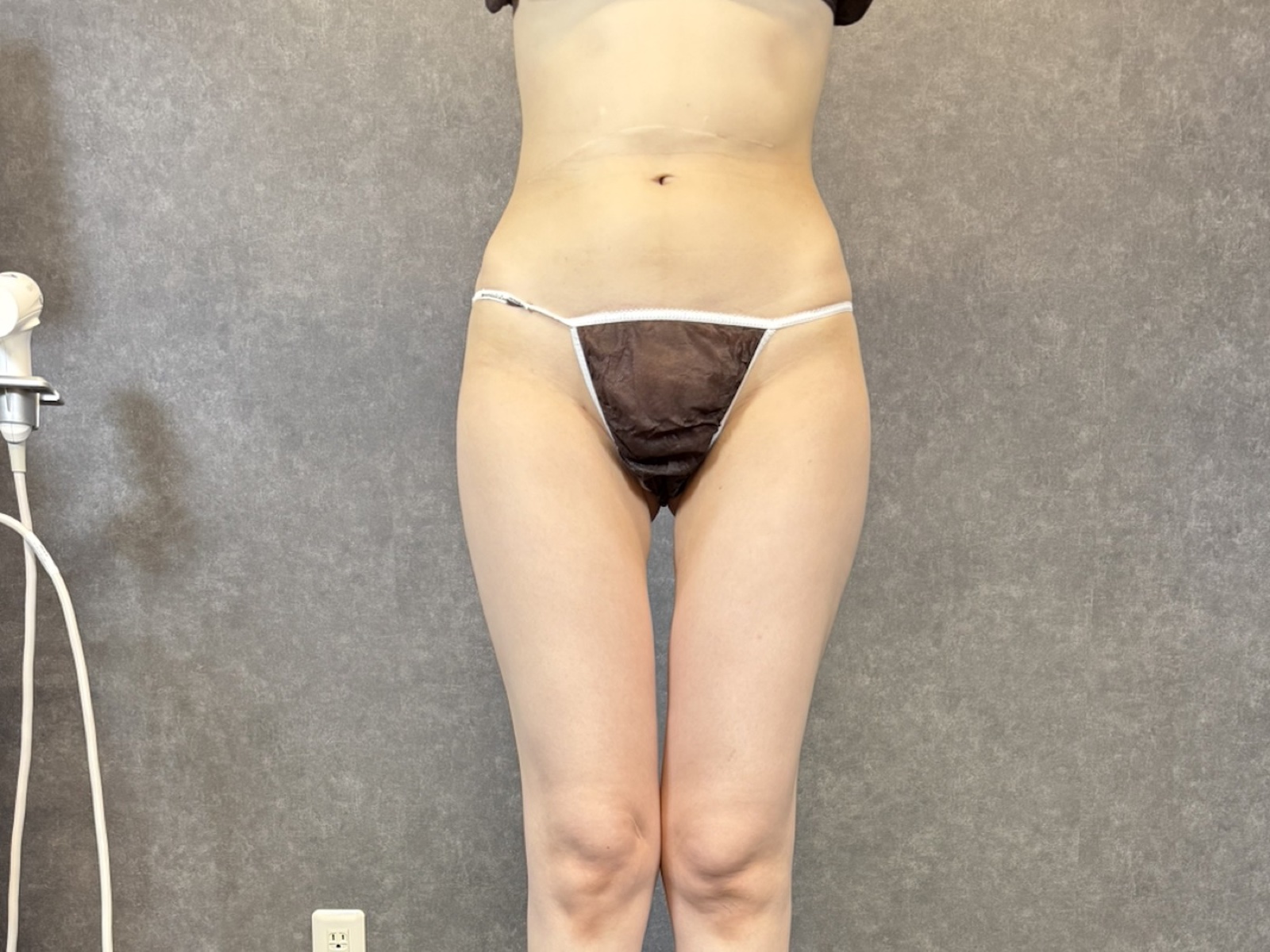
Compression garments are selected by zone: abdominal binder for the abdomen and waist, bodysuit and girdle for the full thighs, knees and calves. Compression closes the dead space left by the aspiration, limits oedema and reduces haematoma. For general principles of safety in cosmetic surgery, see the Japan Society of Aesthetic Surgery (JSAS).
Indications, limits and risks
Treating everything in one session has advantages—one single downtime, easier line matching between zones—but also places a heavier load on the whole body. Patients with a very high BMI or significant comorbidities are usually safer with a staged plan rather than a single long operation.
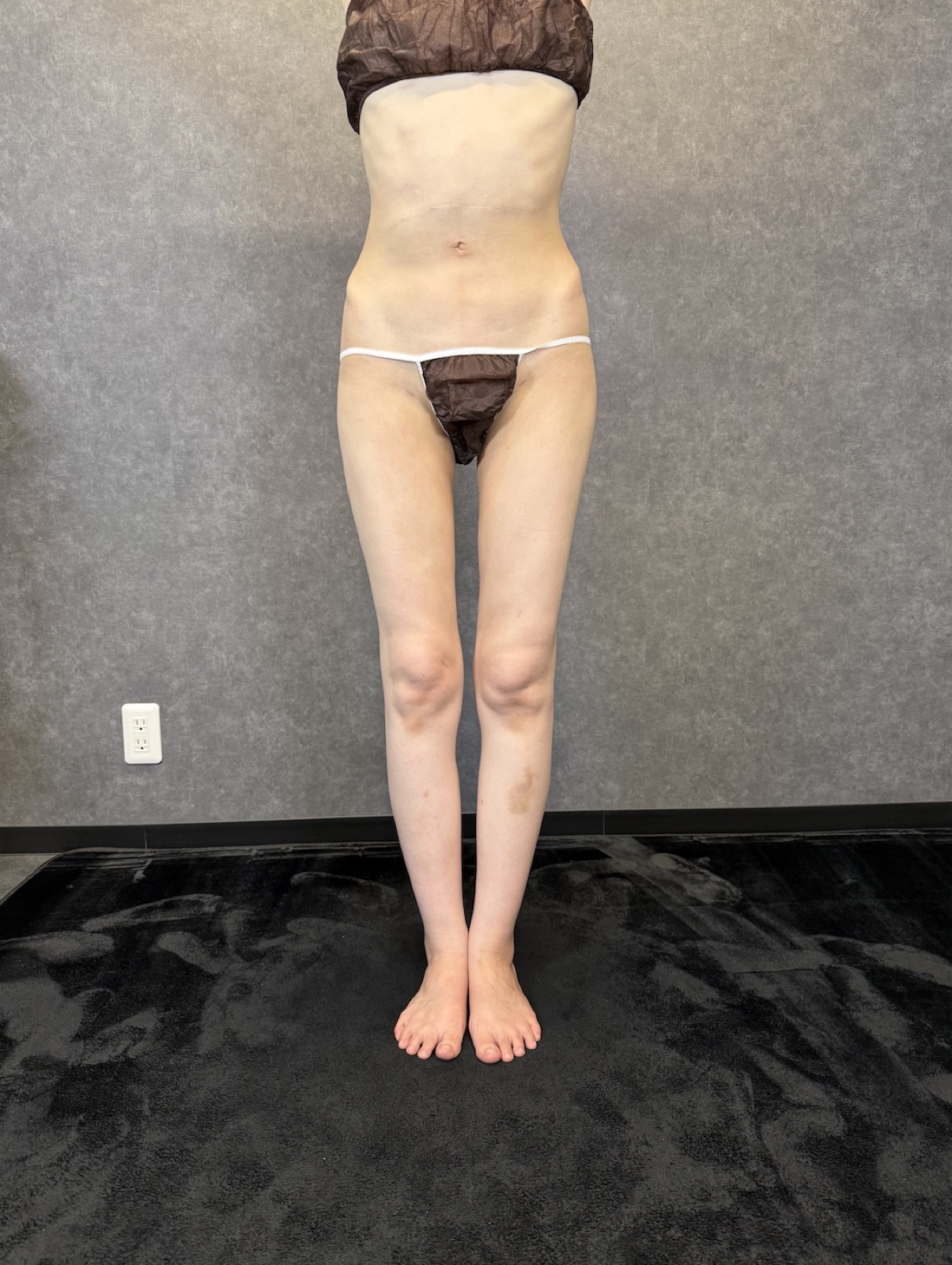
Possible risks include bruising, swelling, contracture, asymmetry, infection, seroma, transient numbness, skin tethering, surface irregularity and scarring. Large-volume cases additionally require attention to dehydration, anaemia and deep-vein thrombosis. We mitigate these with pre-operative blood tests and intra- and post-operative monitoring, but the risks cannot be reduced to zero.
Treatment, cost and risks of this case
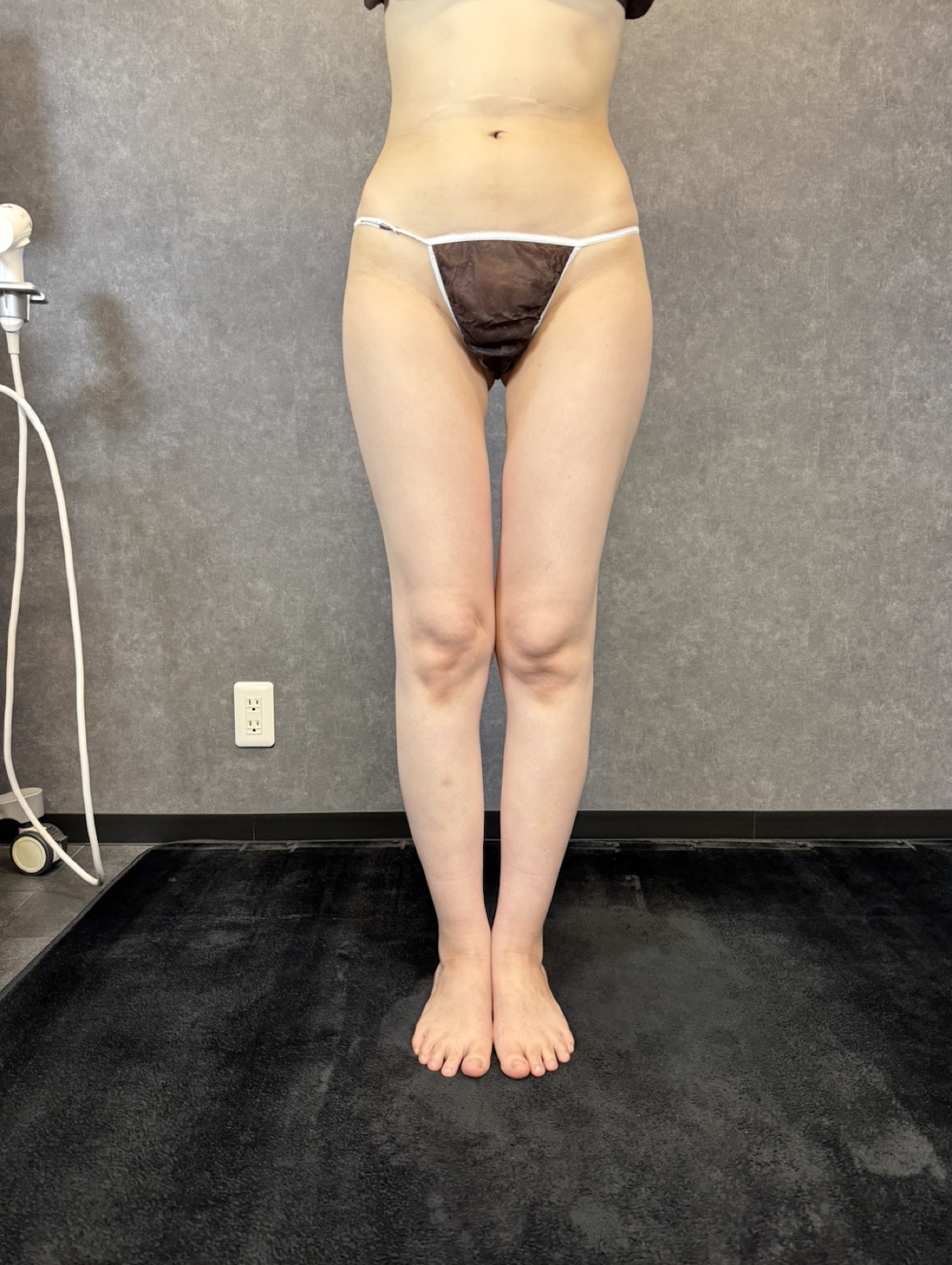
■ Procedures: Liposuction of the full abdomen (upper, lower, flanks), waist, inframammary area, buttocks, full-circumference thighs, knees and calves, performed in one session under general anaesthesia. We also treated the full-circumference upper arms, forearms, accessory breast tissue, axilla and areas above and below the scapula, together with cheek and submental liposuction, buccal fat removal, thread lift, bi-needle, and fat injection to the nasolabial folds and cheeks. Total aspirated volume was 4,700 ml. Photographs are taken 6 months postoperatively.
■ Cost: Please refer to the price page. Final quotes are confirmed at consultation.
■ Main risks and side effects: bruising, swelling, contracture (firmness), asymmetry, infection, seroma, transient numbness, scarring, skin tethering, surface irregularity, dehydration, deep-vein thrombosis.
■ Results vary between patients, and the photographs show one case. Whether to perform everything in one session or in stages is decided at consultation.
More articles are available in our liposuction column index.
Frequently Asked Questions
Q. How long is the downtime for lower body continuous liposuction?
Swelling tends to peak within 3 days to 1 week, and bruising usually resolves within 2 to 3 weeks. Firmness from the contracture phase lasts 1 to 3 months, and the final shape typically settles between 3 and 6 months after surgery. Recovery varies between patients.
Q. Is it better to do everything in one session or split it into several?
A single session makes it easier to align the lines between zones, but it also concentrates the downtime. The decision depends on your medical history, BMI, aesthetic goals and how many days you can rest, and is made at consultation.
Q. Do calves always need to be included?
If only the thighs are slimmed and the lower legs are left untouched, calves can look relatively bulky by comparison. To preserve a long vertical leg line, we may recommend including the knee-to-calf area.
Q. How long do I wear the compression garments?
Depending on the area, we taper usage over 1 to 3 months. Compression closes the dead space, reduces swelling and influences how smooth the final skin surface becomes, which is why consistent wear matters.
Q. How much weight will I lose?
Liposuction is a body-contouring procedure, not a weight-loss procedure. Most patients see a bigger change in silhouette than on the scale, so judge the result by the mirror rather than kilograms.
──────────────
【監修】森脇 進 / Shin Moriwaki(監修医師)
日本美容外科学会(JSAS)会員 / American Academy of Aesthetic Medicine 会員
米国医師免許資格(ECFMG certificate)
──────────────
📍AVAN TOKYO GINZA LIPOSUCTION CLINIC
English / 日本語 / 中文 / Tiếng Việt available
For appointments and consultations
please contact us via DM / LINE / Website / Phone.