


Pec Intramuscular Fat Injection in Hybrid Breast Augmentation: Correcting Asymmetry2026.10.07
In hybrid breast augmentation, a silicone implant provides the foundation volume, and autologous fat is layered on top to refine the natural contour. The injected fat is typically distributed across two layers: the subcutaneous layer and the pectoralis muscle (intramuscular layer). Pec intramuscular fat injection plays a particularly important role in finely correcting left–right asymmetry of the breast. In this article, Dr. Moriwaki explains how these two injection layers differ in function, and how intramuscular injection is designed to balance asymmetry, with an illustrative case.
Key points
・In hybrid breast augmentation, fat is divided into two layers for injection: subcutaneous and intramuscular (within the pectoralis major)
・The subcutaneous layer serves as “cover fat” that masks the implant edge and should be placed symmetrically on both sides
・Pec intramuscular fat injection allows volume to be added in a layer that is less visible on the surface, making it well suited for asymmetry correction
・In slim patients in their 20s, harvestable fat is limited, so how fat is distributed between layers directly affects the final result
・Outcomes and recovery vary between individuals, with meaningful variation in fat retention and downtime
The two fat injection layers in hybrid breast augmentation
Fat injected during hybrid breast augmentation is not distributed uniformly inside the breast. Instead, we design where and how much fat is placed, taking into account the overlapping structures of the mammary gland, pectoralis major, and subcutaneous tissue.
The most superficial layer is the subcutaneous layer. Because it lies directly beneath the skin, fat placed here contributes to the softness of the breast surface and acts as a cushion between the implant and the skin. The smooth slope from the décolletage down to the cleavage is also shaped by fat in this layer.
Deeper to this is the intramuscular layer within the pectoralis major. Small amounts of fat are placed between muscle fibers, and because the surrounding tissue is rich in blood supply, this layer is thought to favor graft survival. The fat is also hidden within the muscle thickness, so it is less likely to affect the surface contour.
Why the subcutaneous layer should be symmetric
Fat in the subcutaneous layer is directly connected to how the breast surface feels to the touch. If one side receives noticeably more fat, differences in softness and in the thickness of pinchable skin become apparent — differences that are also visible in the mirror.
For this reason, we generally keep the subcutaneous injection volume symmetric on both sides. Our priority is to secure adequate cover fat thickness and to keep the tactile feel the same between the two breasts.
However, the subcutaneous layer alone makes fine volume adjustments difficult. Too much subcutaneous fat on one side can produce surface irregularities, while too little leaves the implant edge palpable. Subcutaneous thickness should be stopped at the “minimum necessary” amount, with any additional volume placed in a different layer.
Using pec intramuscular fat injection to balance asymmetry
This is where pec intramuscular fat injection takes on its role. Because small quantities of fat placed within the pectoralis major blend into the muscle thickness, differences in injection volume between the two sides are far less likely to show on the surface.
The native mammary gland and skeletal frame are often asymmetric to begin with, so identical injection volumes do not necessarily produce matching results. If we try to compensate using the subcutaneous layer, we risk creating a visible step. By fine-tuning volume in the less visible intramuscular layer, we can match overall volume while keeping the surface smooth.
During pec intramuscular fat injection, the cannula is advanced along the muscle fibers, placing very small volumes along each pass. Concentrating fat in a single spot can lead to cysts or fat necrosis, so it is essential to distribute the fat across the plane and across muscle bundles.
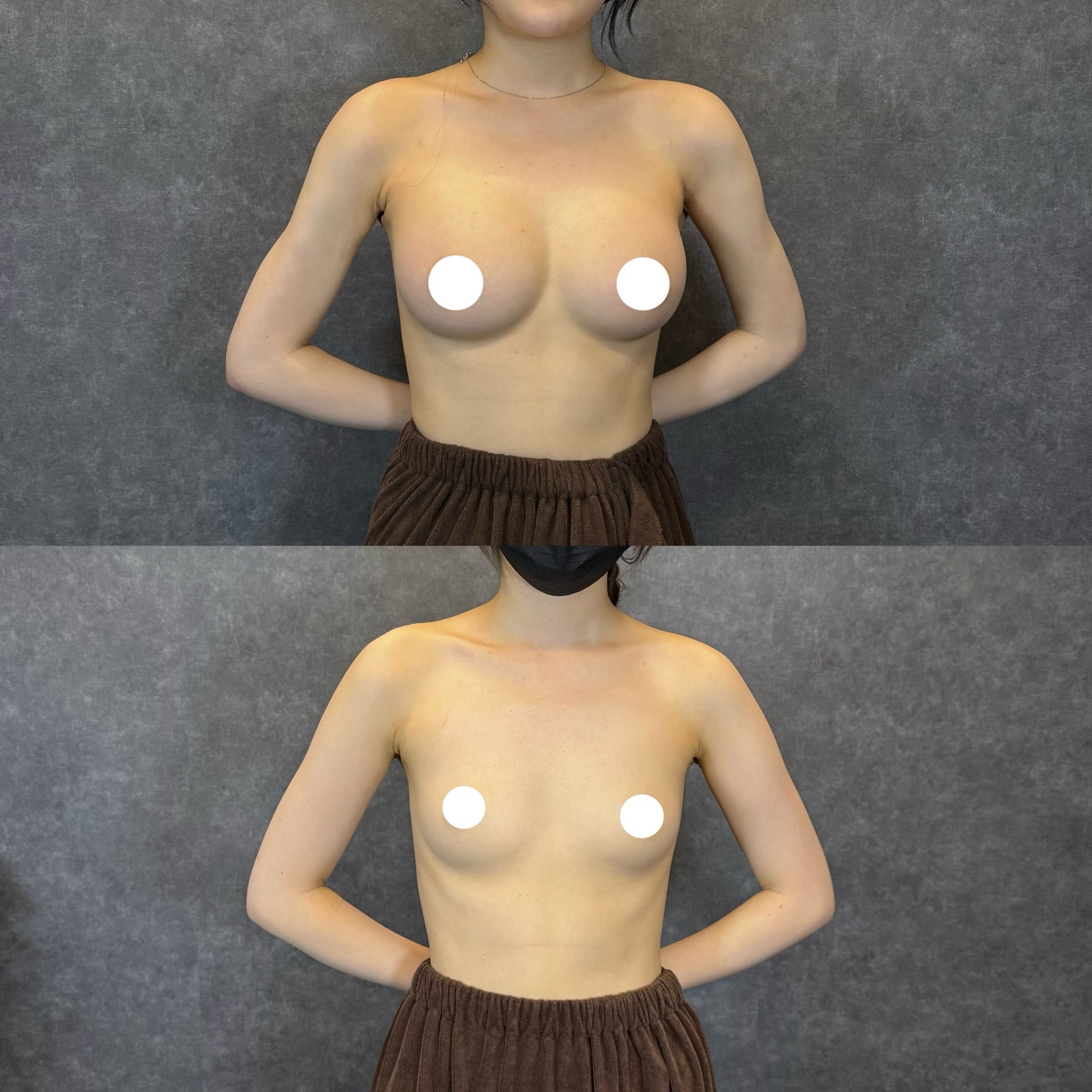
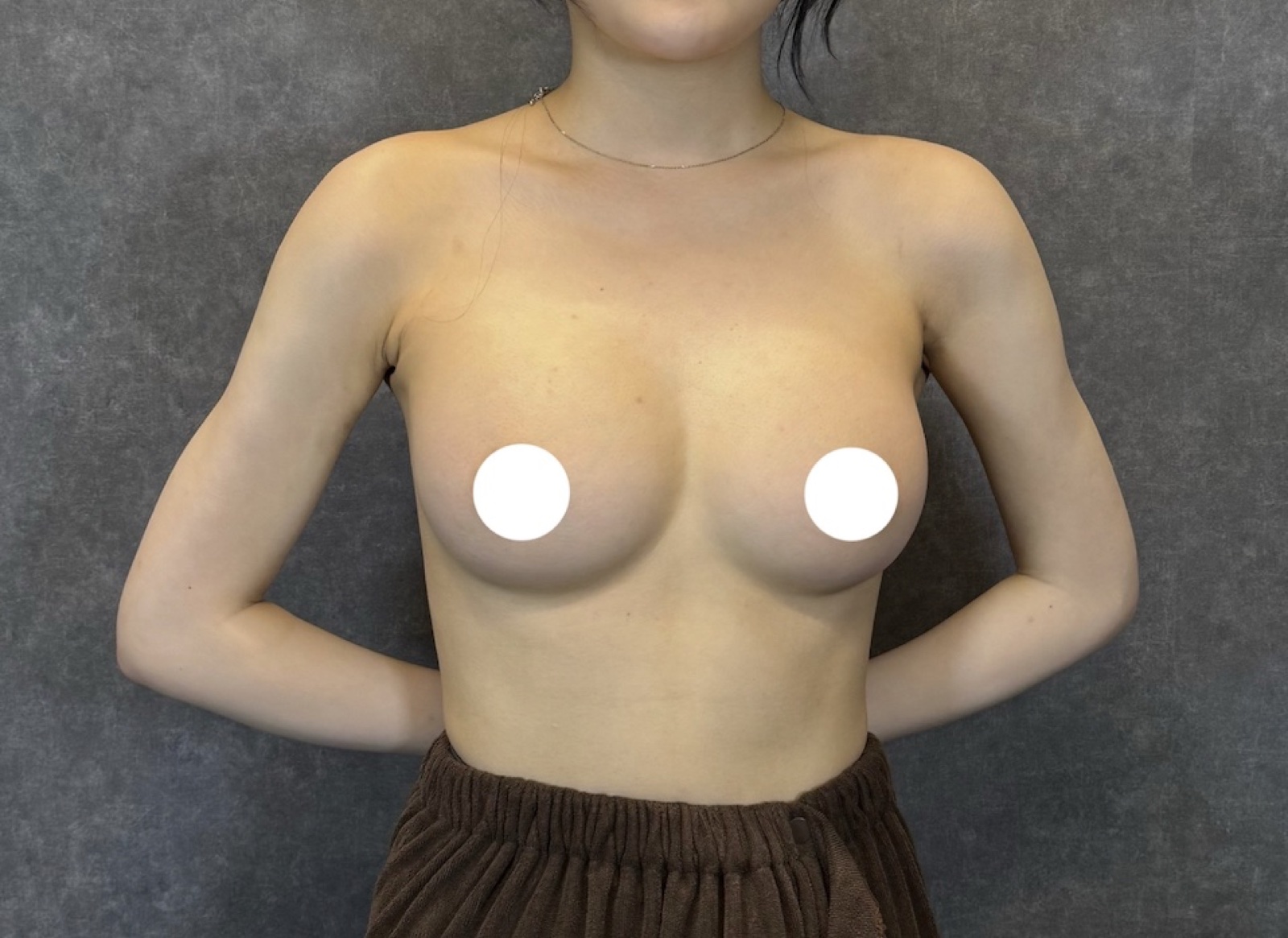
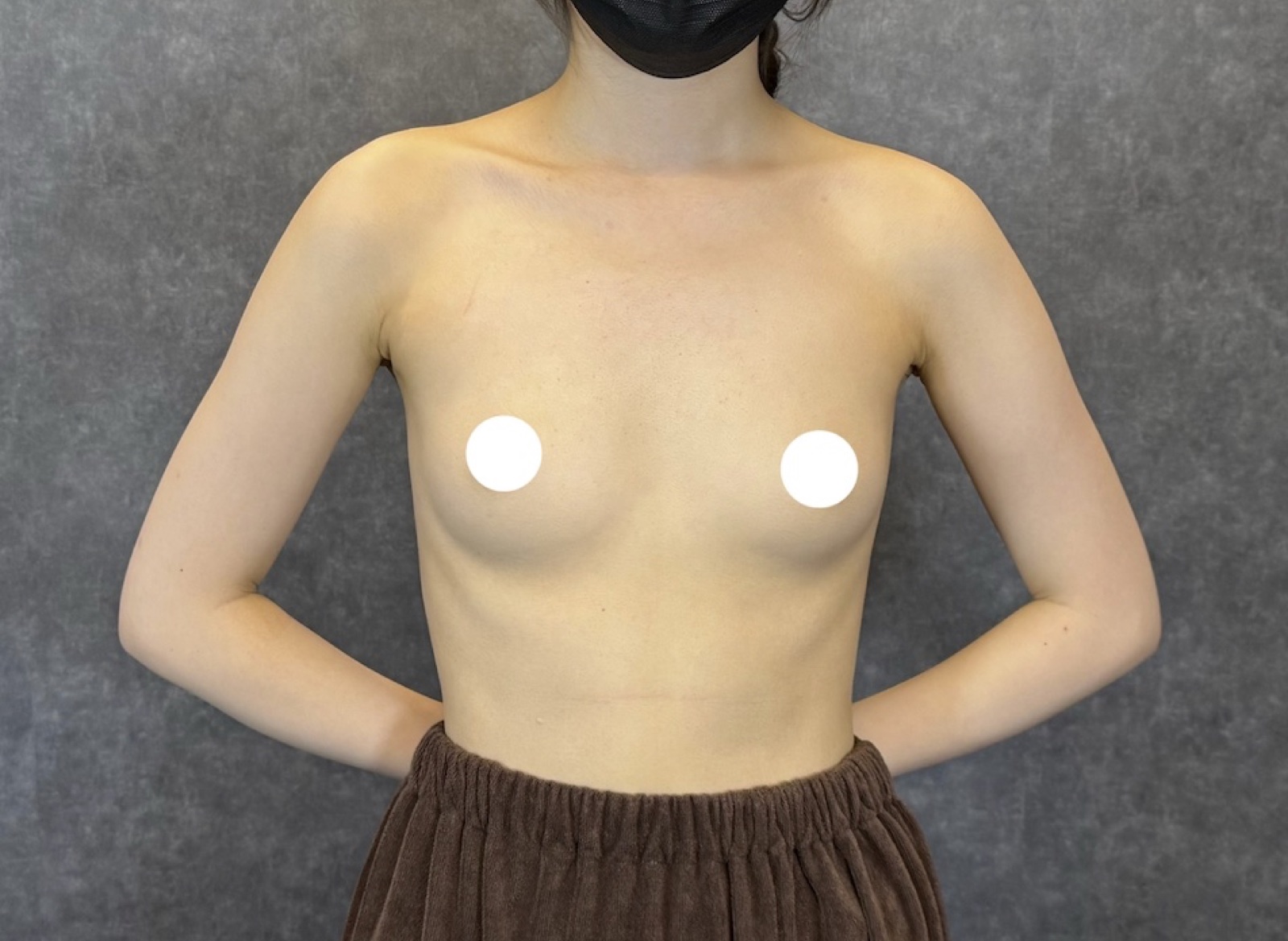
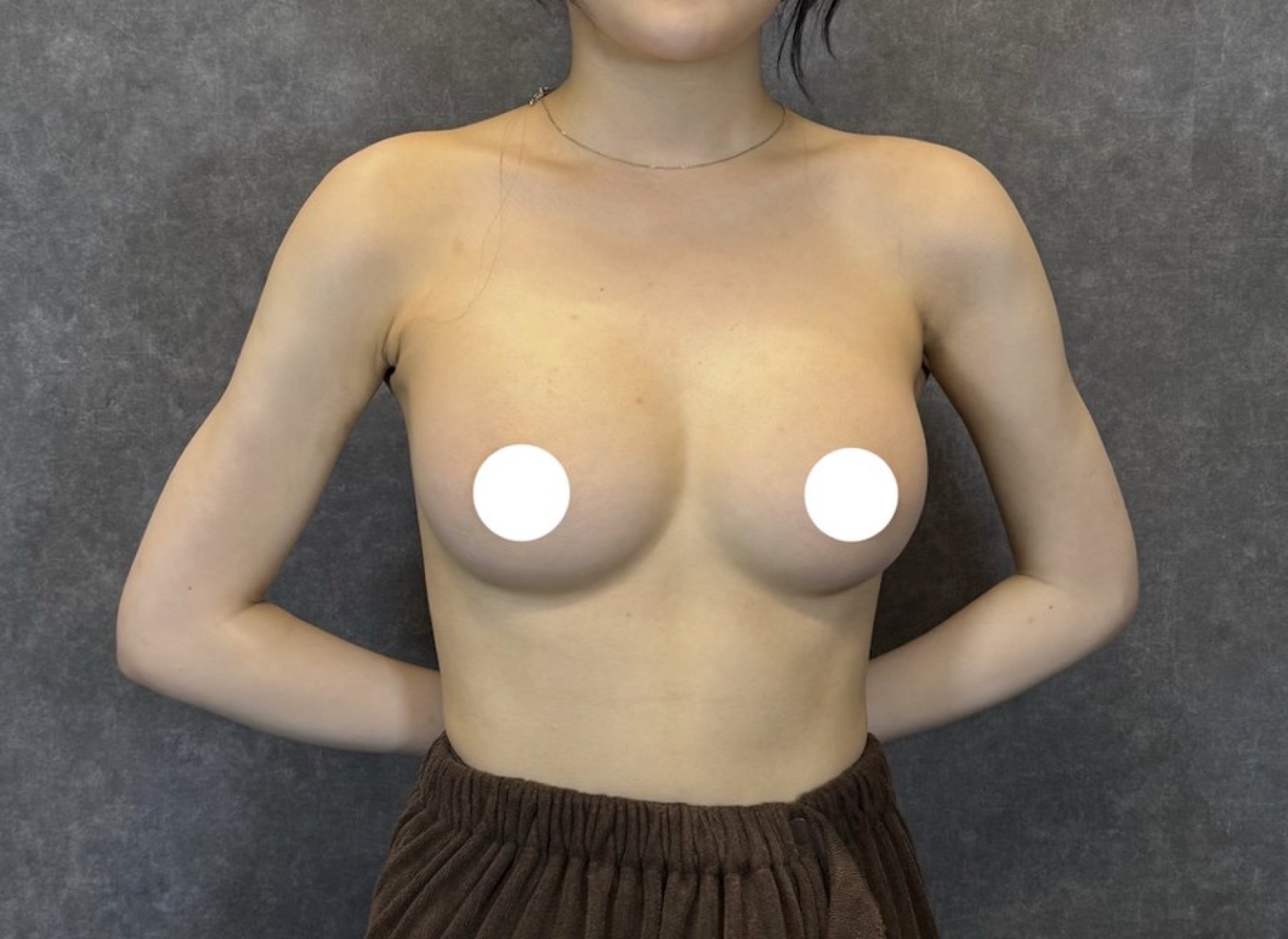
Case: Woman in her 20s, Motiva Mini 290cc
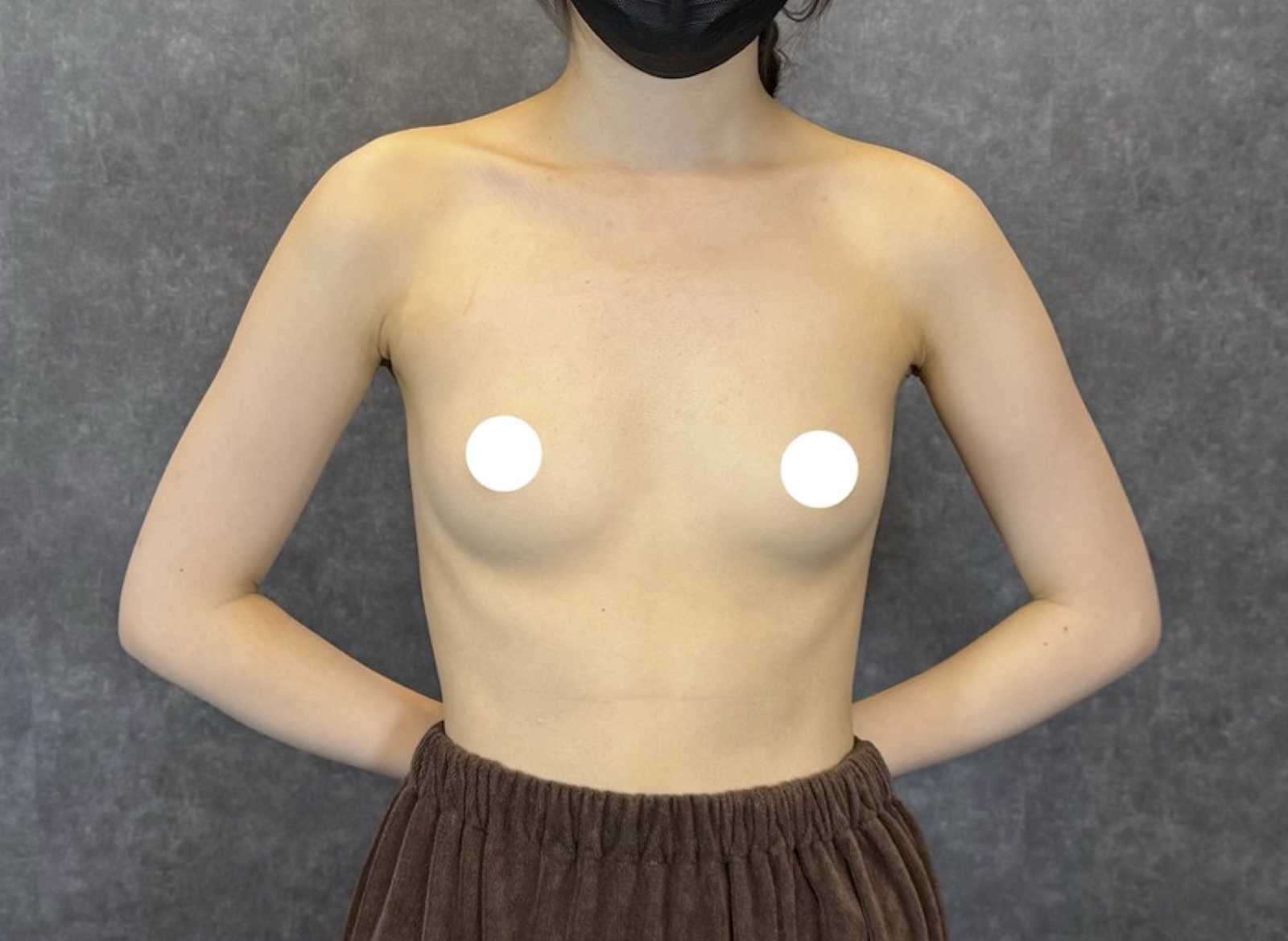
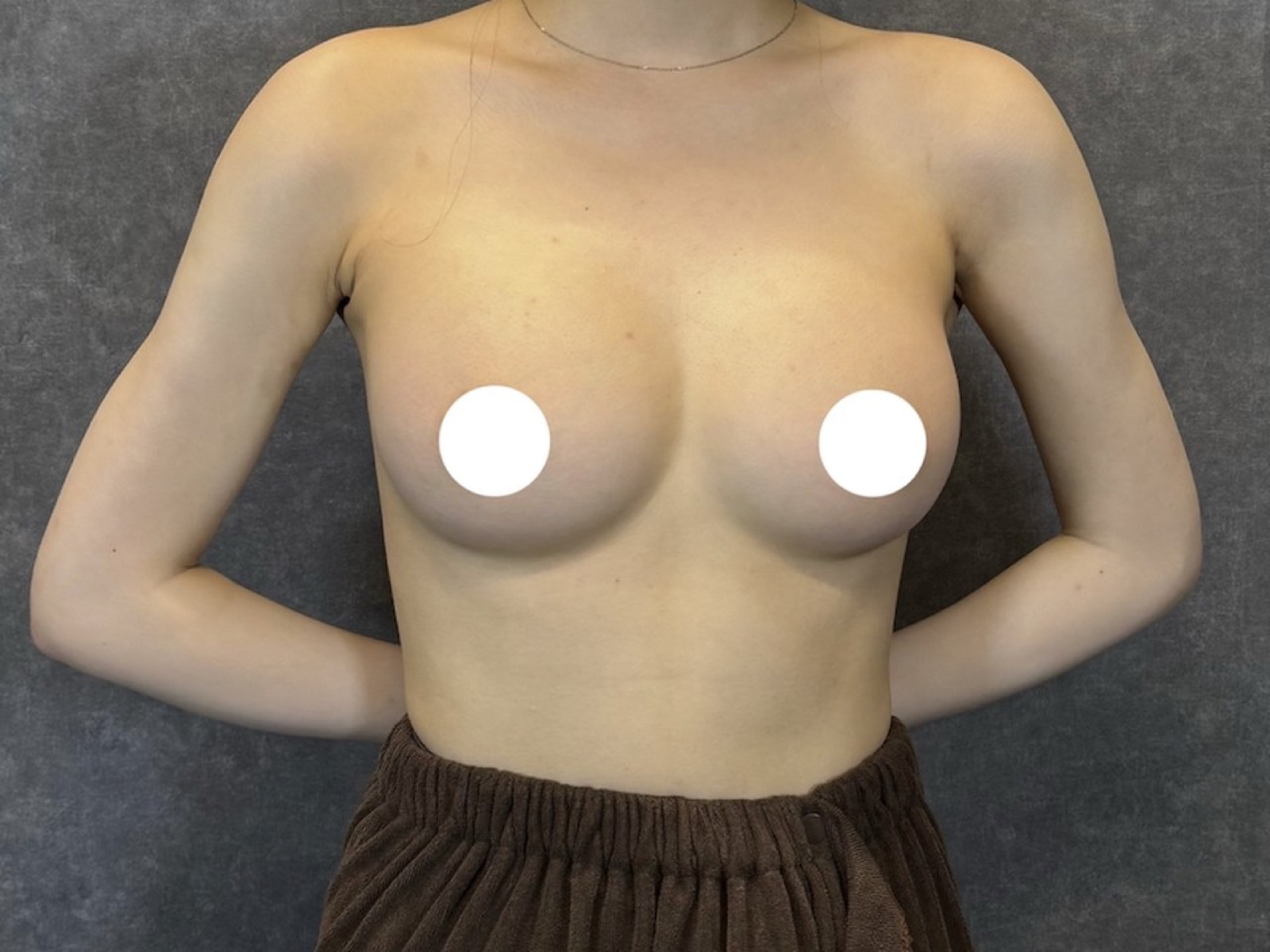
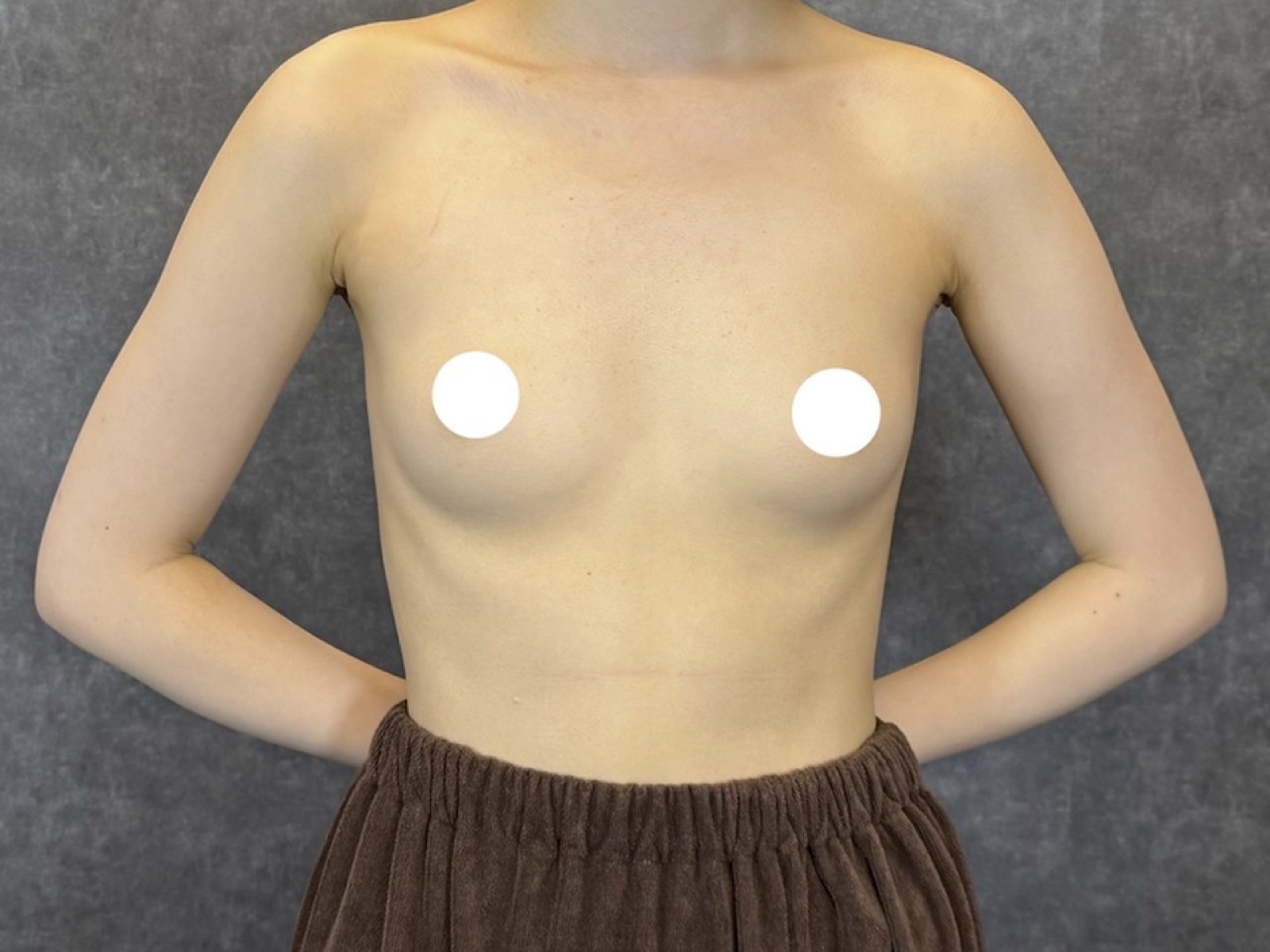
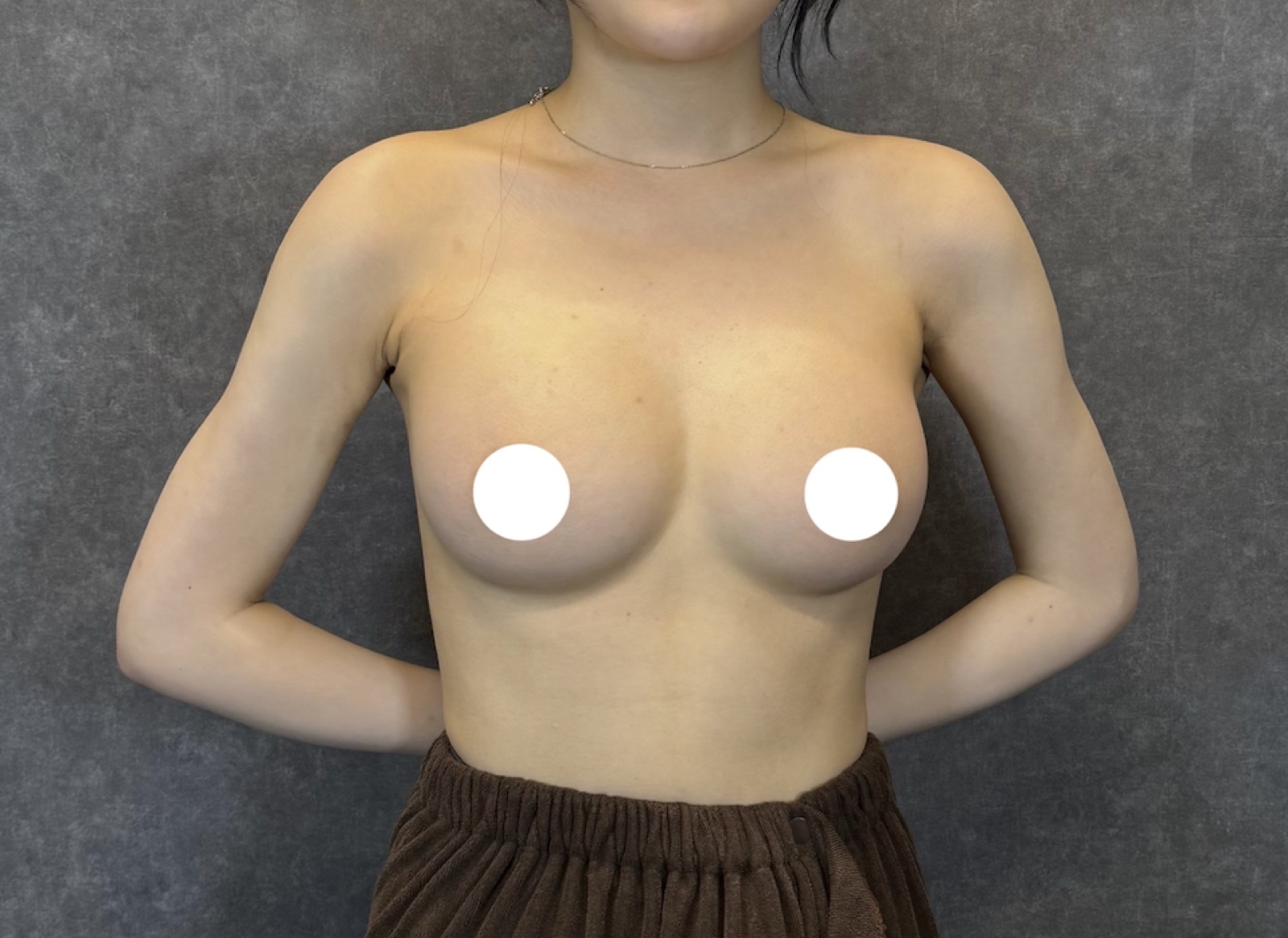
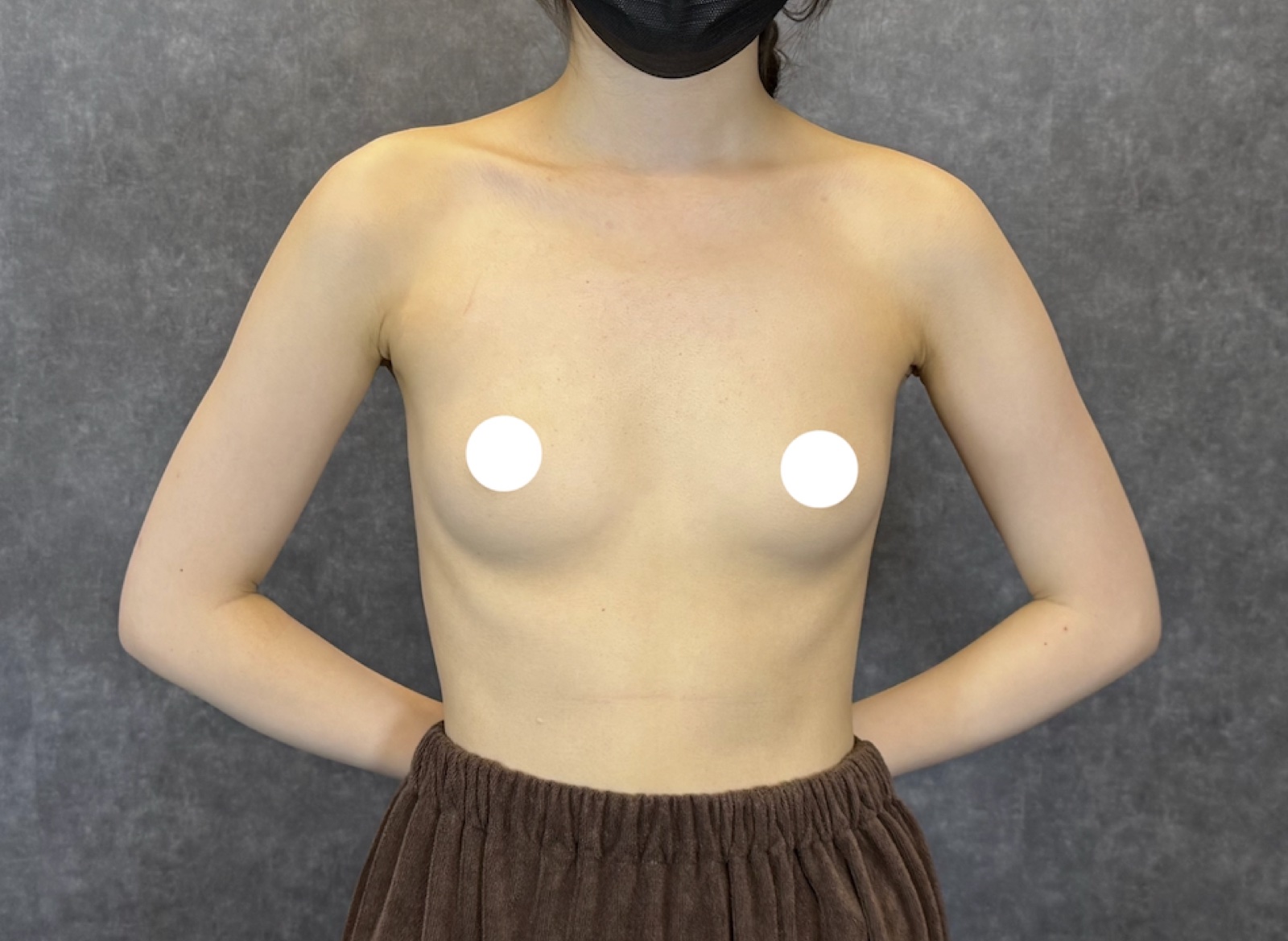
As one example, we performed hybrid breast augmentation on a woman in her 20s. She wished to add volume to her breasts and also to refine the fullness extending from her upper arms around to the flanks. We combined a silicone implant with fat grafting, and performed circumferential upper arm liposuction and flank liposuction concurrently to harvest donor fat. The photographs show the frontal view six months postoperatively.
We selected a Motiva Mini 290cc implant and placed it in the subglandular plane through an axillary incision hidden in the natural skin crease. The harvested fat from the upper arms and flanks was refined by centrifugation, and we injected 80ml subcutaneous + 50ml intramuscular on the right side, and 80ml subcutaneous + 30ml intramuscular on the left side.
The subcutaneous volume was intentionally kept identical on both sides to match cover fat thickness and tactile feel. Asymmetry correction was reflected in the intramuscular volume alone, so that the surface contour remained smooth and step-free.
Treatment details, cost, and risks for this case
Treatment
Hybrid breast augmentation (Motiva Mini 290cc, axillary incision, subglandular placement) combined with circumferential upper arm and flank liposuction. The harvested fat was refined by centrifugation and injected into the subcutaneous and intramuscular layers of both breasts.
Cost
Cost varies with the surgical plan and the extent of liposuction. Please refer to our price page. The final estimate is confirmed at consultation.
Main risks and side effects
Bruising, swelling, pain, firmness or contour irregularity at the liposuction sites, infection, fat lumps or calcification, capsular contracture around the implant, and transient sensory changes may occur. Fat retention varies between individuals, and additional procedures may be required.
About the result
Results vary between individuals; the photographs show one case. Swelling, bruising, firmness duration, and graft retention are influenced by individual factors and postoperative care.
Intraoperative decisions
The volume of pec intramuscular fat injection is not simply the “planned” value injected as-is; it is adjusted in real time during surgery. We check the position of each implant, the way the mammary tissue sits, and how the skin lifts from the décolletage down to the cleavage, then increase or decrease the injection volume accordingly.
In slim patients, harvestable fat is particularly limited. Removing fluid and blood components during centrifugation further reduces the usable volume. Because allocation of this limited resource directly shapes the result, we first secure the minimum subcutaneous volume needed as cover fat, and distribute the remainder into the intramuscular layer.
Rather than applying rigid numbers uniformly, we determine the volume while checking tissue by palpation and visual inspection — an approach that is essential for asymmetry correction in hybrid breast augmentation.
Six-month postoperative course and precautions
Injected fat develops connections with the surrounding blood supply over the first three to six months, and the balance between what retains and what is absorbed is determined during this period. Retention varies between individuals and depends on the donor site, injection layer, individual factors, and postoperative care.
Fat placed within the pectoralis major is supported by a muscle environment rich in blood supply, which is thought to make retention more stable than in the subcutaneous layer. However, intramuscular placement does not guarantee survival — injecting too much in one area can create a hypoperfused center and lead to fat cysts or necrosis. The underlying principle is to distribute small amounts across the plane.
By six months, swelling has subsided and the volume that will remain becomes clear. The photographs are from this time point; the appearance and cleavage shape continue to settle gradually from here.
Frequently asked questions
Q. Does pec intramuscular fat injection cause more pain?
A dull soreness similar to muscle fatigue can occur, but most patients find it eases within several days to about a week. Pain medication is usually sufficient; if strong pain persists, we evaluate the cause at follow-up.
Q. Should more fat go into the subcutaneous or intramuscular layer?
There is no single correct answer. The distribution is decided by harvestable fat volume, mammary and subcutaneous thickness, and the degree of asymmetry. As a general approach, we first secure the subcutaneous volume needed as cover fat, then allocate the remainder to the intramuscular layer.
Q. Does intramuscular fat feel strange during movement?
When injected in small dispersed amounts, most patients notice little or no discomfort during muscle contraction. Concentrating large volumes in one spot can cause both discomfort and lumps, so plane distribution is key.
Q. Can asymmetry be completely corrected?
When the underlying mammary tissue or skeletal frame is asymmetric, achieving perfectly symmetric breasts can be difficult. We aim to balance the result to a degree that is not visibly noticeable, but outcomes vary between individuals.
Q. What do you check at follow-up visits?
We check volume balance between the two breasts, implant position, lumps, skin condition, and how the liposuction sites are maturing. To address any abnormality early, we recommend attending the scheduled follow-ups.
For aesthetic surgery safety standards, please also refer to information from the Japan Society of Aesthetic Surgery (JSAS). For related articles, see our liposuction column index.
──────────────
Supervising physician: Dr. Shin Moriwaki
Member, Japan Society of Aesthetic Surgery (JSAS) / Member, American Academy of Aesthetic Medicine
ECFMG Certificate
──────────────
📍AVAN TOKYO GINZA LIPOSUCTION CLINIC
English / 中文 / Tiếng Việt supported
Reservations and inquiries via DM / LINE / Website / Phone.