


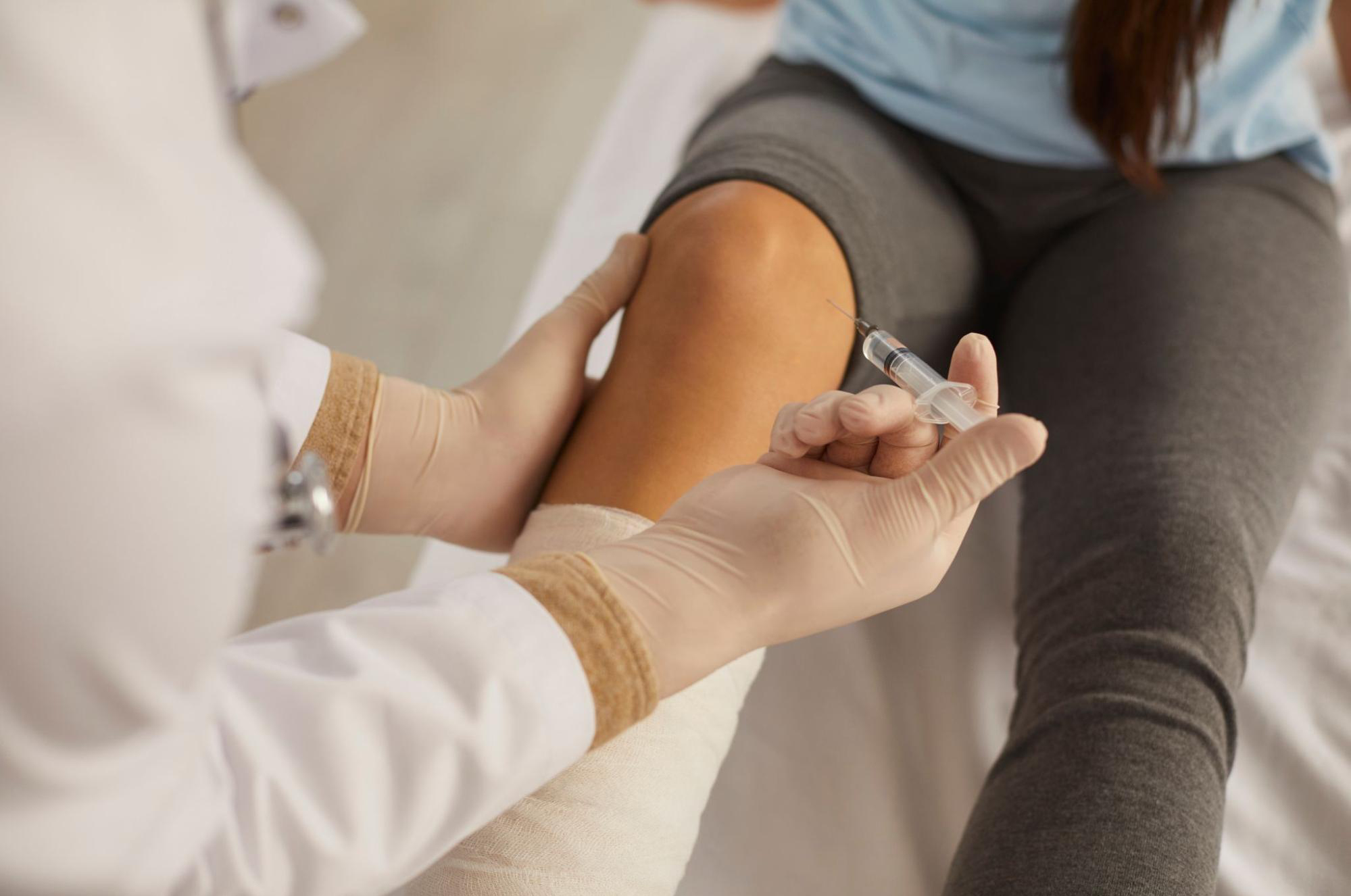
Budget Joint Injections with Stem Cell Conditioned Media by the Whole Treatment Course, Not by a Single Session — Dr. Moriwaki on How to Estimate Total Cost Including Follow-Up, Additional Doses, and Rehabilitation2026.07.17
“How much is one session?” — this is often the first question patients ask before considering a joint injection. But because joint injections with stem cell conditioned media are not designed as a one-shot treatment, the price of a single session alone does not give an accurate picture of the actual cost. Follow-up visits for effect assessment, additional doses when needed, and the combined cost of rehabilitation or braces — all of these must be included when you estimate the “whole treatment course.” Adopting this perspective is what leads to a choice you will not regret later. In this article, Dr. Moriwaki, who oversees joint injections in AVAN TOKYO Ginza’s regenerative medicine practice, outlines the key points for thinking about cost on a course basis.
Key Points of This Article
・A joint injection with stem cell conditioned media cannot be judged by the price of a single session alone; it should be considered as a total cost that includes follow-up and additional doses.
・Depending on the joint (knee, shoulder, lower back, foot, etc.) and severity, the number of sessions, interval, and combined therapies vary significantly.
・Effect assessment is performed over weeks to months, and whether to continue or revise the plan should be decided together with the physician.
・Rehabilitation, exercise therapy, and braces — not the injection alone — often determine the long-term outcome.
・Step back from offers such as “special price only today” and confirm the course design before making a decision.
Why a Joint Injection Cannot Be Judged by Price Per Session
A joint injection with stem cell conditioned media does not follow a fixed protocol like once-weekly hyaluronic acid for five weeks. Because it takes weeks to months to calm inflammatory cytokines inside the joint and prepare a favorable environment for tissue repair, the basic workflow is: inject once, observe the response, and consider additional doses if necessary. That is why comparing single-session prices alone falls short of reflecting the real cost.
Induction Phase and Maintenance Phase
A joint injection plan is often built in two stages: an “induction phase,” when doses are given more intensively during a symptomatic period, and a “maintenance phase,” when intervals are stretched to preserve the improved state. A typical image is two to three sessions during induction, then one session every few months. Comparing only per-session pricing tends to diverge widely from the actual expected total.
Effect Assessment and the Need for Additional Doses
After an injection, effects usually appear over several weeks to about three months. During this time, the trajectory of pain, range of motion, and improvement in daily activities are shared between physician and patient, and additional doses are decided based on that shared assessment. If the response is good, the plan moves into the maintenance phase; if it is limited, orthopedic re-evaluation or a switch to another treatment is considered. This “cost of following the course” should also be counted in the total.

Total Cost Varies by Joint and Severity
Each joint — knee, shoulder, lower back, ankle, fingers — differs in ease of injection, required number of sessions, and the role of rehabilitation. Realistically, the total cost of a joint injection fluctuates depending on the combination of severity and site.
The Knee (Knee Osteoarthritis and Others)
For knee osteoarthritis, the design depends on the stage of progression. In mild to moderate KL grades, several induction doses may be followed by extended intervals with exercise therapy and bracing. In advanced stages, the decision shifts from “buying time with injections” to careful assessment of surgical indication, and the cost-versus-course estimate changes fundamentally.
Shoulder, Elbow, Lower Back, Ankle, and Fingers
Target conditions range widely: frozen shoulder and rotator-cuff-related pain, enthesopathies such as tennis elbow and golfer’s elbow, facet-joint or sacroiliac-joint back pain, chronic pain after ankle sprains, and finger osteoarthritis. Even within the same category of “joint injection,” the target tissue differs (intra-articular space, bursa, tendon insertion, peri-articular tissue), so the number of sessions and the weight given to combined therapy shift accordingly.
The Injection Alone Is Not Enough — the Cost of Combined Therapy
A joint injection with stem cell conditioned media is not a magic cure that works simply because the shot was given. Its effects are sustained only when built on a foundation of exercise therapy, rehabilitation, bracing, and lifestyle adjustment. For knee osteoarthritis, quadriceps strengthening and weight management are widely known to strongly influence long-term outcomes. For general information on joint conditions, please also refer to the Japanese Orthopaedic Association.
When you factor in the cost and time of rehabilitation visits, supports, insoles, and shoe modifications when needed, the meaning of comparing per-session prices across clinics steadily fades. The real difference is whether a clinic can present “what combination is designed across the whole course.”
What to Check on the Cost Side When Choosing a Clinic
Before jumping at offers like “special price if you sign up today” or “packaged sessions for a discount,” consider confirming the following.
What Is in the Package Plan
Multi-session packages purchased upfront hinge on the refund and transfer terms if you decide to stop midway. Confirm in advance whether the plan can flexibly accommodate changes in strategy in the middle of effect assessment. If “completing the paid number of sessions” becomes the goal, the clinical judgment of adjusting course based on progress becomes harder to apply.
Criteria for Effect Assessment and Additional Doses
At which session, and using what indicators, will effect be assessed, and how will the need for additional doses be decided? A clinic that can articulate these “decision criteria” at the first consultation is a clinic where the outlook for additional costs is easier to forecast. For details on the treatment, please also see this page on joint injections with stem cell conditioned media.
Frequently Asked Questions
Q. Is a joint injection completed in a single session?
It depends on the symptoms, joint, and severity. In mild cases, one or two doses may be enough to move directly into a maintenance phase, but in many cases multiple induction doses are followed by maintenance every few months. It is realistic to build the plan by discussing the course after the first injection with your physician.
Q. The price per session feels high. How should I think about it?
Rather than judging by single-session price, we recommend estimating the total cost of the “whole treatment course” — including expected number of sessions, intervals, and rehabilitation costs. It is safer to review the specific plan and decision criteria at the pre-treatment consultation before deciding.
Q. What happens if the treatment does not produce a response?
If the response is limited after following the course for several months, we do not continue injections indefinitely. Instead, we switch to orthopedic re-evaluation or other treatments — reviewing exercise therapy, adding bracing, or considering surgical consultation if warranted. Response varies between individuals, and the therapy does not work equally for everyone.
Q. Is rehabilitation always required?
To sustain the effect of a joint injection, exercise therapy and lifestyle adjustments play an important role. For the knee and lower back in particular, strengthening the surrounding muscles and weight management significantly influence long-term outcomes. We recommend viewing this as a combined design rather than an injection alone.
Q. Is it covered by insurance?
A joint injection with stem cell conditioned media is elective self-pay care and is not covered by public medical insurance. It is important to clarify the cost estimate and course design in advance before deciding.
──────────────
Supervising Physician: Shin Moriwaki, MD
Member of the Japan Society of Aesthetic Surgery (JSAS) / Member of the American Academy of Aesthetic Medicine
ECFMG Certificate
──────────────
📍AVAN TOKYO Ginza Joint Regenerative Medicine
AVAN TOKYO Ginza Joint Regenerative Medicine
English / 中文 / Tiếng Việt available
Inquiries via DM / LINE / Website / Phone.