


Why Enthesis Pain Is So Hard to Heal—Dr. Moriwaki on Blood-Poor Tissue and What Stem Cell Conditioned Media Joint Injection Can Realistically Target2026.07.14
Tennis elbow, Achilles tendinopathy, plantar fasciitis, thumb CM joint arthritis—what these conditions share is that pain concentrates at the “attachment point” of tendons and ligaments, and it does not respond as expected to compresses or rest. Consultations for pain that was thought to resolve in weeks but now drags on for six months or a year are common, and many patients live with real stress in daily activities. The tendon-bone attachment site, or enthesis, is a transition zone where tendons and ligaments connect to bone. Physiologically it has poor blood supply, and once damaged, self-repair does not advance easily. In recent years, joint injection using stem cell conditioned media has been considered as an option for this area, but expectations and limits must be understood clearly. This article organizes why enthesis pain lingers and what local delivery can realistically target, from Dr. Moriwaki’s clinical perspective.
Key Points of This Article
・The enthesis is a transition zone connecting tendon and bone with poor blood supply, making it a tissue that takes a long time to heal.
・Chronic attachment-site pain is better understood as “tendon degeneration (tendinosis)” than as inflammation (“-itis”).
・Stem cell conditioned media joint injection approaches the local repair environment through growth factors and anti-inflammatory cytokines.
・It is not recommended for complete tears, active infection, or end-stage degeneration, and effects vary individually—overexpectation should be avoided.
・Combination with rehabilitation, orthoses, and activity modification is a premise. Injection alone is not a “magic bullet.”
What Is the Enthesis—”Not Inside the Joint” Despite Being Near It
The enthesis is an anatomical term for the transition zone where tendons and ligaments attach to bone. Usually described casually as the “root of the muscle,” it actually contains a four-layer transition of “tendon → uncalcified fibrocartilage → calcified fibrocartilage → bone.” It is not a simple structure like a thread tied to a knot. Instead, it distributes mechanical stress through this layered architecture so that loading forces are absorbed.
This transition zone is also a vulnerable point where stress concentrates mechanically. Repeated overuse or sudden loading causes microtears and incomplete repair to accumulate, and degeneration gradually progresses. Tennis elbow (lateral epicondylitis), golfer’s elbow (medial epicondylitis), Achilles insertional tendinopathy, plantar fasciitis, and patellar tendon insertion pain (jumper’s knee) are all pathologies that occur at these attachment sites.
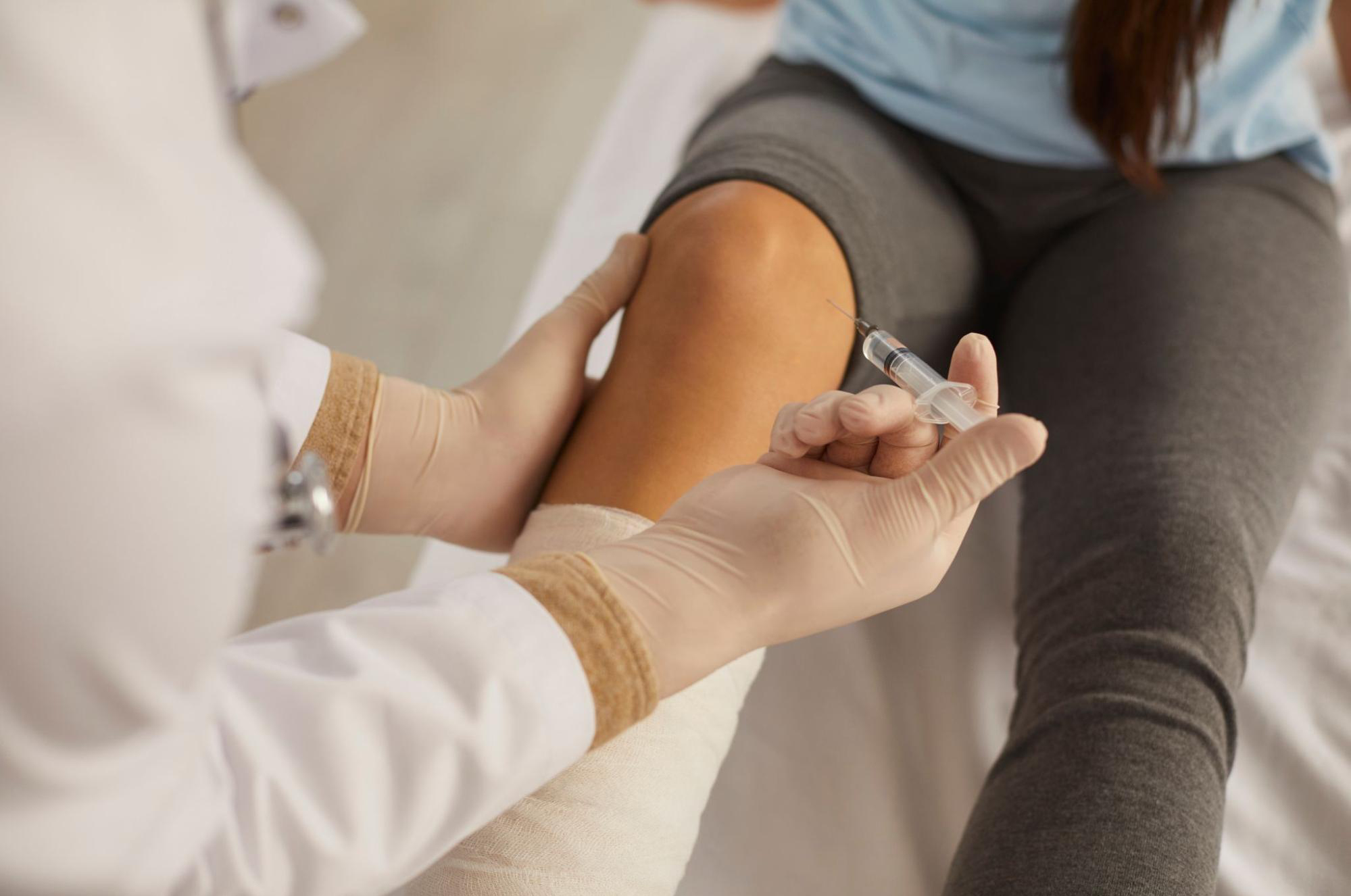
Meanwhile, local delivery to the enthesis differs slightly in meaning from an intra-articular joint injection that simply places medication inside the joint space. The target is the tendon-bone transition around the joint. Even under the same word “injection,” the meaning changes when the target tissue changes—an important premise to understand first.
Why the Enthesis Heals Poorly—Considered From Blood Supply and Tissue Structure
Poor blood supply slows healing
Tendon tissue itself has fewer blood vessels than other tissues such as skin and muscle—this has been known for a long time. The transition zone at the enthesis has even less blood supply than the tendon substance. Blood carries the oxygen, nutrients, immune cells, and growth factors needed for repair. Poor blood supply means these repair resources have difficulty reaching the site. In contrast to a skin cut that heals in days, tendon and enthesis injuries often take months to years to resolve.
Not “inflammation” but “degeneration” on histology
For years, tennis elbow and Achilles tendinopathy were called “inflammation (-itis).” But as histological research progressed, it became clear that chronic tendon pathology has scarce inflammatory cell infiltrate, and is dominated by disorganized collagen fibers, abnormal angiogenesis, and mucoid degeneration. This state is called “tendon degeneration (tendinosis)” or tendinopathy.
If it were inflammation, steroids might be enough to suppress it, but degeneration does not reverse with steroids alone. An approach that supports the repair environment of the tissue itself becomes necessary. This is the background against which stem cell conditioned media is examined as a different angle.
Representative Sites Where Foot and Hand Entheses Cause Problems
Foot: plantar fascia and Achilles tendon
The attachment of the plantar fascia to the calcaneus is the main battlefield of plantar fasciitis, presenting as sharp pain with the first step in the morning. The Achilles insertion (insertional Achilles tendinopathy) is common in runners and athletes who repeat jumping motions. Both sites are constantly loaded during walking and standing, and complete rest is difficult—part of the reason chronicity develops.
Hand and elbow: epicondylitis and thumb base
Tennis elbow is an insertional pathology of the extensor carpi radialis brevis (ECRB) at the lateral epicondyle; golfer’s elbow is an insertional pathology of the flexor-pronator group at the medial epicondyle. At the wrist and thumb base, attachment-site pain around the thumb CM joint (from CM joint arthritis) becomes an issue. Hand and elbow tissue cannot easily be “not used” in daily activities, which is another reason these conditions chronify.
What Stem Cell Conditioned Media Joint Injection Aims At in the Enthesis
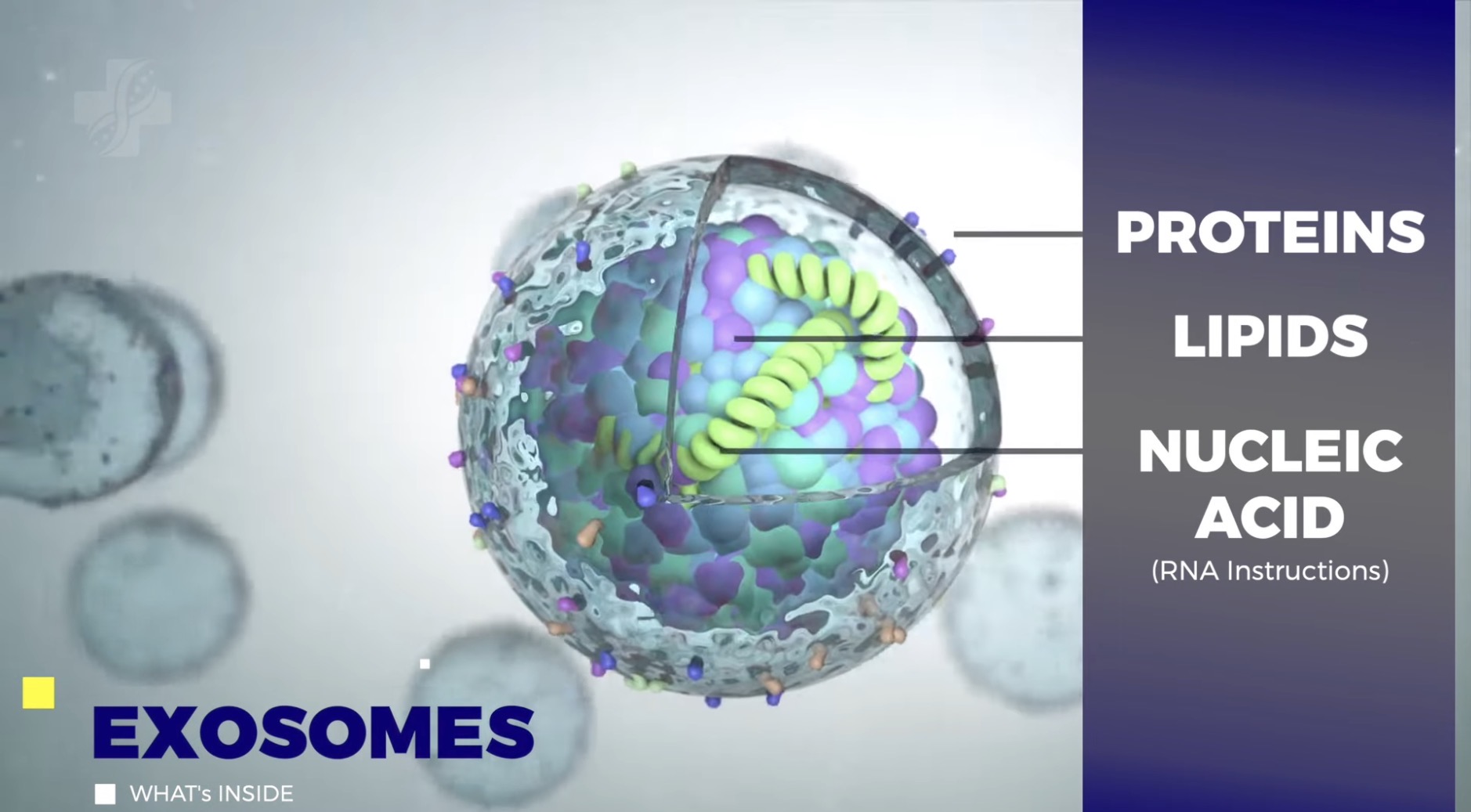
Stem cell conditioned media contains multiple growth factors such as TGF-β, IGF-1, FGF, and VEGF, along with anti-inflammatory cytokines. When delivered locally to the attachment site, the aims can be organized into roughly two.
One is suppression of secondary inflammation that generates pain. The other is upregulation of the repair environment—promoting collagen synthesis and supporting microvascular neogenesis. For a tissue with poor blood supply and difficulty receiving repair resources, this is a strategy of delivering growth factors and cytokines locally in a pinpoint manner.
Ultrasound-guided administration is used to visualize the target layer (enthesis, tenosynovium, bursa) while distributing the injected volume. This is where the meticulousness of the technique and anatomical understanding influence outcomes.
You can review the treatment flow at our clinic through this page on our joint injection with stem cell conditioned media.
What You Can and Cannot Expect—Drawing the Line of Indications and Limits
Stem cell conditioned media has the following limits. Overexpectation should be avoided.
・It does not “reattach” a fully torn tendon or ligament.
・It is not recommended when there is active infection, severe degeneration, or end-stage joint destruction.
・Response varies individually, and follow-up over weeks to months is necessary.
・It is not a treatment that “cures” on its own—rehabilitation, orthoses, activity modification, and posture review remain the foundation.
For information on joint disease, please also refer to the guidelines of the Japanese Orthopaedic Association. When enthesis pain lingers, it is reasonable to first confirm the pathology through orthopaedic diagnosis and then consider regenerative options. Rather than assuming “an injection cures,” we recommend aligning diagnosis and combined therapy first, then building treatment that matches the background of your symptoms.
Frequently Asked Questions
Q. How many injections of stem cell conditioned media are needed to see effects?
For enthesis administration, some patients feel changes in pain within weeks, but repair of the tissue itself takes months. Avoid drawing conclusions from a single injection, and evaluate over 3–6 months using pain scores, range of motion, and daily activities. When response is poor, judgment about continuing, changing, or switching to orthopaedic re-evaluation is required. Effects vary individually.
Q. How is it different from steroid injections?
Steroid local injection offers strong anti-inflammatory action and short-term pain reduction, but it is associated with tendon weakening and rupture risk, making it hard to use repeatedly at the enthesis. Stem cell conditioned media aims not only at anti-inflammation but also at supporting the repair environment—its target axis is different. The two are not competitors, but options to be selected according to the situation.
Q. Is exercise on the same day of treatment safe?
On the same day, avoid intense exercise, prolonged loading, and strong pressure on the treatment site. For rehabilitation and light exercise from the next day onward, follow your physician’s guidance, since it depends on pathology and individual variation. Balancing “protecting the enthesis at rest” with “using it within limits that don’t overload it” is important for creating a healing environment.
Q. Over what period do you assess the effect?
Because tendon and ligament repair takes time, the standard is to evaluate pain scores, range of motion, and function at around 6–12 weeks after administration. When response is poor, we review injection interval, site, and combined therapy (rehabilitation, orthoses, activity modification), and orthopaedic re-evaluation is also considered.
Q. Are there side effects or precautions?
Transient local pain, swelling, and internal bleeding may occur. Infection management and checks for allergy history, diabetes, and immunosuppressive states are essential. It is not recommended for those with active infection or strong immunosuppression. Serious systemic side effects are rare, but individual risks are carefully evaluated during the pre-treatment consultation.
──────────────
Medical Supervisor: Dr. Shin Moriwaki (Supervising Physician)
Member, Japan Society of Aesthetic Surgery (JSAS) / Member, American Academy of Aesthetic Medicine
ECFMG Certificate
──────────────
📍AVAN TOKYO Ginza Joint Regenerative Medicine
English / 中文 / Tiếng Việt available
Inquiries via DM / LINE / Website / Phone.