



That Sharp, Pinching Pain in the Front of the Ankle When You Squat: Distinguishing Anterior Ankle Impingement Syndrome from Post-Sprain Sequelae — Dr. Moriwaki on the Tibia-Talus ‘Kissing Lesion’ and What Stem Cell Conditioned Media Ankle Injections Can Realistically Target for Synovitis2026.07.28
A soccer player planting hard mid-play, or a runner landing at the bottom of a downhill stride — many will recognize the sudden “pinching,” “jamming” sensation deep in the front of the ankle. When pain is triggered specifically by dorsiflexion (lifting the toes upward) — first steps in the morning, climbing stairs, deep squats — the culprit is often anterior ankle impingement syndrome. It gets dismissed as post-sprain residual pain or nonspecific arthritis, but the real mechanism is unique: bone spurs on the tibia and talus rubbing against one another. Left alone, dorsiflexion range gradually disappears. In this article, Dr. Shin Moriwaki, supervising physician at AVAN TOKYO Ginza Joint Regenerative Medicine, outlines how to distinguish anterior ankle impingement syndrome from lingering sprain sequelae and osteochondral lesions of the talus, and where stem cell conditioned media ankle injection fits as a tool for intra-articular inflammation control.
Key Points
・Anterior ankle impingement syndrome is a chronic disorder in which bone spurs on the anterior distal tibia and the dorsal talar neck collide during dorsiflexion.
・It is common in soccer players, ballet dancers, and anyone who has repeatedly sprained an ankle, and is triggered by squatting and climbing stairs.
・Because pain location and provocative positions differ from osteochondral lesions of the talus or simple ankle osteoarthritis, differential diagnosis comes first.
・Stem cell conditioned media ankle injection is a conservative option targeting intra-articular synovitis and chronic soft-tissue inflammation — it does not dissolve the bone spurs themselves.
・When range-of-motion loss becomes severe and interferes with daily life, arthroscopic osteophyte resection enters the discussion. Deciding “how long to hold the line” with your physician matters.
What Is Anterior Ankle Impingement Syndrome?
During dorsiflexion, the anterior distal tibia and the dorsal talar neck come close together. In a healthy joint there is enough clearance that the two surfaces do not collide. But with repetitive dorsiflexion loading, or joint capsule and synovial thickening after trauma, bone spurs (osteophytes) develop on the joint margins of both the tibia and the talus. When these opposing spurs collide during dorsiflexion, sharp anterior pain and a jamming sensation appear. That is anterior ankle impingement syndrome.
Why It Is Called a ‘Kissing Lesion’
Because spurs on the tibial and talar sides develop as paired counterparts, radiologists often describe them as a “kissing lesion.” Their formation involves a combination of factors: (1) repetitive dorsiflexion stress at the joint margin, (2) microtrauma and repair of the anterior joint capsule after ankle sprains, and (3) chronic intra-articular synovitis. In soccer, repetitive kicking motions are a major driver; in ballet, the deeply dorsiflexed positions of demi-plié and grand plié play the same role.
Frequently Seen in the Chronic Phase After Ankle Sprain
In patients who have suffered multiple inversion sprains, laxity of the anterior talofibular and calcaneofibular ligaments leaves microinstability, and the talus tends to slide anteriorly during dorsiflexion. Over years, this raises mechanical stress at the joint margin and drives spur formation and synovial thickening. The syndrome typically arises not from a single injury, but as the outcome of chronic repetitive load.
Avoiding Confusion with Post-Sprain Sequelae and Osteochondral Lesions
Among patients presenting with chronic ankle pain, the main differentials are (1) chronic ligamentous instability after ankle sprain, (2) osteochondral lesions of the talus, and (3) this syndrome. Each differs in pain location, provocative positions, and imaging findings, so careful history and physical examination at the first visit determine diagnostic accuracy.
Pain Location and Provocative Positions
A typical picture of the syndrome is localized pain at the anterior ankle (around the tibia-talus junction) with pain on dorsiflexion. Squatting, climbing stairs, walking uphill, and jump landings aggravate it. Osteochondral lesions of the talus, by contrast, present with deep intra-articular dull pain provoked by weight-bearing in general. Chronic instability after sprains manifests as a “giving way” sensation on uneven ground or lateral cutting.
Imaging Findings (X-ray, MRI)
Lateral X-rays with forced dorsiflexion views help identify the anterior distal tibial spur and the dorsal talar neck spur. MRI evaluates intra-articular synovial thickening, inflammatory thickening of the anterior capsule, and soft-tissue impingement, while simultaneously ruling out osteochondral lesions of the talus. For general information on joint disorders, see the Japanese Orthopaedic Association.
Conservative Treatment for Anterior Ankle Impingement Syndrome
Initial treatment centers on load reduction, exercise therapy, and pharmacotherapy. Because the spurs will not disappear spontaneously, the realistic goal is “how much pain and function can be preserved conservatively.”
Rest, Bracing, and Exercise Therapy
A temporary reduction in athletic load, avoidance of deeply dorsiflexed positions (full squats, deep lunges), and heel-lift insoles are recommended. Exercise therapy focuses on triceps surae stretching and strengthening of the peroneal muscles and tibialis posterior to stabilize the ankle.
Pharmacotherapy and Steroid Joint Injection
NSAIDs form the baseline for inflammation and pain control. Intra-articular steroid injections offer strong short-term analgesia, but repeated dosing raises concerns about impact on cartilage and tendon tissue, so frequency and interval must be designed carefully.
What Stem Cell Conditioned Media Ankle Injection Can Target
In recent years, concerns about repeated steroid injections and the desire to expand conservative options have brought stem cell conditioned media ankle injection into consideration. It should be stated up front that this is not a treatment that dissolves bone spurs or “restores” the joint architecture.
Modulating Intra-Articular Synovitis and Soft-Tissue Chronic Inflammation
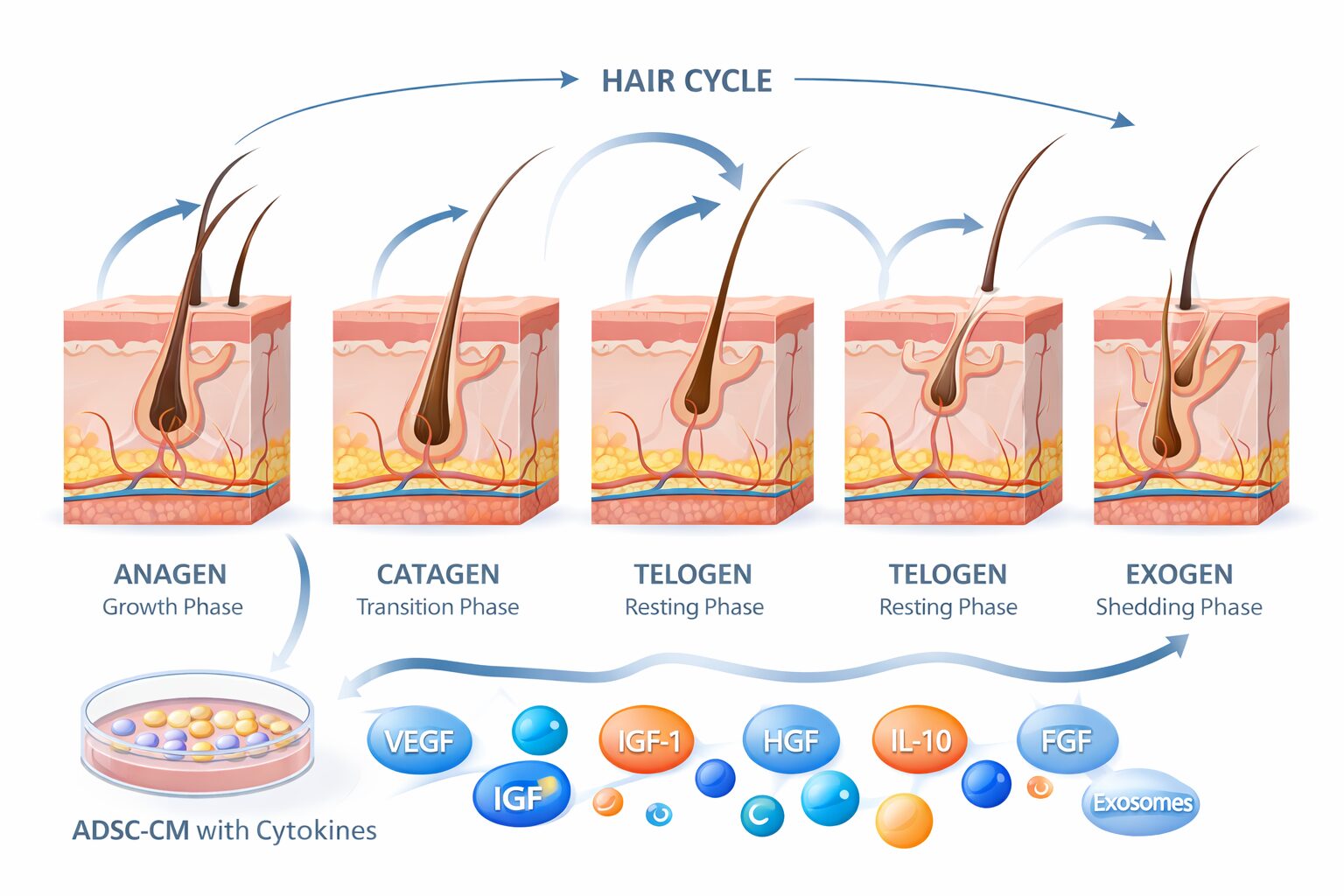
Stem cell conditioned media contains growth factors such as TGF-β, IGF-1, FGF, and VEGF, plus anti-inflammatory cytokines. These may act on the chronic inflammatory cycle of intra-articular synovitis and the inflamed anterior capsule and soft-tissue impingement zone. Clinically, pain scores and changes in dorsiflexion range serve as the follow-up metrics.
Indications and Limits
Good candidates include (1) mild-to-moderate spur size, (2) predominant symptoms of pain with mild range restriction, and (3) patients who want to avoid surgery and extend conservative care. Conversely, when spurs are large and mechanical locking is obvious, or when daily activities are severely disrupted, arthroscopic osteophyte resection takes priority. Response varies among individuals, and no guarantee can be given. Learn more about stem cell conditioned media joint injection here.
Where the Line Sits Between Injection and Surgery (Arthroscopic Osteophyte Resection)
When dorsiflexion is clearly lost, daily life or sport return is impaired, or symptoms persist despite six or more months of conservative care, arthroscopic osteophyte resection becomes a serious option. Surgery is a definitive treatment that directly removes the spurs, but postoperative rehabilitation and recurrence risk must be managed. It matters that patient and physician share, in advance, both “how long to hold with conservative care” and “when to switch.” See also our collection of columns on regenerative medicine for related reading.
Frequently Asked Questions
Q. Will stem cell conditioned media ankle injection make the bone spurs disappear?
No. The spurs themselves are not expected to disappear. What the conditioned media acts on is the intra-articular synovitis and chronic soft-tissue inflammation that accompanies the spurs. It is best positioned as a conservative approach aimed at improving pain and function.
Q. Is it safe to keep exercising with anterior ankle impingement syndrome?
Movements that clearly provoke pain — deep dorsiflexion, repeated jump landings — should be limited temporarily. Combining an injection-based reduction in inflammation with calf stretching and periarticular ankle strengthening is favorable if continued play is a goal. However, symptom trajectories vary widely between individuals, so please proceed only under the evaluation of an orthopedic surgeon.
Q. How is a steroid injection different from stem cell conditioned media?
Steroids have a strong anti-inflammatory effect and excel at short-term analgesia, but repeated dosing raises concerns about cartilage and tendon effects. Stem cell conditioned media contains growth factors and anti-inflammatory cytokines and aims for a gentler modulation of the intra-articular environment. The two differ in mechanism and objective, and are selected or combined based on the patient’s condition.
Q. How many stem cell conditioned media injections are needed?
A common design is 2–3 sessions in the induction phase, followed by maintenance dosing based on symptom trajectory. Number and interval are adjusted individually according to severity, imaging findings, and the degree of interference with daily activities. Response varies between patients, and no guarantee of “you will improve after a set number of sessions” can be made.
Q. How do I decide between surgery and conservative care?
If dorsiflexion restriction and pain do not improve after six or more months of conservative care, if daily activities are strongly impaired, or if mechanical locking is clearly present, it is time to discuss surgical options such as arthroscopic osteophyte resection. That said, the final judgment must integrate lifestyle, sport level, and personal preferences.
──────────────
Supervising Physician: Shin Moriwaki, MD
Member, Japan Society of Aesthetic Surgery (JSAS) / Member, American Academy of Aesthetic Medicine
ECFMG Certificate
──────────────
📍AVAN TOKYO Ginza Joint Regenerative Medicine
AVAN TOKYO Ginza Joint Regenerative Medicine
English / 中文 / Tiếng Việt available
Inquiries welcome via DM / LINE / Website / Phone.