


Why Do Joints Throb and Ache on Days When Barometric Pressure Drops — Dr. Moriwaki Explains the Weather-Pain and Osteoarthritis Inflammation Loop, and How Stem Cell Conditioned Media Joint Injection May Help Lower the Baseline of Pain2026.07.25
“My knees start to throb before it rains” “When a typhoon approaches, my shoulders and lower back feel heavy and ache” — we hear these voices from patients often in the exam room, and they are by no means merely imagined or a matter of personal perception. The phenomenon in which joint pain worsens with changes in weather, especially with drops in barometric pressure, has been increasingly studied under the terms “weather pain” and “meteoropathy,” and in patients with osteoarthritis, the floor of their pain can feel raised by several levels. This article organizes the mechanism of barometric weather joint pain, and how stem cell conditioned media joint injection can be positioned as one option to help lower the baseline of pain — sorted out honestly from Dr. Moriwaki’s perspective.
Key Points of This Article
・Barometric weather joint pain is a physiological reaction in which the autonomic nervous system, intra-articular pressure, and the peri-articular inflammation cycle intertwine — it is not just imagination
・Joints with an “inflammatory background,” such as those affected by osteoarthritis, tend to have pain layered on top when barometric pressure drops
・Stem cell conditioned media joint injection is not a treatment that controls the weather itself; by adjusting the inflammatory environment inside the joint, it may support raising the baseline of pain tolerance
・Since changes in barometric pressure themselves are hard to avoid, combining conservative therapy with lifestyle preparations is practically important
・Pain accompanied by strong red-flag signs (fever, sudden swelling, severe night pain) should never be dismissed as weather pain — orthopedic differential evaluation is essential
What Happens Inside Joints When Barometric Pressure Drops
When a typhoon or seasonal rain front approaches, atmospheric pressure drops by several hectopascals (hPa). This change may seem small in numbers, but for the joint cavity, synovium, and peri-ligamentous tissues, it is an external stimulus that cannot be ignored. Studies have suggested sympathetic dominance mediated by the inner-ear baroreceptor mechanism, changes in vascular permeability around the joint, and small pressure gradient shifts inside the joint, all of which may temporarily raise the local concentration of inflammatory cytokines (IL-1β, IL-6, TNF-α, etc.).
Why osteoarthritic joints are more affected by the weather
Joints already burdened by synovitis or cartilage degeneration always have a low-grade inflammatory cycle running. When the external stimulus of barometric pressure change is added, pain receptors (nociceptors) with an already lowered threshold fire more easily with slight stimuli, and stronger pain is transmitted to the brain. That people with knee osteoarthritis, hip osteoarthritis, or shoulder osteoarthritis complain of weather pain more than those with healthy joints can be partly explained medically by the presence or absence of this “inflammatory background.”
Barometric Weather Joint Pain and the Perspective of Stem Cell Conditioned Media Joint Injection
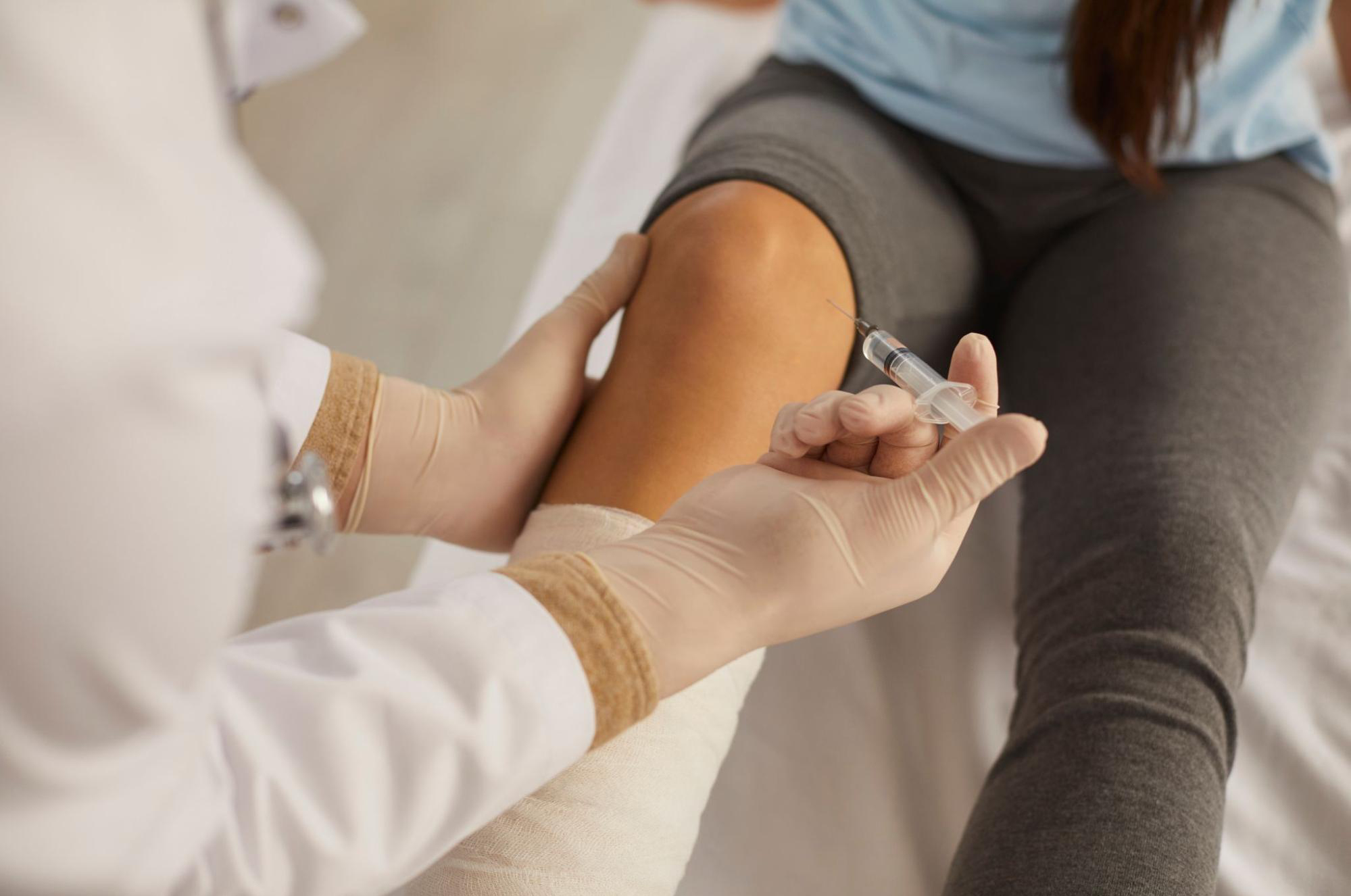
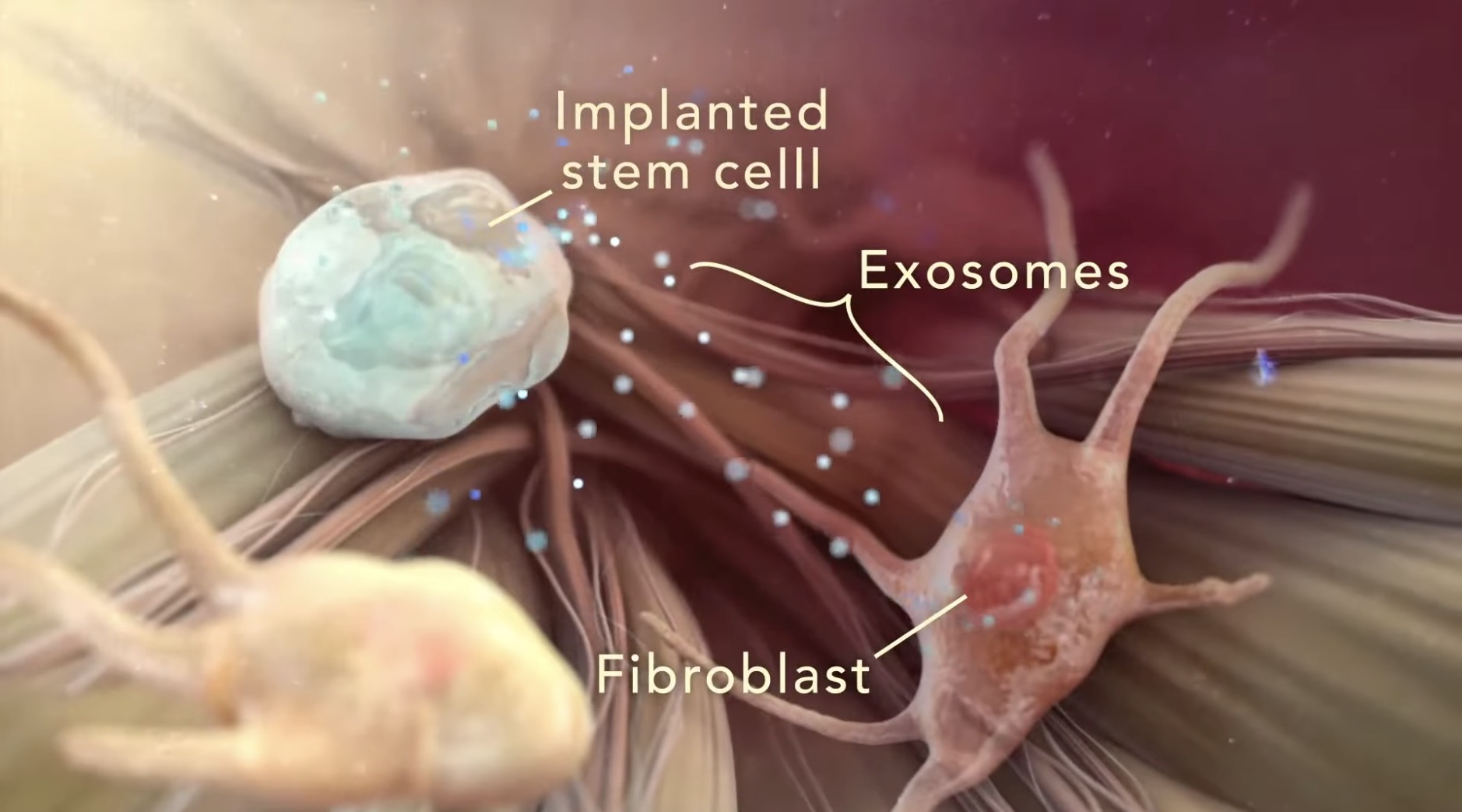
We cannot stop the weather itself. However, if the chronic inflammatory cycle smoldering within the joint can be calmed, there is a possibility of reducing the “added portion” of pain felt on days when barometric pressure drops. Stem cell conditioned media has been reported to contain a variety of cytokines and growth factors secreted by mesenchymal stem cells (TGF-β, IGF-1, HGF, VEGF, etc.), along with molecules involved in anti-inflammatory and immunomodulatory action, and by acting on the chronic inflammatory environment of the synovium, it may support raising the baseline of pain tolerance.
What matters here is that this is not an “injection to eliminate weather pain.” The purpose is to adjust the intra-articular environment for underlying pathologies such as osteoarthritis, not to block the barometric pressure itself. Individual differences in effect exist, and depending on progression, site, and activity, adequate response may not be obtained. For information on joint diseases, please also refer to the guidelines of the Japanese Orthopaedic Association and carefully discuss the indication with your physician.
Lifestyle preparation for barometric weather joint pain
Separately from the decision to have a joint injection, there are also everyday preparations. Cold triggers vasoconstriction and intensifies pain, so on bad-weather days, keep the joint area warm. Sleep deprivation and overwork promote sympathetic dominance, so check the forecast and distribute your load. Avoid staying in the same posture for long periods, and move the joint frequently to promote synovial fluid circulation. These steady adjustments combined with conservative therapy form the foundation that supports the daily life of patients with barometric weather joint pain.
Red-Flag Signs to Check Before Concluding “It Is Just Weather Pain”
Dismissing all joint pain as “weather’s fault” is dangerous. Especially when the following signs appear, do not self-judge as weather pain — first prioritize a differential evaluation at an orthopedic clinic.
・Joint warmth, redness, and severe pain with fever (possibility of septic arthritis)
・Rapid joint swelling that worsens within days (suspected crystal arthritis or hemarthrosis)
・Strong pain that worsens at night or at rest (needs exclusion of tumorous lesions or osteonecrosis)
・Polyarthralgia accompanied by weight loss or systemic fatigue (possibility of systemic diseases such as rheumatoid arthritis)
After excluding these, in patients whose pattern matches barometric weather joint pain and who also have underlying pathology such as osteoarthritis, stem cell conditioned media joint injection can be considered as one option among conservative therapies. For details, please also refer to this page on stem cell conditioned media joint injection.
Frequently Asked Questions
Q. Is weather pain really not just imagination?
Both basic research and clinical observation suggest that barometric pressure drops affect the autonomic nervous system, peri-articular vascular permeability, and local inflammatory cycles. Even if healthy joints don’t easily notice it, people with an inflammatory background such as osteoarthritis tend to react sensitively, so it is by no means a phenomenon that can be explained away as just “imagination.”
Q. If I have a stem cell conditioned media joint injection, will weather pain disappear?
It is not a treatment that controls the weather itself. By adjusting the chronic inflammatory environment inside the joint, the baseline of pain may be raised, and the added portion on days when barometric pressure drops may feel lighter. Individual differences in effect exist, and in end-stage cases with advanced joint destruction, response may be poor.
Q. Should I get an injection only during periods when barometric weather joint pain is severe?
If the underlying pathology is osteoarthritis, rather than an as-needed use aimed only at the symptom peak, it is more practical to design a protocol dividing induction and maintenance phases in consultation with your physician. Sudden single injections timed to the weather are hard to recommend as treatment design.
Q. I’ve been getting by with compresses and painkillers — should I still see a doctor?
If symptoms are transient and do not interfere with daily life, there is no urgency. However, if there are red-flag signs (fever, sudden swelling, severe night pain, etc.), if painkiller use has clearly increased, or if range of motion has gradually narrowed, do not conclude it as weather pain — have an orthopedic evaluation.
Q. What kind of lifestyle prevention is effective?
On days when bad weather is forecast, keep the joint area warm, secure sleep time, avoid long periods in the same posture, and move the joint frequently. Combining with conservative therapy such as exercise therapy, weight management, and bracing forms the foundation that draws out the effect of stem cell conditioned media joint injection.
──────────────
Medical Supervisor: Dr. Shin Moriwaki
Japan Society of Aesthetic Surgery (JSAS) Member / American Academy of Aesthetic Medicine Member
ECFMG Certificate
──────────────
📍AVAN TOKYO Ginza Joint Regenerative Medicine
English / 中文 / Tiếng Việt supported
Consultations available via DM / LINE / Website / Phone.