



External snapping hip (coxa saltans externa) — a lateral thigh ‘pop’ that must not be confused with greater trochanteric pain syndrome: chronic bursitis from repetitive friction between the iliotibial band and greater trochanter, and where stem cell conditioned media periarticular injection can correct the inflammatory environment vs. where it cannot alter the anatomical friction path — organized by Dr. Moriwaki2026.08.17
A ‘pop’ or ‘clunk’ along the outside of the thigh, and a dull deep ache around the greater trochanter after stairs or a long walk — these symptoms may not be hip osteoarthritis, but external snapping hip (coxa saltans externa). Each time the iliotibial band or the anterior edge of the gluteus maximus aponeurosis slides across the greater trochanter, it catches and ‘snaps’; when this becomes chronic, inflammation spreads to the surrounding trochanteric bursa. Dismissing this simply as ‘joint noise’ risks mistaking it for greater trochanteric pain syndrome or hip osteoarthritis, leading to off-target treatment. Here, Dr. Moriwaki outlines the pathology of coxa saltans externa and the boundary of what stem cell conditioned media periarticular injection can — and cannot — do.
Key Points of This Article
・Coxa saltans externa is a condition of the lateral hip in which the iliotibial band (or the anterior aponeurosis of the gluteus maximus) is ‘snapped’ as it crosses the greater trochanter, producing noise, pain, and a catching sensation.
・It differs from greater trochanteric pain syndrome (GTPS), a gluteus medius/minimus tendinopathy at the trochanteric attachment, and from hip osteoarthritis, which is intra-articular cartilage degeneration.
・When symptoms persist, chronic inflammation spreads to the trochanteric bursa between the iliotibial band and the greater trochanter, and the main complaint shifts from a ‘snapping sensation’ to ‘persistent lateral pain.’
・What stem cell conditioned media periarticular injection can target is the inflammatory environment of the peritrochanteric bursa and tendon attachment — it cannot change the anatomical course of the iliotibial band or the bony shape of the greater trochanter.
・This is a treatment premised on combination design with abductor rehabilitation, stretching, and trunk stabilization — not a stand-alone injection therapy.
What Is Coxa Saltans Externa?
The ‘joint noise’ is actually friction between ligament and bone
Coxa saltans externa is a condition in which the iliotibial band (ITB) or the anterior aponeurosis of the gluteus maximus briefly catches as it ‘rides over’ the greater trochanter during hip flexion, extension, or internal/external rotation, producing a ‘pop’ or ‘clunk’ upon release. Unlike intra-articular crepitus, this occurs superficially close to the skin, and vibration can sometimes be palpated by placing a finger on the greater trochanter. It is commonly seen in young to middle-aged runners, dancers, those who use stairs often, and people with reduced trunk stability.
Differences from GTPS and hip osteoarthritis
Similar-region pain has distinct pathologies. Greater trochanteric pain syndrome (GTPS) is an enthesopathy of the gluteus medius/minimus tendon at the trochanteric insertion; the tender point is localized, and pain worsens when lying on the affected side. Hip osteoarthritis is characterized by intra-articular cartilage degeneration and joint space narrowing, with referred pain into the groin or anterior thigh and restricted flexion/internal rotation. In contrast, the chief complaint in coxa saltans externa is ‘noise’ and a ‘catching sensation,’ with pain typically resolving once movement stops. That said, the three can coexist: chronic coxa saltans externa can secondarily provoke trochanteric bursitis, mimicking the tender findings of GTPS.
What Stem Cell Conditioned Media Periarticular Injection Can and Cannot Target
What it can target: the peritrochanteric inflammatory environment
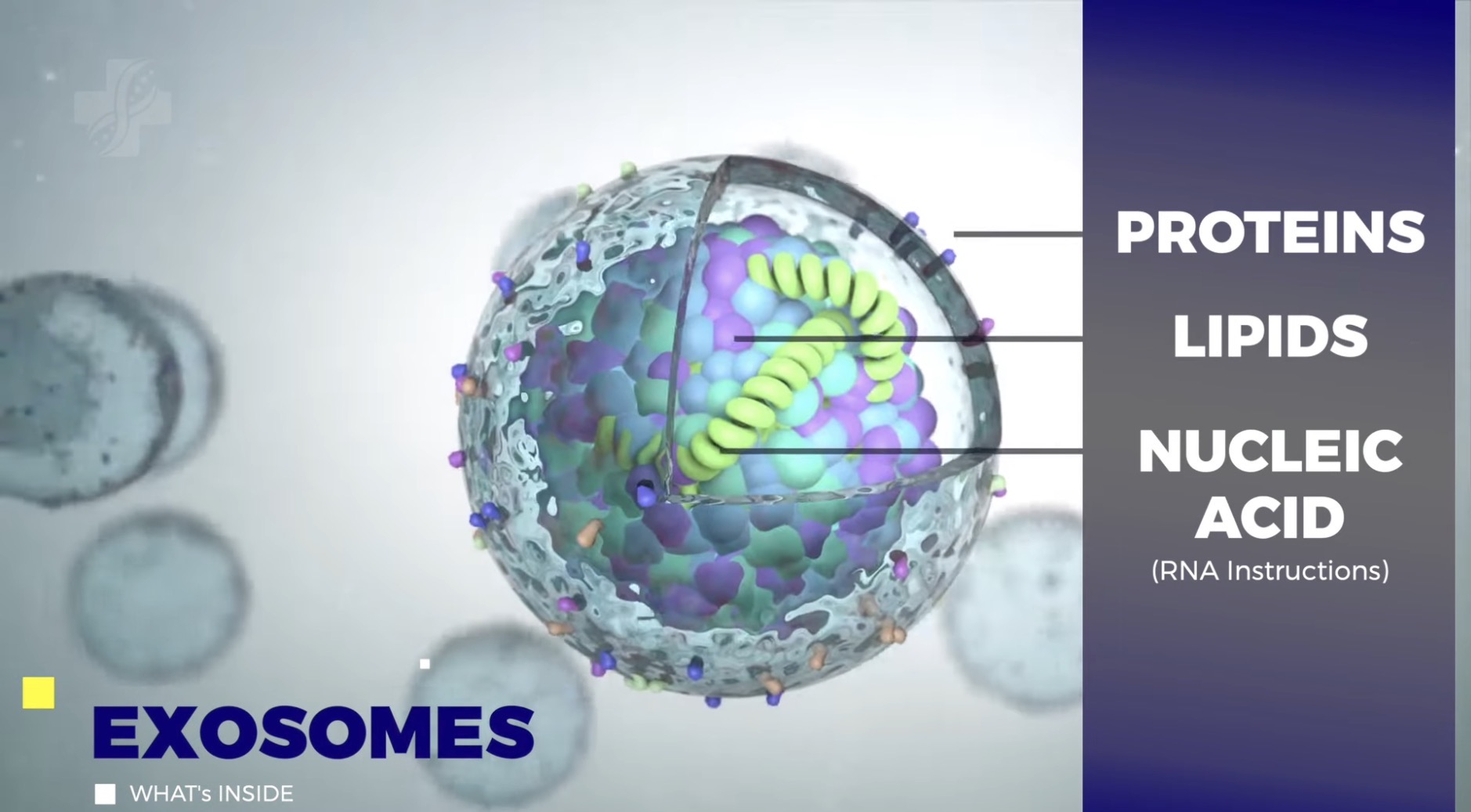
When coxa saltans externa becomes chronic, repeated microtrauma accumulates in the trochanteric bursa between the iliotibial band and the greater trochanter, producing chronic bursitis as a pain generator. Stem cell conditioned media contains growth factors, cytokines, and exosomes, and is expected to exert local anti-inflammatory action and to correct the tissue repair environment. Delivering conditioned media under ultrasound guidance to the bursa and tendon attachment layer around the greater trochanter aims to lower the baseline of pain and create a state that facilitates rehabilitation. For information on joint disease, please also refer to the guidelines of the Japanese Orthopaedic Association.
What it cannot target: the anatomical friction path itself
On the other hand, stem cell conditioned media is not a treatment that changes the course of the iliotibial band or the bony shape of the greater trochanter. If mechanical factors such as pelvic tilt, trunk stability, or hip abductor weakness remain uncorrected, symptoms of coxa saltans externa are prone to recur even after temporary relief from injection. Management is premised on ‘set design of defense and offense’ — combining injection with rehabilitation of the gluteus maximus and medius, stretching of the ITB and tensor fasciae latae, and re-education of single-leg stance and lunge mechanics. For more detail please see our stem cell conditioned media joint injection information page.
How it differs from steroid and hyaluronic acid injections
Traditionally, local steroid injection has been used for peritrochanteric inflammation. Its anti-inflammatory effect is potent, but repeated administration raises concerns about tendon attachment weakening and subcutaneous atrophy, creating a dilemma against frequent dosing. Hyaluronic acid is primarily used for intra-articular lubrication, with limited indication for extra-articular bursa or tendon attachment. Stem cell conditioned media is positioned to target both ‘inflammation suppression’ and ‘correction of the tissue repair environment,’ offering an option for those uncomfortable with repeat steroid injection. However, when coxa saltans externa is advanced with clear ITB thickening or trochanteric bony prominence, injection alone has limits, and additional orthopaedic evaluation may be required.
Frequently Asked Questions
Q. Is it safe to leave the ‘noise’ of coxa saltans externa alone?
When only the noise is present without pain or restricted movement and daily life is unaffected, observation may be acceptable. However, once the noise persists over a long period and tender points or discomfort emerge around the greater trochanter, transition to chronic bursitis should be suspected. Early evaluation — including a review of activity load and trunk mechanics — helps prevent recurrence.
Q. Can stem cell conditioned media periarticular injection cure it on its own?
This is not a stand-alone treatment. Behind coxa saltans externa lie mechanical factors such as hip abductor weakness, pelvic tilt, and insufficient trunk stability. A realistic combination design uses conditioned media to lower the baseline of inflammation while rehabilitation rebuilds movement patterns. Response magnitude and duration vary by individual and depend on disease stage, systemic condition, and lifestyle.
Q. Can I still receive conditioned media periarticular injection after a steroid injection?
Generally yes, but leaving an appropriate interval is desirable given residual steroid effect and tissue impact. The physician judges individually based on treatment history, symptom course, and ultrasound findings. Casual stacking at short intervals should be avoided.
Q. How long does it take to assess the effect?
Effect is assessed over weeks to months, using pain scores, movement-related noise or catching, and range of motion as markers. If response is poor, it is important to have a clear axis for switching to continuation, change, or orthopaedic re-evaluation. Expectations should not be inflated: individual variation and limits are the premise.
Q. Is there a guideline for return to sport?
Even when noise and pain subside, returning with unresolved mechanical issues carries high recurrence risk. It is safer to gradually increase load only after clearing movement checks — pelvic levelness in single-leg stance, trunk stability, and no medial collapse of the knee during a lunge.
──────────────
Supervising Physician: Shin Moriwaki, MD
Member, Japan Society of Aesthetic Surgery (JSAS) / Member, American Academy of Aesthetic Medicine
ECFMG Certificate
──────────────
📍AVAN TOKYO Ginza Joint Regenerative Medicine
AVAN TOKYO Ginza Joint Regenerative Medicine
English / 中文 / Tiếng Việt supported
Inquiries: DM / LINE / Website / Phone.