


Before Recommending Joint Injections to an Elderly Parent — Goal Setting and Fall Risk Assessment2026.09.07
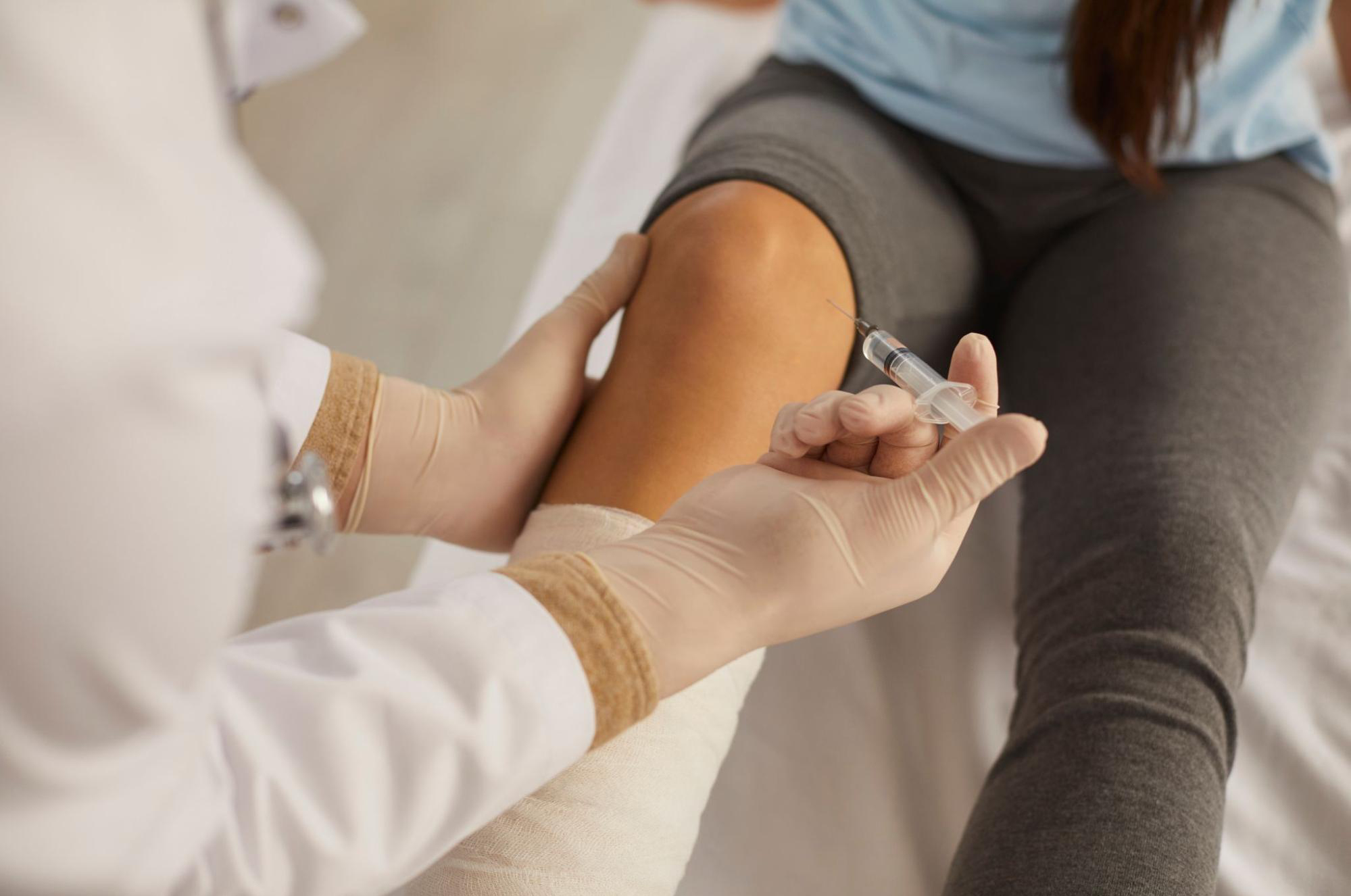
“My mother’s knee pain has kept her indoors — I want to give her some relief soon.” We often receive such requests from families considering joint injections for elderly parents. However, when weighing joint injections for the elderly, the most important thing is not lowering the pain score itself but two upstream tasks: setting goals based on what the person themselves wants to reclaim, and assessing the fall risk that appears the moment pain drops and activity rebounds. In our clinic, we always sort these two out before building the treatment plan.
Key Points
・Joint injections for the elderly should not aim only at moving a numeric pain scale.
・Have the patient articulate the movements they want back (walking, bathing, shopping, playing with grandchildren) before judging indication.
・The moment pain drops, activity often surges — fall risk temporarily rises.
・Assessing lower-limb strength, balance, medications, and home environment alongside the injection improves safety.
・A joint injection is not the goal of treatment but a means of preparing an environment where the person can move.
What to Consider Besides “Removing Pain” in Joint Injections for the Elderly
Put Into Words the Daily Activities the Patient Wants Back
In many joint injection consultations, families take the lead with “we just want the pain gone.” But even if a pain score (such as VAS) drops, if the patient says “there’s nothing I particularly want to do” or “I’m afraid to move,” quality of life will not improve as hoped. First, sit down with the patient and write out one to three concrete activities — for example, “walk to the shops near the station without a cane,” “bathe my grandchild,” “visit my friend down the street on foot.” Once goals are clear, the indicators used to evaluate the injection also stop drifting.
“Once the Pain Is Gone They’ll Move” Doesn’t Always Hold
In younger patients, once pain lifts, activity generally returns as before. In older patients, however, the very period of not moving usually erodes quadriceps and calf strength, hip range of motion, and postural control at the same time. When only the pain is removed in that state, the gap between the will to move and actual physical function widens — and that gap is what triggers falls. A joint injection opens the door labelled pain, but it does not by itself lift underlying fitness — a fact families also need to understand.
Goal Setting: Think in Three Layers — ADL, IADL, Social Participation
The goals of joint injections for the elderly rarely go off-track when sorted into three layers.
ADL (Basic Activities of Daily Living)
Eating, toileting, bathing, dressing, transfers — the foundation of daily life. If these are not independent, home life itself becomes fragile, so when pain is forcing assistance during toileting or bathing, injection priority is high.
IADL (Instrumental Activities of Daily Living)
Shopping, cooking, cleaning, medication management, finances, going out — activities that connect the person to society. Losing IADLs such as “walking to the neighborhood supermarket” or “taking the bus to the clinic” leads directly to becoming housebound and accelerates cognitive decline.
Social Participation
Hobby gatherings, conversations with friends, time with grandchildren, community activities — the realm tied to a sense of purpose. Families often skip this layer as “not that essential,” but it is the biggest factor sustaining motivation.
Which of the three layers a patient wants to reclaim most changes the timing, frequency, and combined rehabilitation for the joint injection. For general information on joint disorders, the patient-facing materials from the Japanese Orthopaedic Association are also useful.
Fall Risk Assessment: So the Extra Movement After the Injection Doesn’t Become the Trigger
Simple Assessment of Lower-Limb Strength and Balance
Before and after planning joint injections for the elderly, we recommend simple assessments such as the Timed Up & Go test (stand from a chair, walk three meters and return), single-leg stance time, and sit-to-stand count. What matters is less the absolute numbers than having a baseline that can be compared before and after the injection. If these improve after pain drops, movement can be increased safely; if they haven’t changed, rehabilitation is prioritized first.
Simultaneous Review of Medications, Vision, and Home Environment
Joint pain is not the only cause of falls. Unsteadiness from sleeping pills, anti-anxiety drugs, antihypertensives, and polypharmacy; poor vision from cataracts or ill-fitting reading glasses; and thresholds, lighting, and slippery bathrooms at home all combine. The very moment a joint injection makes the person mobile is when these hidden risks surface. Ideally, at the same time as the injection, review the prescriptions with the primary-care doctor and inspect the home (handrails, non-slip mats, night lighting) in parallel.
Dr. Moriwaki’s View: Pair the Injection With Preparing an Environment for Movement
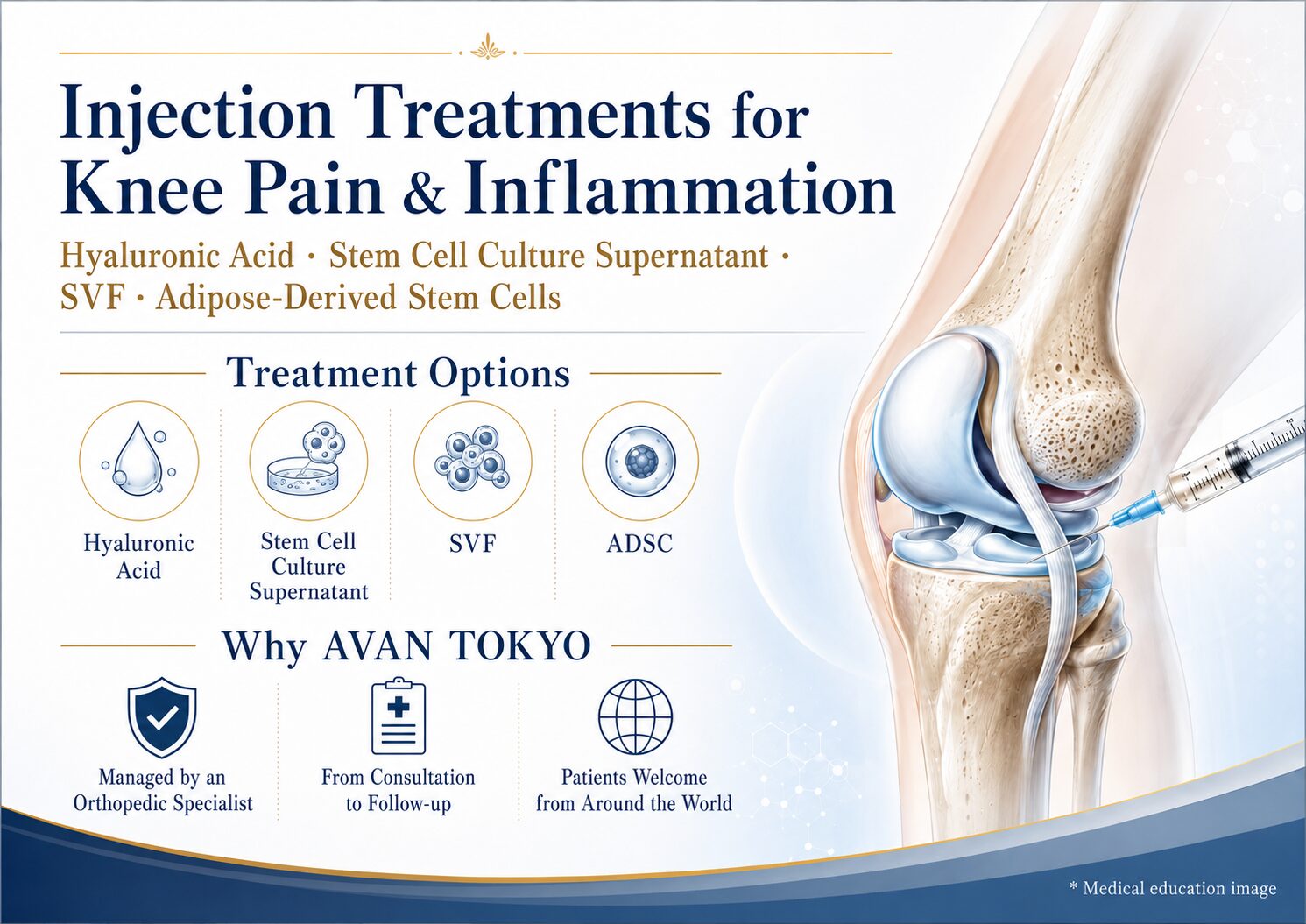
When I propose a joint injection to an elderly patient, I always tell the family: “The injection is the key that unlocks the door labelled pain — climbing the stairs beyond it, one step at a time, is done by the person and their environment.” Joint injections using stem cell conditioned media ease swelling and movement pain from synovitis and calm the intra-articular inflammatory cycle, giving the patient a chance to start moving. But the injection alone will not reverse sarcopenia or declining postural control; only when it is packaged with rehabilitation, nutrition (especially adequate protein), medication review, and home adjustments does a route back to daily life without falls become drawable. For more on treatment content, see also our page on joint injections using stem cell conditioned media.
FAQ
Q. Can someone over 90 still receive joint injections?
Age itself is essentially not a contraindication. However, we individually assess active infection, anticoagulant management, nutritional state, and cognition. Above all, being able to express what they want to do after the injection is very important in determining the meaning of treatment.
Q. Is it safe to recommend an injection for a parent with a history of falls?
A past fall is a strong predictor of future falls. Before easing the pain with an injection, we strongly recommend sorting out lower-limb strength, balance, medications, and the home environment first. Sudden increases in activity after the injection can lead to unusual movements from the relief of pain and cause falls.
Q. What should we do if the patient has dementia and cannot express their wishes clearly?
Even when verbal expression is difficult, it helps for the family to write down the “movements that mattered” from daily observation. Small routines such as “they prayed at the Buddhist altar every day” or “they liked stepping outside to look at the garden flowers” become goals for the injection. Comparing the amount of assistance, facial expression, and appetite before and after the injection allows effect judgment.
Q. How long does one injection keep the person moving more easily?
Durations vary based on joint and inflammation status, activity, and combined rehabilitation, but pain reduction often lasts from several weeks to several months. In the elderly, how much fitness can be regained during that period governs how long until the next injection is needed. The design principle is: “move while it’s working.”
Q. How should family members bring up the topic with the parent?
Rather than “getting rid of the pain,” phrasing such as “a consultation to help you do X again” tends to draw out motivation. We recommend that family members attend the counseling too and share a place where the goals can be put into words together.
──────────────
Supervising Physician: Shin Moriwaki, MD
Member, Japan Society of Aesthetic Surgery (JSAS) / American Academy of Aesthetic Medicine
ECFMG Certificate
──────────────
📍AVAN TOKYO Ginza Joint Regenerative Medicine
English / 中文 / Tiếng Việt supported
Inquiries via DM / LINE / Website / Phone.