


How AVAN TOKYO minimizes the rare-but-serious post-injection septic arthritis risk in stem cell conditioned media joint injections — a three-layer sterile-technique design and the fever, severe pain, and swelling red flags patients should watch for at home, explained by Dr. Moriwaki2026.08.05
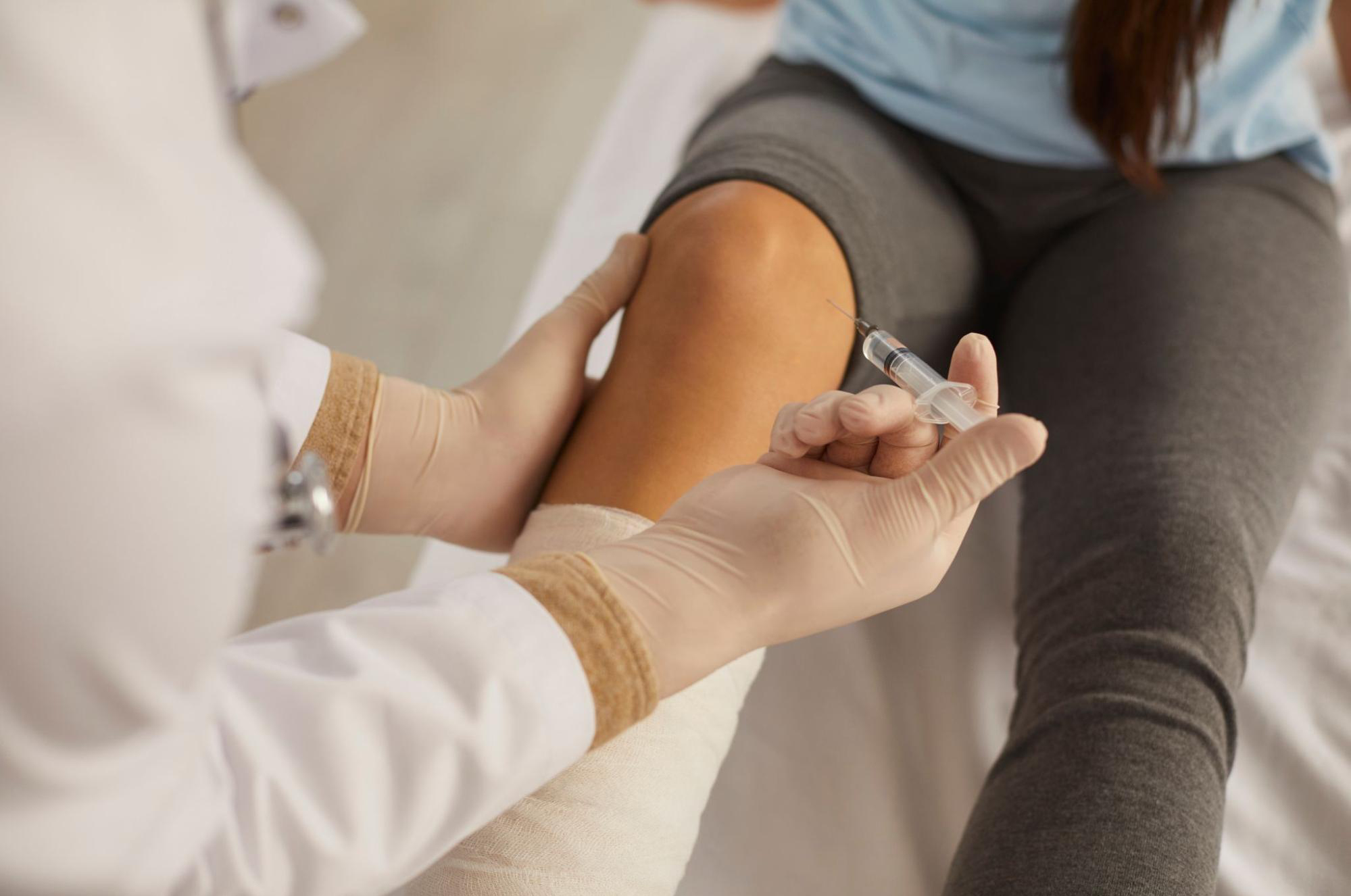
Stem cell conditioned media joint injections are often described as gentle on the body, yet many patients still worry: “What if bacteria get into the joint through the needle?” A joint puncture does, after all, pass a needle from the outside into a closed space — the joint cavity — and while it is extremely rare, the risk of post-injection septic arthritis, a serious complication, cannot be reduced to zero. This is exactly why, whenever we perform a stem cell conditioned media joint injection at our clinic, minimizing the risk of post-injection septic arthritis is built into the treatment design through strict sterile technique and structured post-procedure self-monitoring by the patient.
Key points of this article
・Post-injection septic arthritis can occur after a stem cell conditioned media joint injection, but the reported incidence is very low — on the order of one case per several thousand to several tens of thousands of adult knee injections.
・Risk reduction rests on three layers: (1) lot-level sterility testing of the product, (2) proper skin antisepsis and a sterile field at the puncture site, and (3) single-pass ultrasound-guided puncture.
・On the patient side, the essential task in the 48–72 hours after injection is to distinguish red flags — fever, resurgent severe joint pain, and a joint that feels hot and increasingly swollen — from a normal flare, and to seek care early when in doubt rather than waiting for the next morning.
・Patients with poorly controlled diabetes (high HbA1c), those on biologics or JAK inhibitors, and those on long-term oral steroids are more vulnerable to infection, and the timing and monitoring plan must be tailored individually.
What is post-injection septic arthritis?
Septic arthritis is a condition in which bacteria enter the joint cavity, proliferate inside it, and cause a purulent inflammation. The most common pathogens are skin commensals such as Staphylococcus aureus. When inadequate antisepsis, small breaks or eczema in the patient’s skin, or a weakened immune system overlap, bacteria that would normally be cleared can establish themselves inside the joint. Synovial fluid is nutrient-rich and highly permissive for bacterial growth, and once the process is under way, enzymes that dissolve cartilage matrix are released, so cartilage destruction can advance within days to weeks. This is why septic arthritis is categorically different from “the same kind of infection as a cold.”
Reported infection rates for joint puncture and injection
Although figures vary between reports, the incidence of septic arthritis after joint aspiration or injection in the adult knee is generally on the order of one case per several thousand to several tens of thousands. But because that rate is not zero, post-injection septic arthritis has to be openly acknowledged as one of the possible complications of stem cell conditioned media joint injections, with a clear plan around it. For general information on joint disease, please refer to the Japanese Orthopaedic Association.
How we minimize post-injection septic arthritis risk in stem cell conditioned media joint injections
Risk reduction cannot rest on a single measure such as “careful antisepsis.” At our clinic the design is organized into three distinct layers.
(1) Product side: lot-level sterility testing and closed-system handling
The first prerequisite is that the conditioned media itself be sterile. We use only lots that have passed sterility, mycoplasma, and endotoxin testing, and once opened, the product is drawn up in-house within a closed system and used up on the same day. We do not leave opened material exposed to air for long periods and we do not share a single vial across multiple patients.
(2) Puncture site: antisepsis, sterile field, no bare-hand contact
Immediately before the injection, the puncture area is generously prepped with an alcohol- or chlorhexidine-based antiseptic, allowed to dry, and then a sterile field is set. As a rule, the actual entry point is not touched by a bare hand after antisepsis. We do not perform stem cell conditioned media joint injections with the shortcut of “a quick swipe of alcohol through the clothing.”
(3) Technique: single-pass ultrasound-guided puncture and appropriate needle choice
We perform the injection under ultrasound guidance so that the drug reaches the joint cavity reliably and with the fewest possible passes. Repeatedly redirecting a blind needle increases the chance of carrying skin commensals into the joint and unnecessarily raises the risk of post-injection septic arthritis. Likewise, using an appropriately sized needle that reaches the joint cavity in one pass causes less tissue trauma — and less infection risk — than trying to trickle the drug through an overly thin needle.

Red flags patients themselves should watch for at home
However tightly we control risk inside the clinic, early detection ultimately depends on the patient’s ability to observe their own joint during the 48–72 hours after injection. The following signs should not be dismissed as a mere “temporary post-injection flare” — they are red flags that should raise suspicion of septic arthritis.
・A fever of 38°C or higher on the day of the injection or in the days that follow
・The injected joint is clearly hot to the touch and severely painful when pressed
・Swelling that grows steadily worse day by day (a normal flare usually starts to improve within 24–72 hours)
・A sudden loss of function — being unable to bear weight on the knee, or severe pain in the shoulder with the slightest movement
・Systemic symptoms such as chills, shivering, or cold sweats
If any one of these applies, do not “wait and see”: contact our clinic or a nearby orthopaedic center immediately. Septic arthritis is a disease in which joint destruction advances the longer treatment is delayed, and joint lavage plus antibiotic therapy within about 48 hours substantially shapes the prognosis. The single overnight decision — “maybe I’m overreacting, I’ll go tomorrow” — can determine the future of that joint.
How to distinguish this from a post-injection flare
After a stem cell conditioned media joint injection, a few percent of patients experience a temporary rebound in pain from the time of injection through the following day — the well-known post-injection flare. This is not a bacterial infection but a transient inflammatory reaction to the injected material and the puncture itself. A flare typically peaks the day after injection and then eases progressively; it rarely comes with fever or systemic symptoms, which is the key contrast with septic arthritis. If instead the pain “gets worse by the day,” is “accompanied by fever,” or comes with strong general malaise, this is the moment to suspect infection rather than a flare.
Special considerations for infection-vulnerable patients
For patients in any of the following categories, infection risk must be evaluated individually from the very moment a stem cell conditioned media joint injection is considered.
Diabetes with elevated HbA1c
When blood glucose control is poor, white blood cell function declines and defense against skin commensals weakens. We recommend bringing HbA1c into as reasonable a range as possible before planning the injection, and we monitor glucose and general condition carefully before and after the procedure.
Rheumatoid arthritis patients on biologics or JAK inhibitors
In patients on immune-modulating therapy, the early symptoms of septic arthritis can be limited to mild pain and a low-grade fever, allowing the process to progress unnoticed. We coordinate with the treating physician to check the interaction between the injection schedule and the biologic dosing cycle in advance.
Long-term oral steroids and other immunosuppressants
In these patients the red flags of infection tend to be blunted or delayed, so we extend the at-home monitoring window somewhat and instruct them to contact us early at the first unfamiliar sensation in the joint.
For more on the indications and limits of stem cell conditioned media joint injections, please also see our page on joint injection with stem cell conditioned media.
Frequently asked questions
Q. How often does septic arthritis actually occur?
Reports vary, but the incidence of septic arthritis after joint aspiration or injection in the adult knee is generally on the order of one case per several thousand to several tens of thousands — very low. Because it is not zero, however, we do not lean on the low incidence alone: we combine strict sterile technique with structured post-procedure self-monitoring by the patient to keep the risk down.
Q. My pain came back a little after the injection. Is this an infection?
A transient increase in pain on the day of the injection or the following day is the well-known post-injection flare — a temporary inflammatory reaction, not a bacterial infection, which usually peaks the day after injection and then eases day by day. If instead the pain “gets worse by the day,” is “accompanied by fever,” or the joint becomes hot and severely swollen, please suspect infection and seek care promptly.
Q. I have diabetes. Can I still receive a stem cell conditioned media joint injection?
Unless your blood glucose control is extremely poor, a stem cell conditioned media joint injection is generally still on the table as an option. From an infection-risk standpoint, however, we would like to bring HbA1c into as reasonable a range as possible before planning it, and to check your general condition carefully around the procedure. The final decision is made on an individual clinical basis.
Q. When can I take a bath or shower after the injection?
Once the dressing at the puncture site has been removed and any bleeding has stopped, a short shower on the same day is often fine. Long baths, hot springs, and saunas should be avoided on the day of injection; you may resume them the following day if you feel well. Please do not rub the puncture site vigorously.
Q. Can I take pain medication after the injection?
Acetaminophen for temporary pain relief may be used after individual discussion. NSAIDs such as loxoprofen or ibuprofen can both interfere with tissue repair and mask the red flags of infection (fever, in particular), so please avoid prolonged self-directed use and always consult your treating physician first.
──────────────
【Supervising physician】Shin Moriwaki, MD
Member, Japan Society of Aesthetic Surgery (JSAS) / Member, American Academy of Aesthetic Medicine
ECFMG Certificate
──────────────
📍AVAN TOKYO 銀座 関節再生医療
AVAN TOKYO Ginza Joint Regenerative Medicine
English / 中文 / Tiếng Việt supported
Inquiries via DM / LINE / Website / Phone are welcome.