


Grinding, Painful Snapping Along the Medial Border of the Scapula — Not to Be Mistaken for Cervical Radiculopathy or Trapezius Myofascial Pain: Dr. Moriwaki Explains Snapping Scapula Syndrome, Scapulothoracic Bursitis Chronicized by Desk Work and Overhead Sports, and Where Peribursal Injection of Stem Cell Conditioned Media Can and Cannot Reach in the Rib–Scapula Interface2026.08.17
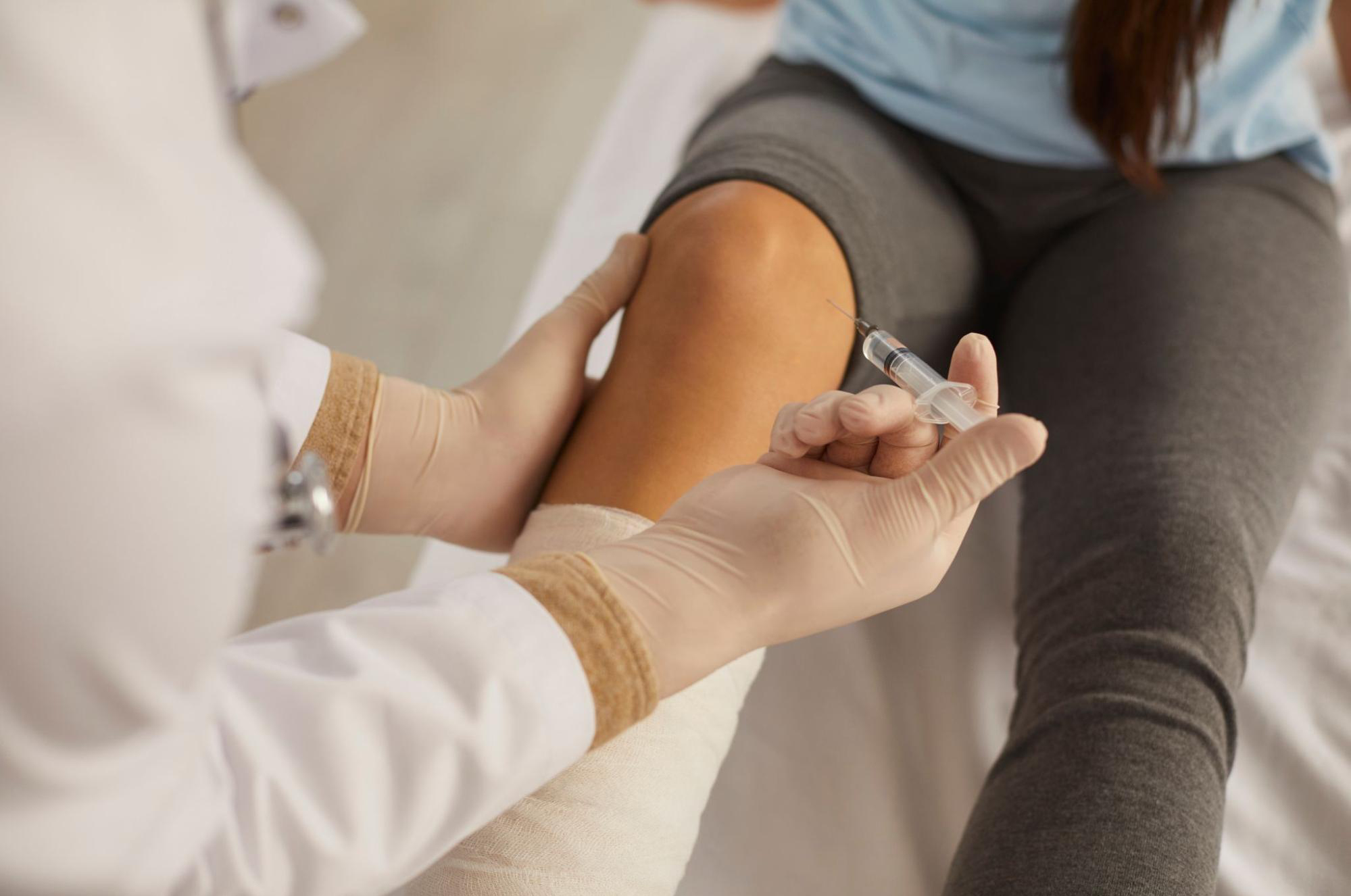
“There is a grinding sound behind my shoulder blade,” “deep in the back it aches when I rotate the shoulder,” “in the second half of the workday a dull pain settles along the medial border of one scapula” — patients presenting this way are often not suffering from cervical radiculopathy or trapezius myofascial pain, but from snapping scapula syndrome. This is a pain pattern driven by chronic friction and inflammation between the scapula and the rib cage, and peribursal injection of stem cell conditioned media into the scapulothoracic bursa is one option considered within conservative treatment. Importantly, however, stem cell conditioned media does not alter the anatomical contact between scapula and rib. What it can and cannot address needs to be laid out clearly, and this article does that from Dr. Moriwaki’s clinical perspective.
Key Points
・Chronic deep pain along the medial border of the scapula, together with audible grinding, may be snapping scapula syndrome.
・The differentiating findings and initial workup differ from cervical radiculopathy and trapezius myofascial pain.
・Peribursal injection of stem cell conditioned media into the scapulothoracic bursa targets the inflammatory environment inside the bursa — not anatomical remodeling of the bone-contact pathway itself.
・Injection alone is never enough: posture correction, retraining of periscapular muscles, and workstation adjustments are essential adjuncts.
・Response is assessed over several weeks to three months; if the response is poor, diagnosis is re-evaluated and orthopedic reassessment is arranged.
What Snapping Scapula Syndrome Is — the Real Source of the “Grinding Under the Scapula”
Besides articulating with the clavicle at the acromioclavicular joint, the scapula also glides along the dorsal surface of the thoracic cage (ribs) and this gliding sustains a wide range of shoulder motion. Anatomically this is not a true joint, but kinematically it is called the scapulothoracic articulation and is estimated to account for about one-third of total shoulder motion. When repetitive friction and inflammation chronicize at this interface, the result is snapping scapula syndrome.
Anatomy of the scapulothoracic bursae and the mechanism of repetitive friction
Several lubricating structures (scapulothoracic bursae) lie between the deep surface of the scapula and the rib cage. The main ones are the supra-medial scapulothoracic bursa between the superomedial angle and the second rib, and the infrascapular bursa between the inferior angle and the thorax. These are designed for smooth gliding during elevation and rotation of the shoulder. However, if forward head posture, increased thoracic kyphosis, and abnormal scapular positioning persist, sustained shear stress on this gliding surface drives a chronic cycle of microinflammation, fibrosis, and heightened pain sensitivity within the bursa. Audible grinding or clicking (crepitus) is believed to arise from the fibrotic bursal walls or, more rarely, from a bony prominence developing between the medial scapular border and the rib (the so-called Luschka tubercle).
Why the syndrome tends to chronicize in desk workers and overhead athletes
Snapping scapula syndrome tends to chronicize most in two groups: long-hour desk workers on PCs, and overhead-sport athletes performing repetitive elevation (throwing, spiking, swimming). In the first group, forward head posture, thoracic kyphosis, and scapular anterior tilt sustain a position that presses the medial scapular border toward the rib cage, chronically compressing the bursa. In the second group, follow-through motion forces excessive scapular anterior tilt and downward rotation, and repetitive frictional loading accumulates microdamage in the bursal wall and along the bone-contact path. In both, the central pathology is not a single traumatic event but the accumulation of everyday motion.
Differentiating from Cervical Radiculopathy and Trapezius Myofascial Pain
Pain along the medial scapula and upper shoulder can be produced by several distinct conditions. Injecting without an accurate diagnosis fails to reach the real generator of pain. When considering snapping scapula syndrome, at least two differentials must be kept in mind.
If there is upper-limb numbness, evaluate cervical radiculopathy first
In radiculopathy from foraminal narrowing at C5-6 or C6-7, patients typically show deep interscapular pain together with numbness or weakness in the arm and thumb-to-index-finger distribution. A positive Spurling test (extension and lateral bending of the neck toward the affected side reproducing the symptoms) puts cervical MRI at the top of the workup. Peribursal injection of stem cell conditioned media into the scapulothoracic bursa will not change nerve root inflammation or physical compression. The first step is to avoid the shortcut of concluding “medial scapular pain equals snapping scapula syndrome.”
If deep, sharply localized pressure pain is present, strongly consider snapping scapula syndrome
With myofascial pain of the trapezius or rhomboids, tenderness lies in the muscle belly (trigger points) and fluctuates with movement and posture; deep bony pressure pain and audible crepitus are not prominent. In snapping scapula syndrome, focused pressure just deep to the medial scapular border (rib side) elicits sharply localized pain, and elevation-depression of the shoulder reproduces the audible friction. When differentiation is difficult, CT is used to assess the Luschka tubercle or rib-head morphology, and MRI to look for bursal effusion or fibrotic changes.
What Peribursal Injection of Stem Cell Conditioned Media Can and Cannot Do
When the target is clearly defined, peribursal injection of stem cell conditioned media into the scapulothoracic bursa for snapping scapula syndrome makes sense. Confusing the target leads to the impression that the treatment “did not work” or “was not right.”
What it can target: the chronic inflammatory cycle inside the bursa
Stem cell conditioned media contains various cytokines and growth factors that may down-modulate the inflammatory cytokine-dominant environment inside a chronic bursa and slow further fibrotic progression. This differs in both mechanism and time course from the immediate, potent anti-inflammatory action of a local steroid injection. It is positioned as one option, particularly in cases where the atrophy risk of repeated steroid injections on the bursal wall and surrounding soft tissue is undesirable. For general orthopedic guidance on joint disorders, please also refer to the Japanese Orthopaedic Association guidelines.
What it cannot target: the anatomical bone-contact pathway itself
On the other hand, the anatomical contact pathway — Luschka tubercle, bony prominences on the rib head, increased thoracic kyphosis, malposition of the scapula — is not altered by an injection of stem cell conditioned media. That domain is addressed by posture correction, retraining of the periscapular muscles (serratus anterior, rhomboids, middle and lower trapezius), and workstation adjustment (monitor height, chair, keyboard placement). When a bony prominence is the main driver and the audible clicking or pain markedly interferes with daily life, orthopedic evaluation for arthroscopic bursectomy or bony prominence resection may be considered. For details of our approach, please also see our page on stem cell conditioned media joint injections.
Designing the Treatment — Never Ending with “Injection Alone”
Treatment for snapping scapula syndrome follows the sequence: confirm diagnosis → step through conservative interventions → consider injection therapy → reassess response. Peribursal injection of stem cell conditioned media into the scapulothoracic bursa is one rung of that ladder, placed on the foundation of posture, workstation, and rehabilitation. Response is assessed over several weeks to three months using objective measures: pain scores, range of motion, work-tolerance time, and frequency of audible crepitus. When response is poor, it is appropriate to re-confirm the diagnosis, obtain additional cervical and thoracic imaging, and refer for orthopedic consultation. It should also be shared openly from the first visit that response varies between individuals and that improvement is not guaranteed.
FAQ
Q. Once diagnosed with snapping scapula syndrome, what should I do first?
The first priorities are reviewing posture and the workstation environment, and retraining the periscapular muscles (serratus anterior, rhomboids, middle and lower trapezius). If pain and inflammation remain chronic despite rest, icing, and appropriate NSAIDs, injection therapy such as peribursal injection of stem cell conditioned media into the scapulothoracic bursa is then considered.
Q. Will the “grinding sound” itself disappear after the injection?
The main source of the audible sound is the anatomical contact between the medial border of the scapula and the rib side, so an injection of stem cell conditioned media does not change bone shape or the contact pathway itself. What can be targeted is reducing bursal inflammation and easing pain, swelling, and discomfort with motion — complete elimination of the sound itself is not guaranteed.
Q. How long until effect can be judged?
Generally response is assessed over several weeks to three months, using objective measures such as pain scale, range of motion, work-tolerance time, and frequency of the audible click. If response is poor, it becomes necessary to re-confirm the diagnosis, obtain additional cervical and thoracic imaging, and pivot to orthopedic consultation. It is important to share up front that response varies between individuals and that this treatment has limits.
Q. What is the difference from a steroid joint injection?
Local steroid injection is characterized by strong immediate anti-inflammatory action, but repeated use carries risk of atrophy of the bursal wall and surrounding soft tissue. Injection of stem cell conditioned media is a different approach that aims to modulate the tissue-repair environment, positioned as an option when repeated steroid use is undesirable. The two have their own indications and limits, and are best considered as complementary tools rather than as a simple hierarchy.
Q. Can I continue desk work during treatment?
Treatment itself can continue, but adjustments to monitor height, chair, keyboard placement, and scapular movement patterns significantly influence treatment effect and recurrence rate. It is essential to combine injection with adjustments to daily-life movements — injection alone rarely prevents recurrence.
──────────────
Medical Supervisor: Shin Moriwaki, MD
Member, Japan Society of Aesthetic Surgery (JSAS) / Member, American Academy of Aesthetic Medicine
ECFMG Certificate
──────────────
📍AVAN TOKYO Ginza Joint Regenerative Medicine
English / 中文 / Tiếng Việt supported
For consultations, please contact us via DM / LINE / Website / Phone.