


Thermotherapy and Joint Injections: Where Blood-Flow Benefit Meets Inflammation Risk — Explained by Dr. Moriwaki2026.09.09
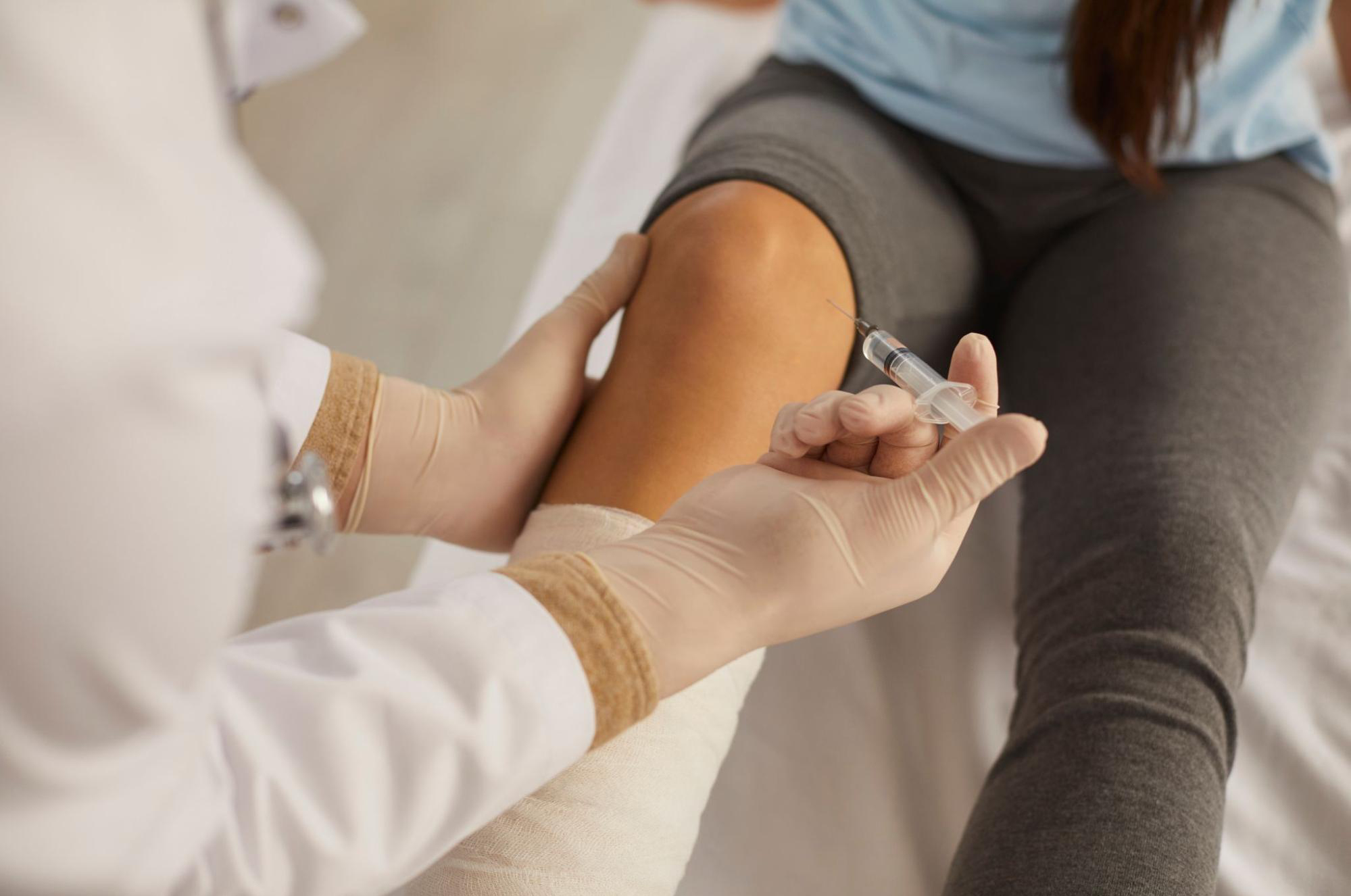
“Soaking in a hot spring makes my knee pain lighter, but is it really okay to go straight in after a joint injection?” — patients on regular follow-up for knee osteoarthritis or chronic enthesopathy raise this kind of question more and more often. Thermotherapy and joint injection are both mainstays of conservative care for pain and inflammation, but their physiological axes overlap in some phases and directly oppose each other in others. Combined in the wrong order, the two can cancel one another out or even trigger an unwanted flare. This article, prepared by Dr. Moriwaki of AVAN TOKYO Ginza Joint Regenerative Medicine, sorts out the compatibility of thermotherapy and joint injection through two lenses: the benefit of improved blood flow and the risk of worsened inflammation.
Key Points
・The main effects of hot-spring bathing and thermotherapy are increased peripheral blood flow and skeletal-muscle relaxation — often helpful in the chronic phase of osteoarthritis.
・Combining thermotherapy and joint injection on the same day risks accelerating diffusion of the injectate out of the joint cavity and amplifying post-injection flare through local hyperemia, so time separation is the default.
・When the joint shows acute-inflammation signs — heat, marked swelling, throbbing pain — adding heat can worsen synovitis. Cooling takes priority in this phase.
・After an intra-articular injection of stem cell conditioned media, the practical rule of thumb is to avoid prolonged bathing, saunas, and bedrock baths on the day and the following day, then return to short, lukewarm hot-spring bathing after roughly 48 hours.
・If you want to combine a hot-spring trip with your injection schedule, completing the injection at least one week before travel is a safer margin.
Physiological Effects of Hot Springs and Thermotherapy on the Joint
Thermotherapy is one of the oldest branches of physical medicine, and hot-spring convalescence (“touji”) has long been part of Japanese conservative care. Basic-science accumulation has clarified its mechanism beyond the mere “it feels good” impression.
Peripheral Blood-Flow Increase and Metabolite Clearance
When skin temperature rises to around 38–42°C, subcutaneous arterioles dilate, and blood flow to the skin and subcutaneous tissue climbs to several times the resting level. This increase reaches not only the skin but also the underlying fascia, muscles, tendon insertions, and tissue around the joint capsule. In chronic knee osteoarthritis, microcirculation is impaired around the synovium and joint capsule, and stagnant metabolites contribute to pain and morning stiffness — improving blood flow through heat is therefore a rational intervention.
Skeletal-Muscle Relaxation and Joint Range of Motion
Heat stimulation suppresses gamma motor-neuron firing at the muscle spindle and relaxes skeletal muscle. Around the knee, relaxation of the quadriceps and the triceps surae, and around the shoulder relaxation of the trapezius and infraspinatus, reduce compressive stress and shear on the joint and widen the achievable range of motion. Even without any structural change in the joint itself, symptomatic pain often eases just because the state of the surrounding muscle changes — a well-known clinical observation.
Heat and Inflammation — the Line Between “When It Helps” and “When to Avoid It”
The most important lens for judging the compatibility of thermotherapy and joint injection is the phase of inflammation. In the very same knee osteoarthritis, whether you should warm the joint or cool it can reverse depending on the phase.
Why Heat Is Off-Limits in the Acute Inflammatory Phase
A knee that is hot, tensely swollen, tender with a throbbing quality, and suddenly stiffer than usual — adding heat in this setting accelerates vascular permeability and worsens both effusion and synovitis. In this phase, cooling to suppress inflammatory cytokine activity and resting the joint take priority. It is not at all rare for a patient to bathe in a hot spring in this phase and wake the next morning with the joint swollen to twice its size and immobile.
When Heat Delivers in the Subacute and Chronic Phase
Once swelling and heat have subsided into the subacute phase, or in long-standing chronic osteoarthritis, thermotherapy becomes a clear ally. Typical chronic-phase complaints — strong morning stiffness, pain on start-up that eases with movement — respond well to a morning bath or a hot pack that contributes to range-of-motion recovery. For joint-disease information, the site of the Japanese Orthopaedic Association also endorses many conservative regimens that combine thermotherapy with exercise therapy.
Time-Line Design When Combining Thermotherapy and Joint Injection
For patients who want to continue enjoying hot springs or home bathing while attending clinic, here is the practical timing by injection type.
Compatibility With Hyaluronic-Acid and Steroid Joint Injections
Hyaluronic-acid joint injection places a high-molecular-weight gel inside the joint cavity to serve as lubricant and shock absorber. Soaking in a hot bath for a long time immediately after the injection may accelerate diffusion of the material out of the joint through local hyperemia, so refraining from bathing on the day, or limiting it to a brief shower, is standard. With steroid joint injections, a transient inflammatory flare around the injection site can appear from a few hours to a day later; adding heat during this window tends to amplify the flare. Enjoying a hot spring is safer once things settle after the following day.
How Heat Interacts With Stem Cell Conditioned Media Joint Injections
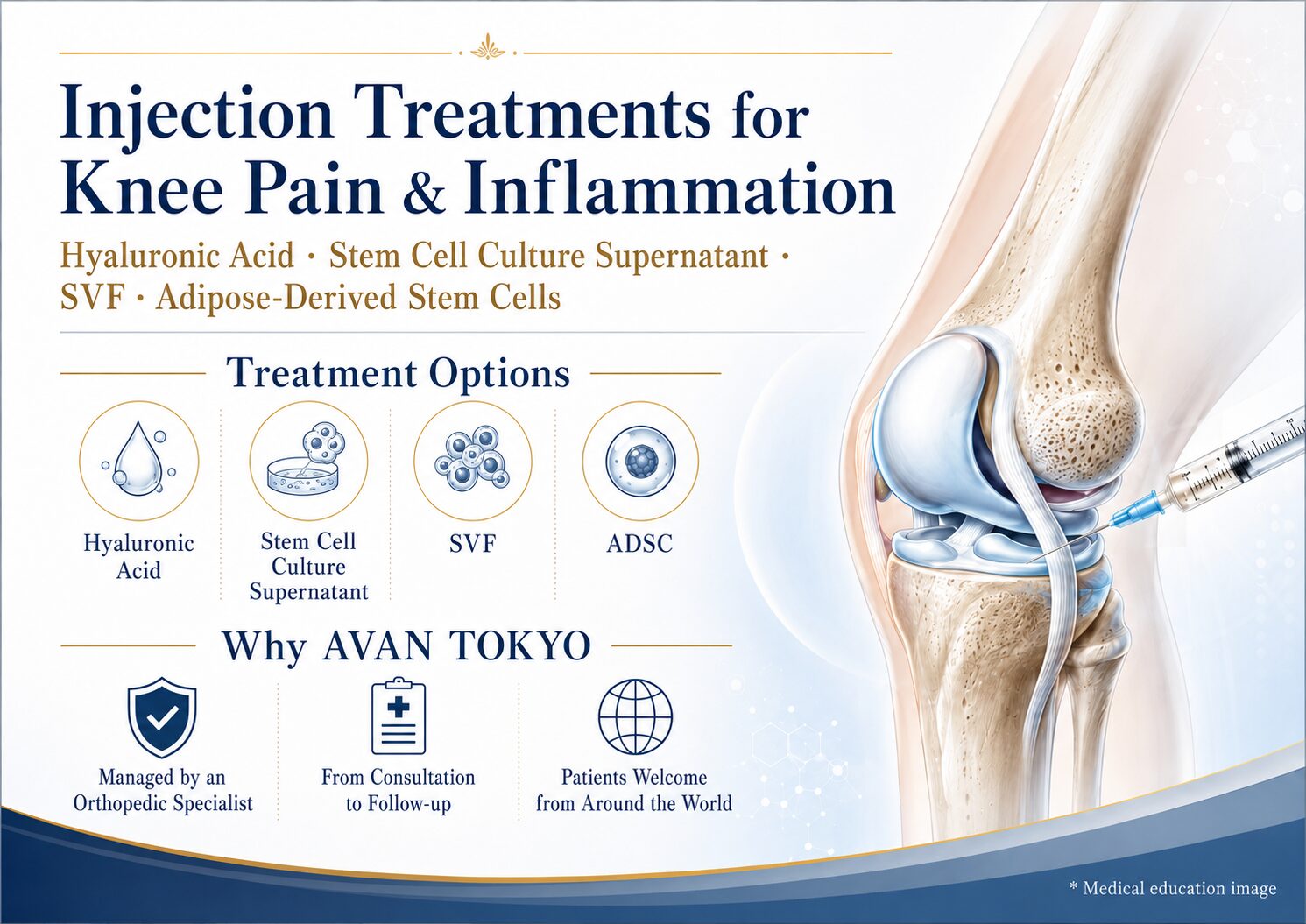
Stem cell conditioned media joint injection delivers growth factors, cytokines, and exosomes into the joint cavity to rebalance the synovial inflammatory environment. Adding intense heat immediately after the injection may accelerate diffusion of the active components out of the joint through local hyperemia, and the added heat over the small tissue disturbance from the needle can amplify next-day swelling in some cases. Clinically, avoiding bathing on the day of the injection through the following day, or limiting to a lukewarm shower, and returning to short, lower-temperature hot-spring bathing after about 48 hours, is a workable rule. See our page on joint injection of stem cell conditioned media for details.
When to Avoid Hot Springs and Thermotherapy — and How to Enjoy Them Safely
To get the most out of the compatibility of thermotherapy and joint injection, several contraindications and cautions must be respected. Acute inflammatory phase, suspected septic arthritis, history of deep vein thrombosis, marked blood-pressure lability, and uncontrolled heart failure all warrant careful judgment about hot-spring bathing itself. Discuss whole-body status, not just the joint, with your physician.
Practical guardrails for safe enjoyment include: water temperature under 40°C, no more than 10 minutes per soak, no more than two to three baths per day, and consistent hydration before and after bathing. Because saunas and bedrock baths raise core temperature more sharply than a hot-spring soak, we recommend a gap of at least 48–72 hours after joint injection.
FAQ
Q. Is it okay to get into a hot spring on the same day as a joint injection?
On the day of the injection, prolonged bathing, hot springs, and saunas should generally be avoided in favor of a lukewarm shower. This applies to all joint injections — hyaluronic acid, steroids, and stem cell conditioned media — because on the day of injection, the puncture site is not yet fully sealed, and local hyperemia can amplify post-injection flare. From the following day, if the joint feels fine, you can resume with short, lukewarm baths.
Q. Should bedrock baths and saunas also be avoided after a joint injection?
Bedrock baths and saunas raise core temperature more than hot-spring bathing and can amplify transient flare and swelling after the injection, so we recommend a gap of at least 48–72 hours. Even beyond the following day, if the injection site shows heat, marked swelling, or throbbing pain, avoid heat exposure and consult your treating physician first.
Q. I have knee osteoarthritis and a hot-spring trip planned. When should I get my joint injection?
To enjoy a hot-spring trip fully, one useful rule of thumb is to complete the joint injection at least one week before travel. By that point, the effect of hyaluronic acid or stem cell conditioned media is beginning to build, while the post-injection flare has typically settled. Scheduling the injection after the trip is also fine — but if the joint swells after bathing at your destination, be sure to report this at your follow-up visit.
Q. Can thermotherapy alone make a stem cell conditioned media joint injection unnecessary?
Thermotherapy eases symptoms through improved blood flow and muscle relaxation, but it does not directly intervene in the synovitis itself or in subchondral bone changes. It is useful for chronic-phase symptom relief, but in progressive osteoarthritis a separate approach is needed to reshape the intra-articular inflammatory environment. Rather than substitutes, thermotherapy and stem cell conditioned media joint injection should be understood clinically as complements deployed in different phases.
Q. Which should I start first — thermotherapy or a joint injection?
While acute inflammatory signs are present, cooling and rest take priority; once inflammation settles, joint injection can be considered. Once the post-injection flare window passes, thermotherapy and exercise therapy can restart in parallel and serve as symptom control between injections. Order depends on the state of each joint, so please share your lifestyle and any travel plans at your first visit.
──────────────
Supervising Physician: Shin Moriwaki, MD
Member, Japan Society of Aesthetic Surgery (JSAS) / American Academy of Aesthetic Medicine
ECFMG Certificate
──────────────
📍AVAN TOKYO Ginza Joint Regenerative Medicine
English / 中文 / Tiếng Việt supported
Inquiries via DM / LINE / Website / Phone.