


Second Fat Transfer Breast Augmentation: 1 Month After Surgery2026.07.05
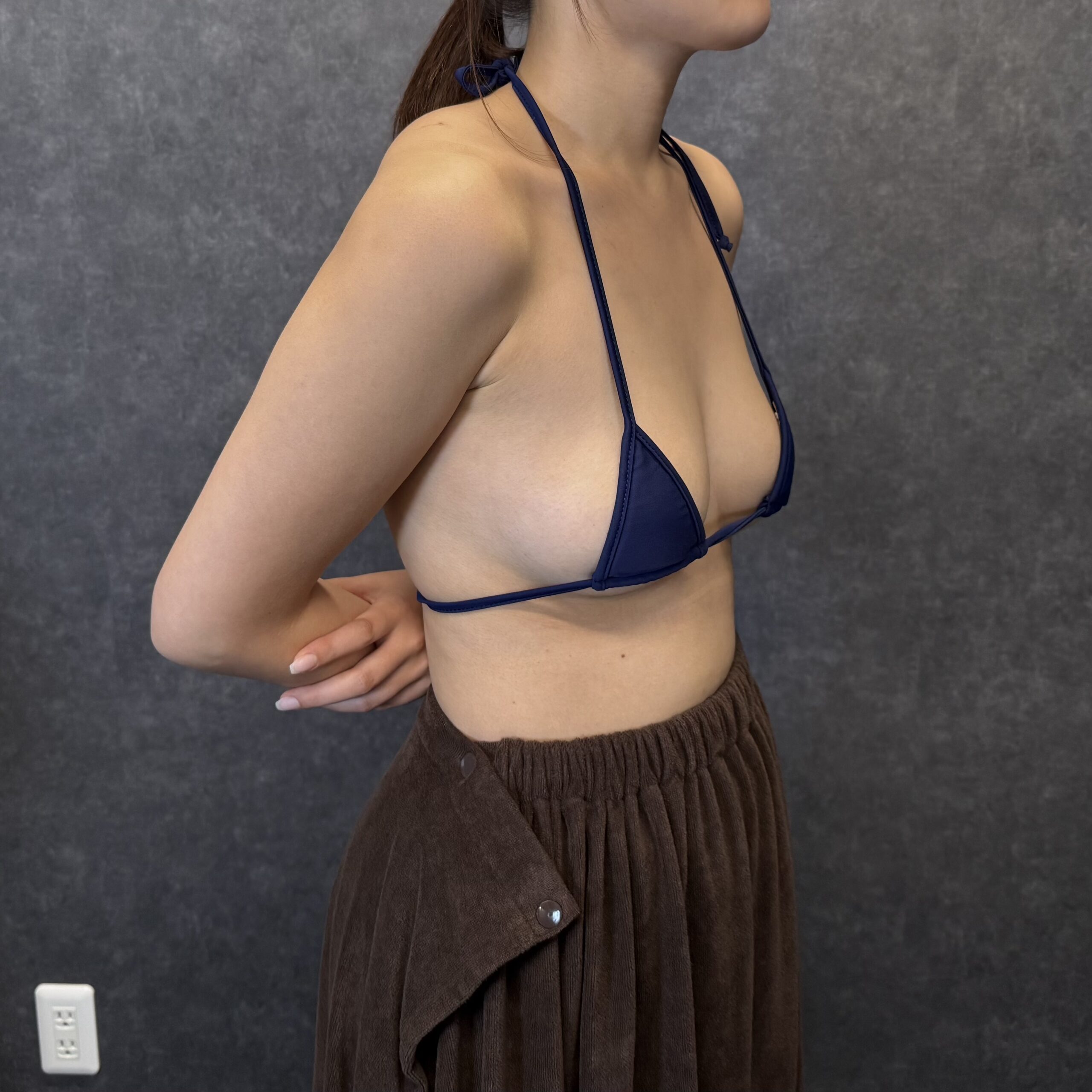
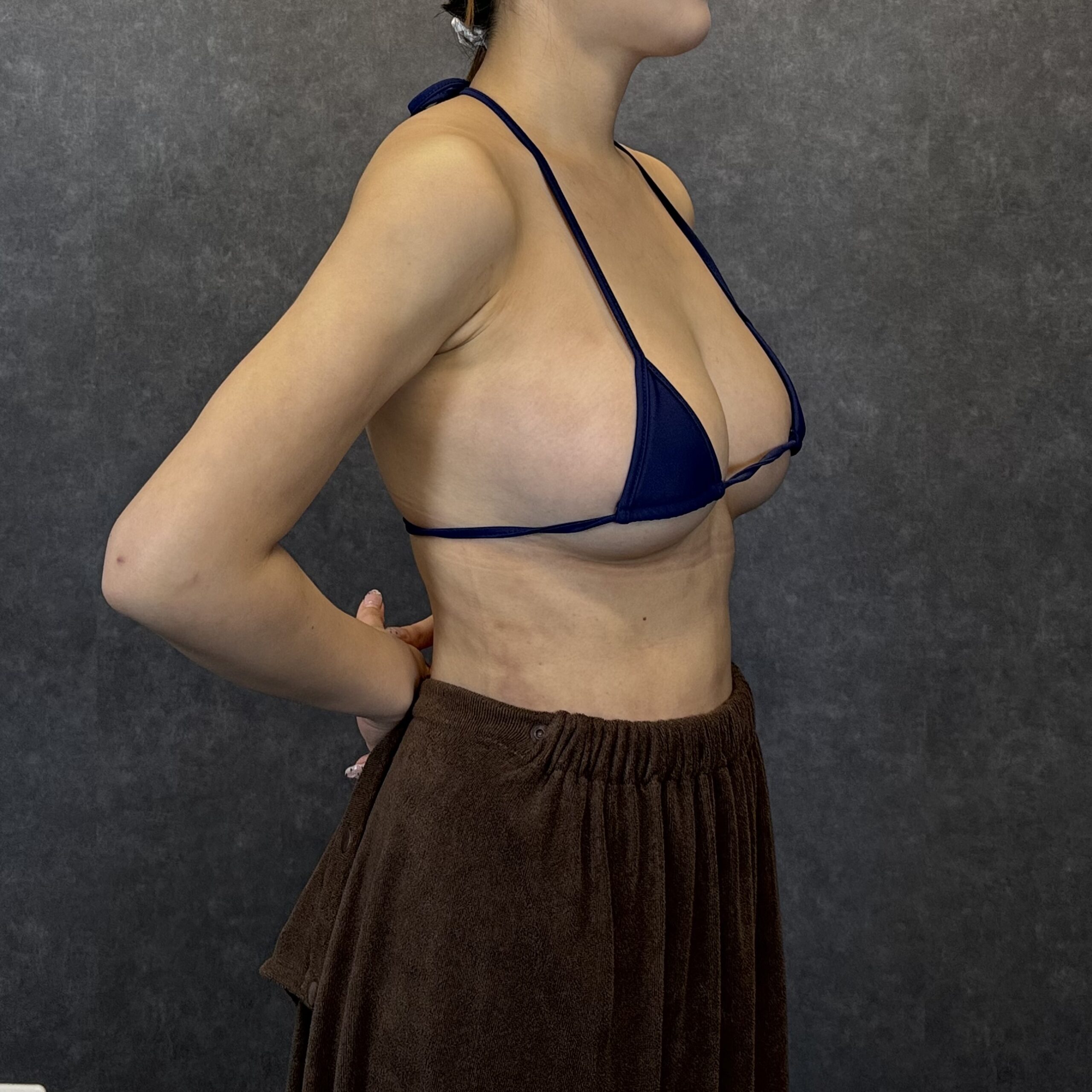
Fat Harvested From Arm Liposuction in the First Procedure and Abdominal Liposuction in the Second Procedure
This case shows the recovery at 1 month after a second fat transfer breast augmentation.
The patient is 26 years old, 158cm tall, and weighs 49kg.
For the first fat transfer breast augmentation, fat was harvested from arm liposuction. For the second procedure, fat was harvested from abdominal liposuction and injected into the breasts.
The fat harvesting volume was:
● First procedure: 790cc from arm liposuction
● Second procedure: 1150cc from abdominal liposuction
For this second fat transfer breast augmentation, 200cc was injected into the right breast and 200cc into the left breast.
Although the injected volume was not very large, this patient has very good fat retention. Even at 1 month after surgery, a clear breast volume increase can be seen.
Fat Transfer Breast Augmentation Is Not Determined Only by Injection Volume
In fat transfer breast augmentation, the final result is not decided only by how many cc of fat are injected.
What matters most is how much of the injected fat survives.
Even with the same 200cc injection volume, some patients retain fat very well, while others may experience more absorption.
Fat retention can be affected by:
● Blood flow
● Skin stretchability
● Breast tissue capacity
● Body type
● Smoking
● Postoperative diet
● How the fat is injected
● Postoperative lifestyle
In this case, although the injection volume was 200cc per side, the fat retention was very good, resulting in a natural and visible breast enhancement.
A Second Fat Transfer Breast Augmentation May Retain Better
Fat transfer breast augmentation may be completed in one procedure for some patients.
However, for patients who want a larger change or who did not retain enough fat after the first procedure, a second or third fat transfer breast augmentation can be an important option.
After the first fat grafting procedure, some fat may remain in the breast, the skin and tissue may stretch slightly, and the breast may become more suitable for additional fat grafting.
By adding fat on top of the fat that has already survived, it may be possible to build breast volume and roundness more gradually and naturally.
Fat Was Harvested From the Abdomen This Time
For this second fat transfer breast augmentation, fat was harvested from the abdomen.
Abdominal liposuction is not only a way to collect fat for breast augmentation. It can also improve the waistline, lower abdomen, and overall body contour.
Fat transfer breast augmentation can therefore improve both the breasts and the donor area at the same time.
In this case, the first procedure used fat from the arms, and the second procedure used fat from the abdomen. This allows us to consider the overall balance of the upper body, waist, and breasts.
Abdominal Liposuction Firmness Often Peaks Around 1 Month
After liposuction, the skin and subcutaneous tissue may become firm during the healing process. This is called fibrosis or postoperative contracture.
After abdominal liposuction, firmness, tightness, swelling, and unevenness often become more noticeable around 1 month after surgery.
Patients may feel:
● The abdomen is hard
● The skin feels tight
● Swelling remains
● Unevenness is visible
● The final result is difficult to imagine
However, 1 month after surgery is still not the final result.
Firmness and fibrosis after abdominal liposuction usually improve gradually over 3 to 6 months, although recovery varies between individuals.
Downtime Care Is Important
Both fat transfer breast augmentation and liposuction require proper postoperative care.
For fat grafting, blood flow and nutrition are important for fat survival. For liposuction, swelling and fibrosis need time and appropriate care to settle.
After surgery, we recommend:
● Smoking cessation
● Avoiding excessive dieting
● High-protein meals
● Sufficient sleep
● Proper compression care
● Massage only when appropriate
● Regular follow-up visits
Sudden weight loss or smoking after fat transfer breast augmentation may negatively affect fat retention and wound healing.
Fat Transfer Breast Augmentation at AVAN TOKYO
At AVAN TOKYO, we do not consider fat transfer breast augmentation as only a breast enlargement procedure.
We see it as part of overall body contour design.
Fat can be harvested from areas such as the arms, abdomen, thighs, waist, or back, while also improving the shape of those donor areas.
The harvested fat is carefully processed and injected into the appropriate layers of the breast in small amounts.
Our goals are:
● Natural breast enhancement
● Soft texture
● Natural upper-breast fullness
● Improved symmetry
● Volume that matches the patient’s body
● Overall balance including the liposuction areas
Even if the first fat transfer breast augmentation did not achieve enough volume, a second or third procedure may help patients get closer to their ideal result.
Case Information
Age
26 years old
Height / Weight
158cm / 49kg
Procedures
Second fat transfer breast augmentation
Abdominal liposuction
Fat Harvesting Volume
First procedure: 790cc from arm liposuction
Second procedure: 1150cc from abdominal liposuction
Injected Volume
Right breast: 200cc
Left breast: 200cc
Follow-Up
1 month after surgery
Frequently Asked Questions
Can fat transfer breast augmentation be completed in one procedure?
Some patients are satisfied after one procedure, but fat retention varies between individuals. If more volume is desired, a second or third fat transfer breast augmentation may be considered.
Can 200cc per side create a visible breast enhancement?
Yes, it can. However, the result depends not only on the injection volume but also on fat retention and breast tissue condition.
How long does abdominal firmness last after liposuction?
Firmness and fibrosis after abdominal liposuction are often noticeable around 1 month after surgery and usually improve gradually over 3 to 6 months.
Risks and Complications
Swelling, bruising, pain, fibrosis, firmness, edema, contour irregularities, pigmentation, scarring, infection, hematoma, seroma, asymmetry, sensory changes, numbness, fat necrosis, palpable lumps, calcification, fat absorption, individual differences in fat retention, and possible need for revision surgery.
This case introduction is intended for medical education purposes. Results and recovery vary between individuals.