


Does Fat Graft Survival Depend Only on Surgery? Why Postoperative Nutrition Matters After Fat Transfer Breast Augmentation2026.06.07
Fat transfer breast augmentation is a procedure that uses your own fat to naturally enhance breast volume.
One of its greatest advantages is the ability to achieve a natural look and feel without implants. However, the amount of fat that survives after transfer varies significantly from patient to patient.
In general, approximately 30–50% of the transferred fat survives long-term. Most patients can expect an increase of about 1.5 cup sizes after a single procedure.
Under ideal conditions, some patients may achieve close to a two-cup increase. However, significant weight loss after surgery can reduce breast volume as well.
For this reason, the final outcome depends not only on surgical technique but also on how patients manage their recovery.
One Common Trait Among Patients With Excellent Fat Survival
After treating many fat transfer breast augmentation patients at AVAN TOKYO, we have noticed a clear pattern among those with the highest satisfaction rates.
They pay close attention to their nutrition during recovery.
Immediately after transfer, fat cells must establish a new blood supply in order to survive.
Without adequate nutrition, fat survival may be compromised.
The first 1–1.5 months after surgery are particularly important.
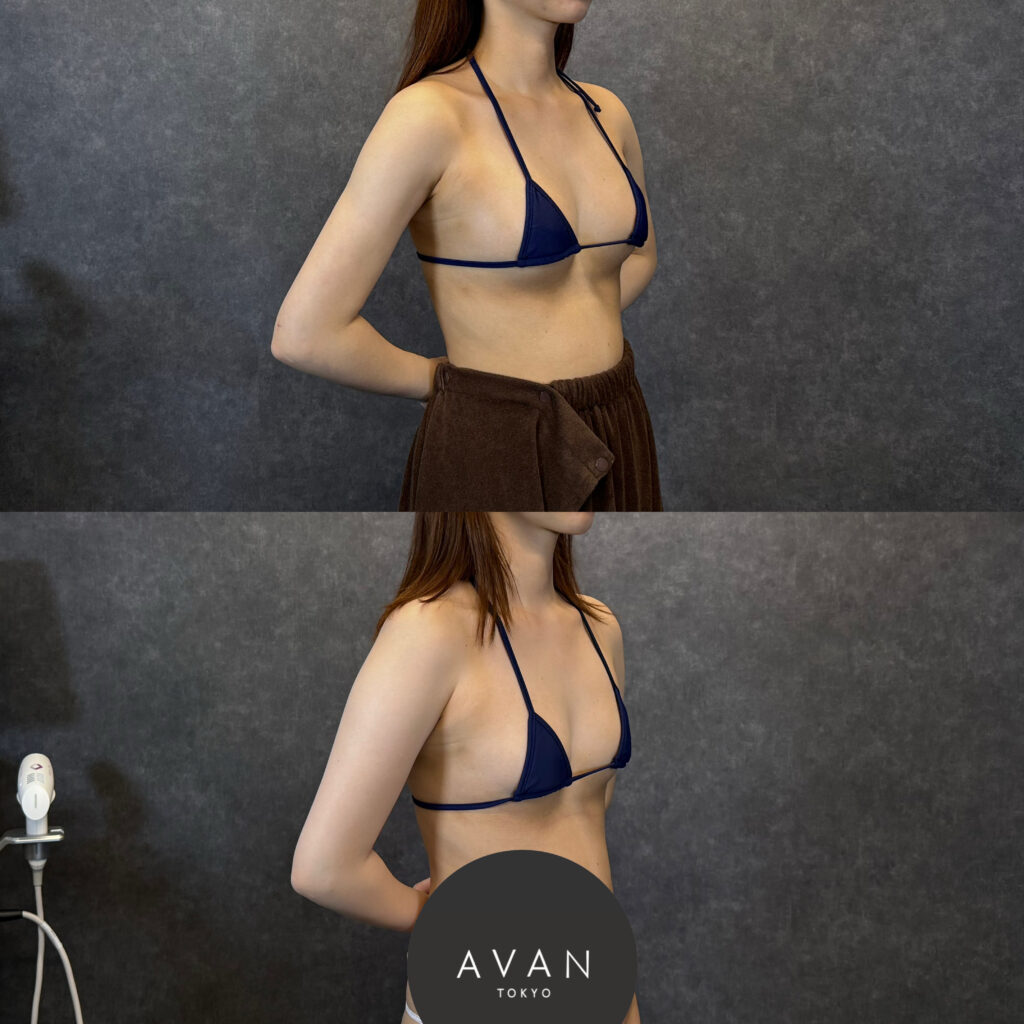
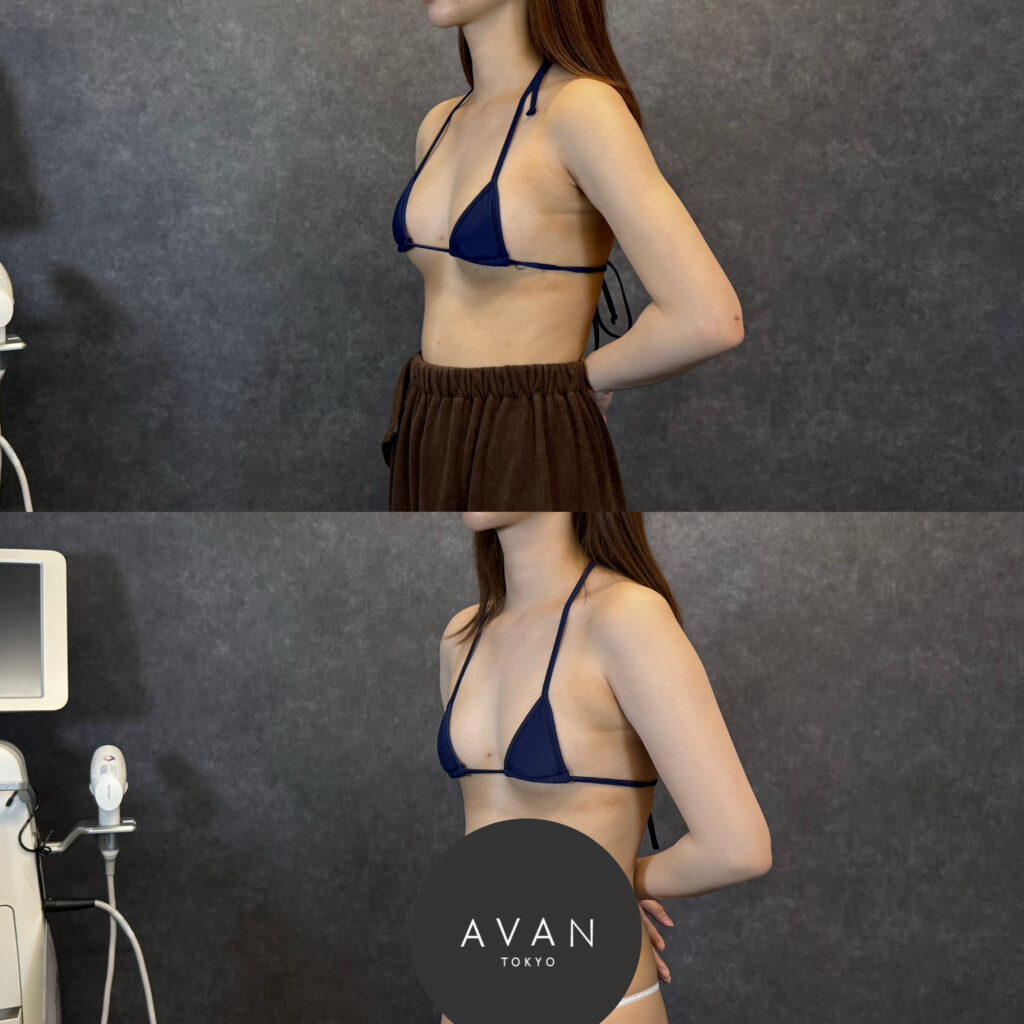
A Real Patient Example
This patient underwent:
- Arm liposuction
- Thigh liposuction
- Fat transfer breast augmentation
At one month postoperatively, she had received:
- 220cc to the right breast
- 200cc to the left breast
Although the injection volume was relatively conservative, she maintained an excellent result, with an estimated fat survival rate exceeding 50%.
Of course, fat survival varies from person to person.
However, proper postoperative care can help maximize the outcome.
What We Recommend After Fat Transfer Breast Augmentation
1. Adequate Protein Intake
Protein plays an important role in tissue healing and fat survival.
2. Avoid Aggressive Dieting
Rapid weight loss during the early recovery period may reduce fat survival.
3. Smoking Cessation
Smoking negatively affects blood flow and is one of the most important factors that can reduce fat graft survival.
Avoiding secondhand smoke is also recommended.
4. Quality Sleep
Good sleep supports tissue repair and recovery.
What Should You Eat?
One of the most common questions we receive is:
“What should I eat after surgery?”
We often recommend:
- Tofu
- Soy milk
- Edamame
These foods are rich in protein and easy to incorporate into daily life.
The AVAN TOKYO Philosophy
Fat transfer breast augmentation is not a procedure that ends when surgery is completed.
Successful outcomes require:
- Careful preoperative planning
- Precise surgical technique
- Dedicated postoperative management
At AVAN TOKYO, we emphasize not only surgical expertise but also nutrition guidance and long-term follow-up.
We believe that beautiful, natural, and long-lasting results are achieved through collaboration between the clinic and the patient.
AVAN TOKYO GINZA LIPOSUCTION CLINIC