


How to Improve Fat Graft Survival After Breast Augmentation2026.06.23
Does Your Diet Really Affect Fat Retention?
One of the most common questions patients ask after fat transfer breast augmentation is:
“Should I eat as much as possible after surgery?”
The answer is:
Not exactly.
The goal is not simply to gain weight.
The goal is to create an environment where transplanted fat cells can survive and establish a blood supply.
At AVAN TOKYO, we believe that the final result of fat grafting depends not only on the surgery itself, but also on how patients manage their recovery.
Fat Transfer Breast Augmentation Does Not End in the Operating Room
Not all transferred fat survives.
In general, approximately 30–50% of the transferred fat becomes permanently established, while the remainder is naturally absorbed by the body.
For fat cells to survive, they must develop access to oxygen and nutrients through newly formed blood vessels.
This is why postoperative nutrition and lifestyle may play an important role in recovery.
Why “Just Eat More” Is Not the Best Advice
Some patients are told:
“Just eat a lot and gain weight after surgery.”
However, fat graft survival is not simply about calories.
What matters more is reducing inflammation and supporting tissue healing.
Many internationally recognized fat transfer surgeons emphasize the importance of an anti-inflammatory diet during recovery.
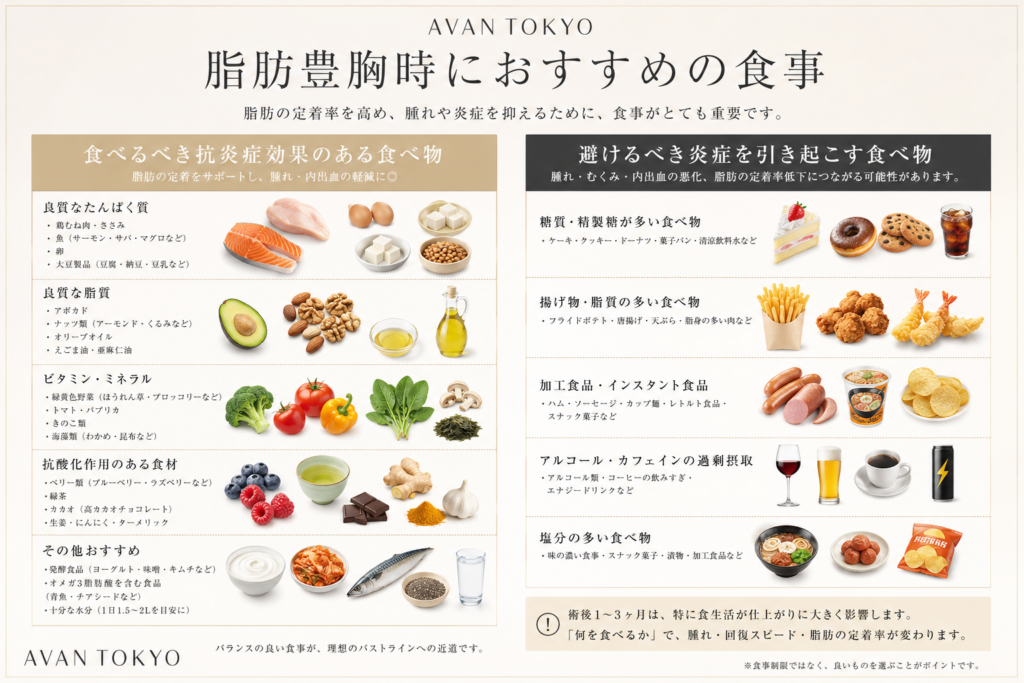
Foods We Recommend After Fat Transfer Breast Augmentation
For approximately the first 6 weeks after surgery, we recommend focusing on:
High-Quality Protein
● Fish
● Eggs
● Chicken
● Lean red meat
Protein provides the building blocks necessary for tissue repair.
Healthy Fats
● Olive oil
● Nuts
● Fatty fish
These foods may help support a healthier inflammatory response.
Vitamins and Minerals
● Vegetables
● Fruits
These nutrients support healing and vascular development.
Soy Milk
For lean patients in particular, soy milk can be a useful nutritional supplement during recovery.
Consumption should be individualized based on body weight and nutritional status.
Foods We Recommend Limiting
Highly Processed Foods
● Fast food
● Chips
● Instant meals
Sugary Foods
● Cakes
● Donuts
● Sugary beverages
Fried Foods
● French fries
● Fried chicken
Excessive intake of these foods may contribute to inflammation and may negatively affect overall recovery.
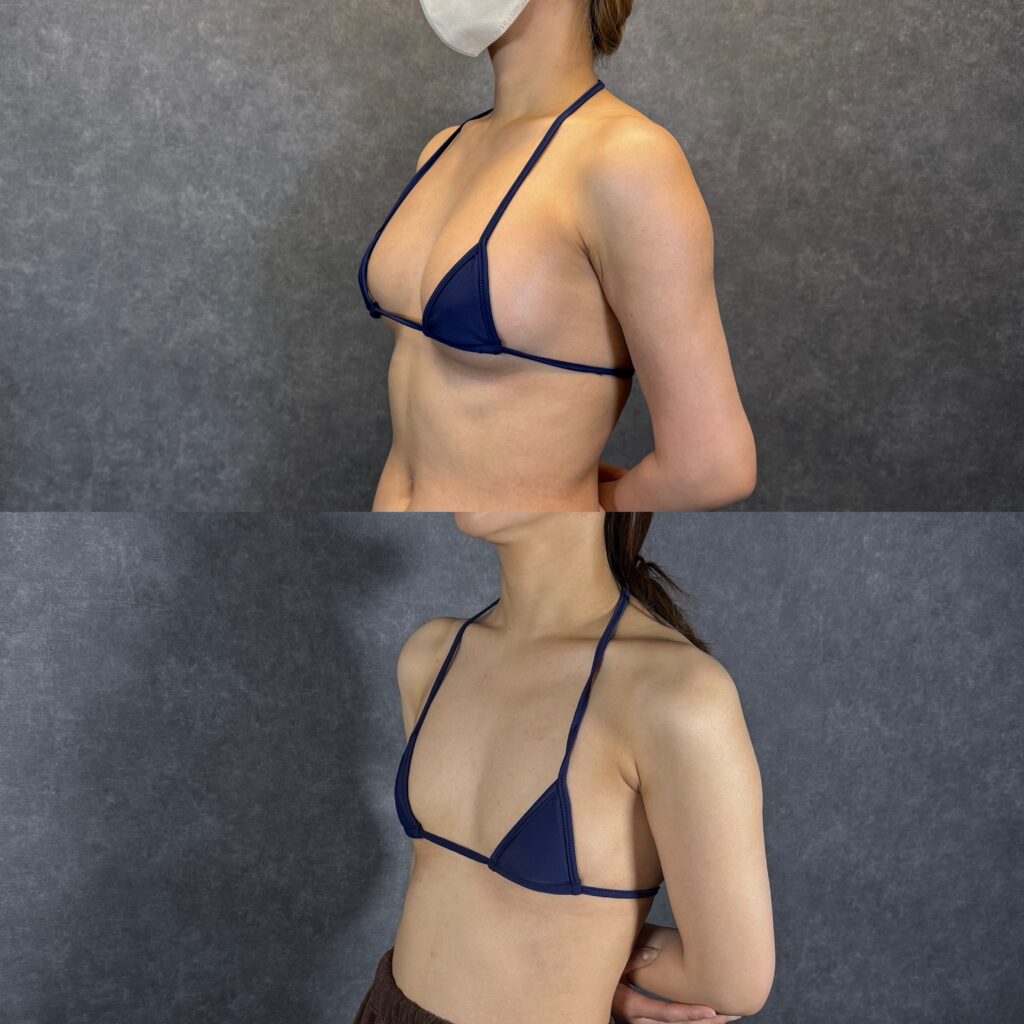
Case Study: Secondary Fat Transfer Breast Augmentation
The patient featured in this case is a 25-year-old woman who underwent a second fat transfer breast augmentation procedure.
At 6 months postoperatively, she has achieved excellent fat retention despite receiving a relatively moderate volume of transferred fat.
While outcomes vary from patient to patient, postoperative nutrition and recovery management are important factors in optimizing results.
The AVAN TOKYO Philosophy
Successful fat transfer breast augmentation is not about injecting the largest possible volume of fat.
It is about:
● Strategic fat placement
● Proper injection layers
● Maximizing fat survival
● Creating a natural breast shape
We provide guidance not only during surgery but also throughout the recovery period.
If You Want Better Fat Retention, Start With Your Diet
The first 4–6 weeks after surgery are a critical period.
At AVAN TOKYO, we support our patients with comprehensive guidance on nutrition, recovery, and postoperative care to help maximize long-term results.
Case Information
Procedure:
Secondary Fat Transfer Breast Augmentation
Patient:
25-Year-Old Female
Follow-Up:
6 Months Postoperative
Risks and Complications
Infection, lumps, fat necrosis, calcification, asymmetry, fat resorption, and scarring.
This post is intended for medical education purposes.