


Fat Survival Matters Even in Hybrid Breast Augmentation2026.06.25
Why Fat Graft Retention Is Essential for Achieving Natural-Looking Results
Some patients ask,
“If I’m getting Hybrid Breast Augmentation with implants, does fat graft survival still matter?”
The answer is yes.
Even with Hybrid Breast Augmentation, fat graft survival plays a critical role in the final aesthetic outcome.
While silicone implants provide reliable breast volume, fat grafting creates the soft, natural contours that implants alone cannot achieve.
What Is Hybrid Breast Augmentation?
Hybrid Breast Augmentation combines:
● Silicone breast implants
● Autologous fat transfer
This approach allows surgeons to achieve:
● Predictable breast enlargement
● A smoother upper pole (décolletage)
● Softer breast texture
● Improved cleavage
● A more natural breast contour
● Better camouflage of implant edges
At AVAN TOKYO, we believe that the best results come from balancing both volume and natural appearance.
Why Implants Alone Cannot Achieve Every Goal
Silicone implants create volume.
However, in slimmer patients, implants alone may not completely address:
● A flat décolletage
● Insufficient fullness along the cleavage
● Visible implant edges
Carefully placed fat grafts help soften these areas and create a seamless transition between the chest wall and the breast.
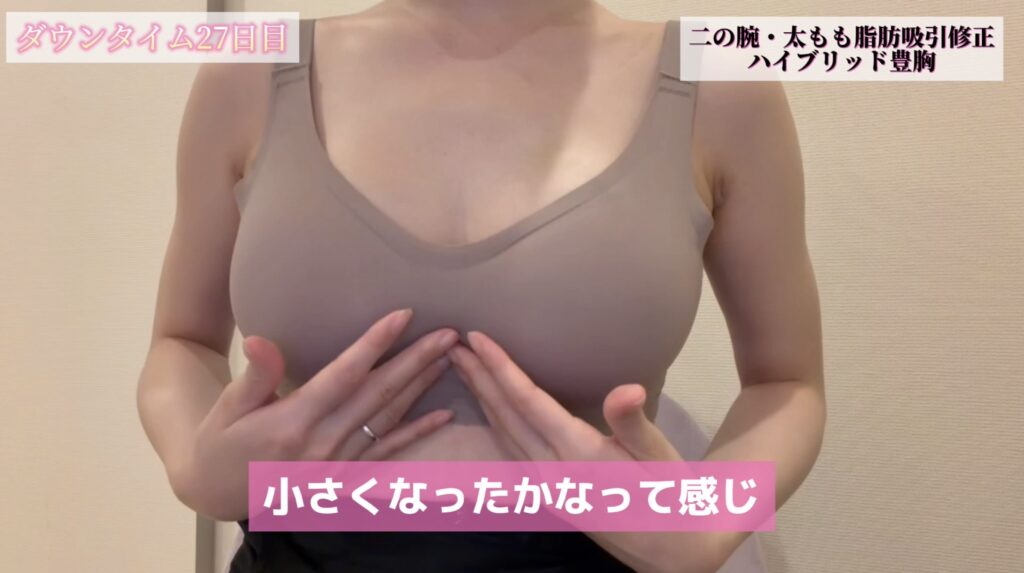
The First 4–6 Weeks Are Critical
Fat cells do not survive immediately after transplantation.
During the first 4–6 weeks, new blood vessels gradually develop to supply oxygen and nutrients.
This period largely determines how much of the transferred fat will survive long-term.
For this reason, postoperative care is just as important as surgical technique.
Postoperative Care Helps Maximize Fat Survival
Successful fat grafting depends on more than surgery.
At AVAN TOKYO, we recommend during the first 4–6 weeks:
● A high-protein diet
● Adequate vitamins and minerals
● Anti-inflammatory foods
● Smoking cessation
● Avoiding excessive dieting
These measures may help create a favorable environment for long-term fat survival.
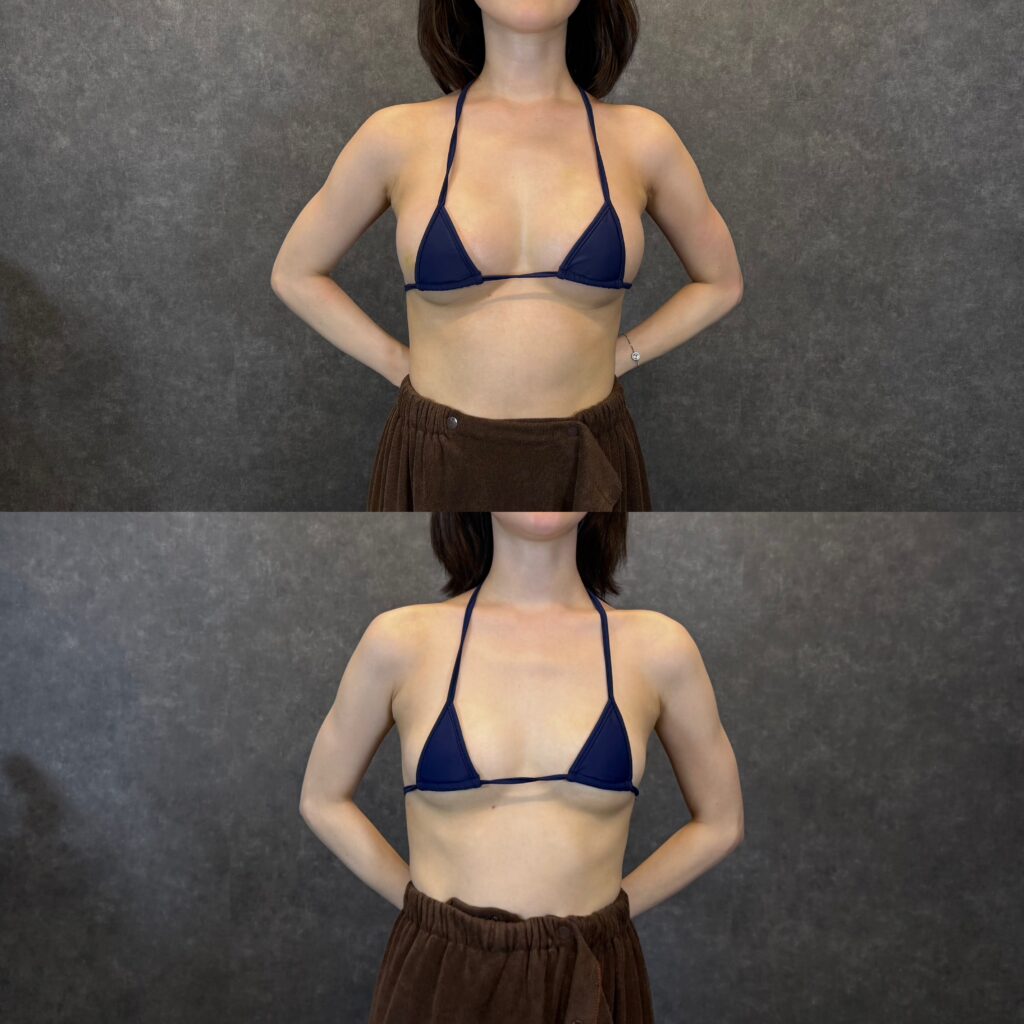
Case Study
This patient previously underwent fat transfer breast augmentation alone, but experienced significant fat resorption.
She later chose Hybrid Breast Augmentation.
Silicone implants were used to establish reliable breast volume, while fat was carefully grafted to the décolletage and medial breast to improve contour and softness.
At 1 month postoperatively, the breasts still feel relatively firm, which is expected during early healing.
Over the next several months, the tissues are expected to soften further, producing an increasingly natural appearance.
The AVAN TOKYO Philosophy
Hybrid Breast Augmentation is not simply about choosing an implant size.
The final result depends on:
● Selecting the appropriate implant
● Strategic fat placement
● Maximizing fat survival
● Designing a harmonious upper-body contour
At AVAN TOKYO, we provide comprehensive care—from surgical planning to postoperative recovery—to optimize long-term outcomes.
Implants Create Volume. Fat Creates Natural Beauty.
Silicone implants provide reliable size.
Fat grafting creates softness, natural contours, and elegant transitions.
For this reason, fat graft survival remains one of the most important factors in successful Hybrid Breast Augmentation.
Procedure
Hybrid Breast Augmentation (Silicone Breast Implants + Fat Transfer)
Follow-up
1 Month Postoperative
Risks and Complications
Infection, palpable lumps, fat necrosis, calcification, capsular contracture, asymmetry, volume loss, skin tethering, and scarring.
This article is intended for medical education purposes.