


Fat Transfer Breast Augmentation May Not Be Completed in One Session2026.07.04
A second or third procedure can help achieve a more stable breast volume
Fat transfer breast augmentation is a procedure that uses the patient’s own fat to create a natural breast enhancement.
Because it does not use silicone implants, it can provide a soft and natural feel. However, the most important characteristic—and also the most difficult part—is that fat retention varies greatly between individuals.
Even if the same amount of fat is injected, some patients retain a large amount, while others may experience more absorption than expected.
Some patients can achieve a significant increase after one fat transfer procedure. However, in general, the expected change is often around 1 to 1.5 cup sizes, and depending on the patient’s body type and breast condition, one session may not be enough to achieve the desired volume.
For this reason, at AVAN TOKYO, we do not always consider fat transfer breast augmentation as a “one-time procedure.” When appropriate, we plan it as a long-term breast design that may include a second or third session.
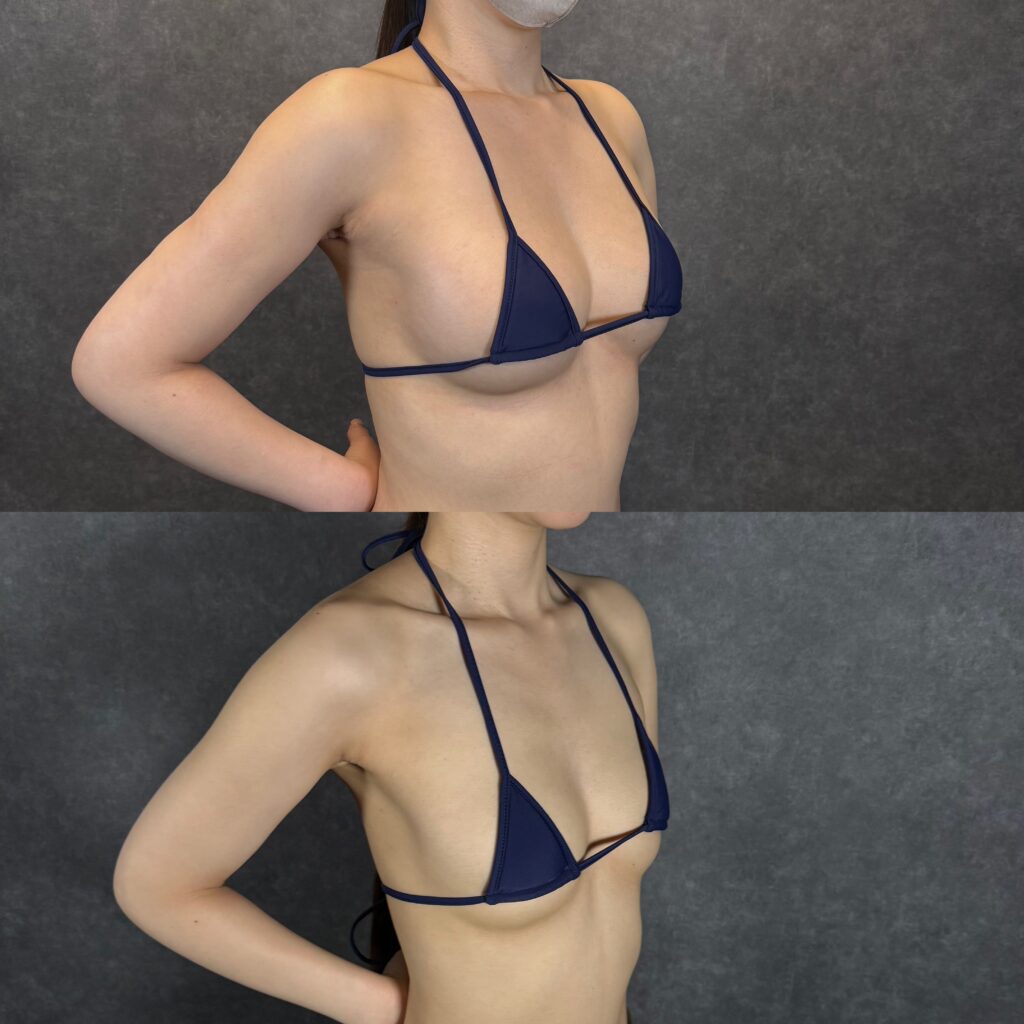
Why does fat retention vary?
In fat transfer breast augmentation, not all of the injected fat remains permanently.
After fat is injected, the fat cells need to receive oxygen and nutrients from the surrounding tissue. New blood vessels must grow into the grafted fat for the cells to survive.
When this process works well, the fat can remain in the breast.
However, fat that does not receive enough blood supply may be absorbed, or in some cases may lead to fat necrosis or palpable lumps.
Factors that may affect fat retention include:
● Skin stretchability of the breast
● Blood flow within the breast tissue
● Available space for fat grafting
● Body type and amount of subcutaneous fat
● Smoking status
● Postoperative diet
● Excessive dieting after surgery
● Injection layer and technique
● Whether the injected volume is appropriate
In other words, fat transfer breast augmentation is not determined only by “how many cc were injected.”
Where the fat is injected, how much is injected, and how finely it is distributed are extremely important.
Why a second or third fat transfer may retain better
Fat transfer breast augmentation may produce a more stable result after a second or third session.
There are several possible reasons for this.
- Fat cells can be increased gradually
Injecting too much fat in one session can make it difficult for blood flow to reach the center of the grafted fat. This may increase the risk of fat necrosis or lumps.
For this reason, instead of forcing a large amount of fat into the breast at once, gradually building volume over multiple sessions may help achieve a more natural result while also considering safety.
With a second or third procedure, additional fat can be layered onto the fat that has already survived, allowing the breast shape and volume to be built step by step. - New blood vessels may form more easily
After fat grafting, tissue repair and new blood vessel formation occur inside the breast.
When fat from the first procedure survives and the blood flow environment changes, the second procedure may have a more favorable environment for fat survival.
Fat cells need oxygen and nutrients delivered by blood vessels.
Therefore, creating an environment where new blood vessels can grow is very important for fat retention. - The skin and tissue may stretch more easily
After the first fat transfer breast augmentation, the breast skin and surrounding tissue may gradually expand.
When the skin and tissue become more flexible, there may be more space for fat grafting during the second or third procedure, allowing volume to be added more naturally.
This can be especially important for patients with small breasts or tight skin.
Instead of trying to create a large increase in one session, gradually expanding the tissue and building volume over time may be more suitable.
Even if the first result was not enough, the second procedure may still make a difference
Some patients feel:
“I had fat transfer breast augmentation, but the fat did not remain much.”
“I did not see as much breast enlargement as I expected.”
“It feels like the fat was absorbed.”
However, it may be too early to decide that fat transfer breast augmentation is not suitable based only on the first result.
Even if the first procedure did not create enough volume, the second or third procedure may achieve better fat retention and a more stable increase in breast size.
Of course, results vary between individuals.
However, fat transfer breast augmentation is a procedure in which repeating the treatment may help create a more predictable and stable result.
Case Study: Second Fat Transfer Breast Augmentation, 10 Months After Surgery
This patient had previously undergone fat transfer breast augmentation several years ago.
For this second fat transfer breast augmentation, the injected volume was:
● Right breast: 270cc
● Left breast: 310cc
Even at 10 months after surgery, the breast roundness and volume have been well maintained.
During injection, we focused not only on increasing breast size, but also on creating breast roundness, natural upper-pole fullness, symmetry, and balance with the patient’s body shape.
Some fat absorption naturally occurs after fat grafting.
However, in this case, the breast volume has remained stable even after 10 months, showing a favorable course after the second fat transfer breast augmentation.
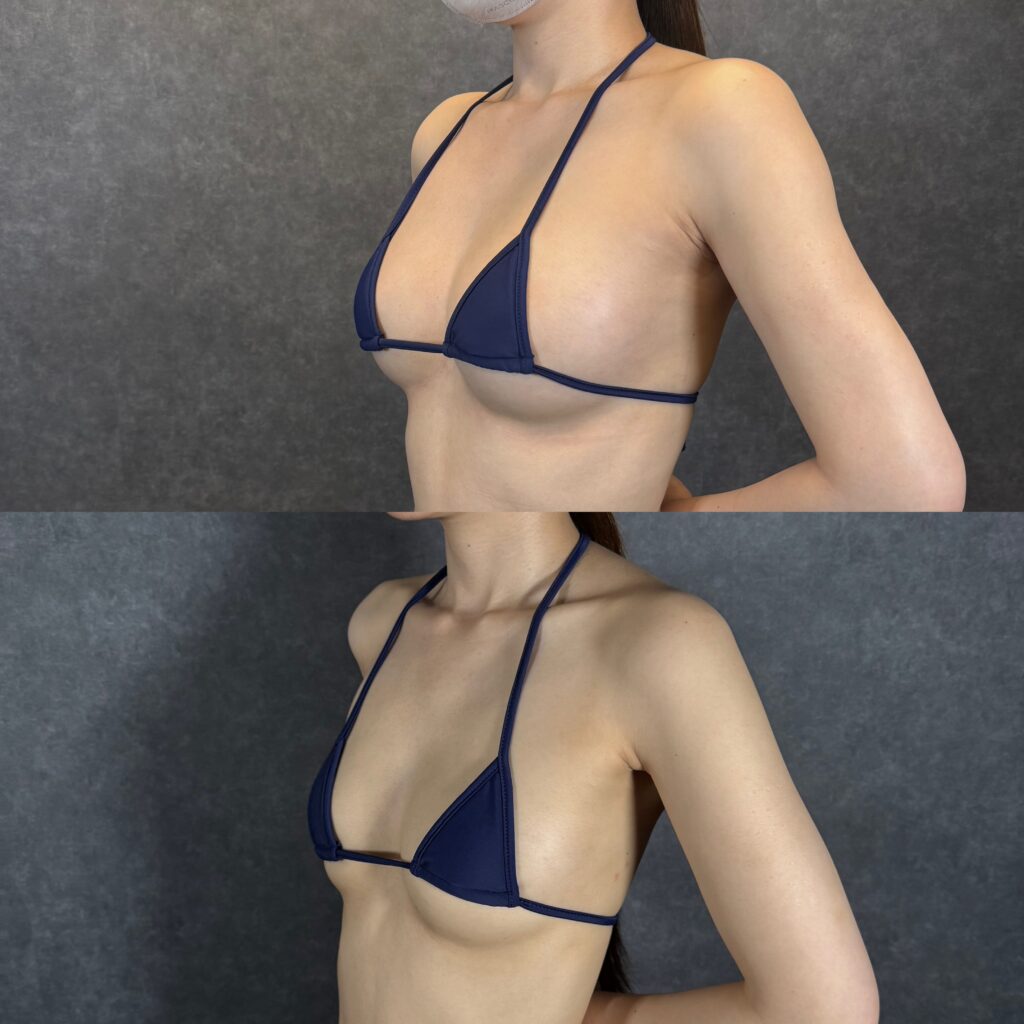
The key is injecting the right amount into the right layer
In fat transfer breast augmentation, injecting more fat does not always mean a better result.
If fat is injected beyond the breast’s capacity, blood supply may not reach the center of the grafted fat. This can lead to fat absorption, fat necrosis, or palpable lumps.
At AVAN TOKYO, we carefully consider fat retention and adjust the injection layers depending on each patient’s condition, including:
● Subcutaneous layer
● Around the mammary gland
● Intrapectoral layer
● Décolletage
● Inner breast
● Outer breast
The important point is to distribute the fat finely so that it can receive oxygen and nutrients from newly formed blood vessels.
Rather than simply injecting a large amount, we focus on injecting fat in a way that is more likely to remain.
Who may be suitable for a second or third fat transfer breast augmentation?
A second or third fat transfer breast augmentation may be an option for patients who:
● Did not retain enough fat after the first procedure
● Want a little more breast volume
● Do not want silicone implants
● Prefer a natural and soft feel
● Want to add roundness to the upper breast or décolletage
● Want to improve asymmetry
● Prefer gradual improvement instead of a large one-time change
● Want to improve the body line through liposuction at the same time
For patients who prioritize natural texture and want to enhance the breasts using their own fat, multiple fat transfer procedures may be a suitable option.
Postoperative care also affects fat retention
In fat transfer breast augmentation, not only the surgery itself but also the recovery period is important.
For fat to survive, blood flow, nutrition, and oxygen are necessary.
For this reason, the first 4 to 6 weeks after surgery are especially important.
At AVAN TOKYO, we emphasize:
● Smoking cessation
● Avoiding excessive dieting
● High-protein meals
● Adequate vitamin and mineral intake
● Sufficient sleep
● Avoiding excessive cold exposure
● Avoiding strong compression on the breasts
● Following the doctor’s postoperative instructions
Smoking can reduce blood flow and may negatively affect fat retention and wound healing.
Extreme dieting or a diet mainly consisting of junk food may also make it difficult for fat cells to receive the nutrition they need.
Fat transfer breast augmentation should be considered a treatment that includes not only the surgery, but also the postoperative lifestyle.
Fat Transfer Breast Augmentation at AVAN TOKYO
At AVAN TOKYO, we do not consider fat transfer breast augmentation as only a breast enlargement procedure.
We see it as a treatment that improves the overall body line.
Fat may be harvested from areas such as the arms, thighs, abdomen, waist, or back, while also improving the contour of those donor areas.
The harvested fat is processed, such as by centrifugation, and carefully injected according to the breast condition.
Our goals include:
● Natural roundness
● Soft texture
● Volume that matches the patient’s body
● Improvement of asymmetry
● A natural line from the décolletage to the breast
● Overall body balance, including the liposuction areas
Rather than focusing only on creating a large change in one session, we design a long-term breast plan that may include a second or third procedure when appropriate.
Summary
Fat transfer breast augmentation can create a natural texture, but fat retention varies between individuals.
Some patients achieve a large increase after one session, while others experience more fat absorption than expected.
However, fat transfer breast augmentation may become more stable when performed in a second or third session.
Possible reasons include:
● Fat cells can be increased gradually
● New blood vessels may form more easily
● The skin and tissue may stretch more easily
● More space for fat grafting may become available
Even if the first fat transfer breast augmentation did not meet expectations, a second or third procedure may help patients get closer to their ideal result.
At AVAN TOKYO, we evaluate each patient’s body shape, available fat volume, breast condition, desired size, and acceptable downtime to propose the most suitable fat transfer breast augmentation plan.
Case Information
Procedure
Second fat transfer breast augmentation
Injected volume
Right breast: 270cc
Left breast: 310cc
Follow-up
10 months after surgery
Risks and Complications
Swelling, bruising, pain, infection, palpable lumps, fat necrosis, calcification, fat absorption, differences in fat retention, asymmetry, skin tethering, scarring, sensory changes, and other possible surgical complications.
This article is intended for medical education purposes. Results and recovery vary between individuals.