


What Is AlloClae™?2026.07.13
The Potential of an Allogeneic Adipose-Derived Product for Patients Who Cannot Harvest Enough Fat
In recent years, allogeneic adipose-derived products, made from donated and processed human fat tissue, have attracted attention in cosmetic and reconstructive medicine in Western countries.
One of the products currently receiving attention is AlloClae™.
AVAN TOKYO has also received inquiries from international patients asking whether this treatment is available in Japan.
This article explains the characteristics of this emerging treatment and its possible role in breast augmentation and body contouring.
What Is AlloClae™?
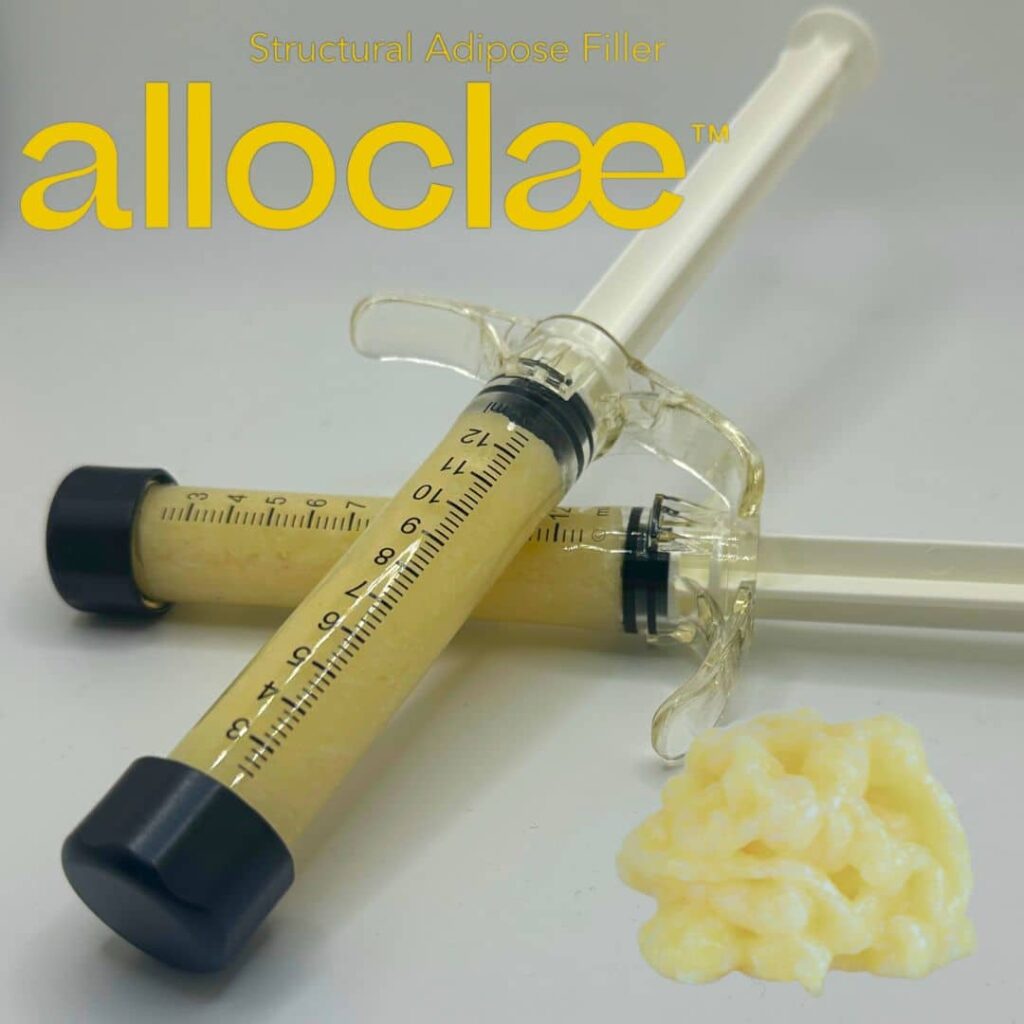
AlloClae™ is an allogeneic adipose matrix product manufactured from donated and processed adipose tissue.
Unlike conventional fat grafting, it does not require fat to be harvested from the patient’s own body. It is intended to provide soft-tissue volume and structural support.
It is attracting attention as a potential option for patients who are too slim to provide enough donor fat or who have previously undergone extensive liposuction.
Use for Hip Dip Correction
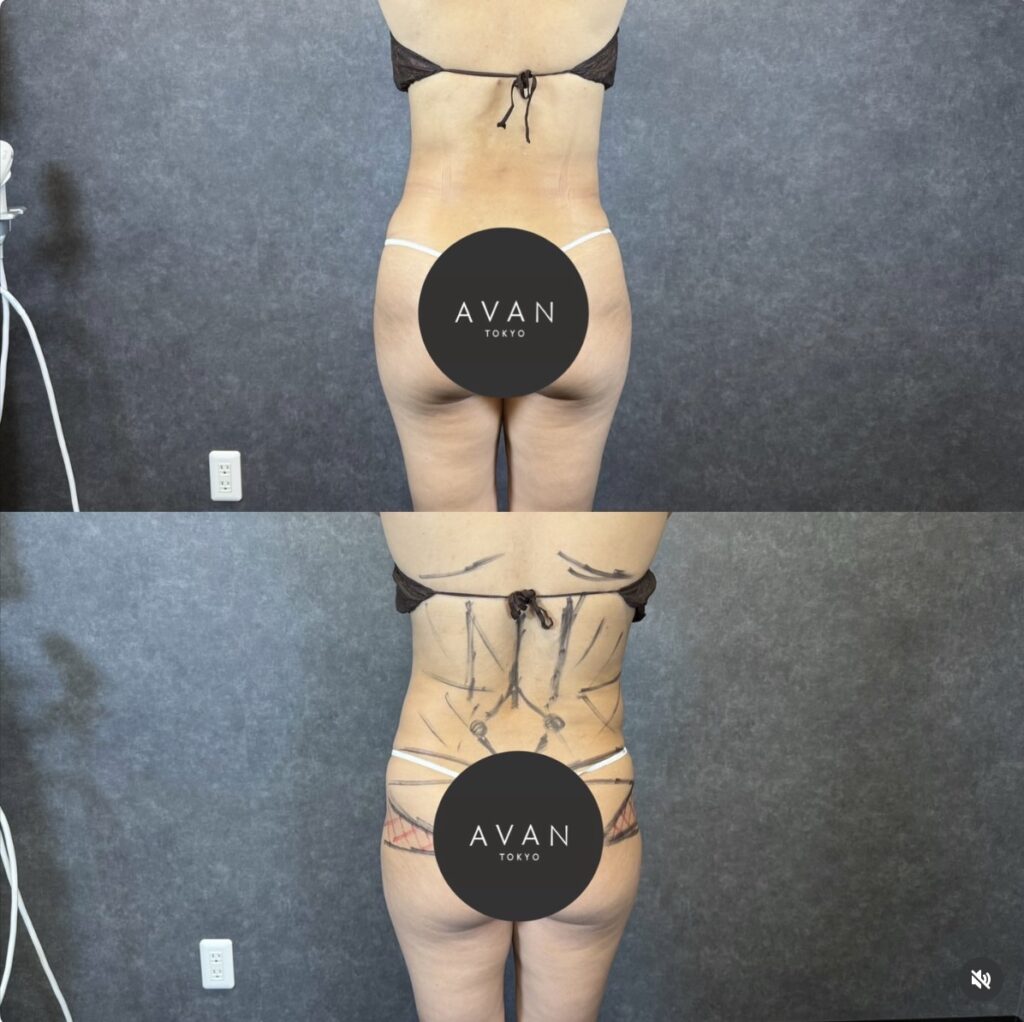
In Western countries, this type of product has been discussed particularly for the correction of hip dips, which are indentations along the outer sides of the hips.
When combined with liposuction of the waist or lower back, volume can be added to the hip area to create a rounder and more balanced buttock contour.
Interest in gluteal contouring and Brazilian Butt Lift procedures is also increasing among international patients.
A Possible Option for Patients With Insufficient Donor Fat
Conventional fat transfer requires harvesting the patient’s own fat.
However, adequate fat harvesting may be difficult in patients who:
- Have a very low BMI
- Have minimal subcutaneous fat
- Have undergone multiple previous liposuction procedures
- Want volume enhancement without silicone implants
For these patients, an allogeneic adipose-derived product may eventually become an additional treatment option.
Current Limitations
Cost remains a major concern.
According to overseas pricing information, approximately 12cc may cost around USD 750. If a larger treatment area requires approximately 200cc, the cost of the product alone could approach several million Japanese yen.
Therefore, its use may currently be limited to carefully selected cases or relatively small-volume corrections.
Its availability, regulatory status, indications, safety data, and pricing also vary by country and medical facility.
Autologous Fat Remains the Standard Option
At present, fat harvested from the patient’s own body remains the most established option for fat grafting.
Autologous fat offers several advantages:
- It uses the patient’s own tissue
- It provides a soft and natural texture
- It can improve the décolletage and breast contour
- It can be combined with silicone implants in Hybrid Breast Augmentation
- The donor area can also be contoured through liposuction
When sufficient donor fat is available, autologous fat is generally considered first.
AVAN TOKYO’s Approach to Body Contouring
At AVAN TOKYO, we do not view fat grafting as simply removing fat from one area and injecting it into another.
We design the entire body silhouette.
Examples include:
- Arm liposuction combined with fat transfer breast augmentation
- Thigh liposuction combined with Hybrid Breast Augmentation
- Waist and back liposuction combined with gluteal contouring
Our basic concept is to remove volume from areas where it is unnecessary and add it to areas where it improves proportion and balance.
We Continuously Review International Developments
Cosmetic medicine continues to evolve rapidly.
AVAN TOKYO regularly reviews international medical conferences, anatomical training, scientific publications, and new treatment technologies.
However, we do not introduce a treatment simply because it is new.
Before considering any new technology, we carefully evaluate:
- Safety
- Scientific evidence
- Long-term outcomes
- Regulatory status
- Cost-effectiveness
- Suitability for each patient
Our priority is to recommend treatments that provide meaningful benefits while maintaining safety.
Who May Benefit From a Consultation?
Please consider a consultation if you:
- Want natural breast augmentation
- Are interested in Hybrid Breast Augmentation
- Are concerned that you may not have enough donor fat
- Want comprehensive body contouring
- Want to discuss gluteal or hip-dip correction
- Are interested in new regenerative or adipose-derived treatments
Summary
Allogeneic adipose-derived products such as AlloClae™ may become a useful option for patients who cannot provide enough of their own fat.
However, cost, availability, regulatory status, indications, and long-term evidence remain important considerations.
At AVAN TOKYO, we continue to monitor international advances while prioritizing safety, scientific evidence, and individualized treatment planning.
For patients considering fat transfer breast augmentation, Hybrid Breast Augmentation, or comprehensive body contouring, we propose a treatment plan based on body type, available donor fat, desired volume, and overall proportions.
Risks and Complications
Liposuction may involve swelling, bruising, pain, fibrosis, contour irregularities, asymmetry, infection, hematoma, sensory changes, and scarring.
Fat grafting may involve fat absorption, fat necrosis, palpable lumps, calcification, oil cysts, asymmetry, and infection.
Allogeneic adipose-derived products may have additional product-specific risks, including inflammatory reactions, infection, irregularity, absorption, and unknown long-term outcomes.
This article is intended for medical education purposes. Availability and regulatory approval differ by country. The article does not guarantee treatment effectiveness, and suitability must be determined through an individual medical consultation.