


How Do Liposuction Scars Fade? A Doctor Explains the Maturation of Port Scars and Pigmentation Care2026.06.26
One of the most common concerns for those considering liposuction is how the small entry-port scars will heal. Liposuction scars are tiny dot-shaped incisions made to insert the cannula, and with proper closure technique and post-operative care, they typically fade to a barely visible level over time. In this article, Dr. Moriwaki of AVAN TOKYO Ginza Liposuction Clinic explains the medical timeline of how these liposuction scars mature, and how to minimize redness and pigmentation, from the perspective of anatomy and wound-healing science.
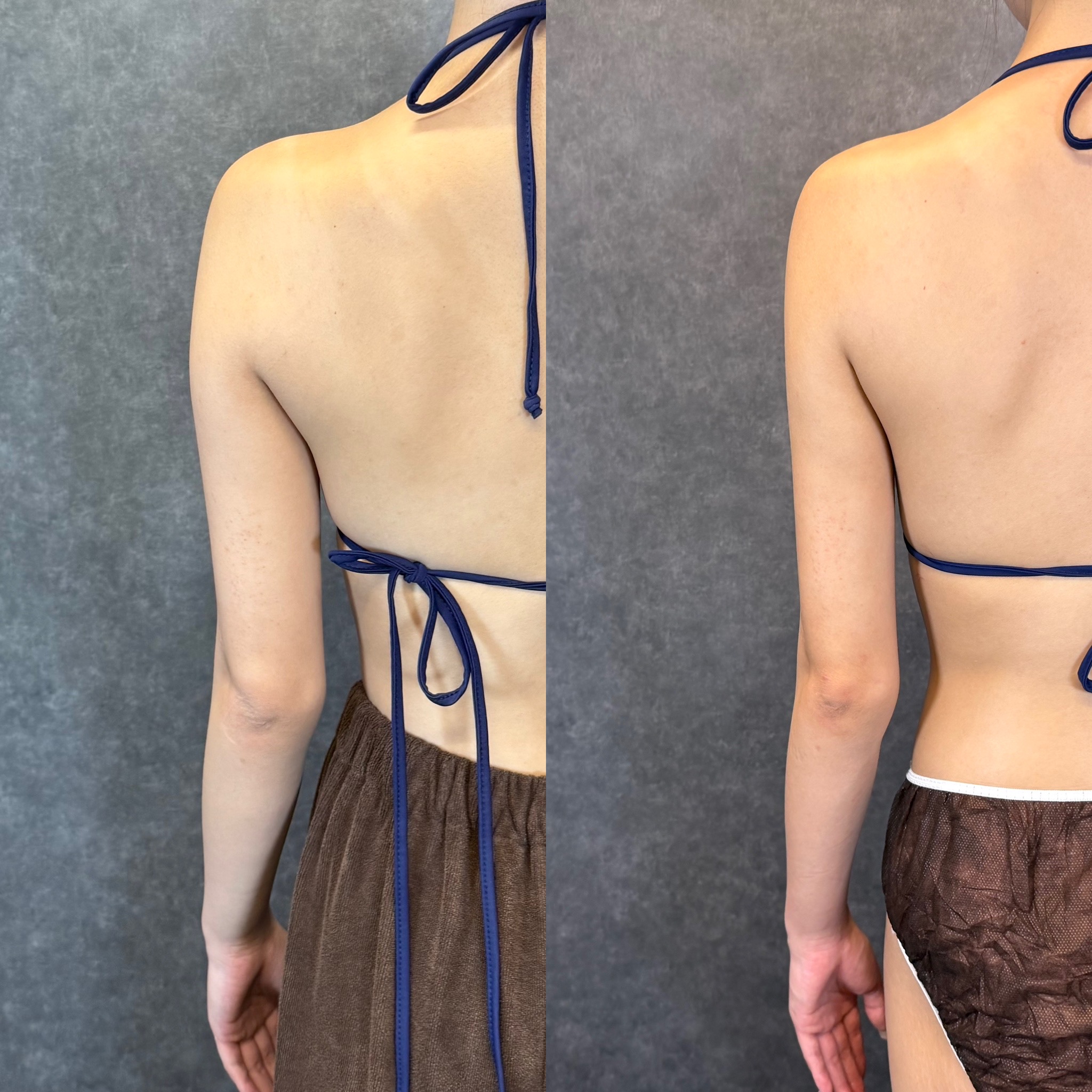
What Liposuction Scars (Port Incisions) Actually Look Like
The incisions used in liposuction vary depending on cannula diameter, but at our clinic we generally use 3–5 mm point incisions. We design their placement in hidden locations — the axilla or inner elbow for the arms, the groin crease or back of the knee for the thighs, the umbilicus or pubic hairline for the abdomen — so that they remain covered by underwear or everyday clothing. By placing liposuction scars within natural skin folds or shadowed areas, they become almost imperceptible in daily life.
Incisions may be left open to encourage drainage, or lightly approximated with one or two absorbable sutures, depending on the site and expected fluid output. Open wounds reduce swelling faster but may show temporary pigmentation, so post-op care must be tailored to each site.
The Three Stages of Liposuction Scar Maturation
Wound healing proceeds through three phases — inflammation, proliferation, and remodeling — and liposuction scars follow the same physiological process.
Stage 1: Redness Phase (0–3 months post-op)
In the first three months, capillary neogenesis and fibroblast proliferation are highly active. Scars appear reddish-purple to pink and may feel slightly firm or raised. This is a normal healing response, and excessive friction or pressure should be avoided.
Stage 2: Pigmentation Phase (3–6 months)
After the redness subsides, melanocyte activation can cause brown pigmentation. Asian skin in particular has higher melanin production, and UV exposure or friction can prolong this stage. This is when patients most often feel that their liposuction scars look temporarily darker, and it is the stage that worries them the most.
Stage 3: Maturation and Fading Phase (6–12 months)
From six months onward, pigmentation is gradually metabolized and the scar tissue softens and flattens as collagen is remodeled. By twelve months, most port scars settle into faint, pale dots. A minimum of one year is needed before judging the final outcome.
Proper Self-Care for Beautifully Healed Liposuction Scars
Tape Fixation and UV Protection
From suture removal through three months post-op, silicone gel sheets or medical tape are highly effective. They distribute mechanical tension across the wound and reduce the risk of progression to hypertrophic scarring or keloids. Equally important is UV protection: until full fading, use SPF 30+ sunscreen or UV-blocking clothing to prevent pigmentation. Rash guards are recommended at the beach or pool.
Moisturizing and Avoiding Friction
Dry scars are prone to itching and inflammation, which prolongs pigmentation. Apply a gentle moisturizer twice daily and avoid mechanical friction from nylon towels or seams in clothing. If compression garments (girdles or sleeves) have seams that rub against the scars, protecting them with gauze is helpful.
Who Is at Higher Risk of Visible Scars — and Medical Options
Patients with a tendency toward hypertrophic scars or keloids, younger patients, those with malnutrition, smokers, and those with poorly controlled diabetes typically take longer for their liposuction scars to fully mature. Nicotine causes vasoconstriction and dramatically reduces oxygen delivery to the wound, which is why our clinic strongly requires at least one month of cessation before and after surgery. Even if a hypertrophic scar does form, multiple medical options are available — steroid tape, intralesional steroid injections, and fractional laser therapy — and with appropriate intervention, improvement is fully achievable. For information on aesthetic surgery safety standards, please refer to the Japan Society of Aesthetic Surgery (JSAS).
With careful incision design and consistent aftercare, liposuction scars in most cases fade to a level where they go unnoticed unless pointed out. If you have any concerns about your healing, please consult your operating surgeon early rather than self-treating. Please also see our related liposuction column index.
──────────────
Medical Supervisor: Shin Moriwaki, MD
Member, Japan Society of Aesthetic Surgery (JSAS) / Member, American Academy of Aesthetic Medicine
ECFMG Certificate
──────────────
📍AVAN TOKYO GINZA LIPOSUCTION CLINIC
English / 中文 / Tiếng Việt support available
For reservations and inquiries, please contact us via
DM / LINE / Website / Phone.