


Is Getting a Second Opinion on Liposuction or Breast Augmentation Rude? A Surgeon’s Guide to Choosing the Right Consultant Without Regret2026.07.18
“Before signing a contract at the clinic where I had my first consultation, I’d like to hear another doctor’s opinion” — many patients hesitate at this point, wondering whether asking for a second opinion is rude, or whether it might offend the first doctor they consulted. But for procedures whose results remain with the body for years, like liposuction and breast augmentation, obtaining a second opinion is by no means impolite. It is a legitimate medical action that patients are fully entitled to. In this article, Dr. Shin Moriwaki of AVAN TOKYO explains, from a medical perspective, how to prepare for a second opinion consultation for liposuction or breast augmentation and how to identify a trustworthy consultant.
Key Points of This Article
– Getting a second opinion is a patient’s legitimate right, and the more irreversible the procedure — as with liposuction or breast augmentation — the more strongly a second opinion is recommended.
– Bringing four documents — treatment plan, price estimate, preoperative photos, and a list of questions — allows even a short consultation to be medically productive.
– Doctors who “speak ill of other clinics,” “rush you into an immediate decision,” or “downplay disadvantages” are warning signs, and the same criteria apply when choosing the surgeon for the actual procedure.
– The final decision must be yours; choose the surgeon you can trust across three axes: surgical technique, honest risk disclosure, and a clearly defined aftercare system.
Why a Second Opinion Is Medically Important for Liposuction and Breast Augmentation
Liposuction and breast augmentation involve irreversible manoeuvres: incision, aspiration, fat grafting, and silicone implant placement. In particular, fat cells removed by liposuction do not regenerate at the same site, and irregularities or skin laxity caused by over-aspiration cannot be fully reversed later. In breast augmentation as well, decisions on implant selection, injection layer, and injection volume vary considerably between surgeons, and these choices influence both the final result and the risk of capsular contracture. This irreversibility — the inability to “take it back” — is the strongest medical reason a second opinion is recommended.
Sufficient information disclosure before treatment and patient self-determination are respected principles in Japan as well, and there is no professional position that regards asking for multiple medical opinions as inappropriate. For safety standards and ethical guidelines in aesthetic surgery, information from the Japan Society of Aesthetic Surgery (JSAS) is a useful reference.
Situations Where a Second Opinion Is Especially Warranted
Always consider a second opinion when the first consultation includes “a discount if you sign today,” when a high-invasive procedure such as extensive liposuction or hybrid breast augmentation is being proposed, when you need an assessment for a revision from another clinic, or when you simply cannot fully accept the proposed surgical plan. This is not the kind of surgery to decide under financial or time pressure.
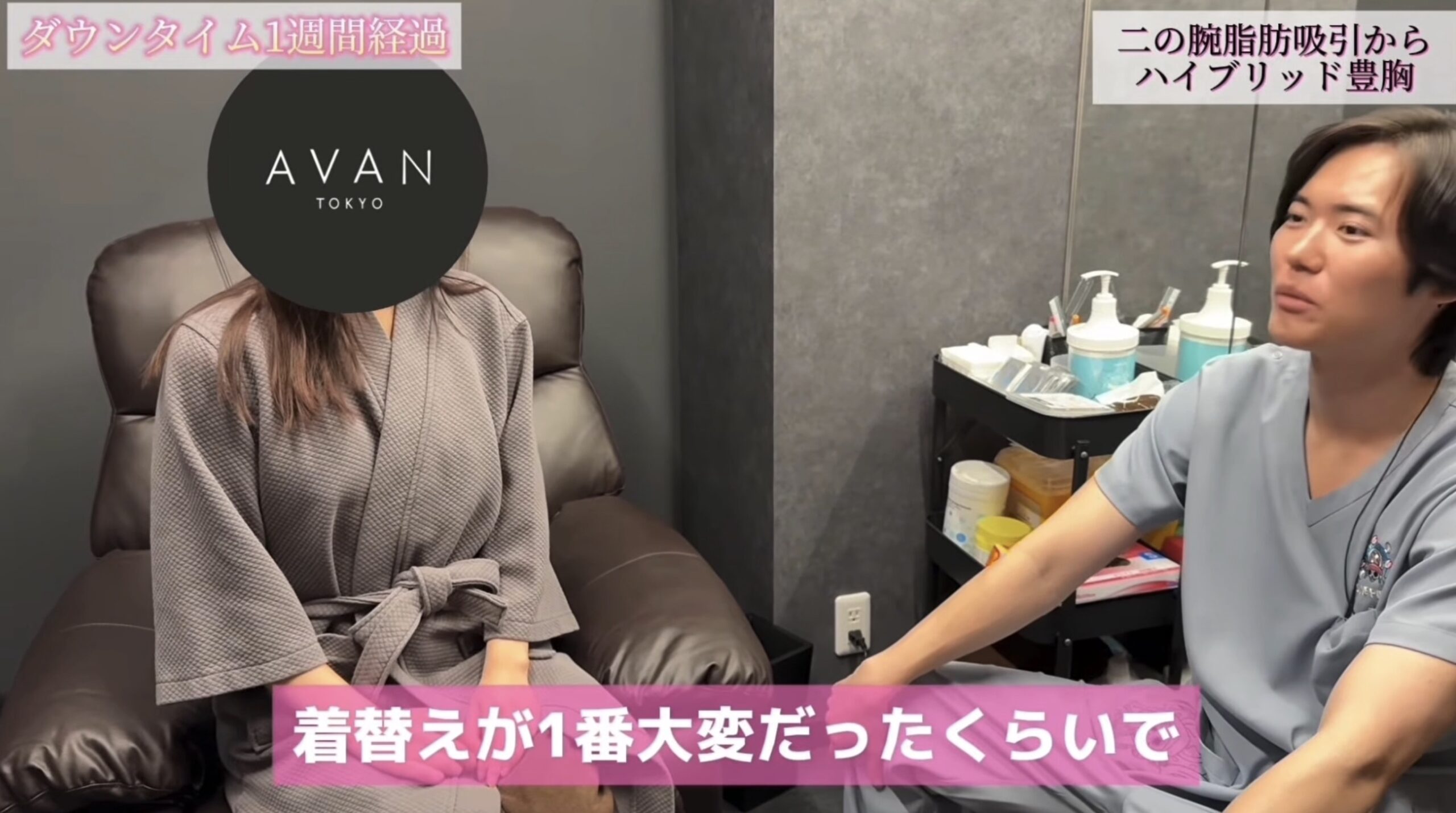
Five Things to Prepare Before Your Second Opinion Consultation
1. Bring a copy of the treatment plan and price estimate
Bring copies (not originals) of the treatment plan and price estimate presented by the first clinic. Materials that clearly show the design, aspiration area, chosen technique, type of anaesthesia, and expected costs allow the second-opinion doctor to respond with precise comments even in a short consultation.
2. Prepare front, side, and back preoperative photos
Smartphone photos taken from the front, side, and back — plus photos showing your weight change history — make the physical assessment far more accurate. Especially in breast augmentation consultations for slender patients, ribcage shape and subcutaneous fat thickness are key criteria, so upper-body side photos are essential.
3. Write your questions on paper in advance
Questions such as “Why do you recommend this technique?” “What are the alternatives?” “How frequent are the complications?” “What is the limit for my body type?” and “How would you handle a revision if needed?” should be written on paper. This lets you extract the information you need without omissions, even within a limited consultation window.
4. Decide in advance not to bring criticism of the first clinic
The purpose of a second opinion is not to disparage another clinic but to widen your own basis for judgement. Communicating facts calmly, without emotional criticism, tends to draw more medically objective answers from the consulting doctor.
5. Choose a clinic that operates by appointment
Walk-in consultations tend to leave both sides unprepared and make deeper discussion difficult. When booking, stating that you are seeking a second opinion allows most clinics to reserve a proper consultation slot.
Three Warning Signs That Reveal a Clinic to Avoid
If the doctor providing a second opinion shows any of the following reactions, seriously consider removing that facility from your list of candidates for the actual procedure. First, doctors who obsessively denigrate the plan of another clinic and even attack the first doctor personally. Medical criticism and emotional insults are fundamentally different, and doctors who persist with the latter lack credibility. Second, doctors who rush you into deciding today, saying, “If you don’t commit now, we can’t hold your slot.” Pressuring a patient in an irreversible surgical decision is medically unethical. Third, doctors who barely explain risks, complications, or limits and emphasise only the positives. These three criteria apply not only when choosing a second-opinion clinic but also when deciding on the final surgeon.
Making the Final Decision After a Second Opinion
After hearing multiple opinions, the choice of where to have surgery must be yours. It is unusual for doctors’ opinions to be identical, and differences in technique, design philosophy, and aftercare typically leave several viable options. What matters is choosing the doctor you can trust across three axes: the one who most concretely put your desired body type into words, the one who honestly explained the risks, and the one whose aftercare system is clearly documented. A clinic chosen with these criteria will keep your decision-making steady even when concerns arise during recovery, leading to a result you won’t regret over the long term. For related information, please also see our liposuction column archive.
How AVAN TOKYO Handles Second Opinion Consultations
At our clinic we welcome second opinions on treatment plans presented elsewhere. The value of a second opinion is especially high in difficult cases — patients declined by other clinics, revision consultations, breast augmentation in slender patients, or extensive liposuction. Please bring the treatment plan, price estimate, and preoperative photos to your consultation. We will share our honest opinion, cross-referencing your case with medical evidence and our own case experience.
Frequently Asked Questions
Q. Does a second opinion cost money?
Most aesthetic clinics charge between 3,000 and 10,000 yen for the initial visit or consultation, though a fair number offer free consultations. Confirming the fee structure when you book gives you peace of mind.
Q. Should I tell the first clinic that I’m getting a second opinion?
You are under no obligation to inform them. A second opinion is your right, not a duty of disclosure, so you may quietly gather multiple medical opinions. Note, however, that this differs from insured treatment cases where a formal referral is required.
Q. How many doctors should I consult?
Two to three clinics is generally sufficient. Consulting too many tends to scatter your information and paradoxically make the decision harder. We recommend narrowing down along three axes: technique, price, and personal compatibility with the doctor.
Q. How should I judge if opinions differ between doctors?
It is natural for doctors to differ on recommended techniques, aspiration volumes, or implant choices. When you are unsure, use the criterion of “whether the doctor clearly explains why they reached that opinion, with medical reasoning” — this makes the decision less likely to lead to regret.
Q. Does AVAN TOKYO accept second opinion consultations?
Yes. We welcome second opinions on treatment plans presented at other clinics. If you bring the treatment plan, price estimate, and preoperative photos to your consultation, we can provide a more concrete, medically grounded explanation.
──────────────
[Medical Supervision] Shin Moriwaki, MD (Supervising Physician)
Member, Japan Society of Aesthetic Surgery (JSAS) / Member, American Academy of Aesthetic Medicine
ECFMG Certificate
──────────────
📍AVAN TOKYO GINZA LIPOSUCTION CLINIC
English / 中文 / Tiếng Việt available
Appointments and consultations are accepted via
DM / LINE / Website / Phone.