


Arm Bi-Needle Liposuction: Precision Cannula Design for Uniform Arms2026.10.02
Patients who ask for “a thinner upper arm” often focus only on the volume of fat removed. In reality, what truly determines the result of arm liposuction is which cannula is used, which fat layer is targeted, and from which direction it is suctioned. In this article, Dr. Moriwaki — the supervising surgeon — explains the meaning of arm bi-needle liposuction and the cannula design needed to produce a uniform full-circumference finish, based on one case in which a woman in her 30s had full-circumference arm liposuction and bra-roll liposuction performed in the same session.
Key Points of This Article
– Arm bi-needle liposuction is a precision technique that uses several ultra-fine cannulas, selected to match the layer, direction, and firmness of each area.
– Because the upper arm and the bra-roll (axillary flank) are anatomically a continuous fat unit, treating them in the same session prevents a step between the shoulder and arm.
– In this case about 700 ml of fat was removed, but what shapes the final result is not “how much was taken,” but “what was left behind.”
– Bruising, swelling, and fibrosis (contracture) peak at 2–4 weeks after surgery; the final appearance is evaluated at 3–6 months.
– Indication and surgeon experience strongly influence the outcome, so a careful tactile exam and a detailed preoperative plan are essential.
What Is Arm Bi-Needle Liposuction, and Why Use Four Different Cannulas?
Arm bi-needle liposuction uses several ultra-fine cannulas in the 1–2 mm diameter class — four of them in this case — chosen according to layer, direction, and tissue firmness. Subcutaneous fat is not a uniform slab: it is divided into the superficial layer (densely fibrous, firm), the middle layer, and the deep layer (soft and mobile). Treating all layers with a single cannula tends to over-thin the superficial layer, leaving skin irregularities, or to leave the deep layer under-treated.
Switching between cannulas of different diameters and shapes allows a delicate approach to the superficial layer, a slightly more efficient pass through the deep layer, and different vectors near the axilla versus near the elbow. This multi-tool approach is the basic principle behind producing a uniform full-circumference arm — thin but not over-done — that still cleanly addresses the “wobble” area.
Treatment, Cost and Risks of This Case
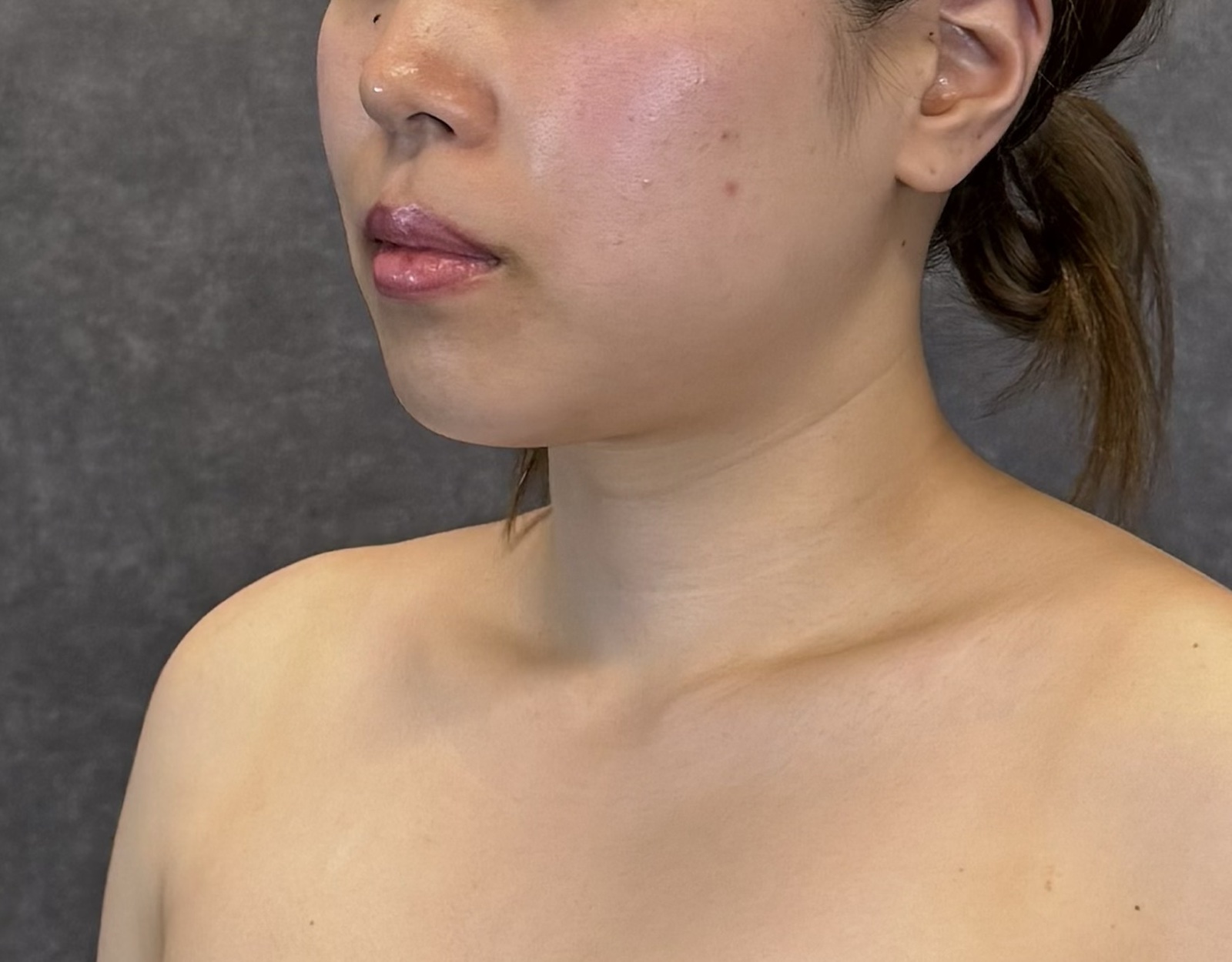
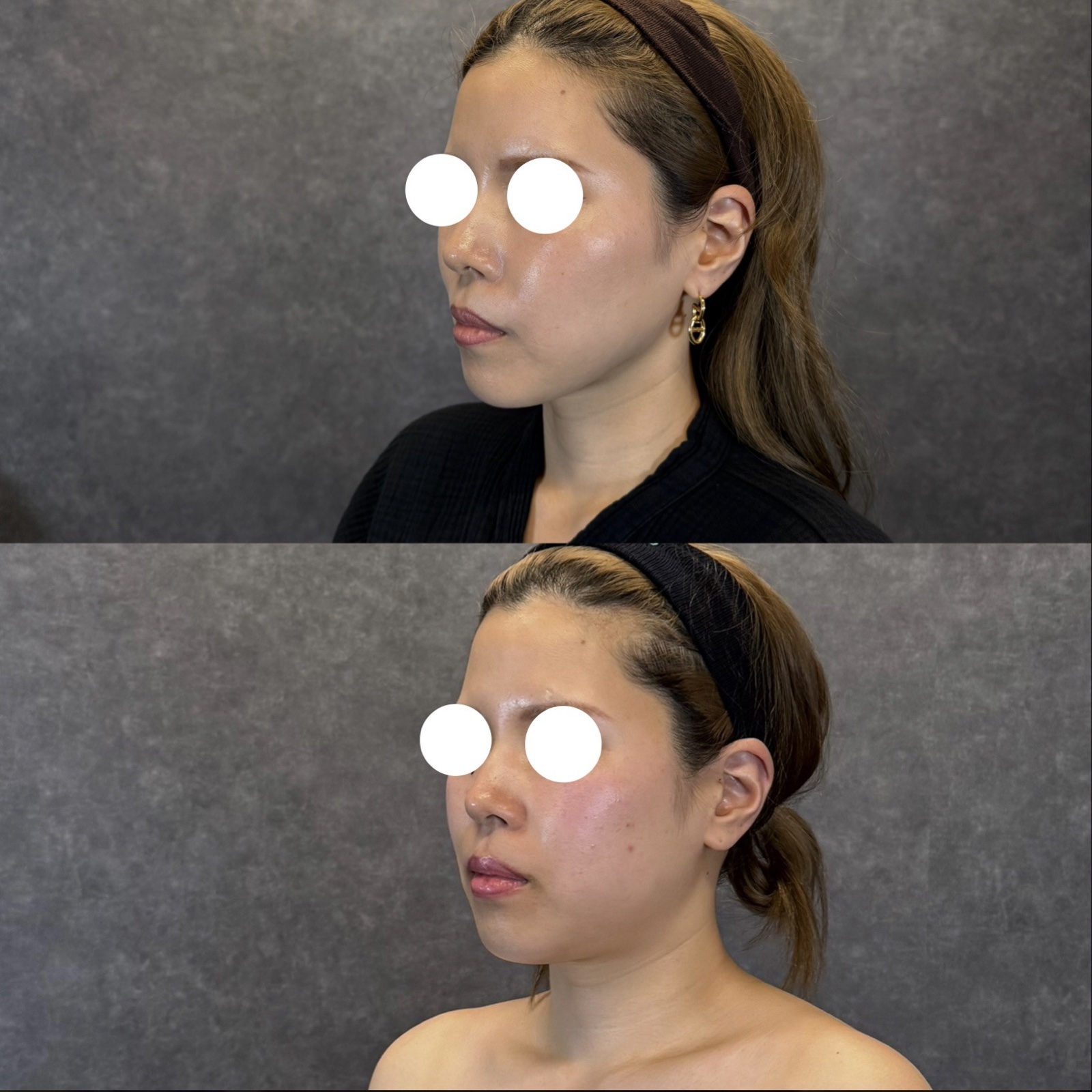
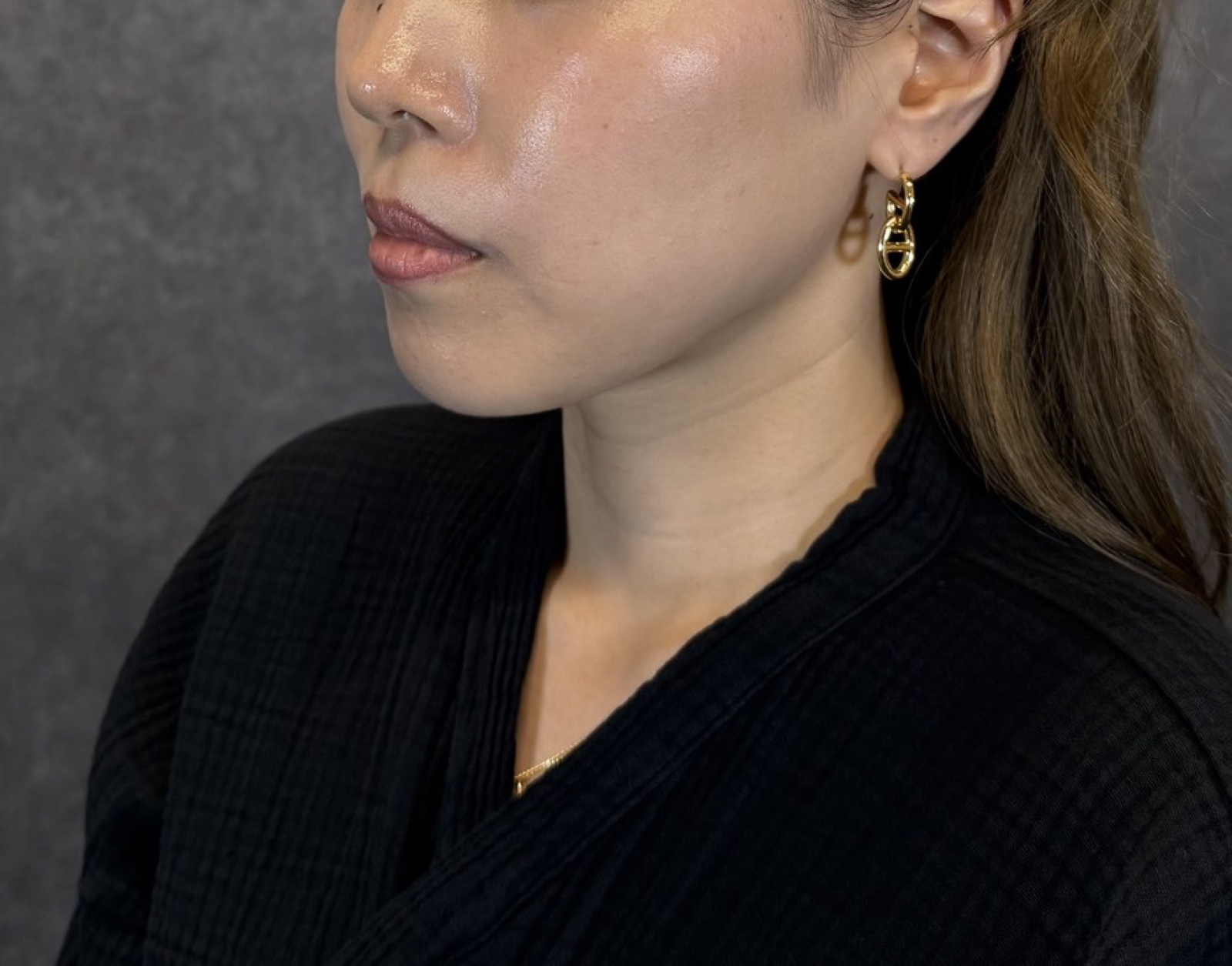
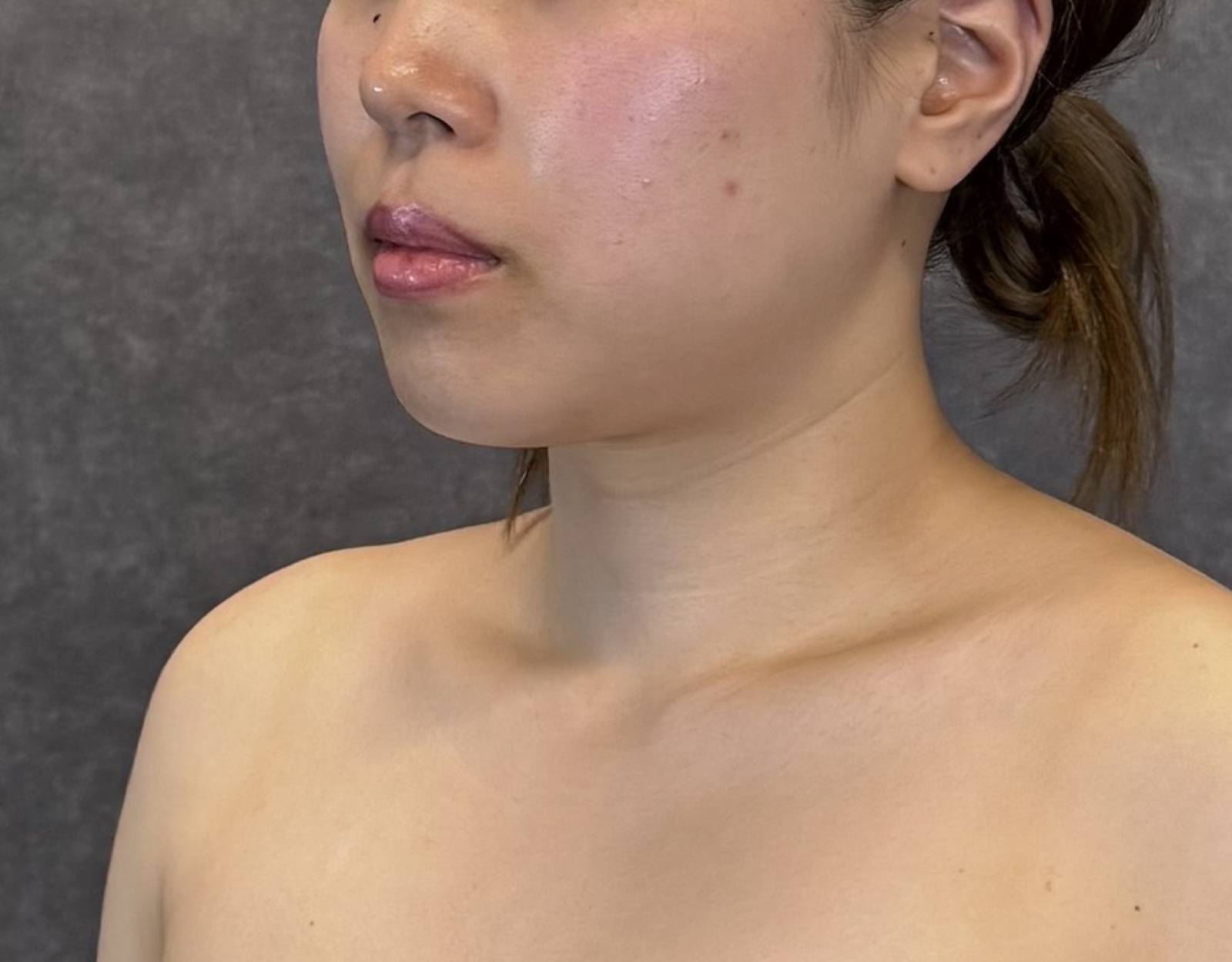
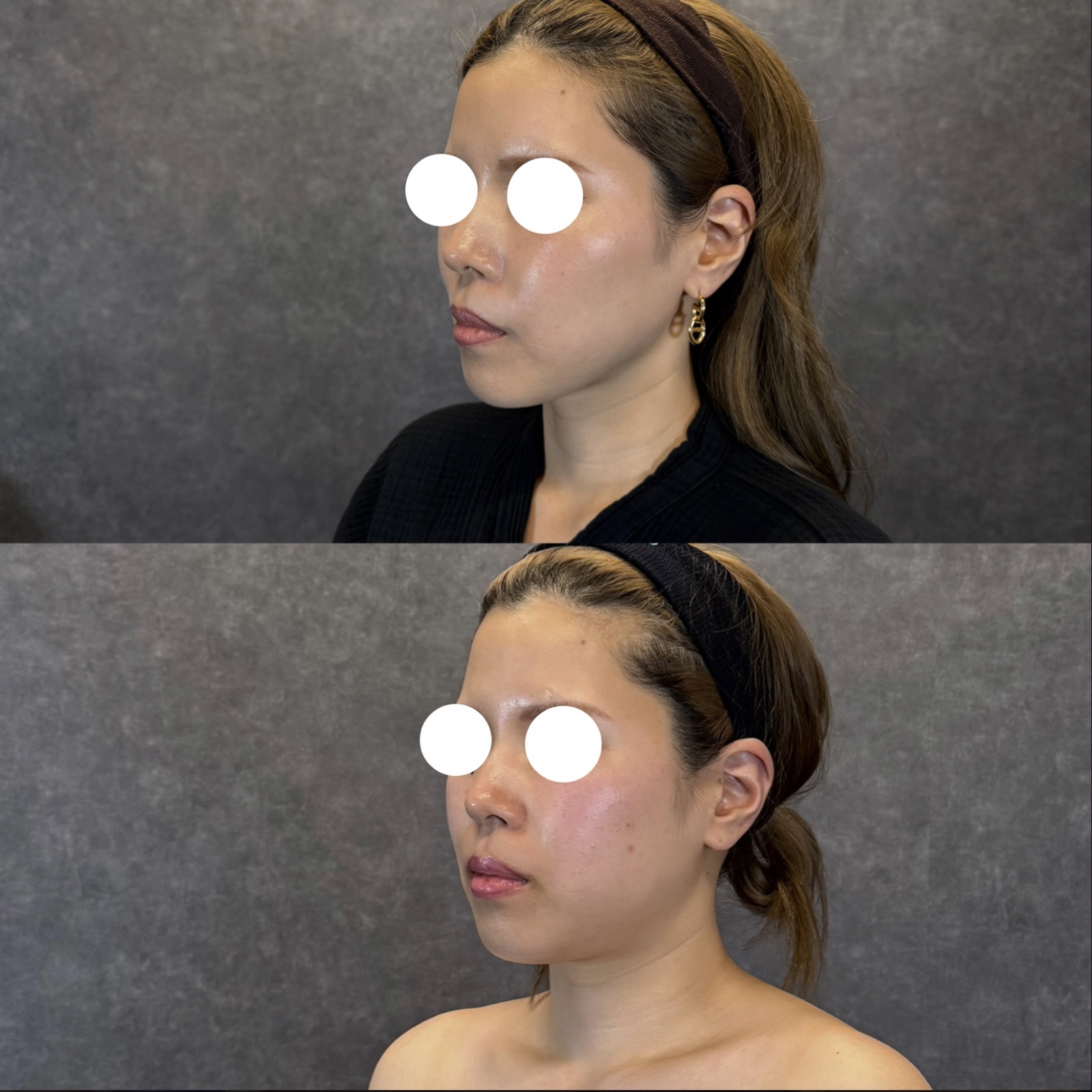
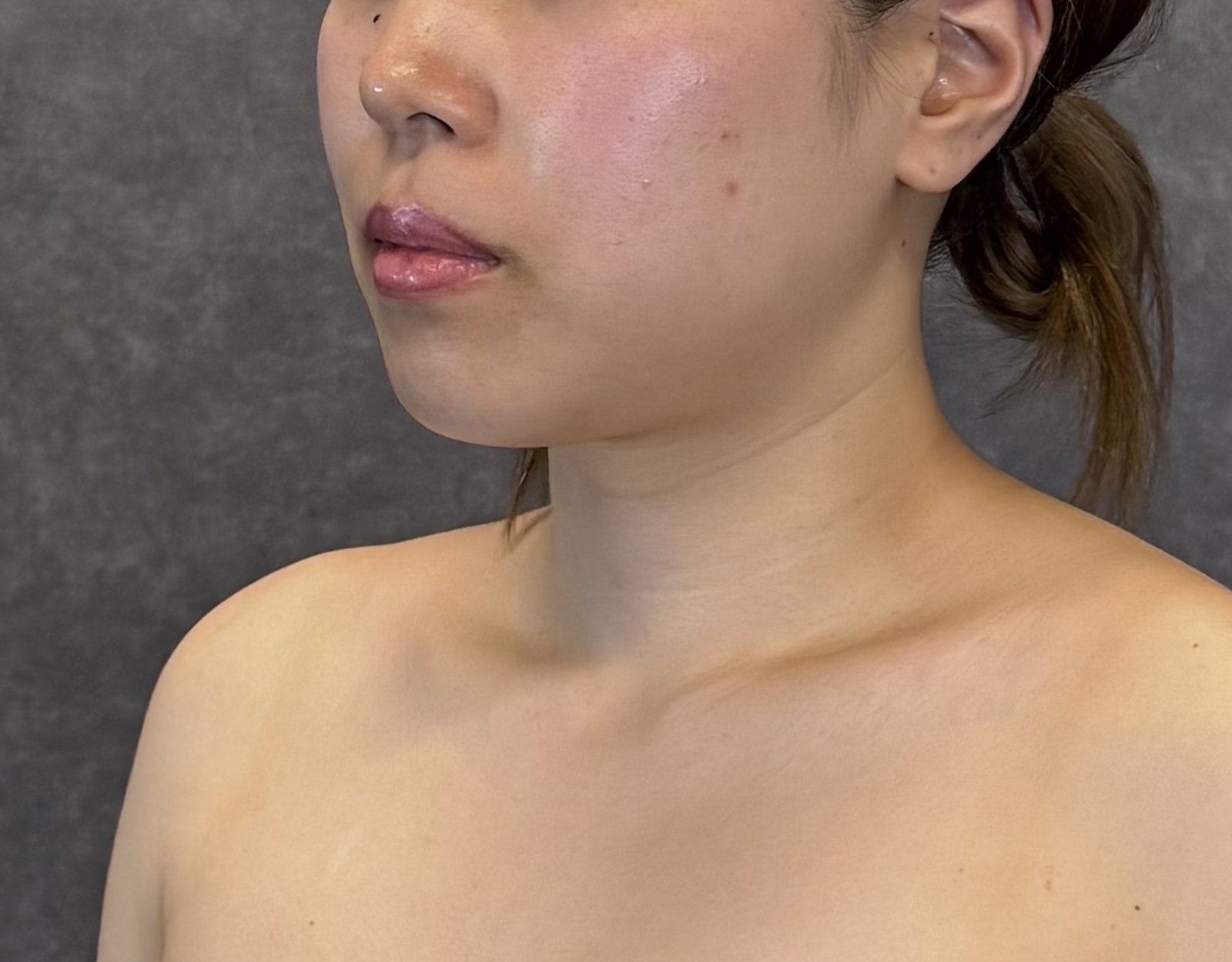
– Treatment performed: Full-circumference upper arm liposuction (with bi-needle technique), bra-roll (axillary flank) liposuction, cheek and submental liposuction, thread lift of the cheeks and submental region, and fat grafting to the forehead, temples, and nasolabial folds — all in the same session.
– Cost: Because the final price varies depending on the combination of procedures, please refer to our price page.
– Main risks and side effects: Bruising, swelling, fibrosis (firmness, irregularity, tightness), asymmetry, infection, nerve dysaesthesia (numbness or reduced sensation), seroma, and rarely thrombosis.
– Results vary between individuals. The photographs are one example and do not guarantee the same outcome.
Why the Upper Arm and Bra-Roll Should Be Treated Together
Although the upper arm and the bra-roll appear to be separate parts, they are a single, continuous subcutaneous fat unit. The anterior axilla begins at the lateral border of the pectoralis major, and the posterior axilla continues from the lateral edge of the latissimus dorsi; both run smoothly into the inner upper arm. If this unit is divided and only the arm is suctioned, a visible step appears at the shoulder–axilla border, which looks unnatural when the arm is relaxed or in a sleeveless top.
In this case we included both the full-circumference arm and the bra-roll in a single integrated design, aiming for one smooth curve from the axilla to the elbow. The access incisions were placed in the anterior axilla, posterior axilla, and lateral elbow — forming a triangle that allowed the fat to be approached from every direction.
Intraoperative Judgment: What to Leave, What to Remove
Throughout the surgery we constantly check pinch thickness and tissue firmness by hand. When the arm and the bra-roll are treated at the same time, three points deserve particular care.
(1) In the posterior axilla (the “accessory breast / bra-roll” area), leaving too much creates a visible bulge in sleeveless clothing, while taking too much reduces skin pliability and paradoxically makes the shoulder look wider.
(2) The inner arm (the “wobble” area) has thin subcutaneous fat, so removing too much from the superficial layer makes the skin ripple and worsens the sense of tightness during the fibrosis phase.
(3) The area over the deltoid insertion is often muscle rather than fat; aggressive suction there increases the risk of hematoma and nerve injury.
Design Principle: Three Suction Vectors
To produce a uniform full-circumference finish, it is important not to treat the entire arm with a single cannula. In this case the anterior axillary approach was used for the outer upper arm and the lateral edge of the bra-roll, the posterior axillary approach for the inner upper arm and accessory breast area, and the lateral elbow approach for residual fat near the forearm — each with a different vector. Cannula diameter was also matched to layer: a finer cannula for the superficial plane and a medium cannula for the deep plane.
For general safety standards and design principles in cosmetic surgery, please also refer to the information from the Japan Society of Aesthetic Surgery (JSAS).
Postoperative Course: Fibrosis and the Final-Result Timeline
After arm liposuction, the arm typically goes through swelling → fading bruises → fibrosis → softening. For most patients, swelling peaks at days 3–5, bruises fade over 2–3 weeks, and fibrosis (firmness and unevenness caused by scar remodelling) is strongest between weeks 2 and 4. During this period the arm may feel hard to bend and the shoulder hard to lift, but this is almost always a temporary reaction.
Over 3 to 6 months the fibrosis gradually softens and the subcutaneous tissue stabilises in its new thickness and contour. Judging the result as “not enough removed” or “asymmetric” too early can lead to unnecessary revision, so patient and careful follow-up is essential.
About the Facial Fat Grafting Performed in the Same Session
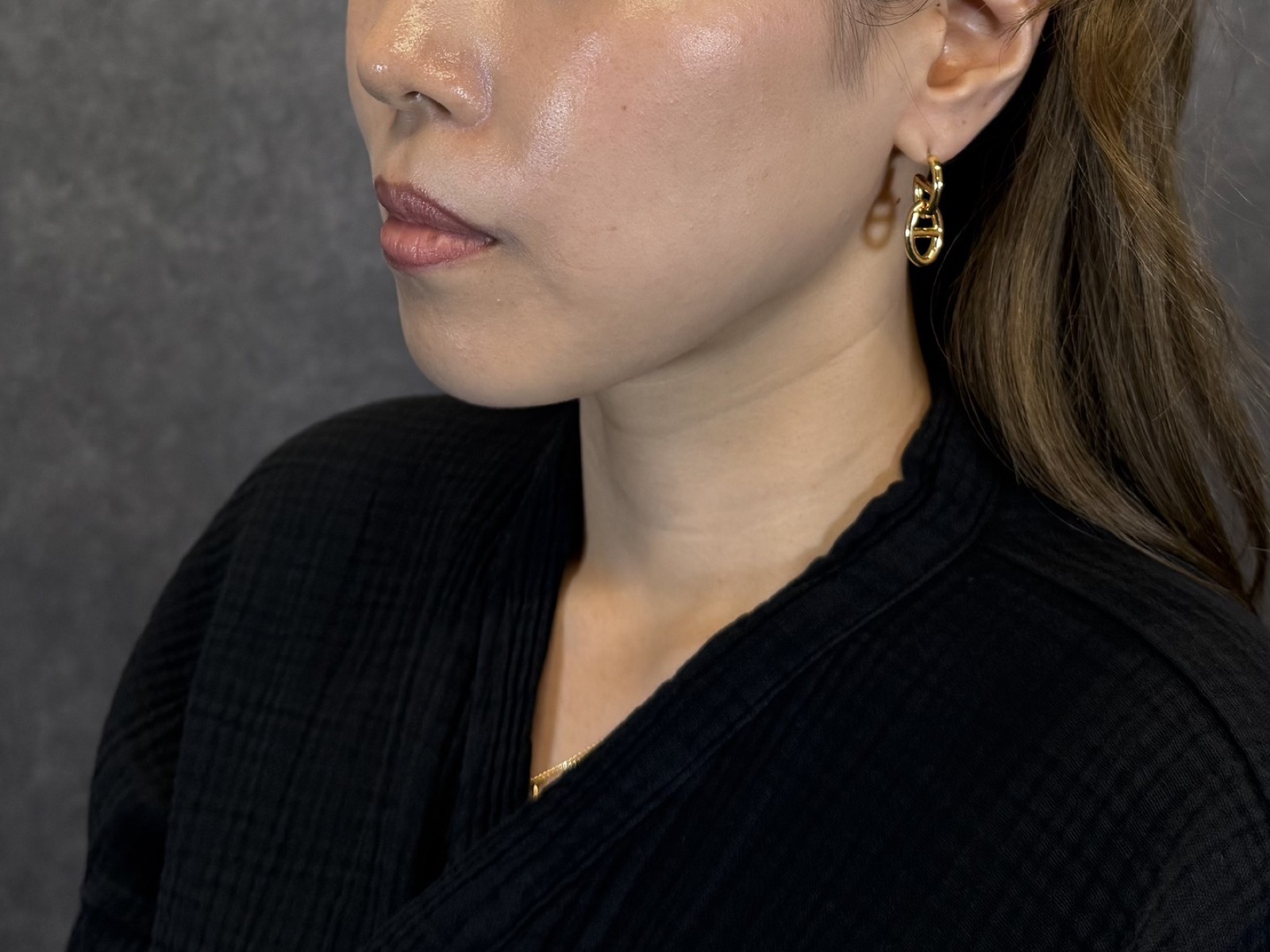
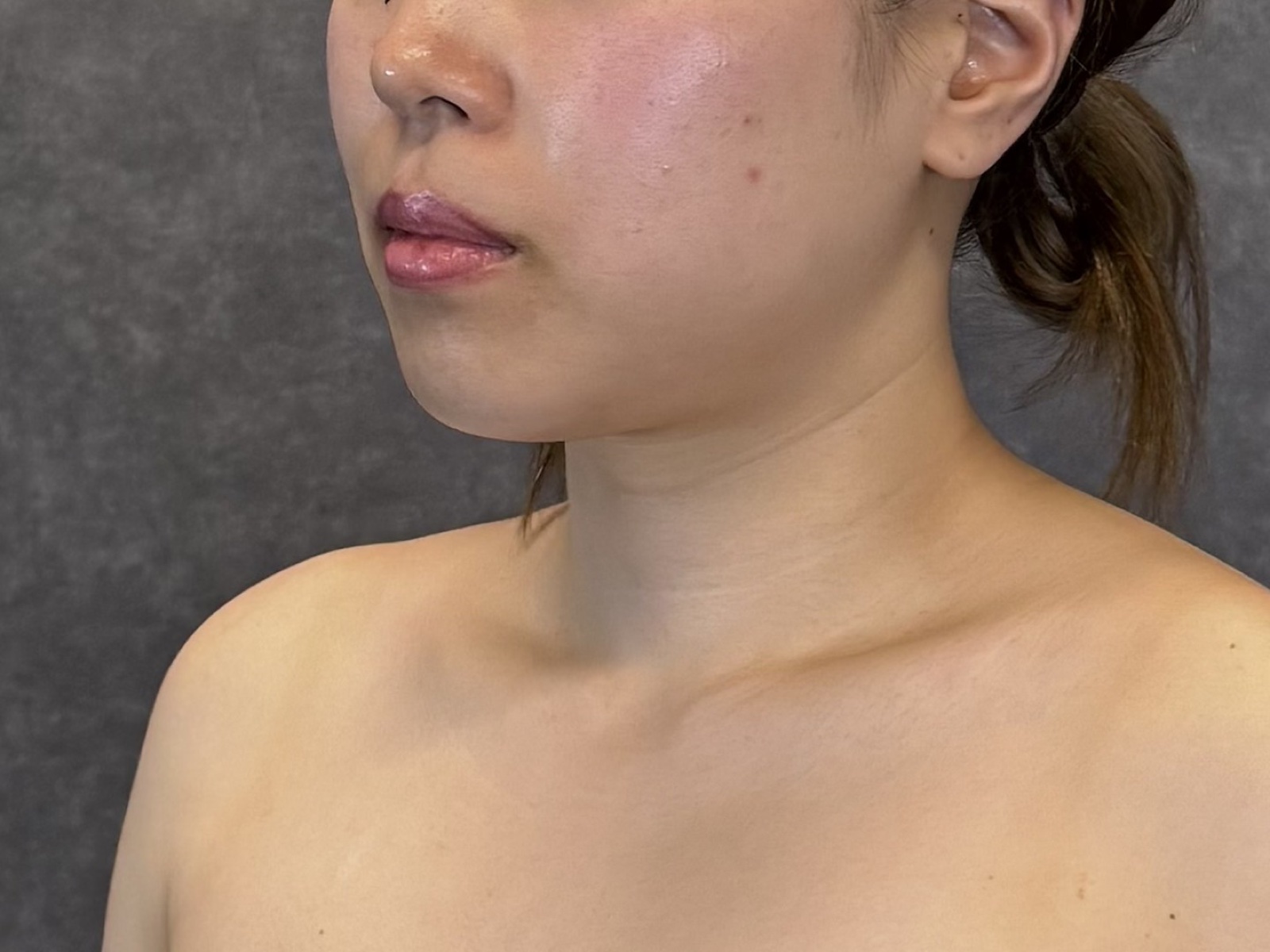
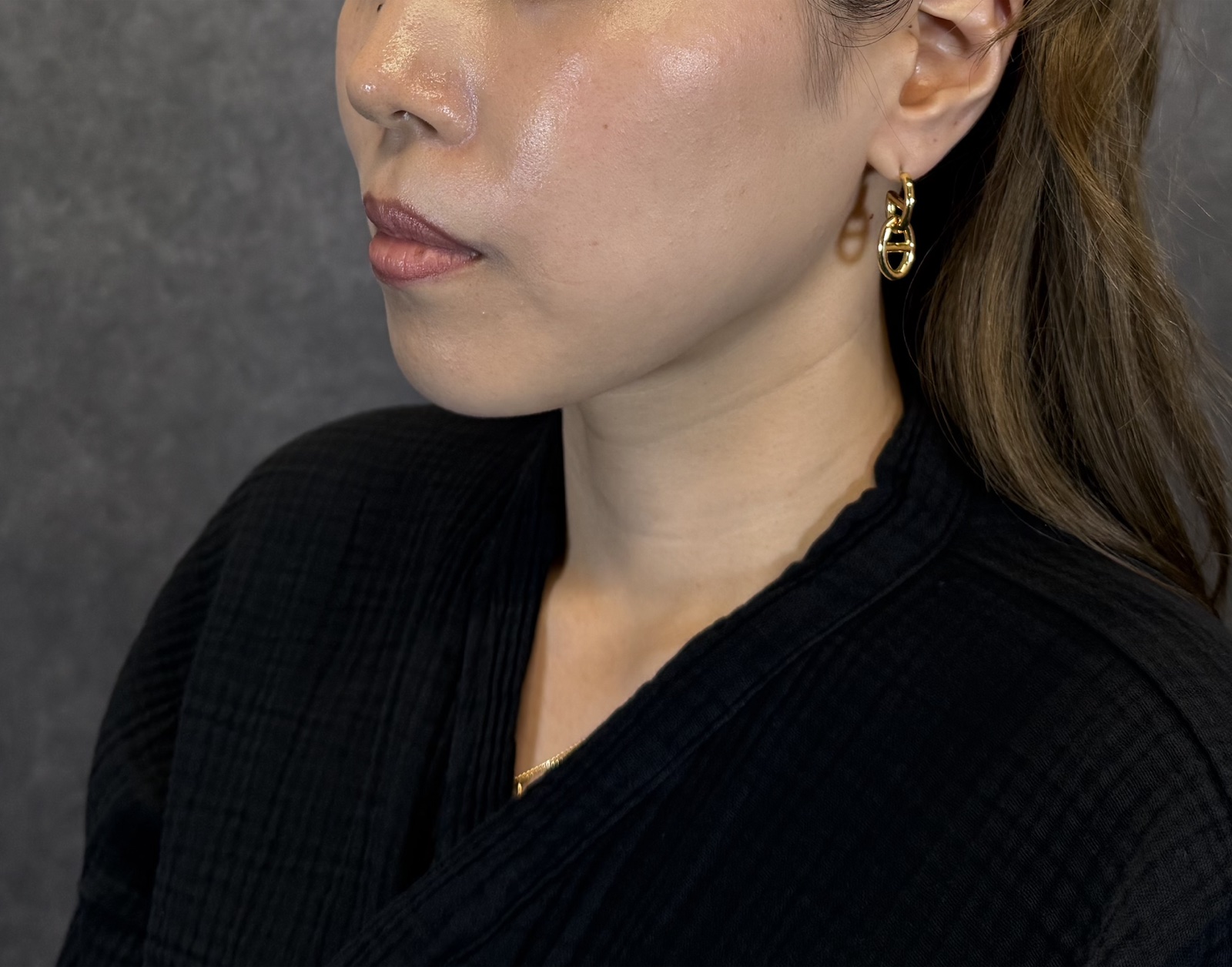
In this case the arm liposuction was combined on the same day with submental and cheek contouring and small-volume fat grafting to the forehead, temples, and nasolabial folds. The facial fat grafting involved only a small volume (a few tens of cc in total), kept within a range that would not disturb the fluid balance of the arm liposuction. In any combined procedure, the preoperative plan must prioritise cases so that total operating time, total anaesthetic dose, and total tumescent fluid volume all stay inside a safe range.
Who Is a Good Candidate for Arm Bi-Needle Liposuction?
Arm bi-needle liposuction tends to be most effective for (1) patients in their 20s to early 40s with good skin elasticity, (2) patients with a clearly palpable “wobble” of subcutaneous fat, and (3) patients who want a smooth full-circumference finish. On the other hand, patients with marked skin laxity, patients whose tissue is already scarred from an earlier aggressive liposuction, or patients with very little fat relative to muscle, may not achieve a satisfying result from this technique alone — a brachioplasty (excisional lift) or a reconstructive revision may need to be discussed.
You can find related topics in our liposuction column index, which is updated regularly.
Anaesthesia and Pain Control in a Combined Procedure
When full-circumference arm liposuction and facial work are performed on the same day, the central safety issue is control of anaesthetic depth and the total local-anaesthetic dose. Tumescent fluid (a diluted local anaesthetic infiltrated broadly into the subcutaneous plane) is calculated so that the dose per kilogram of body weight stays below the accepted safety ceiling at every treated site, and sedation and analgesic drugs are titrated under respiratory and cardiovascular monitoring. Drug names and doses are tailored by the physician for each case, so no single formula is given here — but the single most important safety measure is to avoid pushing volumes or extending operative time to force in extra work.
Frequently Asked Questions
Q. How is bi-needle liposuction different from ordinary liposuction?
The main difference is the number and diameter of cannulas and how they are used. In standard liposuction, 1–2 cannulas typically handle most of the work; in bi-needle liposuction, several thinner cannulas are prepared and swapped by layer and direction to achieve a more uniform result. Because the surgeon’s experience strongly influences the outcome, it is worth reviewing case photographs and technical explanations before deciding.
Q. Is removing 700 ml a lot?
For simultaneous full-circumference arm and bra-roll liposuction, it is within a standard range. However, the aspirate volume depends on body size, baseline fat volume, and which layer is addressed, so the same number does not translate into the same visible change for every patient. The thickness and contour of the remaining layer is what determines the result — not the amount removed.
Q. How long does the fibrosis last?
Individuals vary, but the firmest phase is usually weeks 2 to 4 after surgery, with gradual softening over 3 to 6 months. A small number of patients still feel firmness after six months; in most such cases this improves with massage or other physical therapy.
Q. Can fat from the upper arm be used for facial fat grafting?
Yes. In this case, fat harvested from the upper arm was processed and injected into the face. However, graft survival varies between patients and depends on the donor site, processing method, injection plane, and volume. Facial changes are evaluated from three months onward.
Q. How long should I take off work?
Patients with desk-based jobs often return within a few days, but if your work involves heavy arm movement, about one week of rest is sensible. Compression garment duration and follow-up visits are discussed individually at consultation.
──────────────
Supervising Physician: Shin Moriwaki, MD
Member, Japan Society of Aesthetic Surgery (JSAS) / Member, American Academy of Aesthetic Medicine
ECFMG Certificate (US medical licensing qualification)
──────────────
📍 AVAN TOKYO Ginza Liposuction Clinic
AVAN TOKYO GINZA LIPOSUCTION CLINIC
English / 中文 / Tiếng Việt supported
Bookings and consultations are accepted via DM / LINE / Website / Phone.