


Hybrid Breast Augmentation Fat Yield: Why Harvested and Injected Volumes Differ2026.10.16
In hybrid breast augmentation that combines a silicone implant with fat grafting, the fat harvested from the arms is not injected directly into the breast. Freshly aspirated fat is a cloudy mixture of adipocytes, tumescent fluid, blood, and free oil released from damaged fat cells. It is purified by centrifugation or sedimentation, and only the dense, high-purity fat layer is used for injection. Understanding this hybrid breast augmentation fat yield clarifies why there is always a gap between the harvested volume and the volume that can actually be injected, and helps a patient see how her body habitus relates to the breast size she can realistically expect. Based on a case of a woman in her twenties who underwent hybrid breast augmentation (Motiva Mini 275 cc plus fat grafting) with the arm as the sole donor, this article explains how to plan surgery by working back from the usable fat volume after purification.
Key Points of This Article
・Hybrid breast augmentation fat yield is the proportion of harvested fat that remains injectable after blood and free oil are removed; it is markedly less than the harvested volume.
・After centrifuge-based purification, roughly half of the harvested fat remains as injectable fat; the exact proportion varies with constitution, fat quality, and aspiration damage.
・In slim patients whose only donor site is the arms, the harvestable fat has a ceiling, and fat alone often cannot supply the required volume.
・For such patients, placing a silicone implant for base volume and layering the purified fat subcutaneously may fit the anatomy well.
・The total injection volume and its distribution across layers are decided at consultation based on actual usable volume and the condition of the skin and gland.
Case: Hybrid Breast Augmentation with Full Circumferential Arm Liposuction
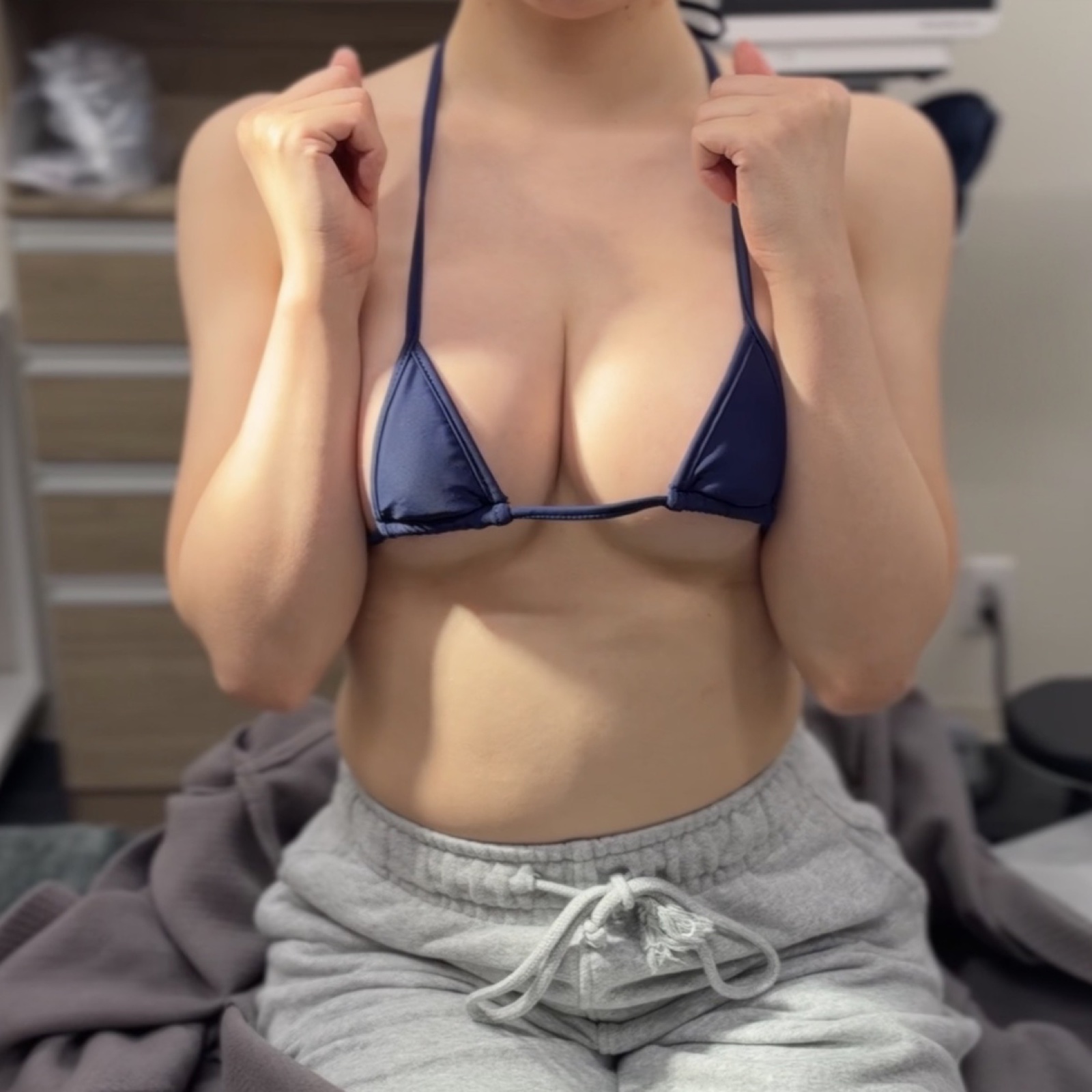
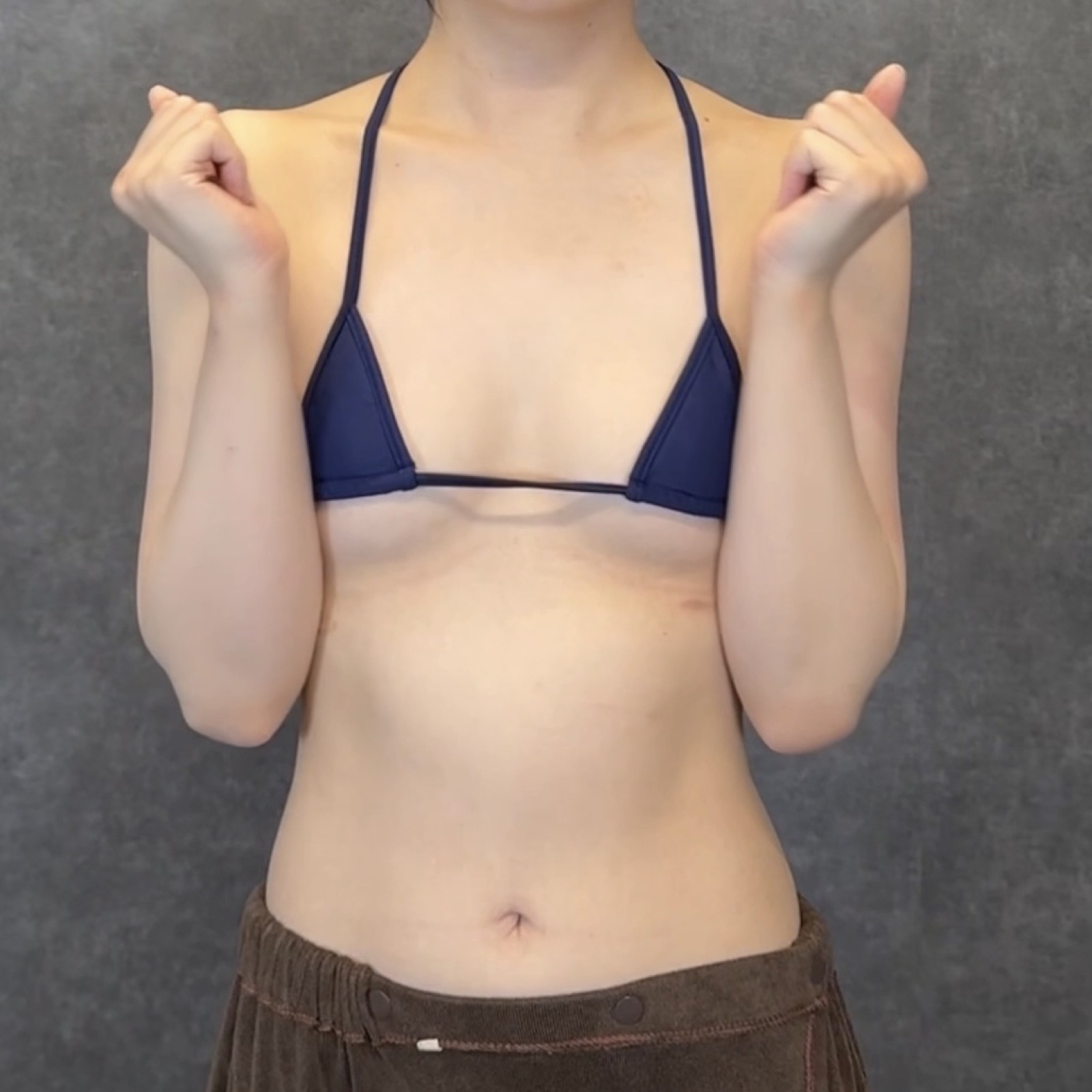
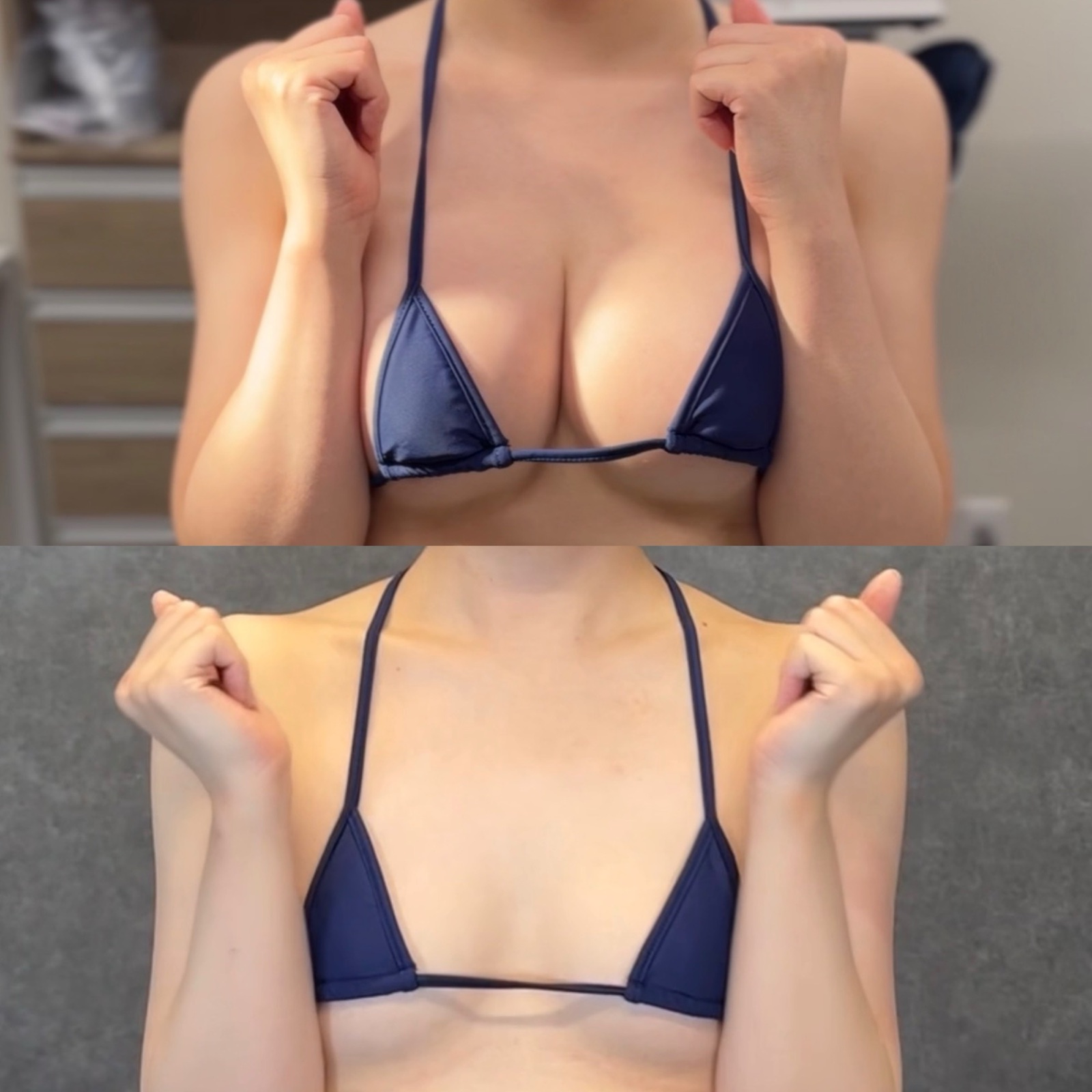
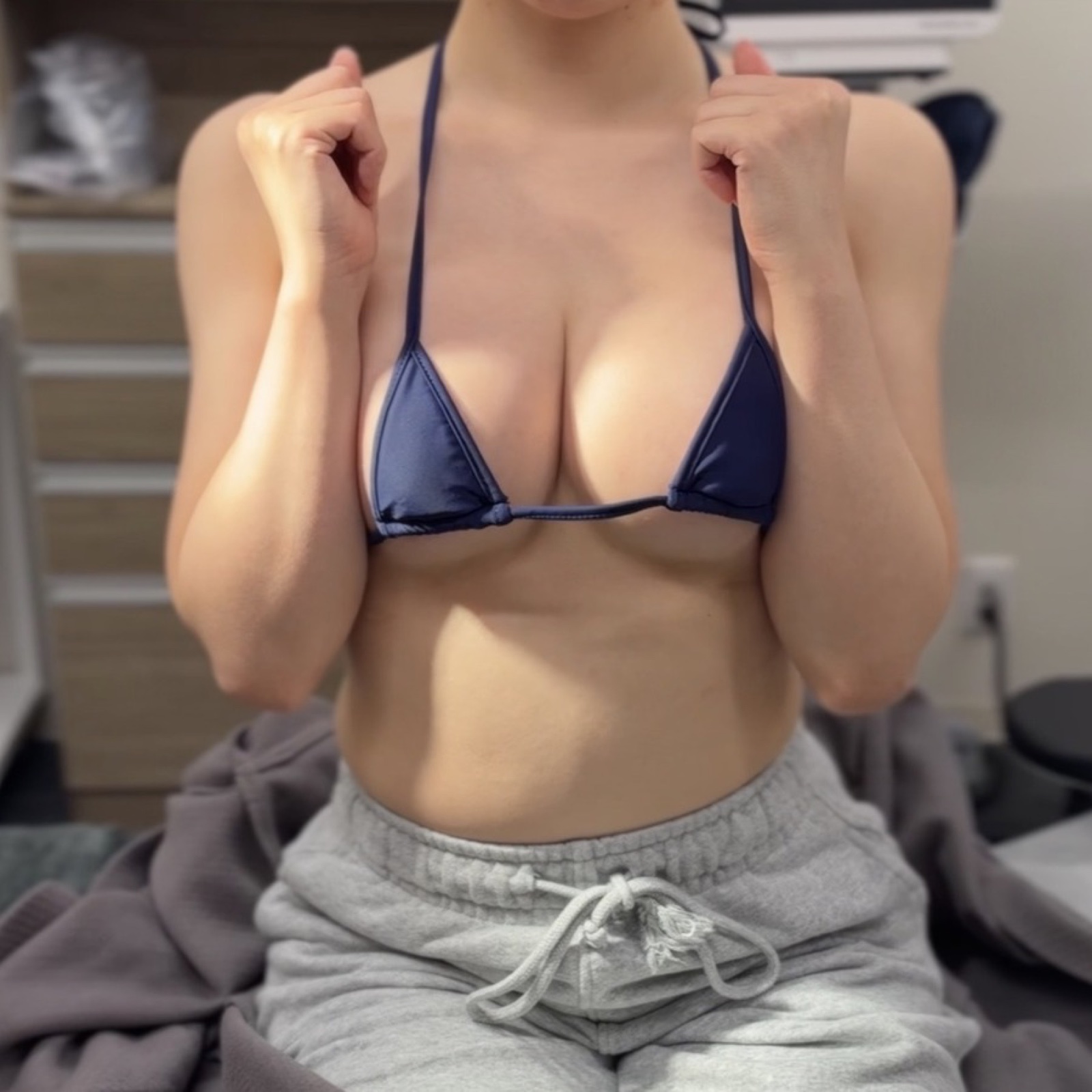
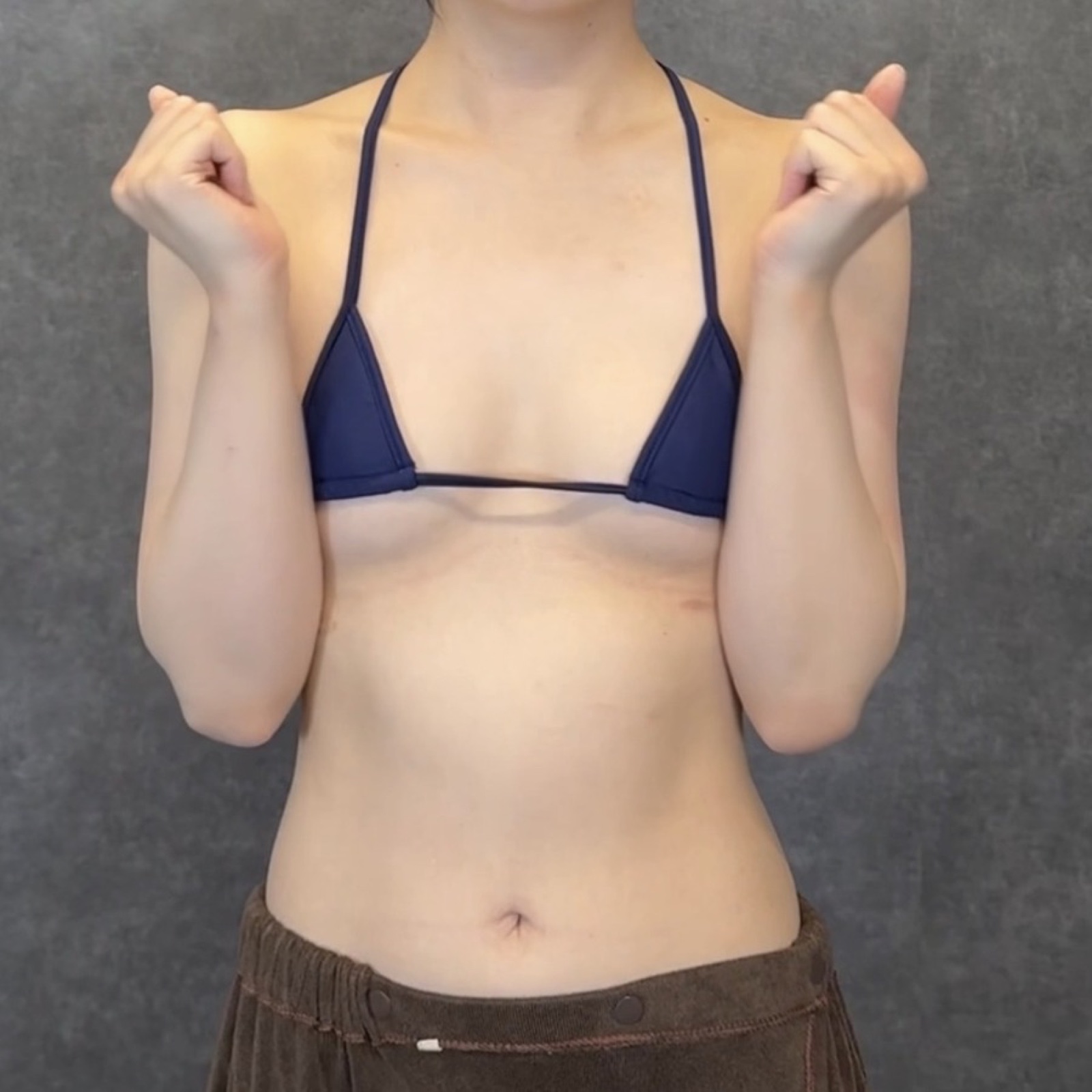
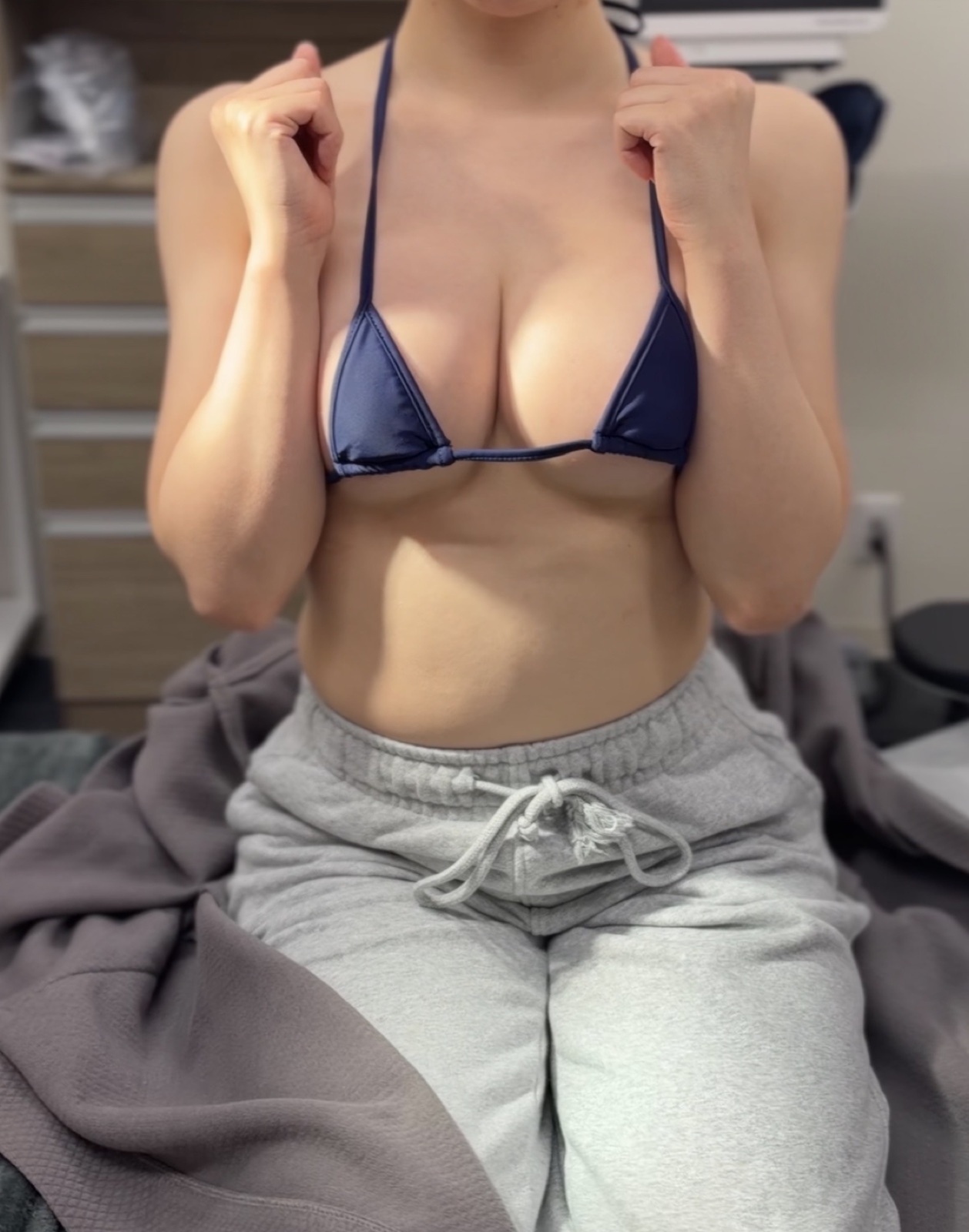
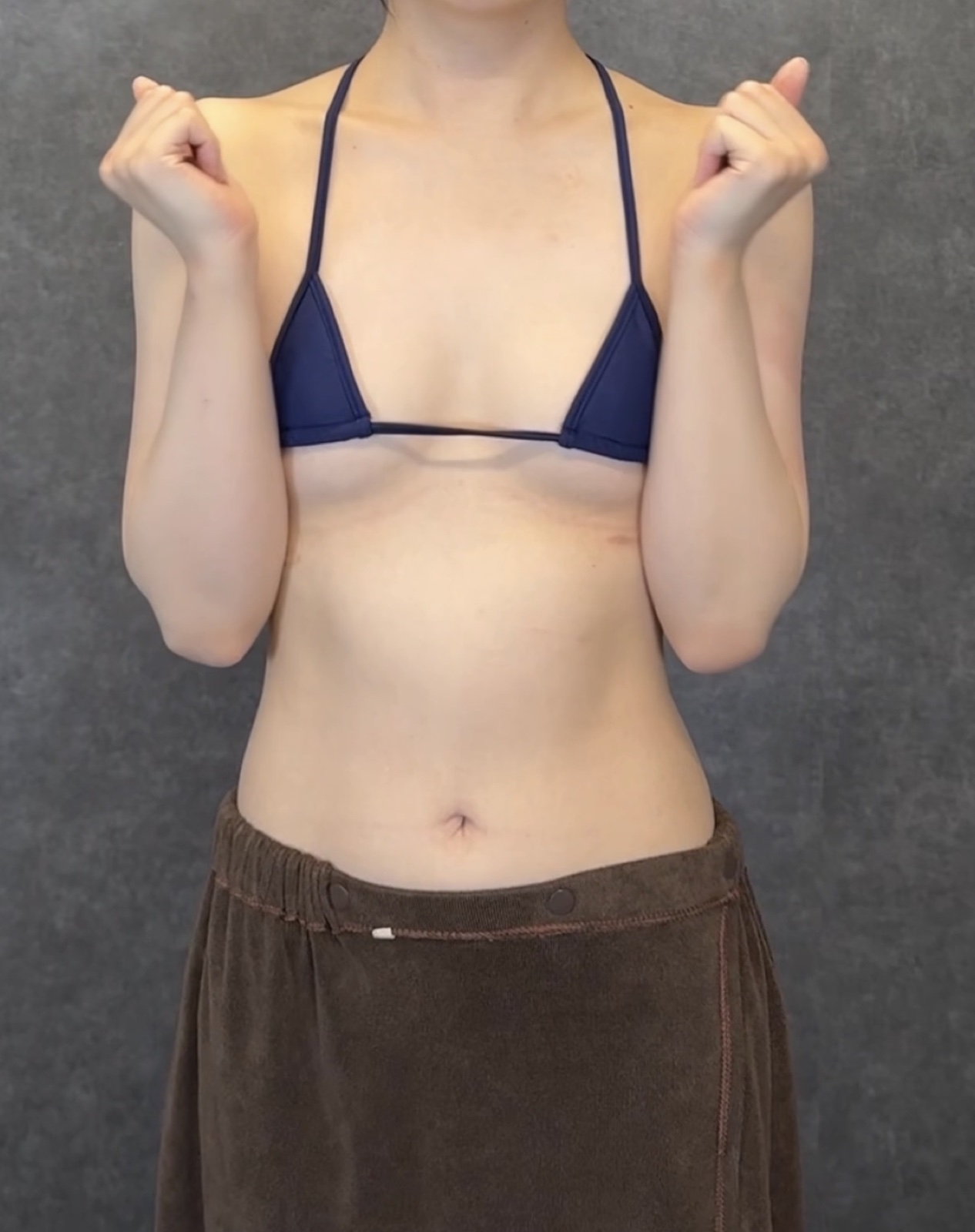
A patient in her twenties consulted us about low breast volume and the thickness of her upper arms. She was slim overall, which made it difficult to harvest a substantial amount of fat from the thighs or abdomen, so the donor site was limited to the full circumference of both upper arms (back, front, and shoulder zones). A Motiva Mini 275 cc implant was selected and placed subglandularly through an axillary incision along the natural underarm crease. The harvested fat was purified by centrifugation and then distributed – the majority to the subcutaneous layer, with a small amount placed subglandularly. The photos show the frontal view at three months after surgery.
Treatment Content, Cost, and Risks of This Case
1. Treatment content: Hybrid breast augmentation using a Motiva Mini 275 cc implant placed subglandularly via an axillary incision, combined with full circumferential liposuction of both upper arms (back, front, and shoulder). Harvested fat was centrifuged, purified, and distributed to the subcutaneous and subglandular layers of both breasts.
2. Cost: Please refer to the price page for fees. The final amount is confirmed at consultation.
3. Main risks and side effects (breast): bruising, swelling, pain, hematoma, infection, fat nodules, calcification, oil cysts, capsular contracture, residual asymmetry, transient nipple sensory changes, and long-term implant-related risks such as rupture, displacement, and rippling. Main risks and side effects (arms): bruising, swelling, transient numbness, firmness due to fibrosis, surface irregularity, scars, pigmentation at port sites, and distal edema. Anesthesia-related risks include circulatory and respiratory changes and post-operative nausea and vomiting (PONV).
4. Results vary between individuals, and the photos represent one example. Recovery course, final appearance, and downtime depend on the patient’s constitution.
Why the Harvested Volume Does Not Equal the Injected Volume
Freshly aspirated fat is more than adipocytes – it is a turbid liquid containing tumescent anesthetic fluid, blood from traumatized vessels, and free oil released by injured fat cells. Injecting this unprocessed mixture into the breast causes oil and blood to trigger inflammation within the graft, which is a key driver of fat nodules, calcification, and oil cysts.
For this reason, the harvested fat is purified by centrifugation or sedimentation, and only the densely packed fat layer is used for injection. Centrifuge settings vary by surgeon, but low-speed (a few hundred rpm, short duration) is usually chosen to avoid mechanically damaging the adipocytes and the stromal vascular fraction (SVF). Higher speeds separate blood and oil faster, but they damage the fat cells and progenitor cells, which affects long-term graft survival.
The proportion remaining after purification depends on donor site, age, degree of fibrosis in the fat, and aspiration trauma, but a practical planning rule is that roughly half of the harvested volume remains injectable. The idea that “harvested fat does not equal injectable fat” is the starting point of hybrid breast augmentation fat yield as a planning concept.
Reverse-Engineering Surgical Planning from Fat Yield
If about 100 mL of cover fat is desired per breast, roughly 200 mL of purified fat is needed in total. Assuming a yield of about half, at least 400 to 500 mL must be harvested from the donor site. That is the floor on the liposuction side. When the only donor site is the arms, we need to decide pre-operatively whether the harvestable volume can meet this floor.
Patients with substantial fat on the thighs or abdomen can allow 1,000 to 2,000 mL of aspiration, which supports plans in which fat alone delivers several hundred mL per breast. In slim patients whose only donor site is the arms, the ceiling on harvestable fat is much lower, and this ceiling tightens as the subcutaneous fat gets thinner. Instead of starting from “how much do I want added,” the plan must start from “how much can realistically be harvested.”
Why Hybrid Augmentation Fits Patients with Arm-Only Donors
If a patient with limited donor volume aims for significant size increase with fat alone, she will likely need multiple fat grafting procedures. The yield wall does not change with repetition, and the arm donor site thins out with each round, so adding volume by repetition becomes less efficient over time.
Hybrid breast augmentation addresses this with a division of roles. The implant provides the base volume, and the purified fat is used only as a cover layer to shape the contour. This limits the required injection volume to what is needed for smoothness, which lowers the burden on the donor site. The implant size is chosen based on chest-wall width, skin elasticity, and glandular thickness. In this case Motiva Mini 275 cc was selected because a smaller implant hides its edges better in a thin patient with a limited subcutaneous envelope.
Subcutaneous-Dominant Fat Layering to Soften the Implant Edge
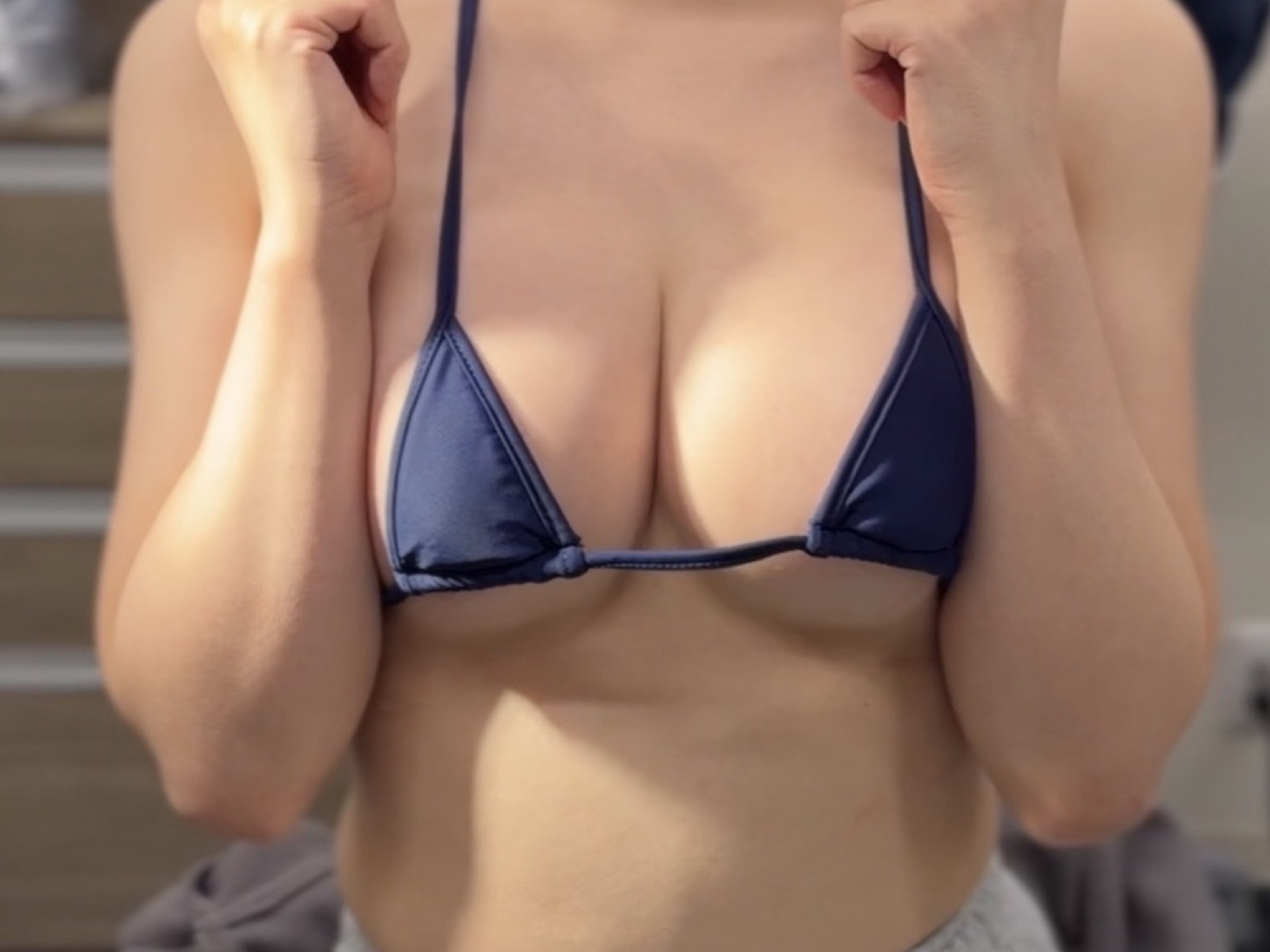
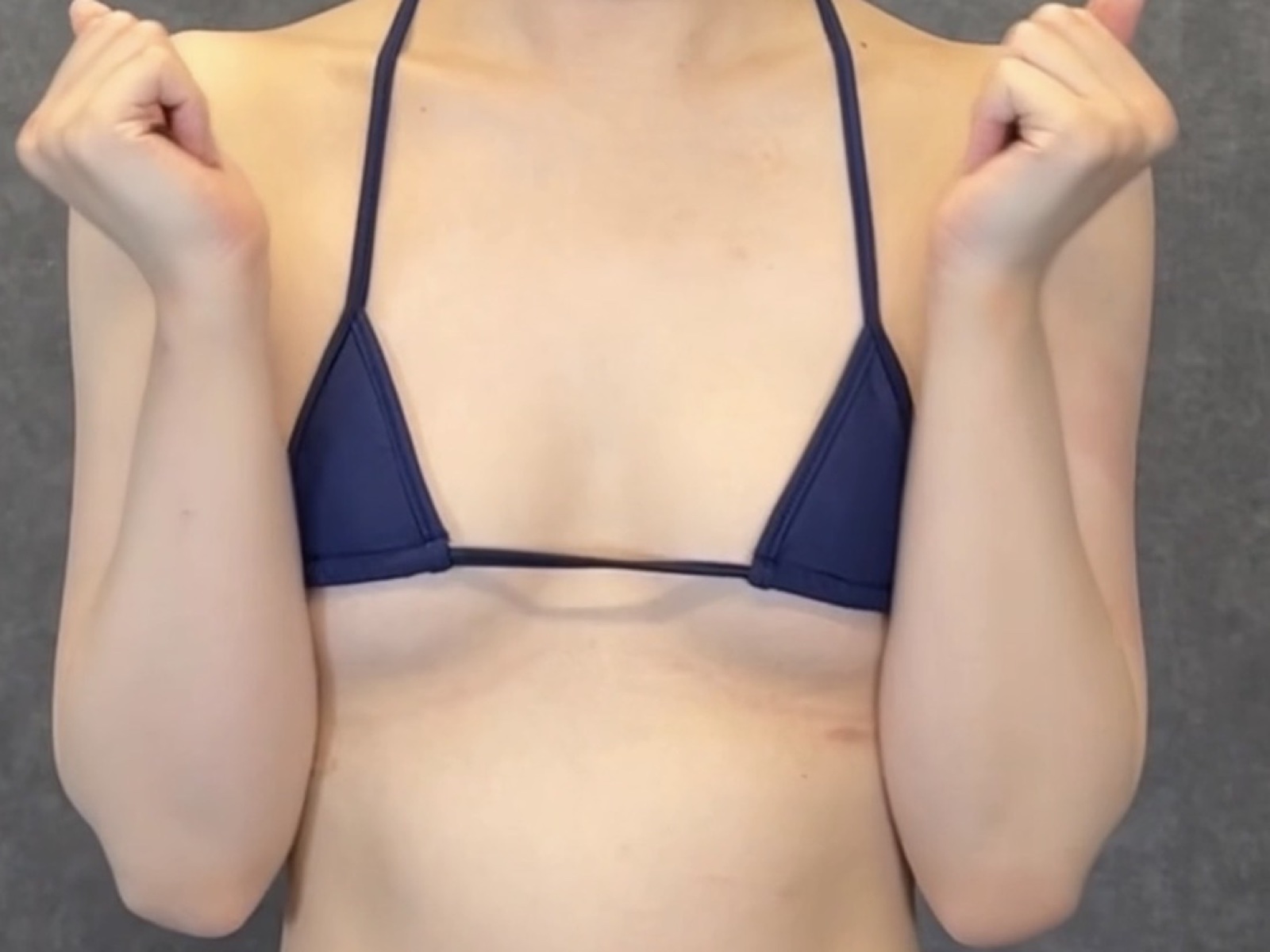
Fat in hybrid breast augmentation is injected mainly in two layers: subglandular (just over the implant pocket) and subcutaneous (closer to the surface). In slim patients, the risk of a palpable or visible implant edge is higher, so adding thickness subcutaneously as a cover-fat layer is essential. In this case the majority of the purified fat was placed in the subcutaneous layer, with only a small amount placed subglandularly. The left-right difference in injected volume was chosen to correct a pre-existing asymmetry.
Subcutaneous-dominant placement creates a thin cover layer directly over the implant, giving the slope from decolletage to upper cleavage a smoother profile and making the implant edge harder to feel and see. The small subglandular addition is intended to blend the junction between the implant and the overlying tissue.
Grafted fat survives only where oxygen and nutrients can diffuse from the surrounding tissue. Laying it too thickly at one time starves the center of the graft and promotes fat necrosis, nodules, and oil cysts. There is a per-layer upper limit on injection even subcutaneously, so the principle is “in sheets, thin and wide.” When thinking about hybrid breast augmentation fat yield, surgeons design not only the total injectable volume but also the per-layer ceiling.
Course at Three Months and the Changes to Come
Three months after surgery, graft take and tissue integration around the implant are still evolving. Immediately after injection, swelling and edema make the volume look larger. Over the first one to three months, fat that cannot establish a blood supply is resorbed while fat that reconnects to local circulation survives. Softness and tissue integration typically settle around six months to a year, which is when the “true” final shape becomes visible.
In this case the subcutaneous thickness from decolletage to upper cleavage is gradually integrating, forming a natural slope in which the implant edge becomes less noticeable. The arms are still in the firmness phase of fibrosis, which will soften toward six months, allowing the contour to settle. Course, final appearance, and downtime vary between individuals – the same technique does not produce the same result in every patient.
Risks When Hybrid Augmentation and Arm Liposuction Are Combined
Breast side: bruising, swelling, pain, hematoma, infection, fat nodules, calcification, oil cysts, capsular contracture, residual asymmetry, transient nipple sensory changes, and implant-related long-term risks such as rupture, displacement, and rippling.
Arm side: bruising, swelling, transient numbness, firmness from fibrosis, surface irregularity, scars, pigmentation at port sites, and edema distal to the elbow.
Anesthesia: circulatory and respiratory changes related to intravenous and inhalational agents, post-operative nausea and vomiting (PONV), and rarely serious complications. Indication is judged after reviewing general status, past history, current medication, and recent (within six months) blood work and electrocardiogram.
For aesthetic surgery safety standards, please refer to the Japan Society of Aesthetic Surgery (JSAS). Related articles are collected in our liposuction column index.
Frequently Asked Questions
Q. Is all the harvested fat injected into the breast?
No. Fresh aspirated fat contains blood, tumescent fluid, and free oil, and after centrifuge- or sedimentation-based purification only roughly half remains as injectable fat. The remaining blood, oil, and liquid components are not suitable for injection and are discarded.
Q. Can hybrid breast augmentation be done with arm fat alone?
It depends on the relationship between the harvestable volume and the cover-fat volume required. In slim patients or those whose only donor site is the arms, the harvestable volume is limited, so a design that uses an implant for base volume and purified fat as a contour-smoothing cover often fits well. Actual usable volume is estimated at consultation.
Q. What proportion of injected fat survives?
Roughly half to seventy percent of injected fat survives long-term, but the figure varies with age, constitution, smoking status, post-operative care, and the thickness and layer of injection. Volume appears larger immediately after injection because of swelling, and settles over six months to a year.
Q. Subglandular or subcutaneous – which is better for fat placement?
Neither is universally better; the choice depends on implant position, subcutaneous thickness, and glandular condition. In slim patients concerned about the implant edge, adding thickness subcutaneously is often the stronger strategy. A small amount placed subglandularly blends the junction between the implant and overlying tissue.
Q. Is the shape at three months the final result?
No, the course is still in progress. Graft stabilization and capsular integration around the implant typically take at least six months. At three months, residual swelling and firmness are still present, and some of the injected fat is still being resorbed.
──────────────
Supervising Physician: Shin Moriwaki, MD
Member of the Japan Society of Aesthetic Surgery (JSAS) / Member of the American Academy of Aesthetic Medicine
ECFMG Certificate
──────────────
📍AVAN TOKYO GINZA LIPOSUCTION CLINIC
English / 中文 / Tiếng Việt supported
For consultations and reservations, please contact us via
DM / LINE / Website / Phone.