


Lower Abdomen Pooch Liposuction: Boundary Design in a Slim Patient2026.10.11
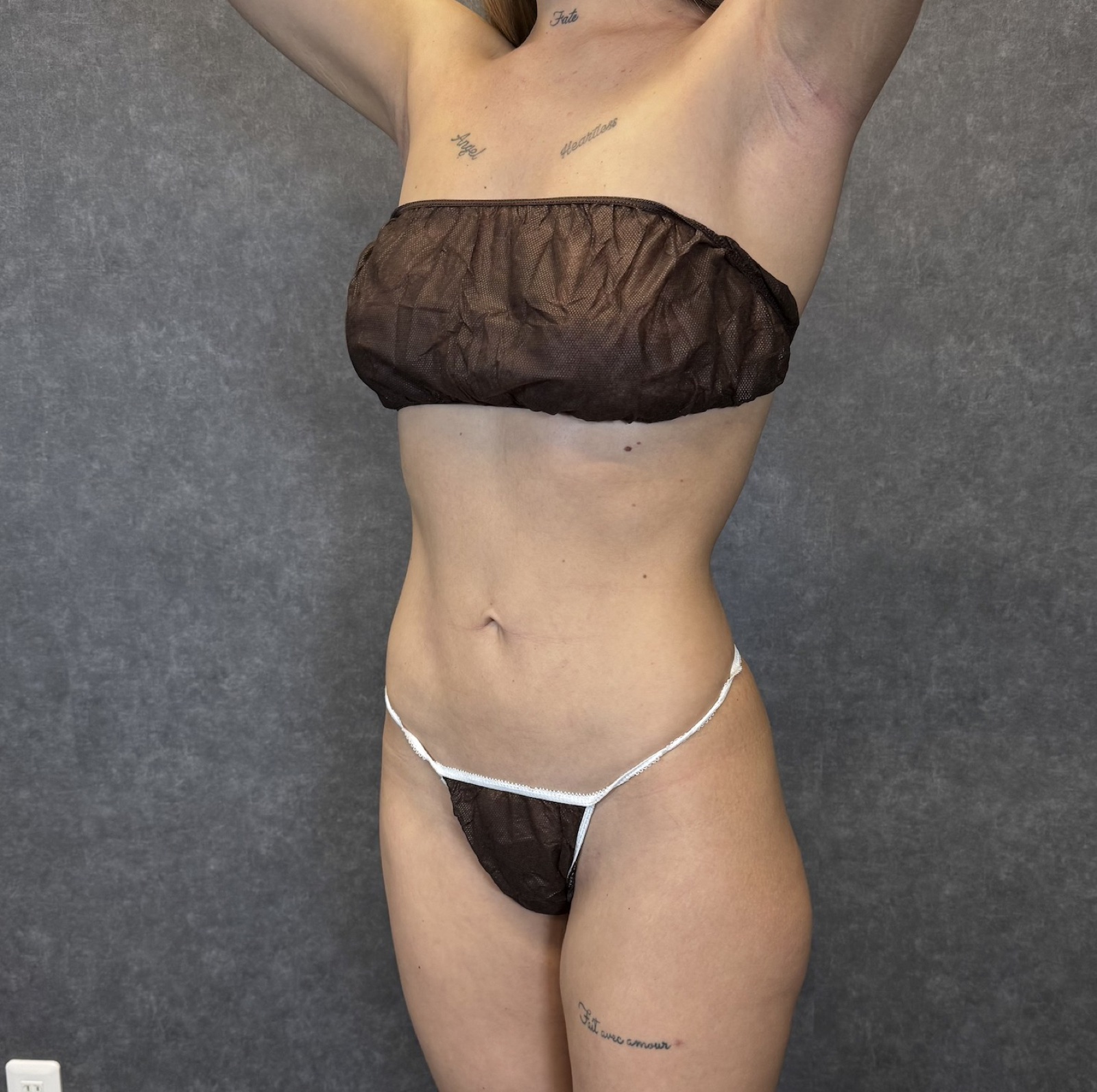
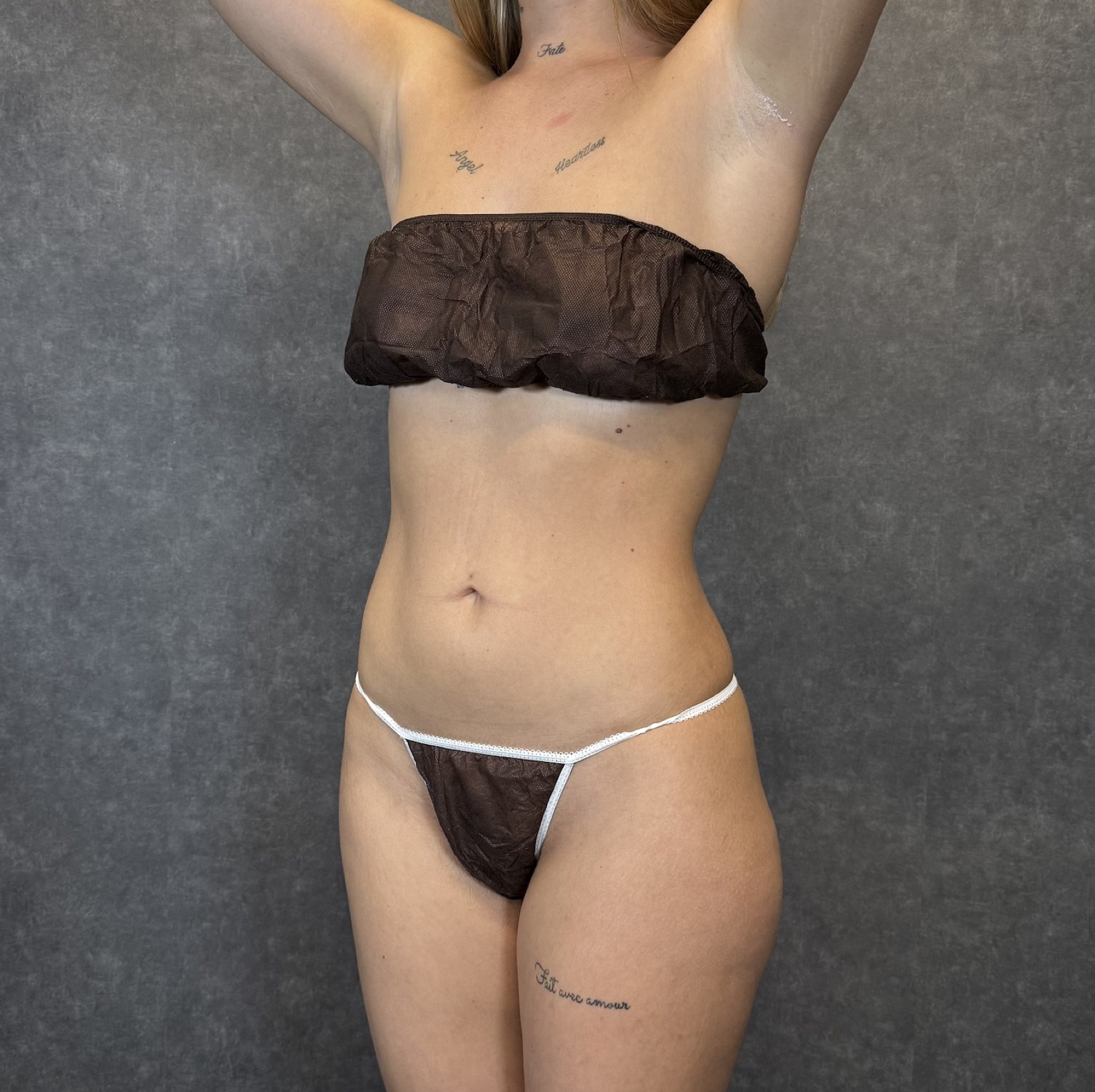
She was slim overall, yet only the area just below her navel pushed forward in a stubborn pooch. This is one of the most common complaints we hear in consultation: dieting and core training trim the whole body, but the lower belly refuses to flatten and spills over the waistband. In this article, I share a case of a woman in her twenties who underwent lower abdomen pooch liposuction combined with same-day skin tightening (Morpheus8) by RF microneedling, and I walk through how we judged the indication, how we designed the suction zone, and how the result settled over six months. Rather than prices or raw numbers, the focus is on three design questions: why slim bodies retain a lower belly pooch, how far it is safe to suction, and how to blend the treated zone into the upper abdomen and flanks.
Key points of this article
– With lower abdomen pooch liposuction, the result is decided less by how much fat is removed and more by where you stop — the boundary design.
– Even slim women retain a lower belly pooch because the subcutaneous fat there is biologically resistant to loss, driven by alpha-2 adrenergic receptor density and estrogen’s protective effect.
– More suction is not better: the final look depends on reading skin laxity and leaving the superficial layer intact rather than chasing volume.
– A single access incision in the groin keeps the scar fully hidden by underwear and lowers the psychological burden of recovery.
– When skin laxity is a concern, same-day Morpheus8 is one option — tightening from the skin side so you do not need to over-resect fat.
Why slim bodies retain a lower belly pooch
The physiology behind stubborn lower abdominal fat
Even in women at or below standard body weight, a protruding pouch below the navel is far from unusual. This is not simply a question of diet — the subcutaneous fat of the lower abdomen is biologically wired to resist loss. Adipocytes carry two kinds of adrenergic receptors: beta receptors that promote lipolysis and alpha-2 receptors that inhibit it, and reports suggest alpha-2 receptors are relatively concentrated in the lower abdomen. On top of that, estrogen preserves fat in the regions that create feminine curves — lower belly, hips, thighs — and this depot is especially reactive to hormonal shifts. When whole-body dieting flattens almost everything but leaves the lower belly behind, this receptor distribution and hormonal climate are the double reason.
Separating subcutaneous fat from visceral fat
Whether the pooch is driven by subcutaneous fat or by visceral fat changes the treatment plan entirely. Liposuction can only reduce subcutaneous fat; visceral fat is not accessible to the cannula. In consultation we use a pinch test and watch how the abdomen changes between standing, sitting, and lying supine. If the lower abdomen flattens when the patient lies down, subcutaneous fat is the main component; if it stays firm like a dome, visceral fat likely dominates. Skipping this assessment is the single most common reason patients feel “the bulge is still there” after surgery, so we always check it preoperatively.
Designing lower abdomen pooch liposuction: the boundary question
Blending into the upper abdomen and flanks
When the complaint is isolated to the lower belly, the first branch point is scope — do we suction the lower abdomen only, or extend into the upper abdomen and flanks? Spreading a thin, even suction across the whole abdomen is tempting but often leaves the actual pooch intact while expanding downtime. On the other hand, suctioning only the lower belly aggressively creates a visible step where treated and untreated zones meet. In practice we divide the plan into a central zone — from below the navel to the underwear line — where volume is removed, and a fade zone that steps down toward the upper abdomen and flanks. By tapering both suction depth and volume into the fade zone, the edge of the treated area is no longer read as a boundary.
Leaving the superficial layer intact
The single most important precaution in lower abdomen pooch liposuction is not over-resecting the superficial layer — the fat immediately beneath the dermis. Aggressive superficial suction can look impressively flat in the short term, but once the contracture phase passes, it tends to leave irregularities and tethering (skin dimpling) that are very difficult to correct. Surface smoothness is determined by how much superficial fat you leave behind: keep the superficial layer thin and even, and take your volume from the middle and deep layers. Reverse this order and you can end up with a washboard-pattern unevenness even when the overall volume is correct. Intra-operatively, cannula depth is confirmed by palpation at every stroke.
Why one incision in the groin is enough
Because the surgical field is confined to the lower abdomen, a single access incision placed in the groin — fully covered by underwear — is usually all we need. Psychologically this matters: there is no visible scar for the patient to see in the mirror, in the bath, or when changing clothes during the long recovery. Expanding the field would require additional incisions, but limiting the plan to the lower belly pooch allows a one-incision, groin-hidden approach. The opening is only a few millimeters wide and settles into a pinpoint scar whose color fades over time.
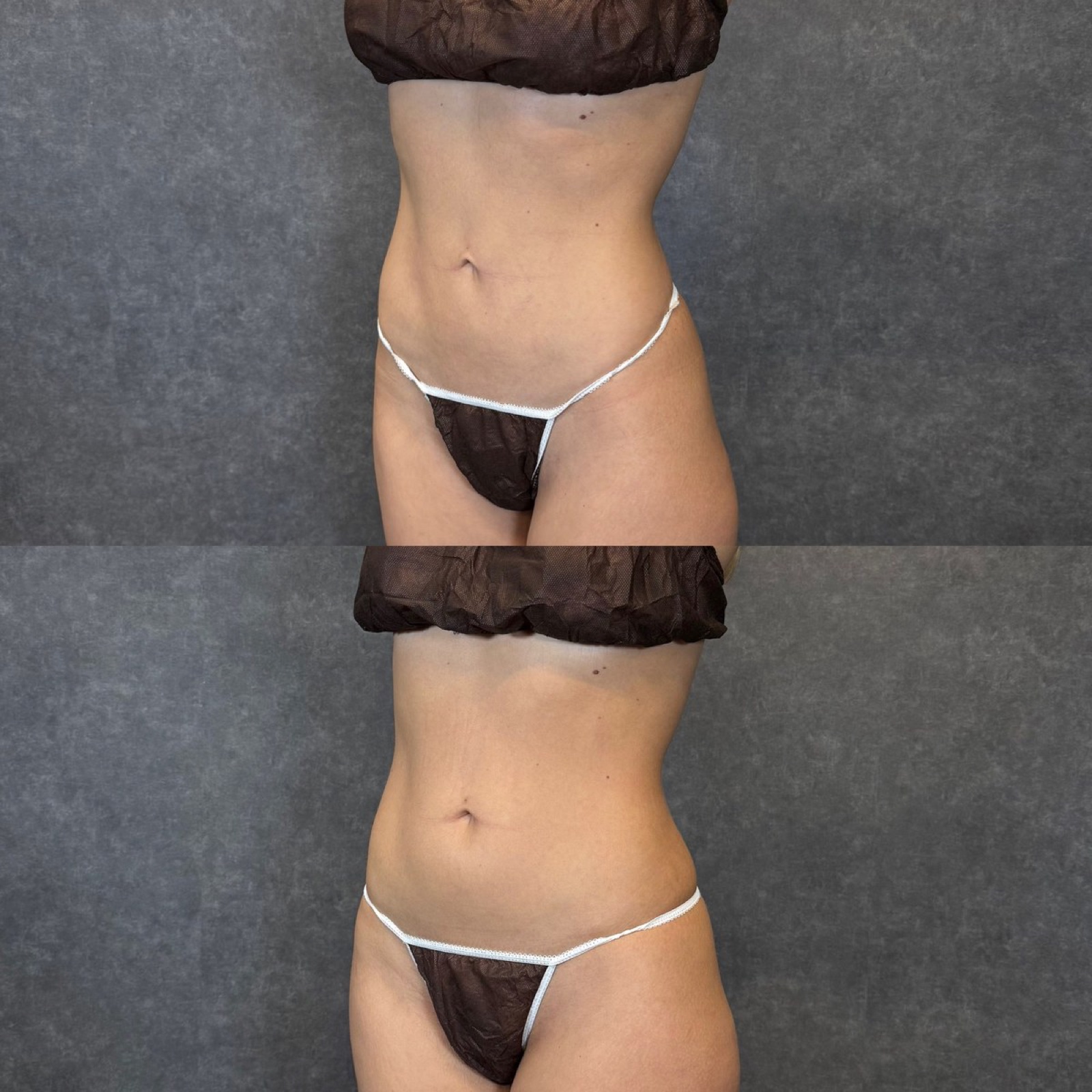
How much is “enough” in lower abdomen pooch liposuction?
Look at what you leave, not what you removed
Patients often judge liposuction by “how many cc came out,” but on the lower abdomen what you leave in which layer matters more than the total. When lower abdomen pooch liposuction is kept inside a defined zone, the aspirated volume will not be a large number — yet because the volume is removed exactly where the protrusion sits, the visual change is substantial. The mindset is not “show the volume removed” but “design the line that remains,” and this is what prevents over-suction and the overly chiselled, hollow look.
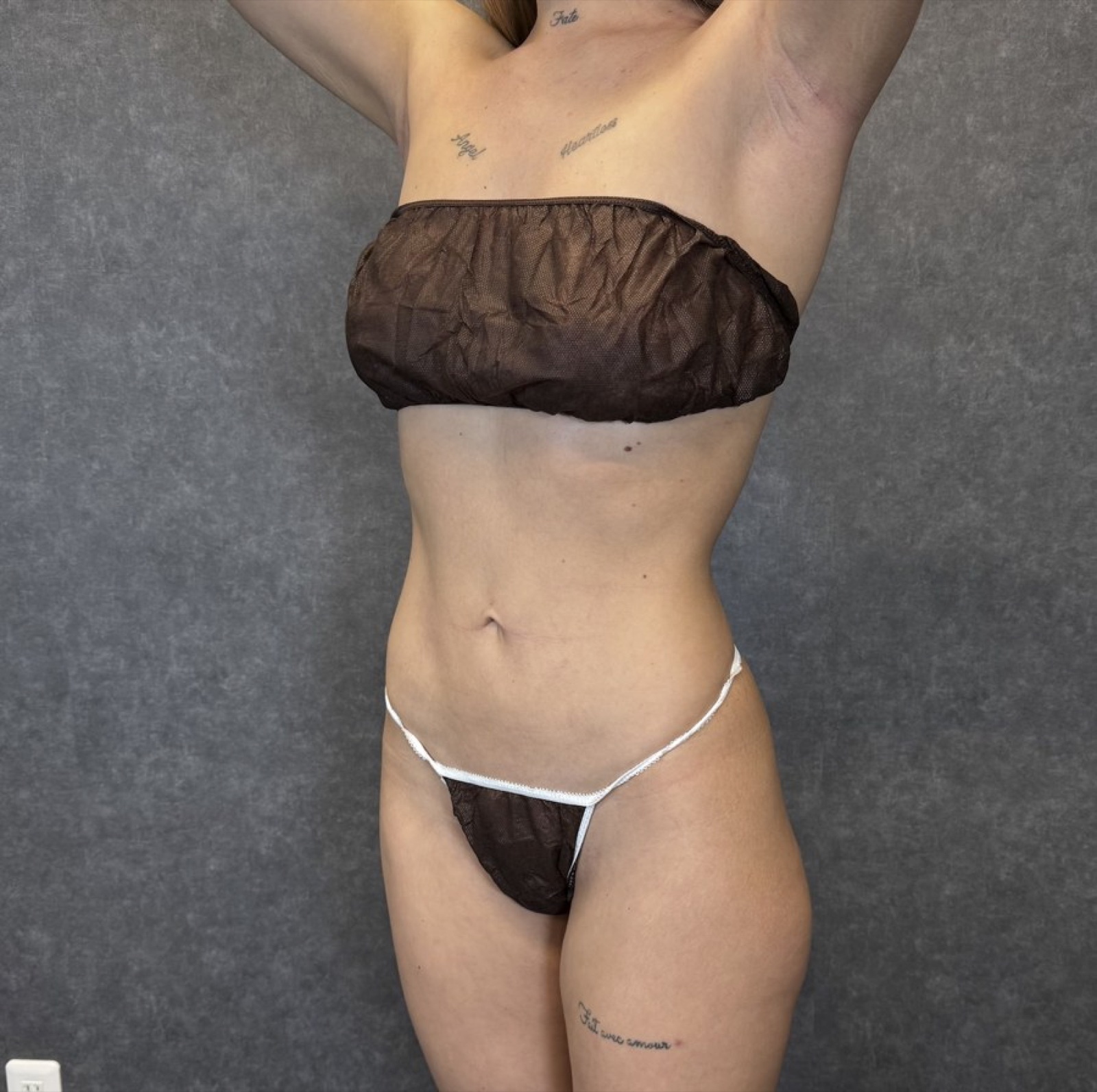
Assessing skin laxity before surgery
Reducing fat on the lower abdomen can expose underlying skin laxity. Preoperatively we check how quickly a pinched fold of lower abdominal skin snaps back, whether there are stretch marks, past weight fluctuations, and age-related changes in elasticity. If skin recoil is strong and the planned volume is modest, liposuction alone usually settles into a tight contour after the contracture phase. If elasticity is reduced or a larger volume is planned, suction alone can mean a longer road to a smooth drape, and sometimes residual laxity.
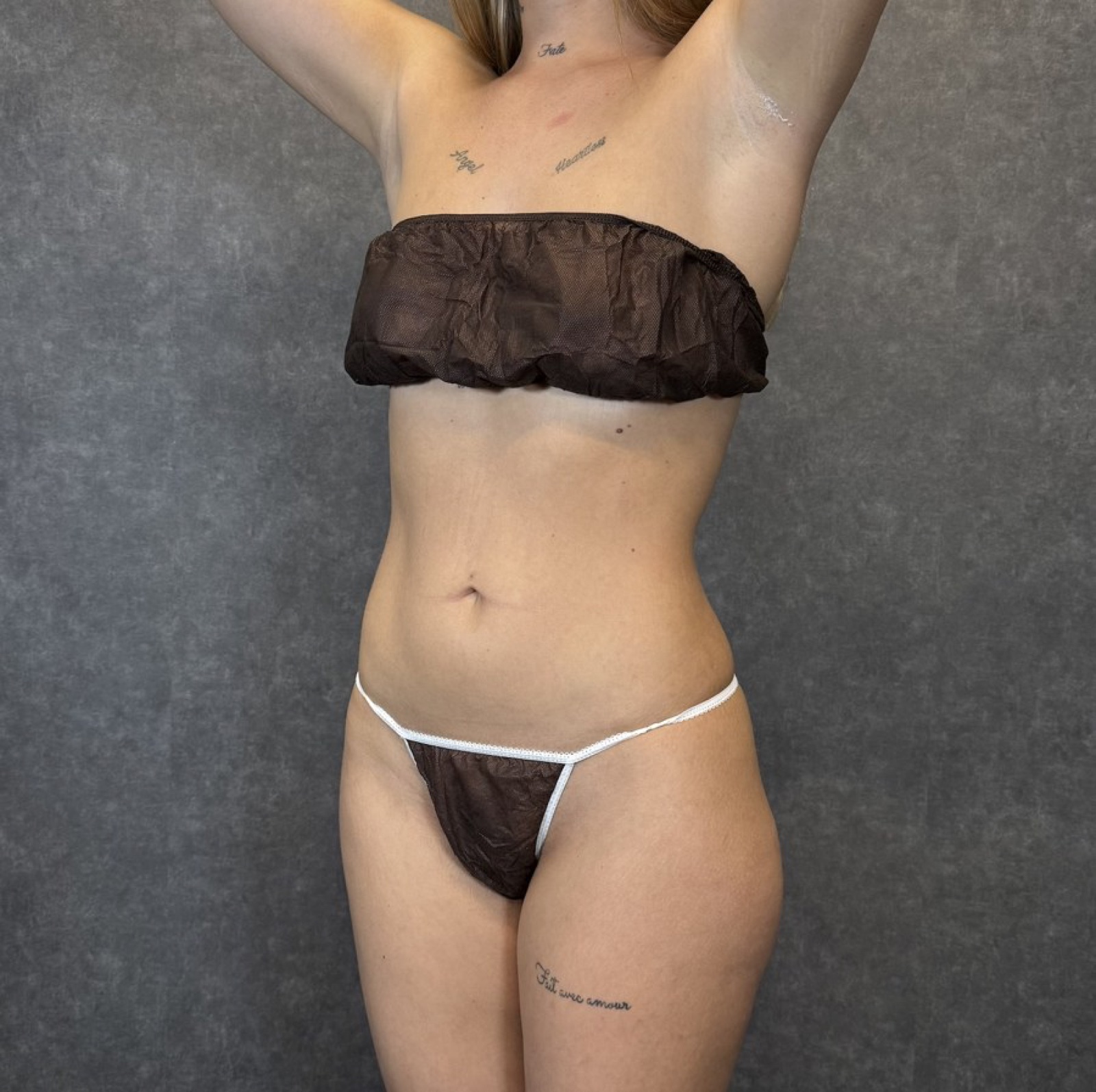
Managing skin laxity: when to add Morpheus8
One option to reinforce skin retraction is RF microneedling such as Morpheus8. Fine microneedles deliver radiofrequency energy into the dermis and superficial fat, triggering tissue contraction and remodelling. Combined with same-day liposuction, physical fat reduction is overlaid with skin-side tightening, letting us tighten from above without needing to resect more fat below. This is not a universal pairing — we weigh skin elasticity, aspirated volume, age, and the look the patient is after. For general safety standards in cosmetic surgery, information from the Japan Society of Aesthetic Surgery (JSAS) can serve as a reference.
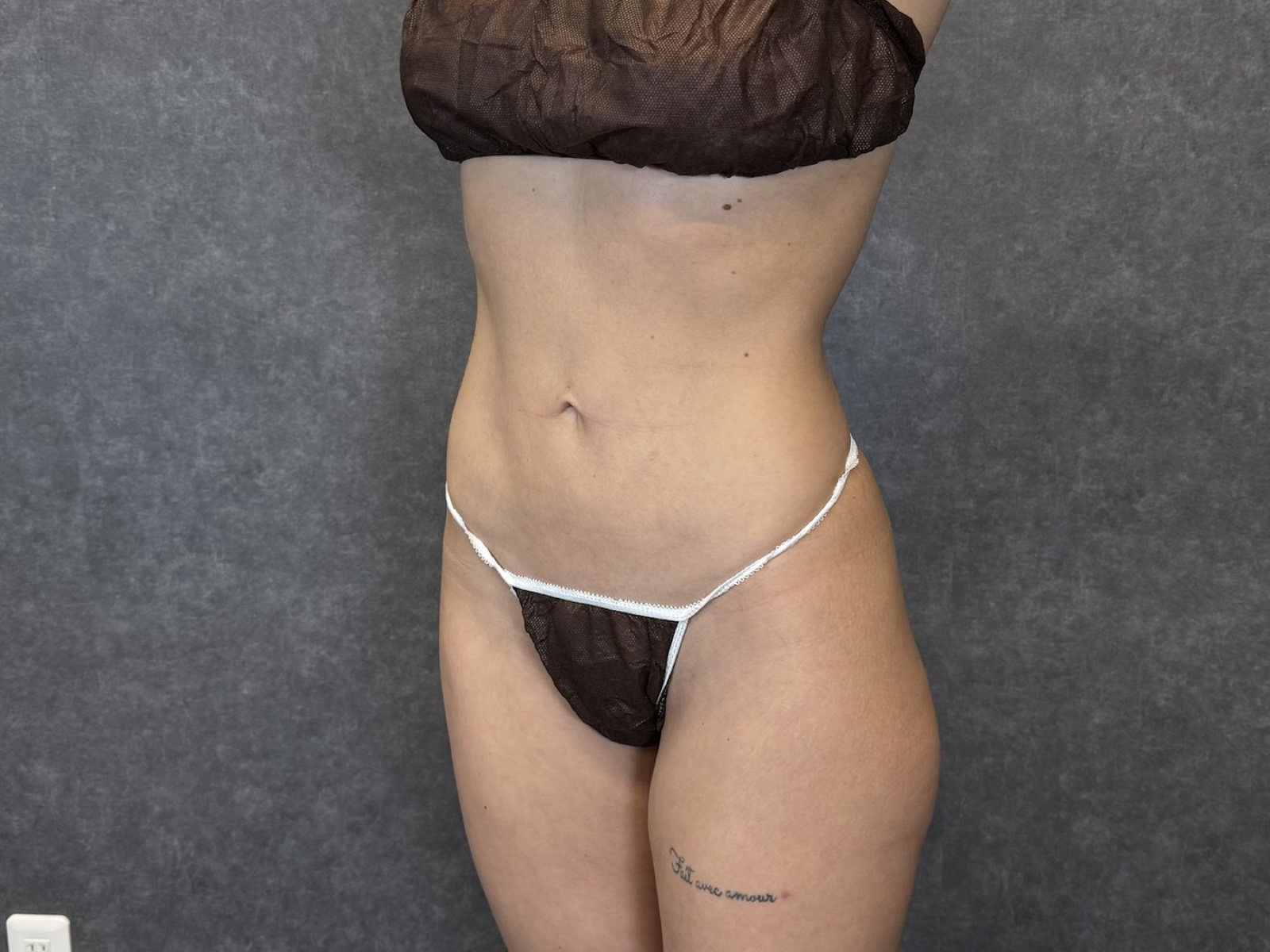
How the postoperative course unfolds
Months 1 to 3: swelling, contracture, bruising
Immediately after surgery the lower abdomen is swollen from infiltrated tumescent fluid and the body’s inflammatory response. The sharpest swelling eases within one to two weeks, but months one through three are the contracture phase: tissues feel firm and may look slightly uneven as fibrosis progresses through normal wound healing. Compression garments, moderate walking, hydration, and a protein-adequate diet all support this phase. Bruising varies with individual coagulation and skin thickness, usually fading through yellow discoloration over two to three weeks.
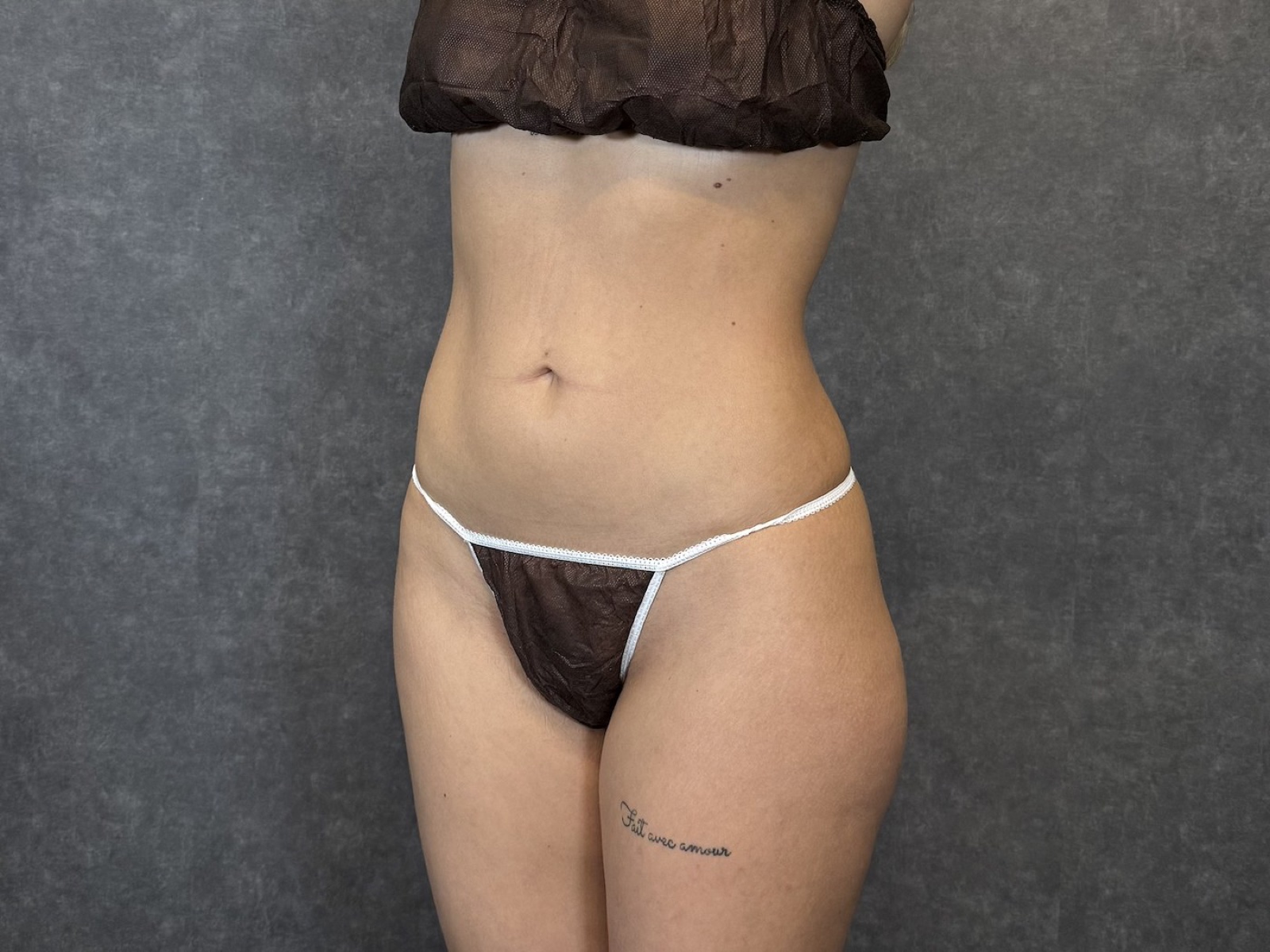
Months 3 to 6: the line settles
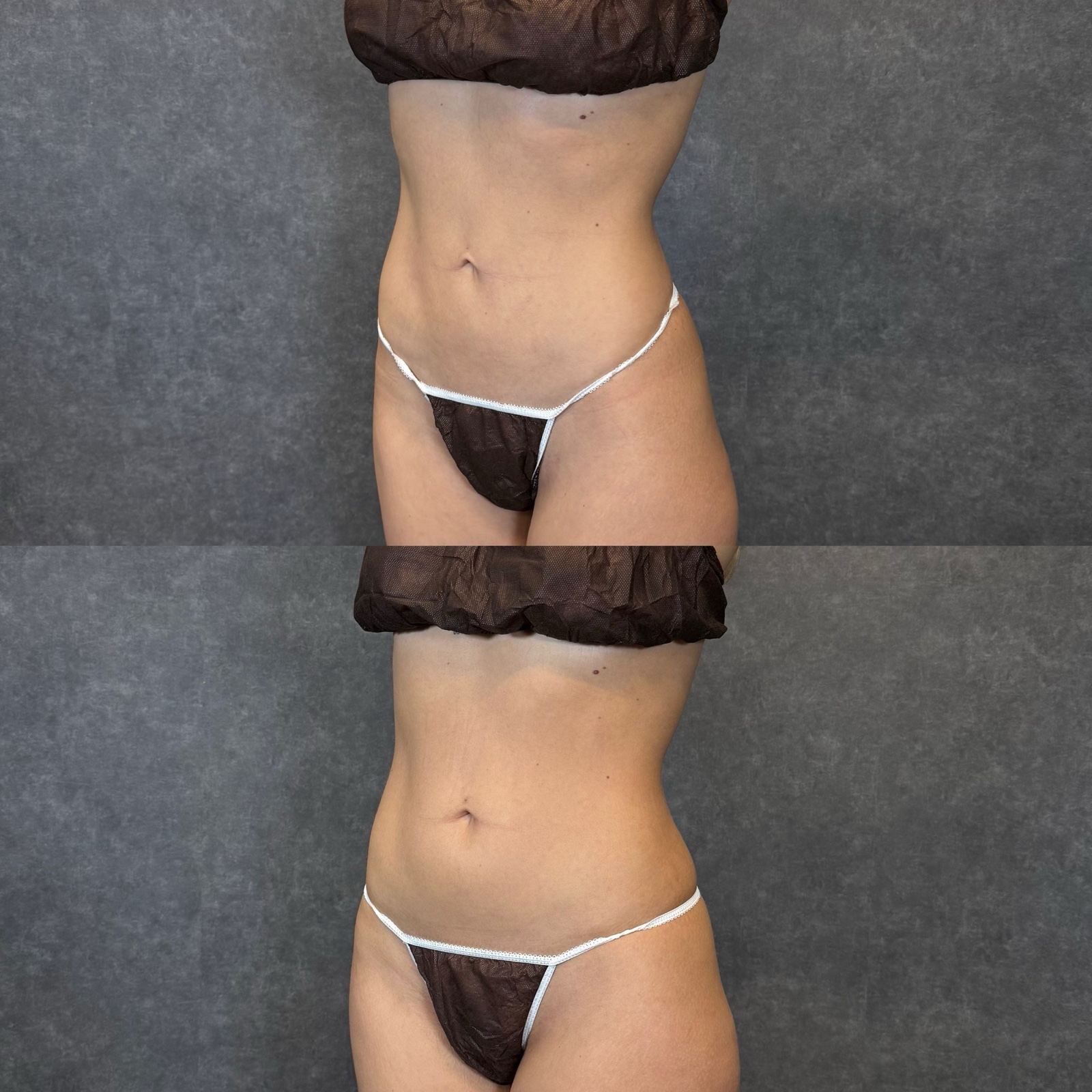
Between three and six months the contracture softens and the aspirated and preserved layers blend. This is when the pooch that used to overflow the underwear line settles, and whether the forward projection on the lateral view has truly reduced can be judged objectively. When Morpheus8 is combined, skin-side tightening becomes visible around this window as well. Individual variation is real, and subtle refinements can continue slowly beyond six months.
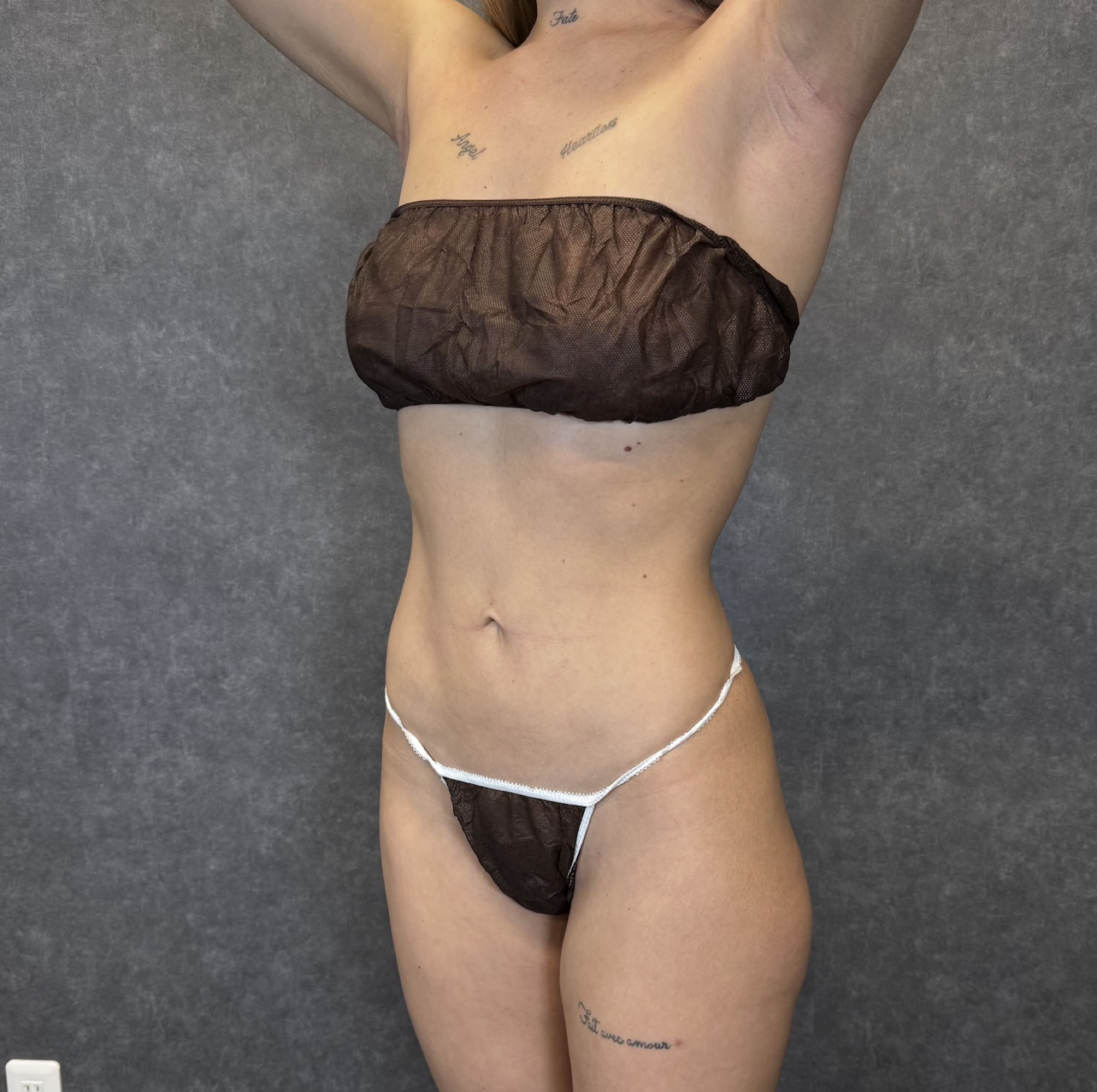
Treatment, cost and risk for this case
Treatment performed: liposuction limited to the lower abdomen, together with same-day Morpheus8 skin tightening over the lower abdomen. Cost: please refer to the price page for current fees. Main risks and side effects: bruising, swelling, temporary firmness and surface irregularity from contracture, infection, asymmetry, scarring, altered sensation, hematoma or seroma, and rare serious complications such as thromboembolism. With Morpheus8, redness, pinpoint crusting, and temporary pigment changes can occur at treated sites. Results and recovery vary between individuals; these photos are one example only.
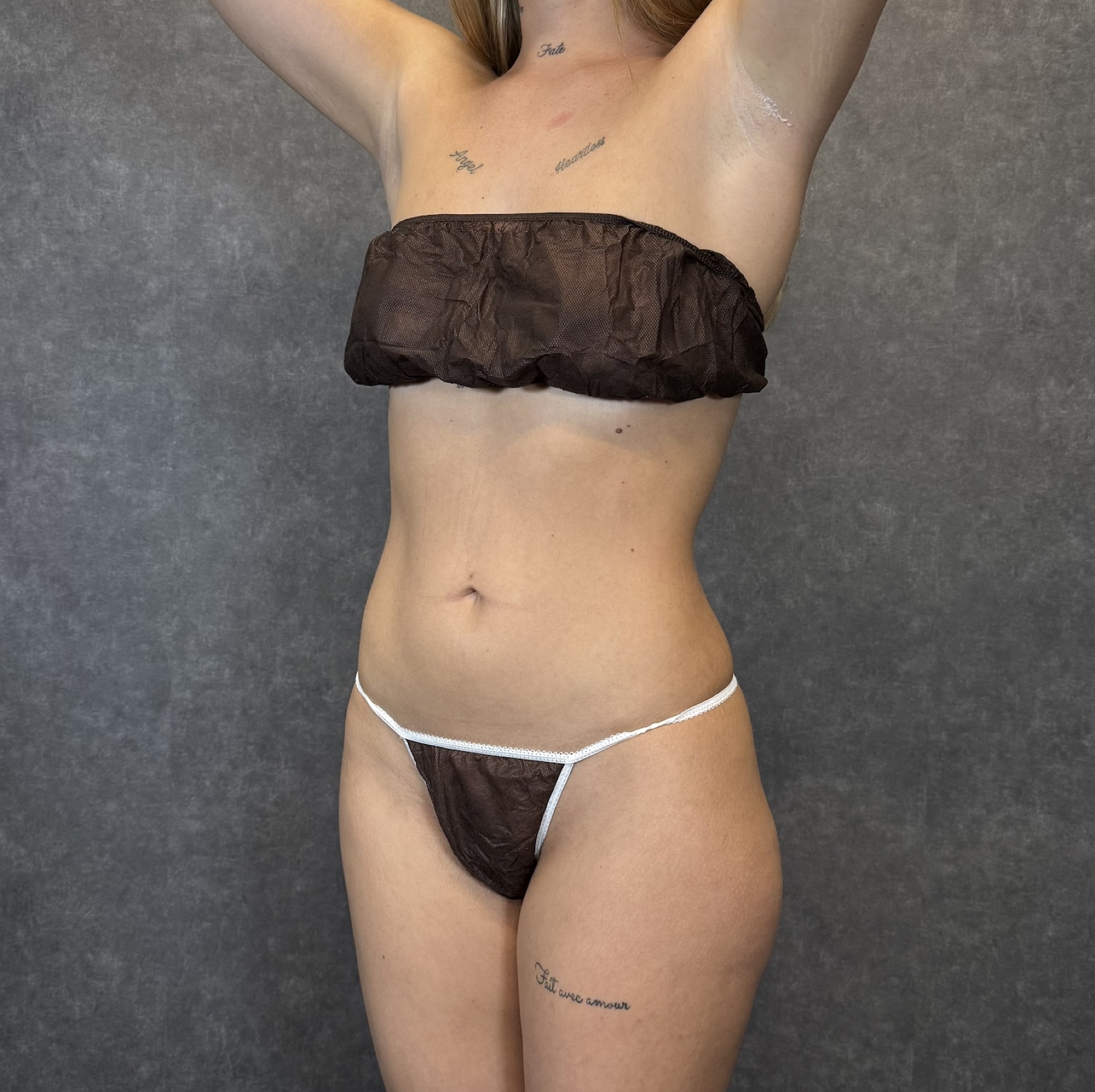
For related reading on liposuction and body design beyond the lower abdomen, see our liposuction column index.
Frequently asked questions
Q. Will a step show up at the upper abdomen or flanks if only the lower belly is suctioned?
Avoiding a visible step is the heart of the design. By tapering both suction volume and depth from the central zone into a fade zone, the edge of the treated area blends into untreated skin and reads as a continuous contour. If, however, the upper abdomen and flanks also carry real volume, lower-abdomen-only treatment will not deliver a smooth whole, and we revisit the scope at consultation.
Q. How much slimmer will I look after lower abdomen pooch liposuction?
The right metric is not aspirated volume but the change in lateral projection. When the pouch below the navel to the waistband reduces and the curve from waist to lower belly becomes continuous, the visual impression shifts significantly. This is a line change, not a weight change — do not expect to lose kilograms on the scale. The final line typically settles between three and six months.
Q. Do I always need Morpheus8 if I worry about loose skin?
Not always. When skin elasticity is preserved and aspirated volume is controlled, suction alone usually settles into a tight contour after the contracture phase. If age, weight-fluctuation history, stretch marks, or the required volume raise concern about skin recoil, same-day Morpheus8 can tighten from the skin side without having to over-resect fat. We decide after checking skin snap-back and fat thickness in consultation.
Q. Will the incision scar be visible?
For a lower-abdomen-limited plan, a single groin incision is enough. It is a few millimeters wide, placed fully under the underwear line, and usually fades into an inconspicuous pinpoint scar over six to twelve months. To prevent post-inflammatory hyperpigmentation, we ask patients to continue UV protection after the wound settles.
Q. How long should I plan for downtime?
Strong swelling and bruising subside within one to two weeks, and desk work is usually resumed early. Firmness and surface irregularity from contracture typically last one to three months, and the final line settles between three and six months. If you have a wedding, overseas travel, or another event on the horizon, we recommend reverse-engineering your schedule from the point where the “visible line” needs to be settled.
──────────────
Supervising physician: Shin Moriwaki, MD
Member, Japan Society of Aesthetic Surgery (JSAS) / Member, American Academy of Aesthetic Medicine
ECFMG Certificate
──────────────
📍AVAN TOKYO GINZA LIPOSUCTION CLINIC
Support available in English / 中文 / Tiếng Việt
For bookings and consultations, please reach us via DM / LINE / Website / Phone.