


Small Implant Hybrid Augmentation for Women in Their 20s: MR255cc + 180ml Cover Fat2026.09.25
“I want more breast volume, but I don’t want it to look obviously augmented.” This is a request we hear often from women in their 20s. Drawing on a case in which we performed a small implant hybrid augmentation on a young woman, we explain the design thinking behind pairing an anatomical subglandular implant of around 255cc with 180ml of cover fat harvested from the arms and shoulders, from the perspective of the supervising surgeon.
Key Points of This Article
・A small implant hybrid augmentation secures base volume with a silicone implant and layers fat harvested from the arms and shoulders on top as “cover fat.”
・For women in their 20s, choosing a subglandular implant of around 255cc leaves skin and tissue reserve and follows a “start small” design that anticipates a lifetime of possible reoperations.
・Using aspirated fat from the arms plus shoulders lets us refine the upper-body silhouette while securing the cover fat the breast needs.
・Because roughly 60% of the harvested fat remains after low-speed centrifugation, aspiration volume must be planned backward from the target injection volume.
・Outcomes vary between individuals, and risks such as capsular contracture, nodules, asymmetry and rippling cannot be eliminated.
Case Overview: A Small Implant Hybrid Augmentation in a Woman in Her 20s
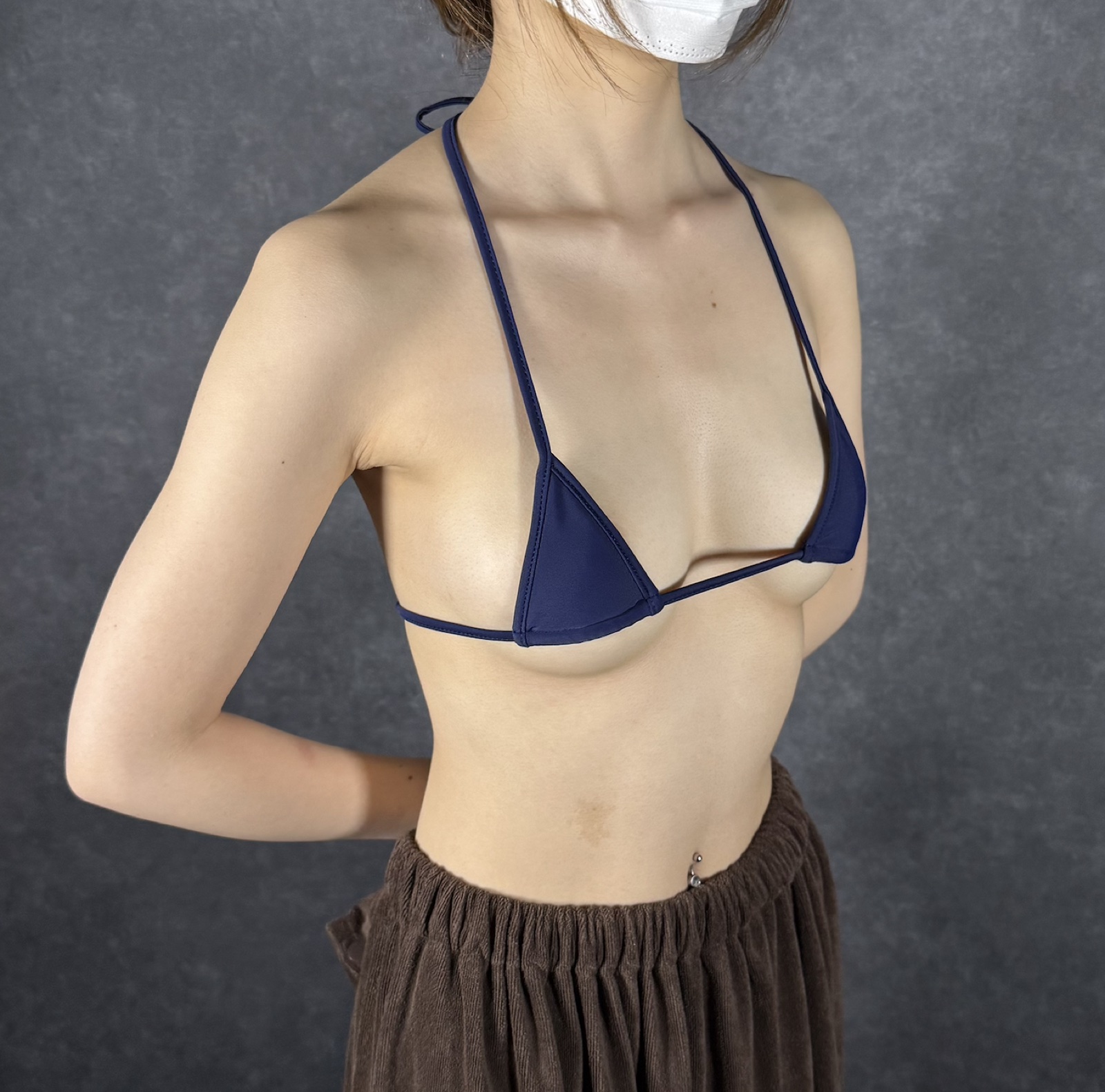
A slim woman in her 20s came to us wanting “one size up in the breast” and “slimmer arms at the same time.” A subglandular pocket was dissected through an axillary incision and an anatomically shaped silicone implant of around 255cc was placed bilaterally. In the same session, liposuction of the arms and shoulders was performed, and after processing, roughly 80 to 100 ml per breast was injected subcutaneously as cover fat.

Why Choose a Small Implant Hybrid Augmentation
In younger patients in their 20s, a “small implant plus cover fat” design is often advantageous for the following reasons.
First, it avoids overloading the skin and subcutaneous tissue. An overly large implant stretches the skin over time and increases the risk of ptosis, rippling and capsular contracture.
Second, it balances with the mammary gland, pectoralis major and thoracic cage. In the 20s the breast tissue is still evolving, and deliberately choosing a “size with reserve” makes it easier to adapt to future life events such as pregnancy, lactation and weight change.
Third, it makes lifetime reoperation planning easier. Silicone implants are generally recommended for exchange every 10 to 15 years, so younger patients will accumulate more reoperations over a lifetime. A first-time design that does not push the limits ties directly to long-term satisfaction and safety.
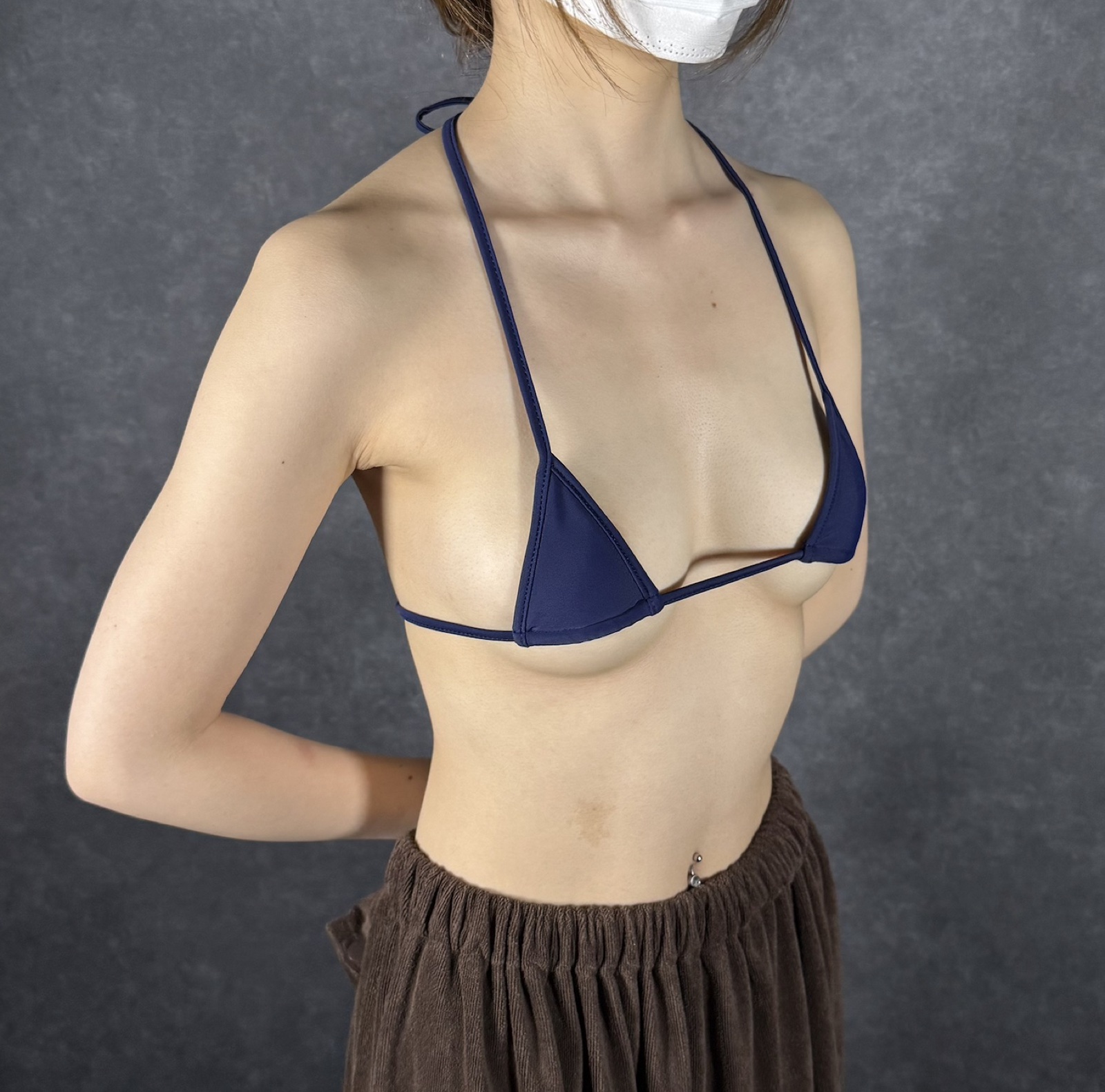
Treatment Content, Cost and Risks for This Case
・Treatment: subglandular hybrid breast augmentation (axillary incision, anatomical silicone implant around 255cc) + arm and shoulder liposuction + subcutaneous cover fat injection (80 to 100 ml per breast).
・Cost: fees vary with treatment content, device selection and anesthesia method. Please see the price page for details. The final quote is confirmed at consultation.
・Main risks and side effects: swelling, bruising, fibrosis, asymmetry, infection, capsular contracture (evaluated by Baker classification), rippling, nodules at the fat injection site, oil cyst, fat embolism syndrome (rare), residual scars, and others.
・Outcomes vary between individuals; the photographs are one example and not everyone will obtain the same result.
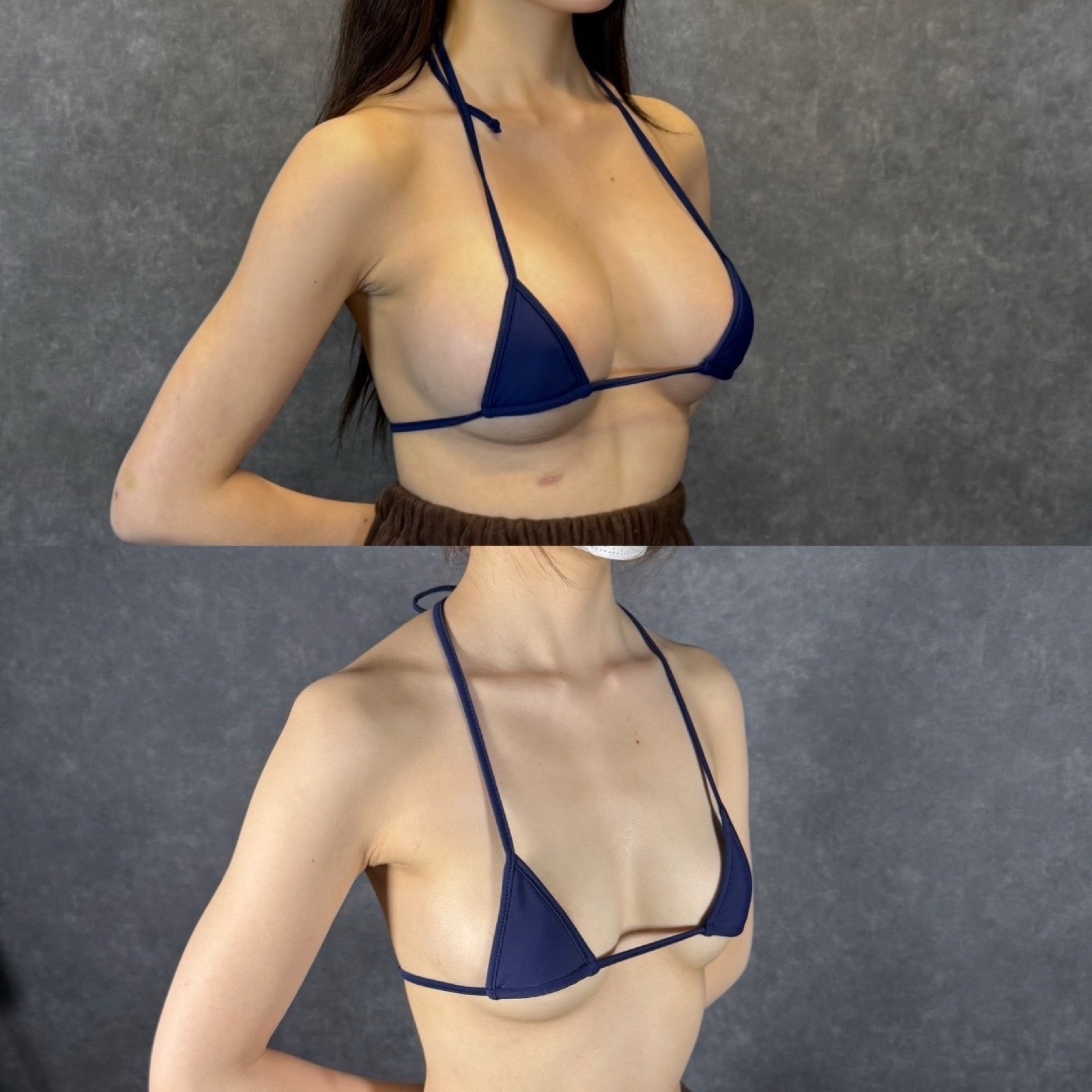
Why Harvesting Cover Fat from the Arms and Shoulders Matters
In this case we deliberately harvested fat from the “arms plus shoulders” rather than from the trunk. The intention was to refine the entire upper-body silhouette. In young women, the boundary between the breast and the arm often looks blurred because of accessory-breast fullness along the anterior and posterior axillary lines and fat along the anterior border of the deltoid. Sharpening this boundary lets the projection of the breast stand out and visually maximizes the volume added by the implant. In addition, arm and shoulder fat tends to contain relatively little fibrous tissue and is comparatively easy to handle as subcutaneous cover fat.
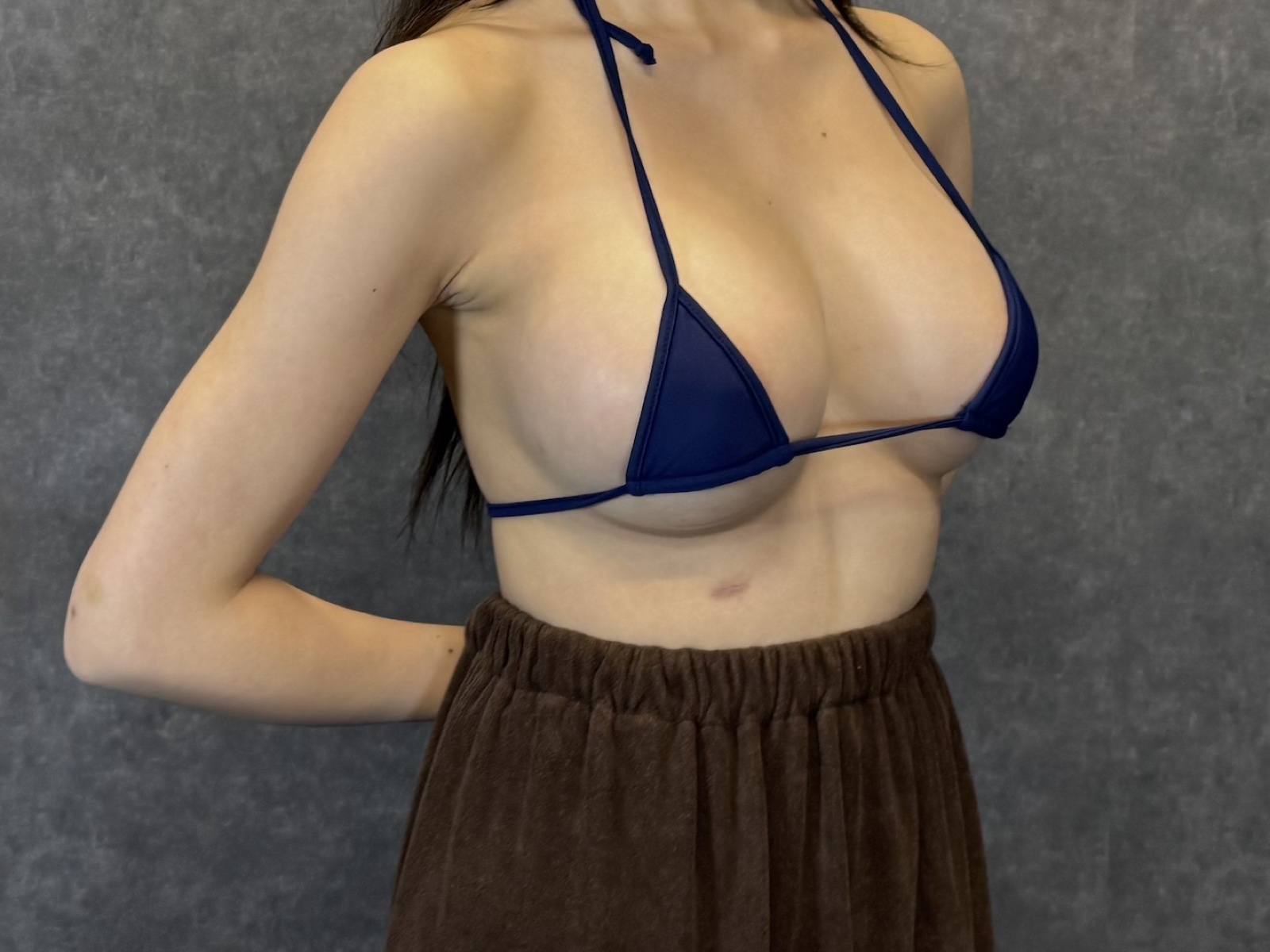
Fat Processing and Yield (300ml Harvested → 180ml Injected)
About 300 ml of pure fat harvested from the arms and shoulders was concentrated by low-speed centrifugation to roughly 180 ml of injectable fat. It is common for the yield after centrifugation to fall to about 60% of the harvested volume, and if this “yield rate” is not factored into the aspiration plan from the start, the target cover-fat volume may not be reached. We work backward from the target injection volume per breast and add a safety margin to the required aspiration volume in advance. Low-speed centrifugation is designed to separate free oil, blood components and tumescent fluid while minimizing damage to adipocytes and adipose-derived stem cells.
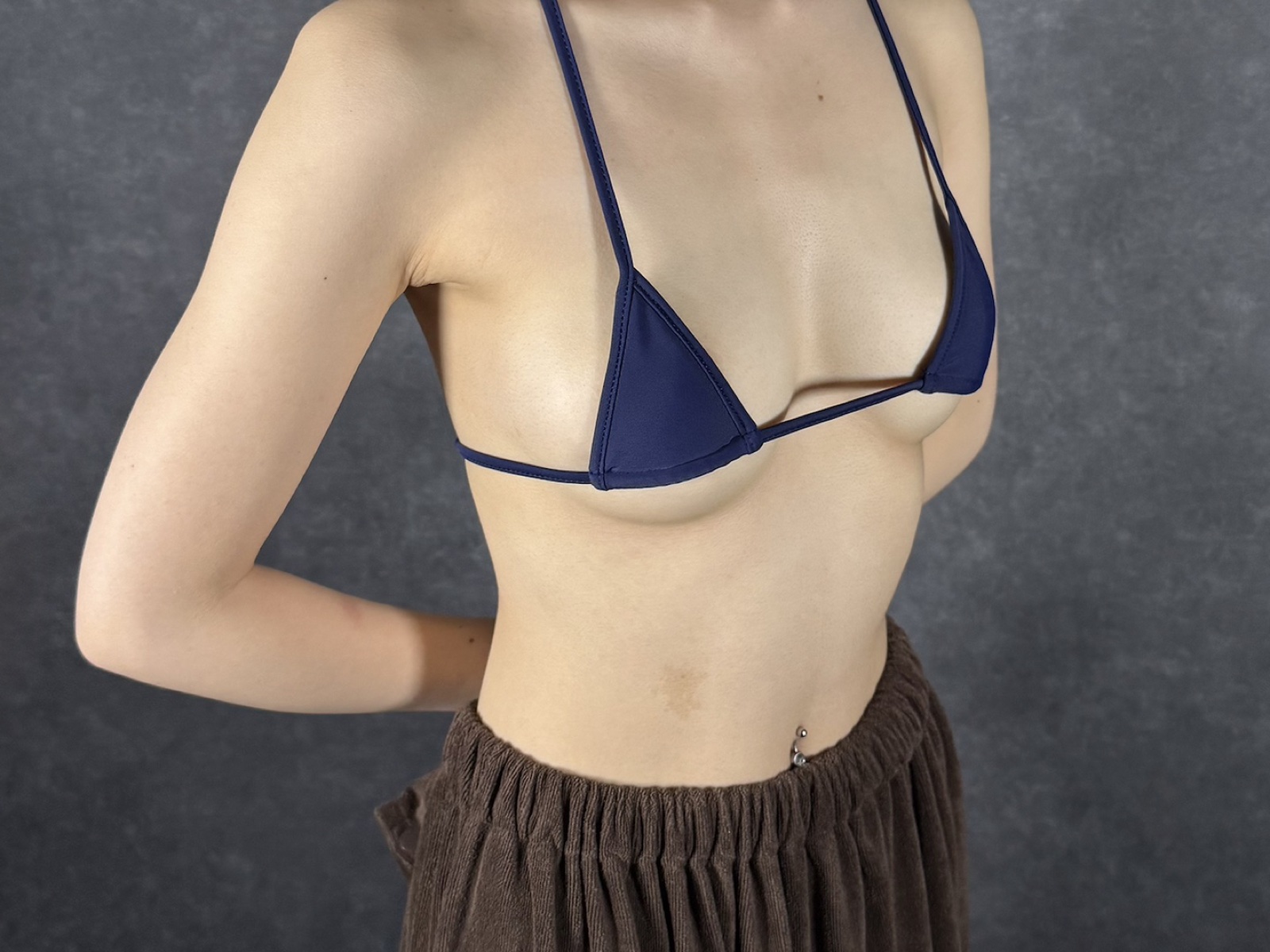
Intraoperative Judgment and Post-Op Course (in General Terms)
The subglandular pocket is dissected carefully along a plane with minimal bleeding, and the silicone implant is inserted as aseptically as possible. Cover fat is placed in the subcutaneous layer in thin, multi-layered passes with a fine cannula to balance take rate and texture. Firmness in the lower breast pole, bruising of the arms and shoulder range-of-motion limitation typically persist for one to two weeks after surgery. Daily-life discomfort usually settles by around one month, and by about three months the implant “settles” into the subglandular pocket and the grafted fat stabilizes. Individual variability in fat take is 30 to 70 percent, and not all injected volume will remain. Final assessment is made no earlier than the six-month mark. For safety standards in aesthetic surgery, please also refer to the guidelines of the Japan Society of Aesthetic Surgery.

Who Is and Isn’t a Candidate for a Small Implant Hybrid Augmentation
Good candidates are (1) patients who want an increase of about one to one-and-a-half cup sizes from their current baseline, (2) slim patients with thin subcutaneous tissue in whom rippling from an implant alone would be noticeable, and (3) patients who want to refine the arms, shoulders and accessory breast in the same session. Patients who want a much larger size increase (more than two cups), those with essentially no skin or gland reserve, or those with a strong history of capsular contracture may be better served by a different technique or a staged surgical plan. Indication is judged from examination, preoperative ultrasound and body measurement. Related treatment concepts can be reviewed on our liposuction column archive.
Frequently Asked Questions
Q. Isn’t a silicone implant of around 255cc too small?
For a slim patient in her 20s, this is a range that can produce a measurable increase of about one to one-and-a-half cup sizes. Perceived size depends on baseline gland volume, skin reserve and thoracic width, and specifics are confirmed at consultation.
Q. How much of the injected fat remains?
Fat take varies widely between individuals, typically in the range of 30 to 70 percent. Even with 80 to 100 ml per breast as in this case, the final retained volume is assessed by observing the course over three to six months.
Q. Is fat from the arms and shoulders alone enough?
In slim patients the available fat from the arms and shoulders is limited, so we add donors such as the back, flanks or abdomen when necessary. Trying to harvest all the fat from a single area increases the risk of irregularities and fibrosis.
Q. What is the downtime like?
Breast firmness and arm bruising generally become inconspicuous within one to two weeks, and many patients resume daily life within a few days. Timing for exercise and duration of compression garments vary between individuals, so please follow your physician’s instructions.
Q. What if I want to change size in the future?
Silicone implants come due for exchange in around 10 to 15 years, at which point a size change or additional fat grafting is possible. In younger patients especially, a modest first-time design tends to translate into long-term satisfaction.
──────────────
Medical Supervisor: Shin Moriwaki, MD
Member, Japan Society of Aesthetic Surgery (JSAS) / Member, American Academy of Aesthetic Medicine
ECFMG Certificate (U.S. medical license qualification)
──────────────
📍AVAN TOKYO GINZA LIPOSUCTION CLINIC
English / 中文 / Tiếng Việt available
Bookings and consultations accepted
via DM / LINE / Website / Phone.