


Shoulder Night Pain Keeping You Awake: What Injections Target in the Inflammatory Phase of Frozen Shoulder2026.10.13
“My shoulder aches so badly in the middle of the night that I wake up.” “Every time I roll over, a sharp pain shoots through, and I cannot sleep until morning.” Night pain from frozen shoulder is known to affect quality of life more severely than daytime pain. It is a hallmark of the inflammatory (freezing) phase of frozen shoulder (adhesive capsulitis), driven by overlapping inflammation of the synovium, joint capsule, and rotator cuff. In this article, Dr. Moriwaki explains, from an orthopedic perspective, why frozen shoulder night pain is severe enough to prevent sleep, what mechanisms are at work during the inflammatory phase, and what intra-articular and periarticular injections can realistically target.
Key Points of This Article
・Frozen shoulder night pain is characteristic of the inflammatory phase and reflects overlapping synovitis, capsulitis, and peri-rotator-cuff inflammation.
・During sleep the shoulder settles into internal rotation; reduced cuff blood flow and raised intra-articular pressure amplify pain at night.
・Injections in the inflammatory phase aim first at the source of pain rather than at range-of-motion gains.
・As the condition shifts into the frozen (contracture) phase, the goal of injection changes, so staging is essential before intervention.
・Sleep posture, bedding, oral medication, and rehabilitation combined in layers can gradually reduce frozen shoulder night pain.
Why Frozen Shoulder Night Pain Prevents Sleep
Frozen shoulder night pain cannot be explained simply as “the shoulder is inflamed, so it hurts.” The joint capsule, synovium, rotator cuff, and subacromial bursa are inflamed simultaneously, and sleep posture then amplifies that pain.
During the day, every small movement of the arm circulates joint fluid and changes capsular tension. At night, however, the same regions stay compressed for hours, and joint fluid flow stagnates. When you lie on your side, body weight bears down on the shoulder; when you lie supine, gravity drops the scapula backward and sets the shoulder into internal rotation. In this internally rotated position, the rotator cuff — especially the supraspinatus tendon — is pressed under the acromion, and local blood flow falls. This nighttime drop in blood flow and the rise in intra-articular pressure sensitize pain receptors in the inflamed tissues, producing the throbbing pain that wakes patients despite being at rest.
Inflammatory Phase vs. Frozen Phase: Different Pain Patterns
Treatment goals in frozen shoulder change according to the phase. The inflammatory phase is dominated by night pain and rest pain; the shoulder hurts even without movement, and patients commonly wake at night. In the frozen phase, restriction of range of motion (inability to put a hand behind the back or behind the head) takes center stage, and night pain gradually eases.
In other words, “shoulder night pain severe enough to prevent sleep” usually signals that the patient is still in the inflammatory phase. Aggressive stretching during this phase often worsens inflammation and prolongs the transition into the frozen phase.
What Shoulder Injections Can Target During Inflammatory-Phase Frozen Shoulder Night Pain
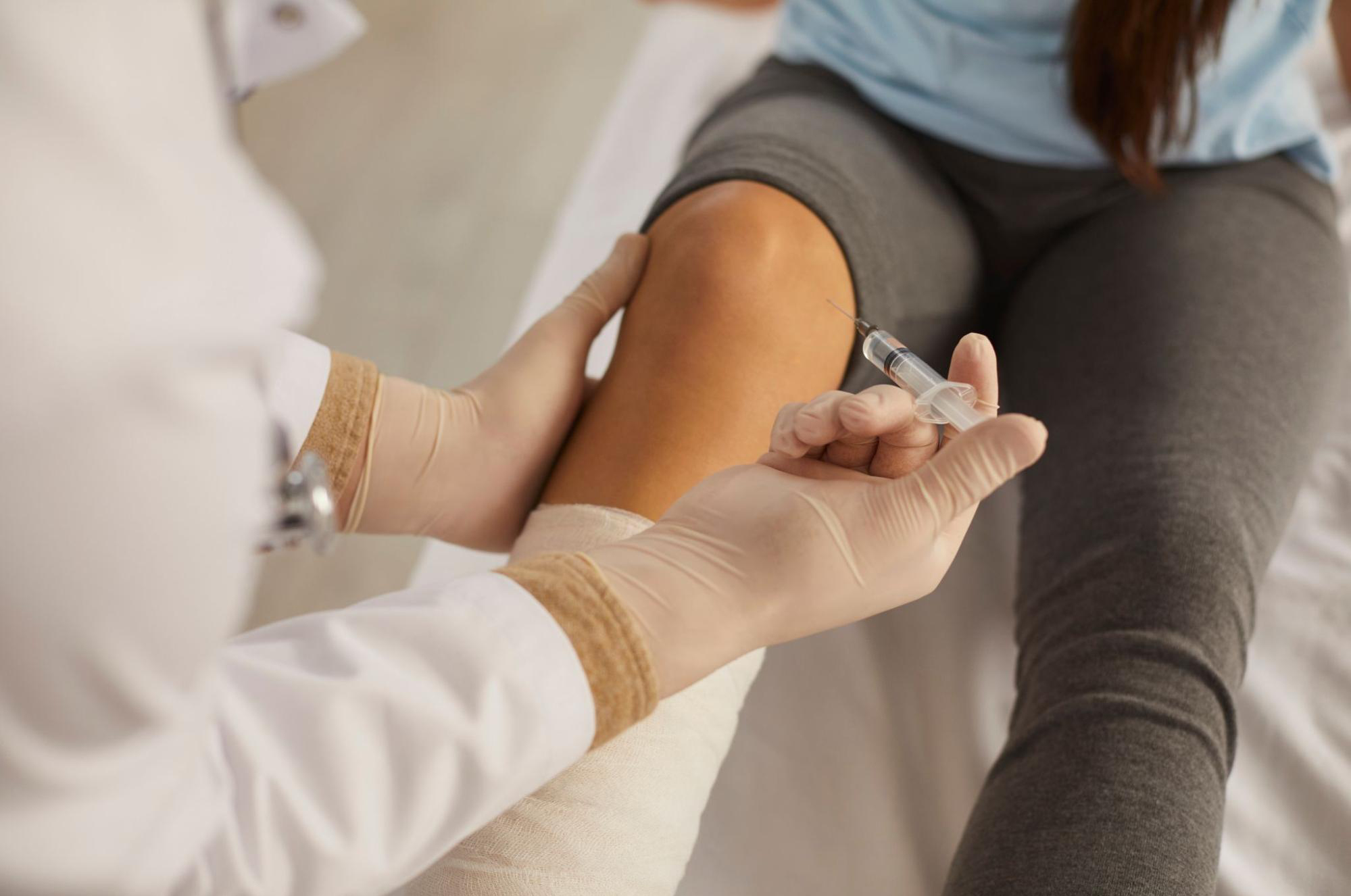
Injections during the inflammatory phase deliver medication to overlapping sites of inflammation: inside the glenohumeral joint, the subacromial bursa, and sometimes the biceps long-head tendon sheath. The primary aim is not to improve range of motion but to calm the source of pain. Restoring sleep lets the body regain the parasympathetic-dominant nighttime window needed for tissue repair, and that in itself has significant therapeutic value.
For general information on joint disease, you may also refer to the Japanese Orthopaedic Association.
Three Structures Targeted by Injection
Injections during the inflammatory phase mainly target three structures: (1) the intra-articular space (synovitis and capsulitis), (2) the subacromial bursa (friction-driven inflammation on the superior surface of the cuff), and (3) the long-head biceps tendon sheath (bicipital groove tenosynovitis). The priority of injection sites depends on where the inflammation is centered. Blind needle placement can miss the target, but ultrasound-guided injection with the needle tip continuously visualized allows more reliable delivery to the center of inflammation.
Stem Cell Conditioned Media as an Option
Corticosteroids provide rapid relief of inflammatory-phase night pain but repeated injections raise concerns about effects on tendon and cartilage. Stem cell conditioned media contains growth factors that suppress inflammatory cytokines while supporting tissue repair, making it a reasonable option for patients who want to avoid steroids — for example, those with diabetes who need to avoid blood-sugar spikes, or those with a concomitant partial rotator cuff tear. Learn more about stem cell conditioned media joint injections here.
Layered Measures Beyond Injection to Reduce Night Pain
Even after an injection dampens the baseline inflammation, night pain will not fully subside unless sleeping posture and bedding are also addressed. The two guiding rules for the inflamed shoulder at night are “do not lie on it” and “do not let it rest in internal rotation.”
When sleeping on your side, keep the painful shoulder on top and place a body pillow in front of your chest to prevent the shoulder from falling forward. When supine, place a thin folded towel under the scapula to keep the shoulder from sinking into the mattress, and support the forearm with a cushion so the weight of the arm does not pull on the shoulder.
In addition, applying an ice pack to the surface for 5 to 10 minutes about 30 minutes before bed, and taking an NSAID about one hour before sleep, work synergistically with the injection. Each measure alone is modest, but together they create a design that “does not stimulate the shoulder at night.”
Frequently Asked Questions
Q. How long does frozen shoulder night pain usually last?
The inflammatory phase typically lasts from two to nine months, with wide individual variation that is hard to predict. When injections, oral medication, and sleep-posture adjustments are combined, night pain often improves first, followed by daytime rest pain, and finally the range-of-motion restriction associated with the frozen phase.
Q. Are shoulder injections painful? How many are usually needed?
With a thin needle under ultrasound guidance, injections can be performed without significant pain. During the inflammatory phase, we typically schedule two to three sessions at intervals of two to four weeks, then adjust frequency based on response and side-effect balance. With stem cell conditioned media, the induction course is usually designed with fewer sessions.
Q. Should I wait for night pain to subside before starting rehabilitation?
Aggressive range-of-motion training while inflammation is high can worsen inflammation. On the other hand, complete immobility promotes contracture. The safe approach is to start active motion within the available range once night pain begins to settle, under the guidance of an orthopedic specialist and a physical therapist.
Q. Are there options other than steroid injections if I have diabetes?
For patients concerned about blood-sugar spikes from steroids, stem cell conditioned media and hyaluronic acid shoulder injections are reasonable alternatives. The choice should be made with your physician based on symptom severity, imaging findings, and comorbid conditions.
Q. Can frozen shoulder be distinguished from a rotator cuff tear?
The treatment strategies differ even when symptoms resemble each other. If a rotator cuff tear is overlooked and only injections are repeated under the label of frozen shoulder, the tear may progress. It is important to confirm the continuity of the rotator cuff with ultrasound or MRI at the first visit.
──────────────
Medical Supervisor: Shin Moriwaki, MD
Member, Japan Society of Aesthetic Surgery (JSAS) / Member, American Academy of Aesthetic Medicine
ECFMG Certificate
──────────────
📍AVAN TOKYO Ginza Joint Regenerative Medicine
English / 中文 / Tiếng Việt supported
Inquiries welcome via DM / LINE / Website / Phone.