


For People With Joint Hypermobility Syndrome Whose Knees, Shoulders, and Ankles Keep Hurting — Dr. Moriwaki Organizes the Pathology of Repetitive Microtrauma and Synovitis Cycles Caused by Systemic Joint Laxity, and the Boundary Between What Stem Cell Conditioned Media Joint Injection Can Address (Intra-Articular Inflammation) and What It Cannot (Ligament and Capsule Laxity Itself)2026.08.12
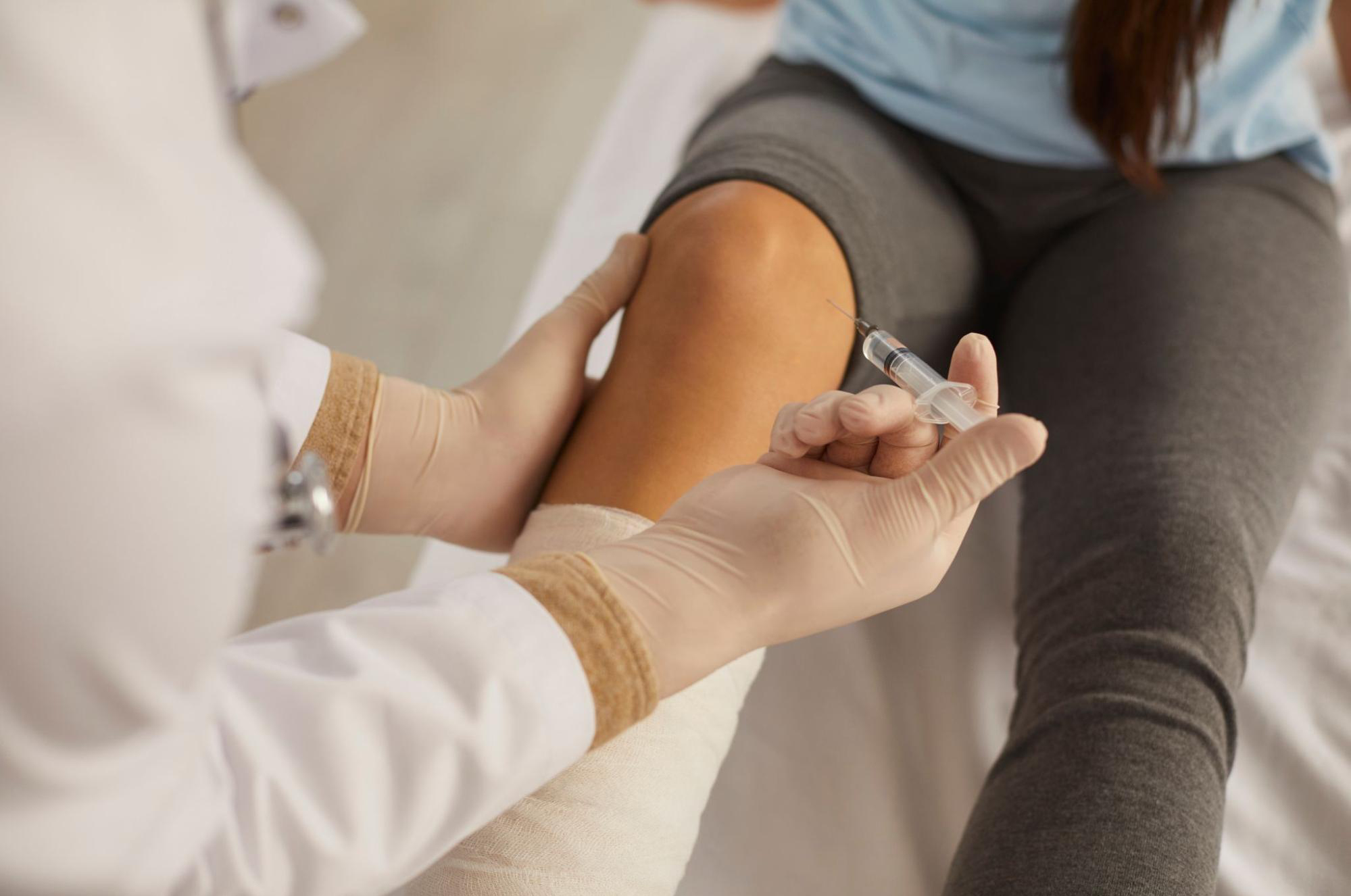
“I twist my ankle even on flat ground.” “My knee suddenly buckles as if it might dislocate.” “I’m afraid my shoulder is about to pop out.” — Behind these complaints, joint hypermobility syndrome is by no means an uncommon finding. Because the ligaments and joint capsules are congenitally lax, everyday movements repeatedly inflict micro-injuries on the joints, which in turn drive chronic joint pain and a synovitis cycle. This article organizes, from Dr. Moriwaki’s viewpoint, how far stem cell conditioned media joint injection can help with the recurrent knee, shoulder, and ankle pain that accompanies joint hypermobility syndrome, and where the boundary of appropriate indication lies — including what such an injection cannot do.
Key Points of This Article
・Joint hypermobility syndrome is a constitutional tendency toward laxity of the ligaments and joint capsules throughout the body, and joint hypermobility syndrome easily leads to recurrent pain and instability across multiple joints such as the knees, shoulders, and ankles.
・Repetitive microtrauma triggers chronic intra-articular synovitis, which becomes the background for pain that lingers.
・Stem cell conditioned media joint injection aims at correcting the intra-articular inflammatory environment; it is not a treatment that repairs the laxity of the ligaments or joint capsules themselves.
・The foundation of treatment is securing dynamic stability through muscle-strengthening exercise; injection is meaningful only when used in combination with physical therapy.
・Ruling out autoimmune arthritis, hereditary connective tissue disease, and post-traumatic conditions through orthopedic evaluation is the precondition for a safe treatment design.
What Is Joint Hypermobility Syndrome? — The Difference Between “Flexible” and “Lax” Joints
Measuring Range of Motion With the Beighton Score
Joint mobility varies widely between individuals, and some people are born with a range that clearly exceeds the normal window. In clinical practice, the nine-item Beighton score (dorsiflexion of the little finger, thumb-to-forearm apposition, hyperextension of the elbows and knees, palms flat on the floor during forward flexion, etc.) is used for objective evaluation, and a score of 4 or higher in adults is taken as a marker of generalized joint laxity. However, a high Beighton score does not by itself equal disease; it is treated as a “syndrome” only when accompanied by pain or instability that interferes with daily life.
Differences in Connective Tissue Collagen Structure
The ligaments and joint capsules that protect a joint are built from connective tissue including type I and type III collagen. In this constitution, small differences in the quality and ratio of that connective tissue are thought to manifest as reduced tensile tolerance in ligaments and decreased joint stability. A more severe form is the hypermobile type of Ehlers-Danlos syndrome (EDS), which is accompanied by systemic findings such as skin hyperextensibility and vascular fragility. Distinguishing the two at the diagnostic stage matters for both treatment planning and safety management.

The Intra-Articular Inflammatory Cycle Caused by Repetitive Microtrauma
Mechanical Stress Concentrating on “Joints That Move Too Much”
In hypermobile joints, movements exceeding the physiological range of motion occur repeatedly even during ordinary activities. This appears as hyperextension of the knee (genu recurvatum), a tendency to subluxation in the shoulder, and repeated ankle sprains. These small over-stretches and shifts gradually accumulate damage in the cartilage, meniscus, labrum, and ligament insertions (entheses), creating an environment in which the synovium chronically produces inflammatory cytokines.
The Synovitis Cycle Turns Pain Chronic
Inflammatory cytokines (IL-1β, TNF-α, IL-6, etc.) disrupt cartilage metabolism and further drive synovial swelling, joint effusion, and pain sensitization. Once this loop of “injury → inflammation → cartilage deterioration → easier re-injury” sets in, pain becomes difficult to resolve through rest alone. The complaint “I’m young, yet my joint pain just won’t get better” often has this chronic synovitis cycle lurking behind it.
What Stem Cell Conditioned Media Joint Injection Can and Cannot Address
What It Can Address: Correcting the Intra-Articular Inflammatory Environment
Stem cell conditioned media is a protein solution containing growth factors (TGF-β, IGF-1, HGF, etc.), cytokines, and exosomes secreted by mesenchymal stem cells. Intra-articular administration is expected to shift the intra-articular cytokine balance toward an anti-inflammatory dominance and to put a brake on the vicious cycle of chronic synovitis. As a conservative approach for synovitis and cartilage microlesions accompanying hypermobile joints, stem cell conditioned media joint injection can be one option to consider. Responses vary between individuals, and not everyone obtains the same degree of change — this variability should also be taken into account in decision-making.
What It Cannot Address: Laxity of the Ligaments and Capsule Themselves
On the other hand, the root cause — “the quality of the connective tissue itself” — cannot be rewritten by an injection. It is important to draw a clear line: stem cell conditioned media acts on the intra-articular inflammatory environment, not as a treatment that shortens loose ligaments or restores tension to a joint capsule. Patients and physicians need to share from the outset that this treatment does not “turn the joints into ones that no longer move too much.” For more detail, please see our page on stem cell conditioned media joint injection.
The Foundation of Treatment Is Exercise Therapy — Combination Is the Premise
To reduce the repetitive microtrauma caused by hypermobility, it is essential that the muscles around a joint function as dynamic stabilizers. For the knee, that means conditioning the quadriceps, hamstrings, and gluteus medius; for the shoulder, the rotator cuff and periscapular muscles; for the ankle, the peroneal muscles. A realistic design is to use joint injection to suppress pain and inflammation while running muscle-strengthening training in parallel to build dynamic stability. For general information on joint disease, please also refer to the site of the Japanese Orthopaedic Association.
What to Organize Before Consultation — Ruling Out Other Diseases and Long-Term Strategy
Ruling Out Other Diseases Is the Top Priority
Recurrent joint pain in young to middle-aged adults includes juvenile idiopathic arthritis, rheumatoid arthritis, and other autoimmune conditions, gout and pseudogout, and post-traumatic ligament injuries among its differential diagnoses. Ruling these out through orthopedic evaluation, including blood tests and imaging, is the precondition for safely considering injection therapy. Especially when fever, morning stiffness, simultaneous swelling of multiple joints, or skin rash is present, evaluation at a rheumatology and collagen-disease department takes priority.
A Comprehensive Strategy Across Multiple Joints Is Required
With joint hypermobility syndrome, pain is often distributed across multiple joints — knees, shoulders, ankles, fingers — rather than concentrated in a single joint. Treatment priorities, session planning, and cost estimates all need to be organized from a long-term perspective, deciding “from which joint” and “in what order” to intervene. This is not a one-shot treatment; planning must presuppose follow-up observation and reassessment.
Frequently Asked Questions
Q. If my Beighton score is 4 or higher, do I necessarily need treatment?
No. A wide range of motion by itself, without pain or instability, is a “constitution” and does not constitute an indication for treatment. It is only when there is pain, recurrent sprains or subluxations, or interference with daily life that we consider treatment for joint hypermobility syndrome.
Q. Can stem cell conditioned media joint injection cure joint laxity?
No. Joint injection acts on the intra-articular inflammatory environment and is not a treatment that restores tension to ligaments or joint capsules themselves. The response to laxity centers on exercise therapy that increases dynamic stability through muscle strength.
Q. After how many sessions can the effect be judged?
Assessment varies individually, but the induction phase generally requires weeks to months of follow-up. Continuation, modification, or referral for orthopedic reassessment is decided using objective indicators such as pain scores, joint range of motion, and daily-activity evaluation. If response is poor, the treatment plan itself is reconsidered.
Q. If I have been diagnosed with Ehlers-Danlos syndrome, can I still receive injections?
The basic policy is the same, but in EDS, systemic findings such as skin and vascular fragility accompany the condition, so consideration for bleeding and skin-injury risk during the injection procedure is required. Treatment proceeds under information sharing with the primary physician and careful judgment of indication.
Q. Is exercise therapy alone insufficient?
Exercise therapy is the foundation, but there are many cases in which pain from chronic synovitis makes exercise itself difficult to continue. A realistic positioning is to use joint injection to temporarily suppress inflammation and pain, thereby creating an environment in which exercise therapy is easier to keep up.
──────────────
Medical Supervision: Dr. Shin Moriwaki (Supervising Physician)
Member, Japan Society of Aesthetic Surgery (JSAS)
Member, American Academy of Aesthetic Medicine
ECFMG Certificate
──────────────
📍AVAN TOKYO Ginza Joint Regenerative Medicine
AVAN TOKYO Ginza Joint Regenerative Medicine
English / 中文 / Tiếng Việt supported
Inquiries welcome via DM / LINE / Website / Phone.