


How Long Does Bruising Last After Arm Liposuction? When Can You Wear Sleeveless Clothing Again?2026.07.19
Introduction
“How long does bruising last after upper arm liposuction?”
“When can I wear sleeveless tops again?”
These are among the most common questions we receive from patients considering arm liposuction.
Following upper arm liposuction, it is normal to experience bruising, swelling, and eventually fibrosis (postoperative tissue firmness) as part of the healing process.
Understanding the typical recovery timeline can help reduce anxiety and allow you to plan your daily activities with confidence.
In this article, we explain how bruising and fibrosis usually progress after upper arm liposuction and what you can expect during recovery.
How Long Does Bruising Last?
Although recovery varies from person to person, most bruising improves significantly within approximately two weeks after surgery.
A typical recovery timeline is:
- Days 1–3: Dark purple or red bruising
- Days 4–7: Bruising gradually changes from purple to green
- Days 7–14: Bruising becomes yellow as the body absorbs the blood
- Around 2 weeks: Bruising is often minimal or no longer noticeable
Recovery depends on factors such as the amount of fat removed, the treatment area, age, individual healing ability, and blood clotting function.
When Can I Wear Sleeveless Clothing?
For most patients, around two weeks after surgery is when bruising has faded enough that sleeveless clothing becomes more comfortable to wear.
At this stage, any remaining yellow discoloration is usually mild and can often be covered easily if desired.
However, this does not mean that the recovery process has finished.
Fibrosis Often Begins as Bruising Improves
One of the most common questions we hear is:
“My bruising is gone, but now my arms feel hard. Is something wrong?”
In most cases, this is due to fibrosis, a normal part of the healing process.
Fibrosis is a temporary increase in firmness within the treated tissues as collagen is produced during healing.
Patients may notice:
- Firmness
- Tightness
- A hard or rope-like feeling
- Mild limitation when raising the arms
Although these symptoms can feel concerning, they usually improve gradually over the following weeks and months.
Case Presentation
This patient underwent:
- Circumferential upper arm liposuction
- Back liposuction
- Hybrid Breast Augmentation
At 12 days after surgery, the bruising had almost completely resolved.
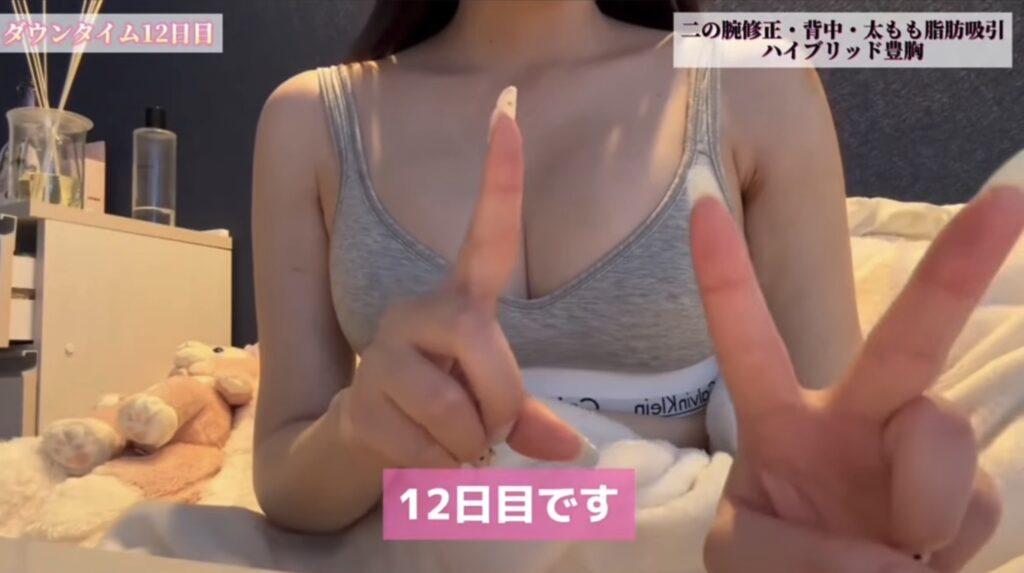
At the same time, fibrosis became more noticeable, representing a typical stage of recovery after liposuction.
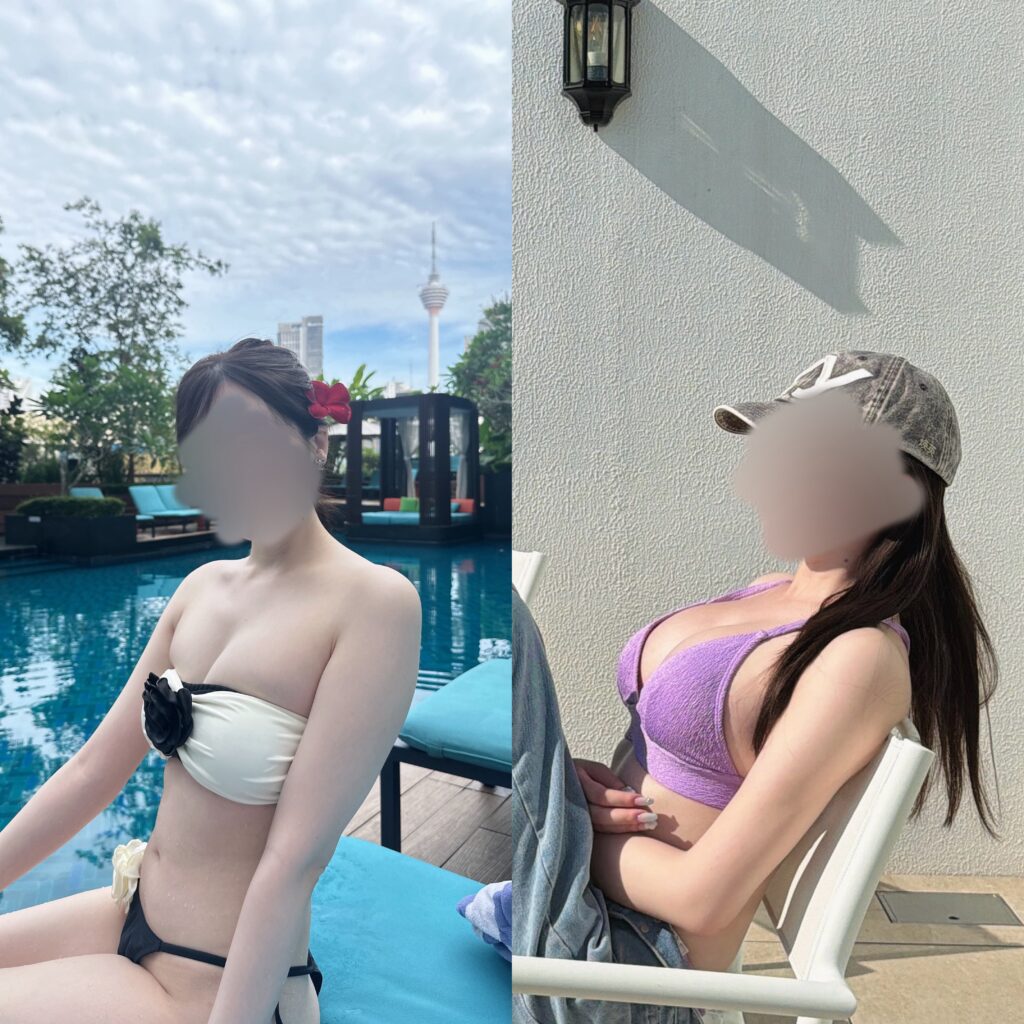
By 3 months, the patient achieved a smooth, well-defined upper body contour with a natural transition from the shoulders and upper arms to the breasts.
Recovery Varies Between Patients
Every patient heals differently.
Recovery may be influenced by:
- Amount of fat removed
- Treatment area
- Age
- BMI
- Healing capacity
- Blood clotting function
- Medical history
- Smoking status
However, the general pattern is similar for many patients:
Bruising improves first, followed by temporary fibrosis, which gradually softens over time.
The AVAN TOKYO Approach
At AVAN TOKYO, we believe successful liposuction involves more than simply removing fat.
Before surgery, we routinely perform ultrasound evaluation to assess:
- Subcutaneous fat thickness
- Blood vessels
- Nerves
- Individual anatomy
This allows us to create a personalized surgical plan focused on both safety and aesthetic outcomes.
Our goal is to create a smooth and natural upper body contour by treating the shoulders, upper arms, accessory breast area, back, and breasts as one continuous aesthetic unit.
Conclusion
For most patients, bruising after upper arm liposuction improves significantly within approximately two weeks.
As bruising fades, temporary fibrosis commonly develops as part of the normal healing process.
By around three months, the tissues gradually soften and the final body contour becomes increasingly visible.
Understanding this normal recovery process can help patients feel more confident throughout their postoperative journey.
Risks and Potential Complications
Possible risks include swelling, bruising, pain, fibrosis, temporary numbness, contour irregularities, asymmetry, skin laxity, pigmentation changes, infection, hematoma, seroma, and scarring. Recovery time varies depending on individual anatomy and healing.
Medical Disclaimer
This article is intended for medical education and patient education purposes only. Treatment recommendations are individualized following consultation and clinical evaluation.