


Is Jawline Fullness Caused by Fat or the Masseter Muscle? | A Doctor Explains the Indications for Jawline Liposuction2026.07.16
Most patients who visit us concerned about a fuller jawline assume that “just removing facial fat should fix it.” In reality, however, the thickness and roundness of the jawline is not always due to subcutaneous fat alone. Multiple factors can be responsible — hypertrophy of the masseter (the chewing muscle), skin laxity, and bony prominence of the mandibular angle. If this differentiation is missed, patients may undergo jawline liposuction and not get the contour they expected, or repeatedly receive masseter Botox without the roundness ever going away. In this article, supervising physician Dr. Shin Moriwaki explains, from a medical perspective, how to distinguish whether jawline fullness is a “fat type” or a “masseter type,” and how to choose the right treatment for each.
Key Points of This Article
– Jawline liposuction is truly indicated only when the fullness is dominated by subcutaneous fat (submental, sub-cheek, jowl fat)
– The masseter type shows a hard bulge behind the jawline when the teeth are clenched, and masseter Botox is the first-line treatment
– The clinically most common “mixed type” requires a combination of liposuction and Botox to achieve a sharp contour
– The bony type (mandibular angle prominence) will not respond to either liposuction or Botox and requires facial contouring surgery
– Missing this differentiation leaves the patient with downtime but no results, so palpation and observation during clenching at the first visit are critical
Jawline Fullness Falls into Three Broad Categories
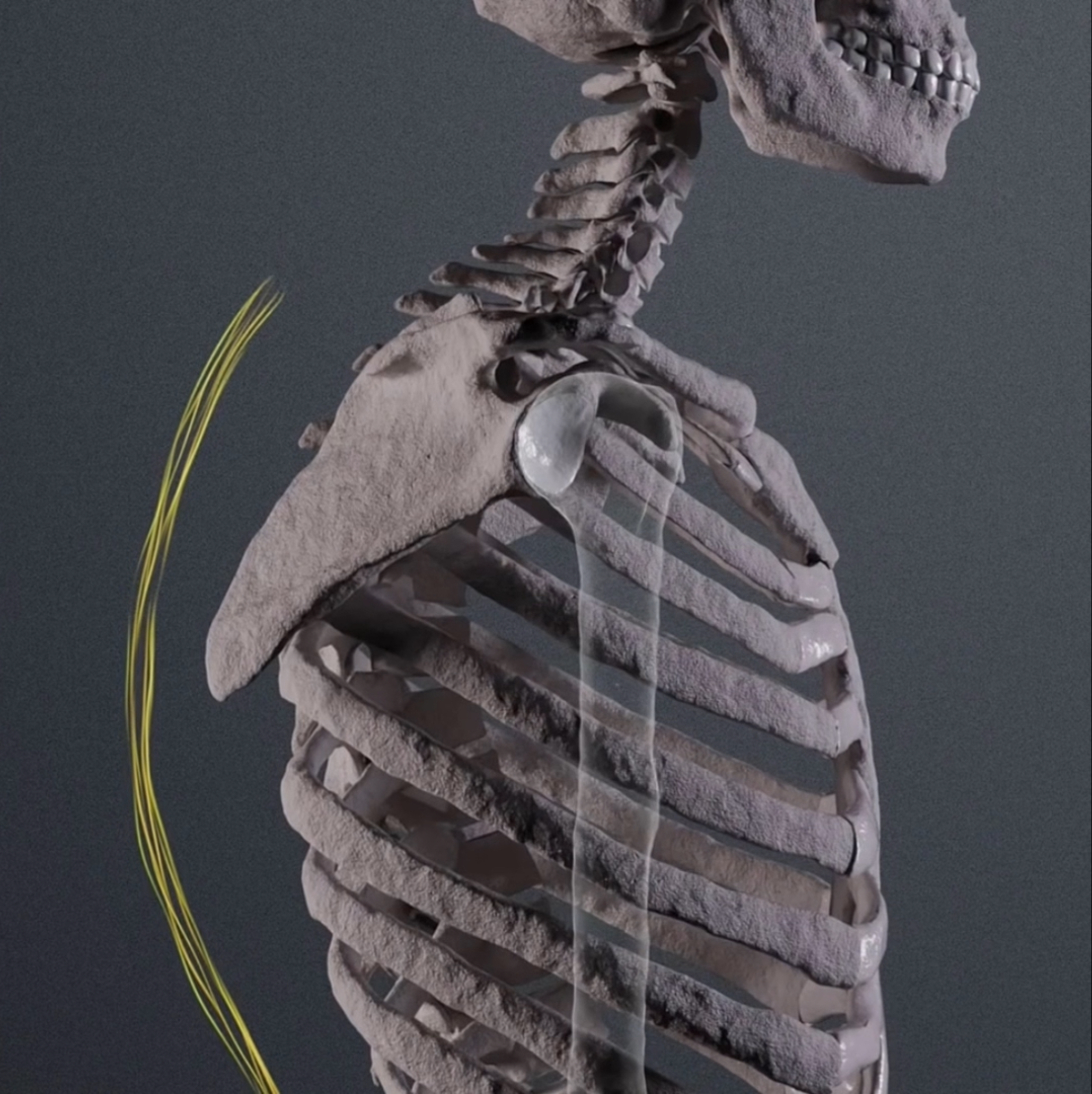
When I examine the jawline clinically, I first classify the fullness into three types: “fat type,” “masseter type,” and “bony type.” The fat type is caused by subcutaneous fat (buccal fat pad, jowl fat, submental fat); the masseter type is due to hypertrophy of the masseter, a chewing muscle; and the bony type is caused by prominence of the mandibular angle itself. Because the histological nature and treatment differ completely, this classification determines the outcome. Jawline liposuction is truly indicated as a rule only for the fat type, and for mixed cases where the fat component predominates. Conversely, choosing liposuction for a masseter type leaves the muscle behind, produces little contour change, and significantly lowers patient satisfaction.
How to Identify the Fat Type
The fat type shows a soft, drooping fullness on the outer jawline even in a relaxed expression, and a continuous thickness from the submentum down the anterior neck. On palpation the tissue is soft and can clearly be pinched between the fingers. Jowl fat, which descends across the mandibular border into the cheek area, tends to migrate anteriorly and inferiorly as the retaining ligaments loosen with age; fat that once sat above the jawline in youth drops below it, distorting the contour. In such cases, jawline liposuction along the sub-cheek, submental, and — where indicated — anterior neck areas, using a layered approach, restores a sharp contour.
How to Identify the Masseter Type
The masseter type is characterized by a clear, firm bulge behind the jawline when the teeth are clenched, which becomes somewhat smaller when the jaw relaxes. On palpation this cannot be pinched like fat; it feels like a firm muscle belly. Bruxism during sleep (grinding and clenching), chronic chewing habits, and stress-induced unconscious clenching are the main causes of masseter hypertrophy. Performing liposuction on this type leaves the muscle itself intact, so the contour hardly changes. Masseter Botox (botulinum toxin injection) is the first-line choice; after roughly 3–4 weeks neuromuscular transmission is suppressed, and over 2–3 months the masseter gradually shrinks. The effect lasts about 4–6 months, and repeated treatments help stabilize the reduced state.
Managing the “Mixed Type” — the Most Common Presentation
In our clinical practice, the most common presentation is actually the “mixed type,” in which both fat and masseter contribute to fullness. In this scenario, jawline liposuction alone makes the posterior masseter bulge stand out more, while masseter Botox alone makes the drooping subcutaneous fat more obvious. In mixed cases, only by simultaneously refining the lower face contour with liposuction and controlling the posterior bulge with masseter Botox can a naturally sharp jawline be achieved. Typically, both are started around the same time, or Botox is added 2–3 months after liposuction, once the contraction phase has settled. This staged approach is also rational because it allows accurate assessment of postoperative swelling.
Bony Jaw Prominence Does Not Respond to Liposuction or Botox
When the mandibular angle itself protrudes laterally or posteroinferiorly, neither liposuction nor masseter Botox will meaningfully change the contour. In such cases the options are angle-reducing osteotomy or less invasive camouflage using hyaluronic acid to modify shadowing. Some patients who say in consultation “I’ve had Botox many times and nothing changes” actually have a bony type as the primary cause. Beyond palpation and observing facial expressions, imaging to confirm bony architecture when needed leads to accurate diagnosis. Getting the differentiation right is the medical honesty that protects both patient satisfaction and safety.
Indications and Limits of Jawline Liposuction
Jawline liposuction is most effective for people in their 20s to 40s whose skin still has good elasticity and whose fullness is dominated by subcutaneous fat. Designing along the sub-cheek, submental, and lateral mandibular border continuously, and using a layered technique that separates superficial and deep planes, produces a sharp line. However, in patients over 50 with significant skin laxity, liposuction alone may not lift the jawline sufficiently, and combination with radiofrequency (RF), thread lifts, or in some cases open lifting surgery should be considered. Correctly explaining the limits of jawline liposuction is critical from both an E-E-A-T standpoint and for building patient trust. For safety standards in aesthetic surgery, please also refer to the Japan Society of Aesthetic Surgery. For related topics, see our column archive on liposuction here.
Frequently Asked Questions
Q. I have had masseter Botox many times, but my jawline hardly changes. What could be the cause?
If you do not feel results, the fat type or bony type may be the primary cause. If subcutaneous fat can clearly be pinched, or if there is thickness in the submental or sub-cheek area, jawline liposuction is indicated. When the bony type predominates, facial contouring surgery should be considered. Rather than repeating a single treatment, we recommend re-evaluating the underlying classification.
Q. Can jawline liposuction alone eliminate the angle bulge?
If the angle bulge is due to subcutaneous fat, improvement can be expected, but if the masseter or bone is the main cause, the change will be limited. In reality, mixed type cases with multiple contributing factors are more common, so preoperative palpation and observation during clenching are essential to break down the contribution of each cause.
Q. How long is the downtime for jawline liposuction?
Significant swelling lasts 1–2 weeks, compression with a facial band is worn for about 1–2 weeks, and including temporary firmness or discomfort from contraction, the result stabilizes 2–3 months postoperatively. There are individual differences based on constitution, age, and postoperative lifestyle.
Q. Can I have masseter Botox and liposuction on the same day?
It is not medically impossible, but assessment of postoperative swelling and bruising becomes difficult and the Botox effect gets confounded with contraction. For these reasons, we generally recommend performing them on separate days.
Q. Is there a chance of rebound after the procedure?
Because jawline liposuction reduces the actual number of fat cells, rebound is unlikely. However, if extreme weight gain or clenching habits continue, the surrounding residual fat and masseter can develop again. Please also work on lifestyle habits.
──────────────
[Medical Supervision] Shin Moriwaki, MD (Supervising Physician)
Member, Japan Society of Aesthetic Surgery (JSAS) / Member, American Academy of Aesthetic Medicine
ECFMG Certificate
──────────────
📍AVAN TOKYO GINZA LIPOSUCTION CLINIC
English / 中文 / Tiếng Việt available
Appointments and consultations are accepted via
DM / LINE / Website / Phone.