


Preparing for a Liposuction and Breast Augmentation Consultation: A 4-Step Guide to Articulating Your Goals and Choosing Reference Photos2026.07.21
The outcome of liposuction and breast augmentation depends on more than the surgeon’s technique or the devices used. In practice, how accurately you can communicate your goals to the physician during the initial consultation has a decisive influence on final satisfaction. If you arrive underprepared, the surgeon has little choice but to fall back on a safe, generic plan — and postoperative regret often follows. In this article, Dr. Shin Moriwaki of AVAN TOKYO Ginza Liposuction Clinic explains how proper liposuction consultation preparation, structured as four concrete steps, prevents that gap.
Key Points of This Article
・The quality of liposuction consultation preparation is one of the most decisive factors in postoperative satisfaction.
・Articulating not only “areas to change” but also “areas to preserve” is the essential first step.
・Choose reference photos of people with a similar skeletal frame, and match the angle, lighting, and posture to reduce misunderstanding.
・Understand medical limits — skin thickness, subcutaneous fat volume, and skeletal structure — to set realistic goals.
・On the day, confirm revision policy, follow-up schedule, and alternative options directly with the operating surgeon.
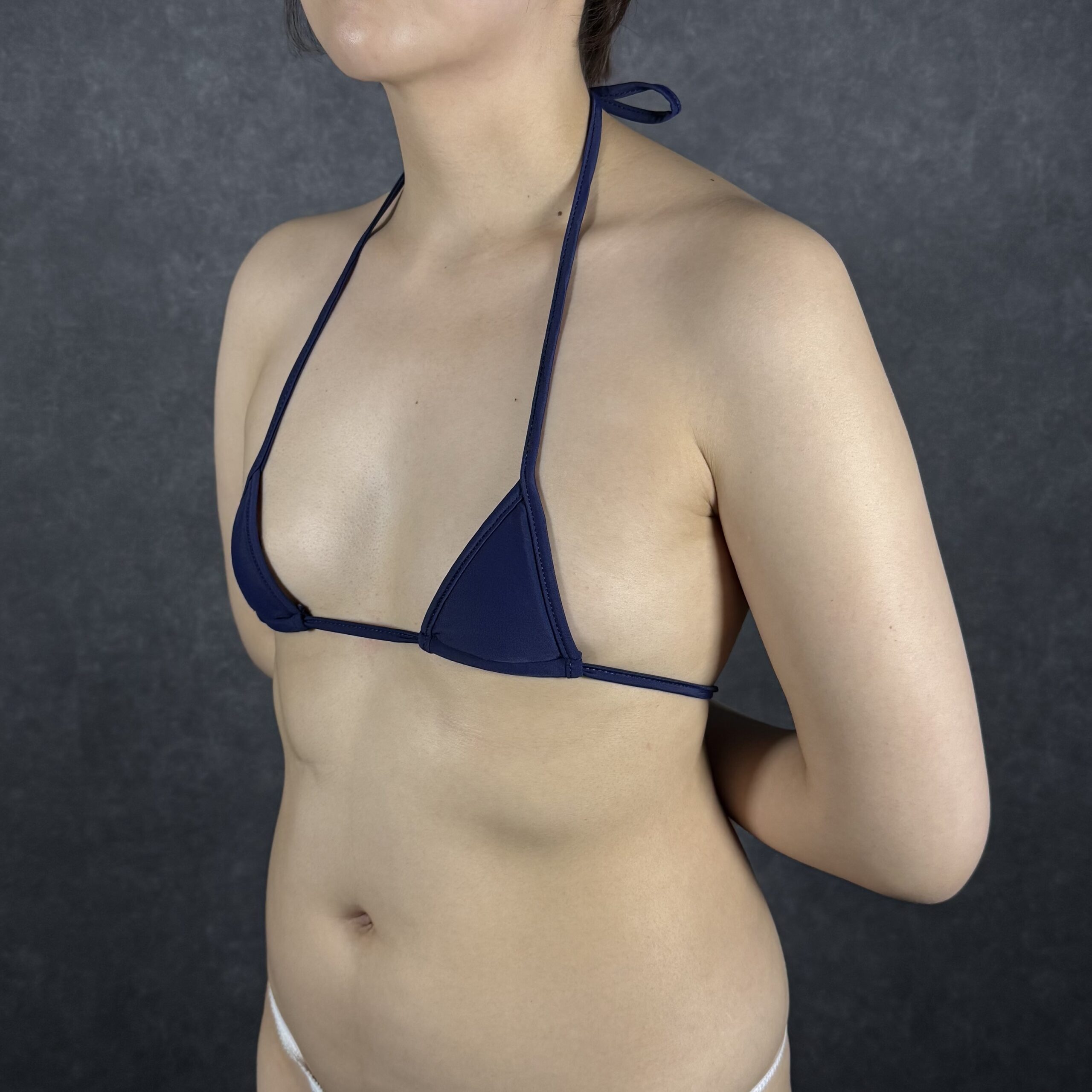
Why Liposuction Consultation Preparation Determines the Final Result
An aesthetic consultation is a limited window in which the physician evaluates your skeleton, skin, and fat layers while simultaneously reaching agreement with you on the target aesthetic. When preparation is shallow, the surgeon must fill in unspoken preferences with assumptions, and the plan tends to converge on a safe, average design. When you have organized your ideals and constraints beforehand, however, you can engage in a genuinely two-way discussion and unlock a more individualized plan. Liposuction consultation preparation is not simply a courtesy; it is the process that determines roughly half of the final outcome. At clinics like AVAN TOKYO — where design accounts for fibrosis and skeletal variance — patient-side articulation translates directly into surgical precision.
Step 1: Separate “What to Change” from “What to Preserve”
Most people begin the conversation with what they want changed: “Slim my upper arms,” or “Remove abdominal fat.” But the more important task is articulating what should be preserved. For upper arms, do you want to keep the rounded shoulder curve, or aim for a straight, athletic line? For the abdomen, do you want only the lower belly flattened, or an elegant S-curve running from below the sternum? Explicitly naming what to preserve allows the surgeon to design lines that avoid over-suction and to reduce the risk of contour irregularities during the contraction phase. Even sketching a simple body outline and shading it in red (reduce) and blue (preserve) dramatically increases the information density of the consultation.
Step 2: Choosing Reference Photos and Three Common Pitfalls
Reference photos are a powerful supplement to verbal description, but poor selection can widen the gap between you and the surgeon. There are three common pitfalls. First, skeletal difference: if the person in the photo has a very different ribcage width, shoulder breadth, or pelvic outline from yours, identical suction will not produce an identical silhouette. Second, capture conditions: downward camera angles, oblique lighting, and app-based retouching often make the subject look slimmer than reality, and any target based on those images will feel disappointing. Third, posture: fat distribution and skin tension differ between standing and sitting, and between arms raised and lowered. Limit yourself to three to five reference photos, taken from front, oblique, and rear angles, and choose people whose skeletal frame resembles yours. Where possible, unretouched candid photos give the most realistic target.
Step 3: Understand the Medical Limits
The most frequently overlooked element of liposuction consultation preparation is a realistic grasp of medical limits. Even if all removable subcutaneous fat is aspirated, skin thickness and elasticity, skeletal contour, and muscle volume cannot be altered. If shoulder bulk comes from the deltoid muscle itself, shoulder liposuction will not meaningfully change the outline. If thigh fullness is due to quadriceps hypertrophy, liposuction alone has limited effect. Aggressive suction in a slim patient with less than 2 cm of subcutaneous fat can bond skin to fascia and produce tethering or irregularity. For general safety standards and technical frameworks in cosmetic surgery, the Japan Society of Aesthetic Surgery (JSAS) is a reliable reference. When a physician says, “That region is not an indication for suction,” or “A different approach is needed alongside it,” that is honest judgment based on those limits.
Step 4: Five Questions to Ask the Operating Surgeon Directly
Do not rely solely on the counselor. Make sure you spend time with the physician who will actually perform the surgery, and ask the following five questions. (1) Why do you propose this specific technique and suction volume — what is the rationale? (2) What does the contraction phase look like, and how long does it last in my case? (3) If revision becomes necessary, to what extent is it covered without additional cost? (4) How many follow-up visits are included, and for how long? (5) Given my skeleton and fat distribution, are there alternative options — hybrid breast augmentation, skin tightening, or targeted secondary suction? A surgeon who can answer these specifically is a surgeon who has genuinely evaluated your body. If the answers remain vague, cross-check against the checklist you built during liposuction consultation preparation and consider seeking a second opinion.
Summary: Preparation Sets Half of the Outcome
Liposuction consultation preparation is not mere background research; it is a collaborative design process with your surgeon. Articulating what to change and what to preserve, choosing realistic reference photos, understanding medical limits, and asking the five key questions of your surgeon — these four steps alone dramatically change postoperative satisfaction. For related explanations, please visit the AVAN TOKYO column archive.
Frequently Asked Questions
Q. How much time should I spend on liposuction consultation preparation?
Roughly two to four weeks. Gathering reference photos, organizing what to change and what to preserve, and drafting your question list all take time. Letting the vision mature over daily life produces a much deeper discussion than assembling it the day before.
Q. How many reference photos should I bring?
Three to five is ideal. Too many blur the message; too few leave the visual concept unclear. Choose people whose skeletal frame resembles yours, photographed from front, oblique, and rear angles.
Q. If the surgeon tells me my goal exceeds the medical limits, should I give up?
Not at all. Even when a single procedure cannot achieve it, combinations — liposuction plus skin tightening, hybrid breast augmentation, or botulinum toxin — often open a different route. Always ask, “Are there alternative approaches?”
Q. What if the surgeon’s explanation was too technical for me to understand?
Ask again on the spot, or follow up by email or an online consultation later. Signing a contract while confused invites postoperative disappointment. A surgeon’s ability to translate specialist terminology is itself an important selection criterion.
Q. How many clinics should I consult before deciding?
Two or three is a realistic range. Too many consultations blur your comparison axis; too few leave you without enough material to compare. Bringing the same photos and question list to each visit makes each surgeon’s diagnostic skill and integrity easier to see.
──────────────
Medical Supervisor: Dr. Shin Moriwaki
Member, Japan Society of Aesthetic Surgery (JSAS) / American Academy of Aesthetic Medicine
ECFMG Certificate
──────────────
📍AVAN TOKYO Ginza Liposuction Clinic
AVAN TOKYO GINZA LIPOSUCTION CLINIC
English / 中文 / Tiếng Việt supported
Appointments and consultations via
DM / LINE / Website / Phone.