


When Is the Most Difficult Part of Recovery After Arm Liposuction? Understanding Pain, Recovery, and Returning to Work2026.07.17
Introduction
“Does arm liposuction hurt?”
This is one of the most common questions we hear during consultations.
The honest answer is yes—some discomfort is expected after surgery.
However, understanding when the pain is usually at its worst and how recovery progresses can help reduce anxiety and make it easier to plan your time off work.
In this article, we explain what to expect during recovery after upper arm liposuction, when pain typically peaks, and how AVAN TOKYO helps patients recover as comfortably and safely as possible.
Does Arm Liposuction Hurt?
Yes, arm liposuction involves postoperative pain.
Most patients describe it as soreness similar to a severe muscle strain or bruising, along with tightness when moving the arms.
Fortunately, the pain usually improves gradually as healing progresses.
Every patient’s experience is different, and recovery varies depending on individual factors.
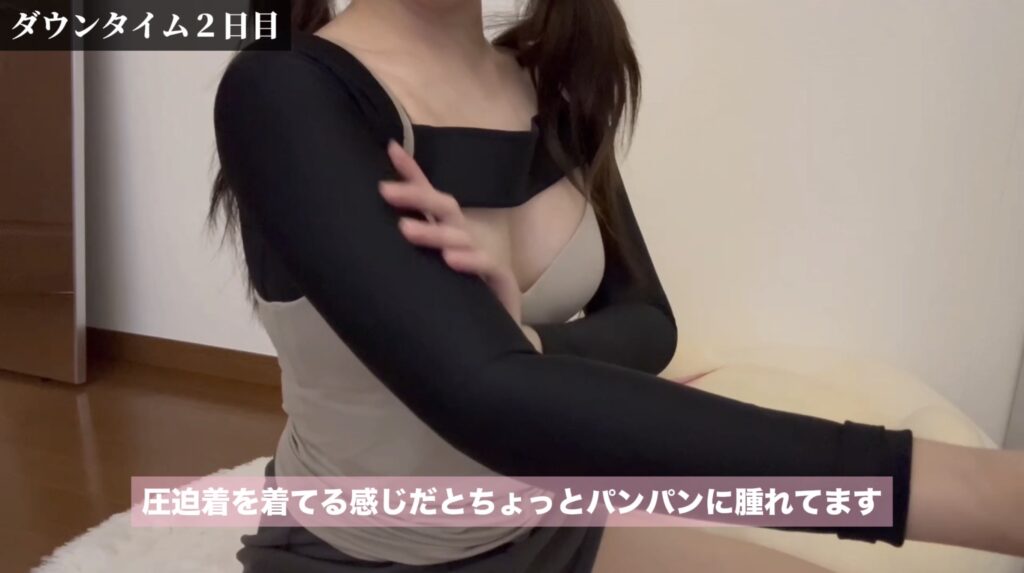
The Most Difficult Period Is Usually Days 2–3
Based on our clinical experience, the peak of discomfort after upper arm liposuction is typically between postoperative days 2 and 3.
During this period, swelling and the body’s natural inflammatory response are usually at their highest.
Simple daily activities such as:
- Raising your arms
- Washing or styling your hair
- Getting dressed
- Reaching overhead
may temporarily become more uncomfortable.
The good news is that after this peak, pain usually begins to decrease gradually.
Although firmness caused by postoperative fibrosis may continue for several weeks, most patients notice steady improvement after the first few days.
When Can I Return to Work?
The answer depends largely on the type of work you do.
Office Work
Many patients with desk jobs are able to return to work as early as the following day.
However, prolonged arm movement may still cause some discomfort.
Physically Demanding Jobs
If your occupation requires frequent arm movement—such as:
- Hairdresser
- Nurse
- Caregiver
- Physical therapist
- Fitness trainer
- Restaurant staff
we generally recommend taking at least three days off whenever possible.
Some patients may benefit from a longer recovery period depending on their symptoms.
Recovery Is Different for Everyone
No two recoveries are exactly the same.
Factors that may influence your recovery include:
- Amount of fat removed
- Areas treated
- Age
- Individual healing response
- Blood clotting function
- Muscle mass
- General health
- Previous surgeries
Because of these differences, your recovery may not be identical to someone else’s.
How AVAN TOKYO Helps Reduce Downtime
At AVAN TOKYO, achieving beautiful results is only one part of successful treatment.
We also focus on minimizing unnecessary tissue trauma and supporting a smoother recovery.
Our approach includes:
- Preoperative ultrasound evaluation
- Personalized surgical planning
- Careful, anatomy-based liposuction techniques
- Comprehensive postoperative follow-up
Our goal is to maximize both safety and patient satisfaction throughout the recovery process.
Tips for a More Comfortable Recovery
To help reduce discomfort during the first few days, we recommend:
- Taking prescribed medications as directed
- Avoiding excessive arm movement
- Staying well hydrated
- Eating a balanced diet
- Wearing compression garments as instructed
- Avoiding strenuous exercise until cleared by your surgeon
Resting during the first few days often leads to a smoother overall recovery.
Summary
Upper arm liposuction does involve postoperative discomfort, and for many patients the most difficult period occurs around 2–3 days after surgery.
After this initial phase, pain typically improves gradually.
Understanding the recovery timeline allows patients to prepare appropriately and return to daily activities with greater confidence.
At AVAN TOKYO, we believe that successful liposuction is achieved through careful surgical planning, individualized treatment, and comprehensive postoperative care.
Risks and Potential Complications
Possible risks include swelling, bruising, pain, temporary numbness, fibrosis, contour irregularities, asymmetry, pigmentation changes, skin laxity, infection, hematoma, seroma, and scarring. Recovery varies depending on the individual and the extent of the procedure.
Medical Disclaimer
This article is intended for medical education and patient education purposes only. Treatment recommendations are individualized following consultation and clinical evaluation.