


Multi-Donor Fat Grafting for Breast: Harvesting from Thighs, Buttocks and Calves2026.10.12
Multi-donor fat grafting is a donor strategy that collects small volumes of fat from several lower-body sites — such as the circumferential thighs, buttocks, and calves to ankles — in order to secure the injected volume needed for autologous breast augmentation. It becomes important for slim patients and whenever a single donor area cannot safely yield enough fat. In this article, drawing on a case of a woman in her twenties who underwent CRF (condense rich fat) breast augmentation, I walk through how donors are selected, why aspirated volume is not the same as injected volume, how we correct left-right asymmetry, how we choose between the subcutaneous and intramuscular layers, and what the main risks are, all from the supervising surgeon’s perspective.
Key points of this article
– Multi-donor fat grafting is a donor strategy that lets slim patients, who have little subcutaneous fat at any single site, secure the required injected volume while preserving the donor contour.
– Aspirated and injected volumes are not the same: the condensation step typically more than halves the usable volume, so donor sites and amounts are planned backward from the target injection volume.
– Each donor site differs in fibrous content and fat character — circumferential thigh, buttock, and calf-to-ankle each demand their own harvest strategy.
– When the breasts are asymmetric, injected volume and injection layer are varied left to right to balance the final silhouette.
– Multi-site harvest means more access incisions, so port placement and postoperative compression garment management meaningfully influence the result.
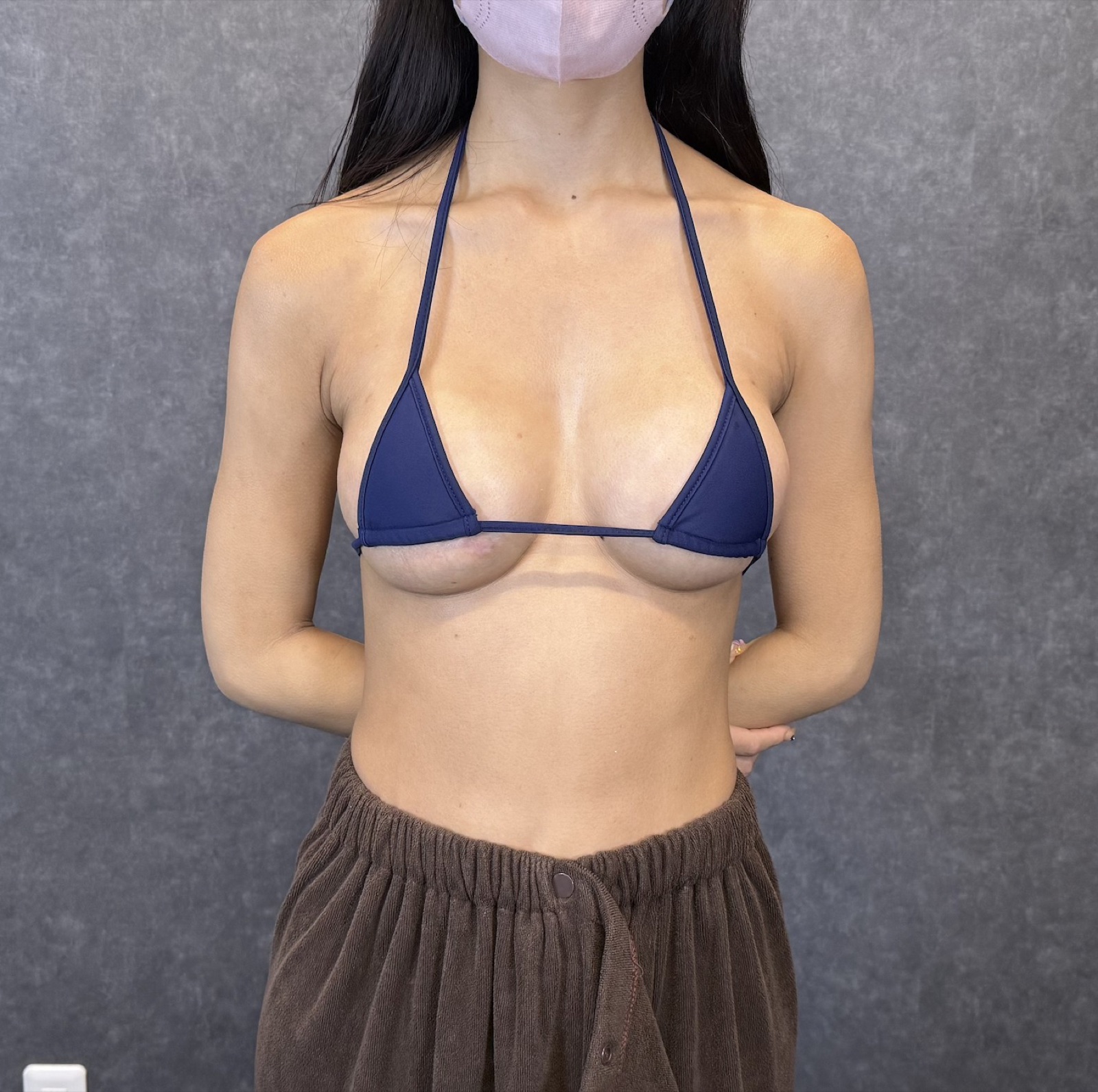
Why we harvest from several sites
In autologous fat grafting the amount of fat that can be safely removed from a single area is capped. Taking a large volume from one place tends to leave dents, steps, or asymmetry in the donor surface and compromises the natural look of the final result.
When a larger injection volume is needed, or when a slim patient has only a thin subcutaneous layer at any single site, we distribute the harvest across several areas — circumferential thigh, buttock, and calves to ankles — taking a small amount from each. Keeping the per-site volume moderate preserves a smooth donor contour.
In this case, roughly 1,600 ml of fat was aspirated in total, distributed across three lower-body sites. The design aimed simultaneously to add breast volume and to refine the lower-body line.
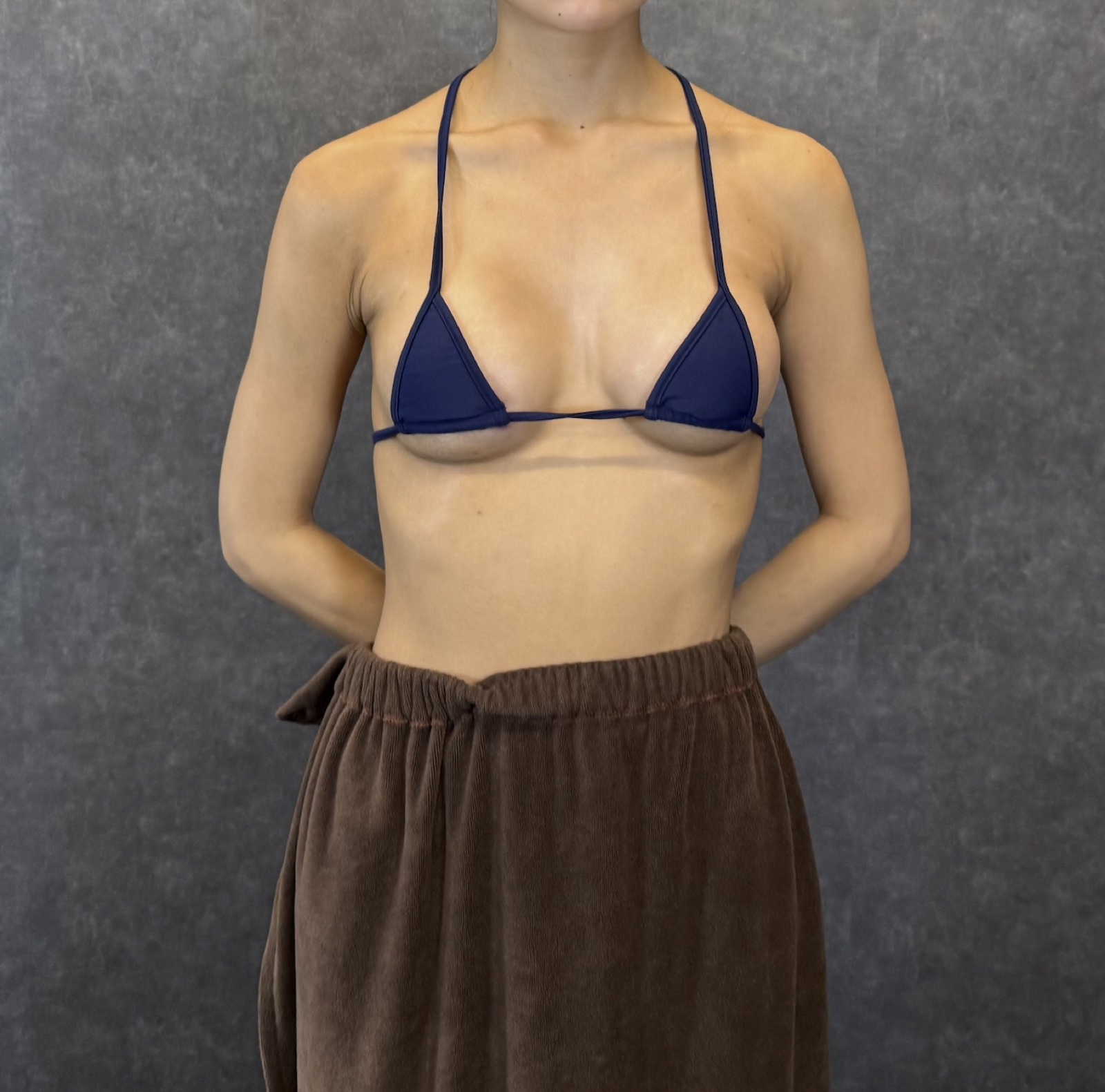
The three donor sites in multi-donor fat grafting
The subcutaneous architecture, fibrous content, and ease of harvest differ by donor site. Each site informs its own choice of suction layer and volume.
Circumferential thigh
The circumferential thigh is a workhorse donor in fat grafting breast surgery. With its outer, inner, anterior, and posterior layers it offers a sizable usable volume. Superficial to mid layers tend to yield fat that handles well as graft material, while the deeper layer can be more fibrous and reduce the condensation yield.
Buttock
The buttock has a thick subcutaneous layer, and taking modest amounts from the lower buttock in a distributed fashion can also tighten the lower buttock crease. Over-harvesting can cause buttock ptosis or contour collapse, so volume and position are chosen with care.
Calves to ankles
Calf-to-ankle fat volumes are small, but this is a meaningful donor when the aim is to carry the lower-body line all the way to the ankle. To avoid altering the shape of the gastrocnemius and soleus, suction depth and volume are planned especially cautiously.
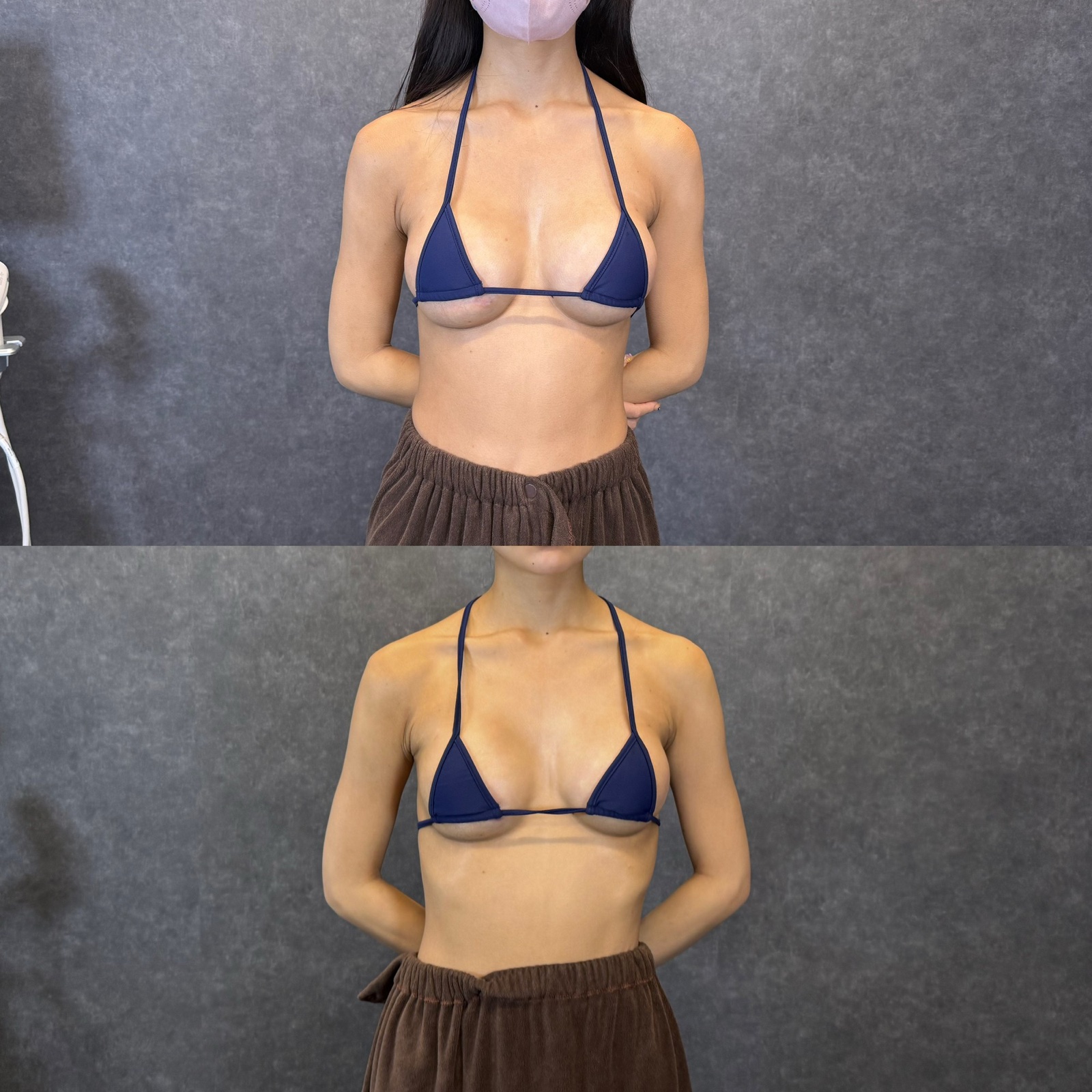
Aspirated volume differs from injected volume
A common misunderstanding is that whatever is aspirated goes straight into the breast. Harvested fat contains tumescent fluid, blood, damaged adipocytes, and free oil, so these components must be removed before injection.
In this case, around 1,600 ml was aspirated from three lower-body sites, from which approximately 500 ml of higher-purity fat was separated and then concentrated using a low-speed centrifugation step to produce 350 ml of injectable fat. Because the usable volume is less than half of the aspirate, we start from the target injection volume and work backward to decide which donors and how much to take from each.
In the concentration step, overly aggressive rotation damages the adipocytes themselves, while an insufficient process leaves excess oil and water, which can later feed oil cysts or palpable nodules.
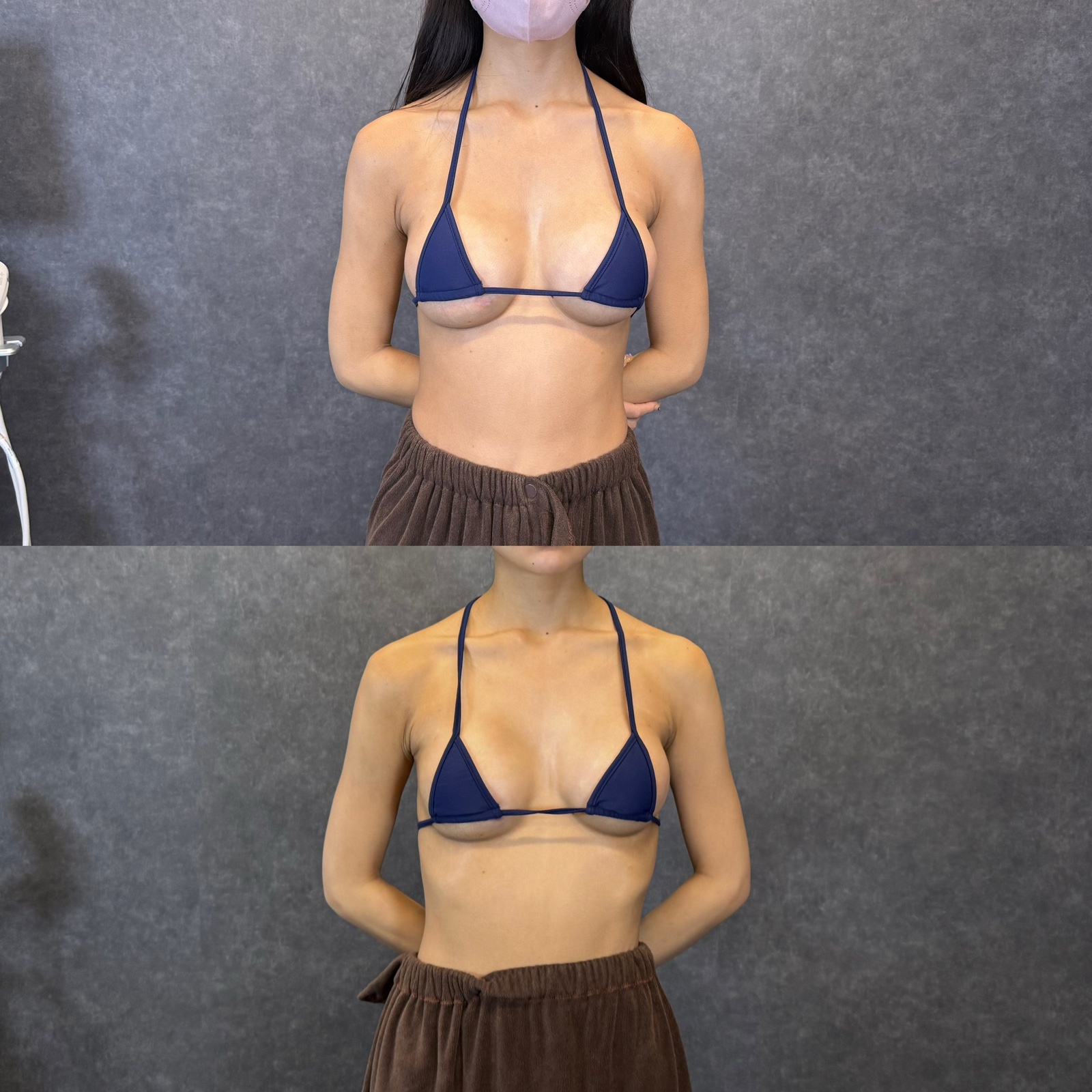
Correcting asymmetry: different volumes left and right
Most breasts are already slightly asymmetric in size and shape preoperatively. Injecting the prepared fat as an even split between the two sides tends to preserve, or even accentuate, the baseline asymmetry.
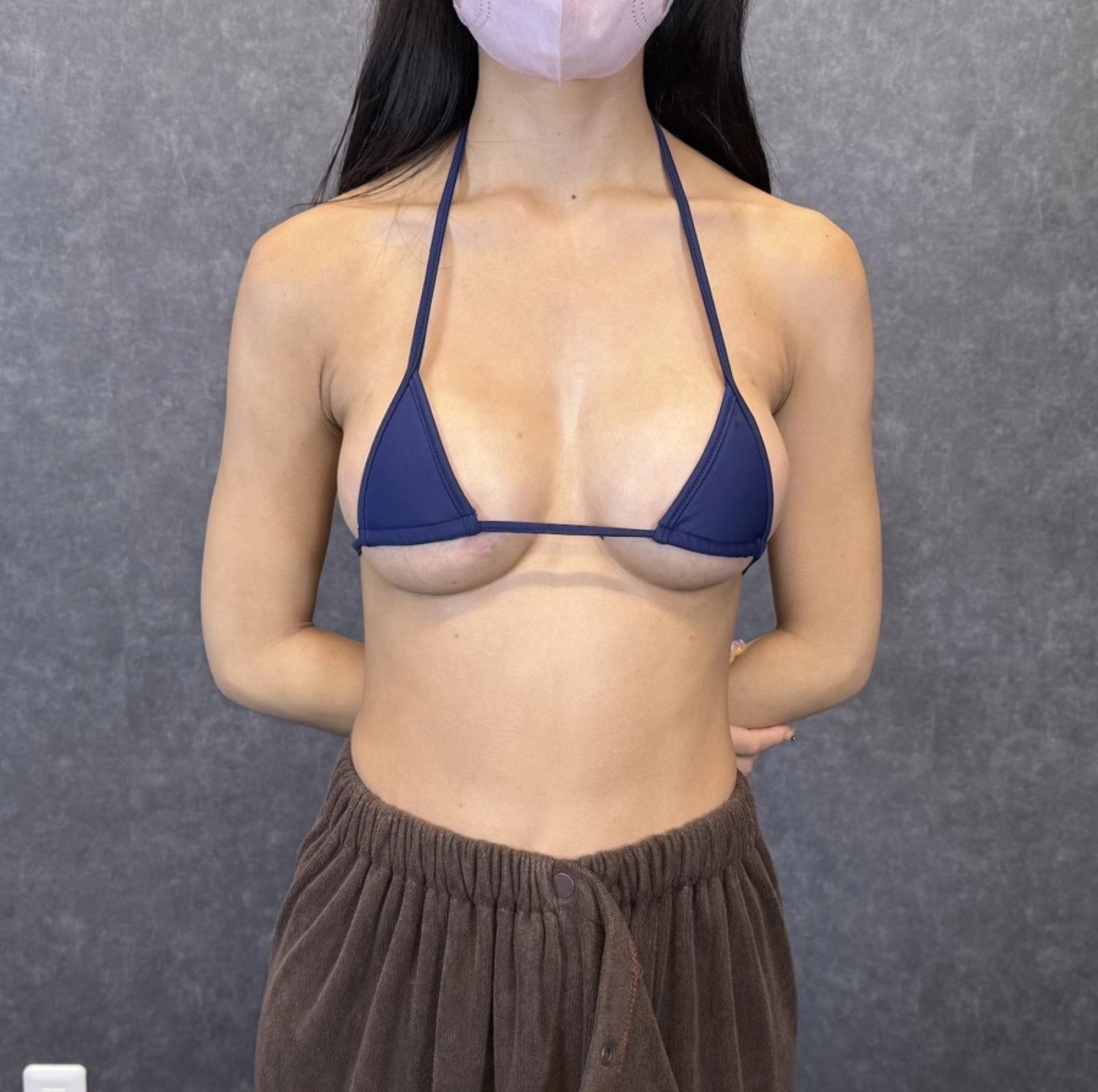
In this case the 350 ml of concentrated fat was divided as 210 ml for the right breast and 140 ml for the left. Preoperative size, chest-wall projection, and nipple position were marked in the standing position to decide how much each side required.
During injection, we spread small aliquots in a fan pattern across different layers. Dropping a thick bolus in one spot can leave the center of the fat mass out of reach of blood supply, which can lead to palpable nodules, calcification, or fat necrosis.
Choosing between subcutaneous and intramuscular layers
Where the fat is placed is decided by glandular thickness and chest-wall shape. In this case, both breasts were grafted mainly subcutaneously, with a portion also placed intramuscularly on the right side only.
Subcutaneous injection helps create roundness from the decolletage to the upper breast and tends to look most natural. However, placing too much thick fat into the subcutaneous layer can collect surface-level fat deposits that may be palpable as lumps.
Intramuscular injection distributes small aliquots within a highly vascular muscle layer, which can support the engraftment environment. The technical bar is higher, so cannula depth and layer control require careful attention. We do not inject into the glandular tissue itself in our fat grafting breast practice, in order to avoid any impact on future breast cancer screening.
Treatment, cost and risk for this case
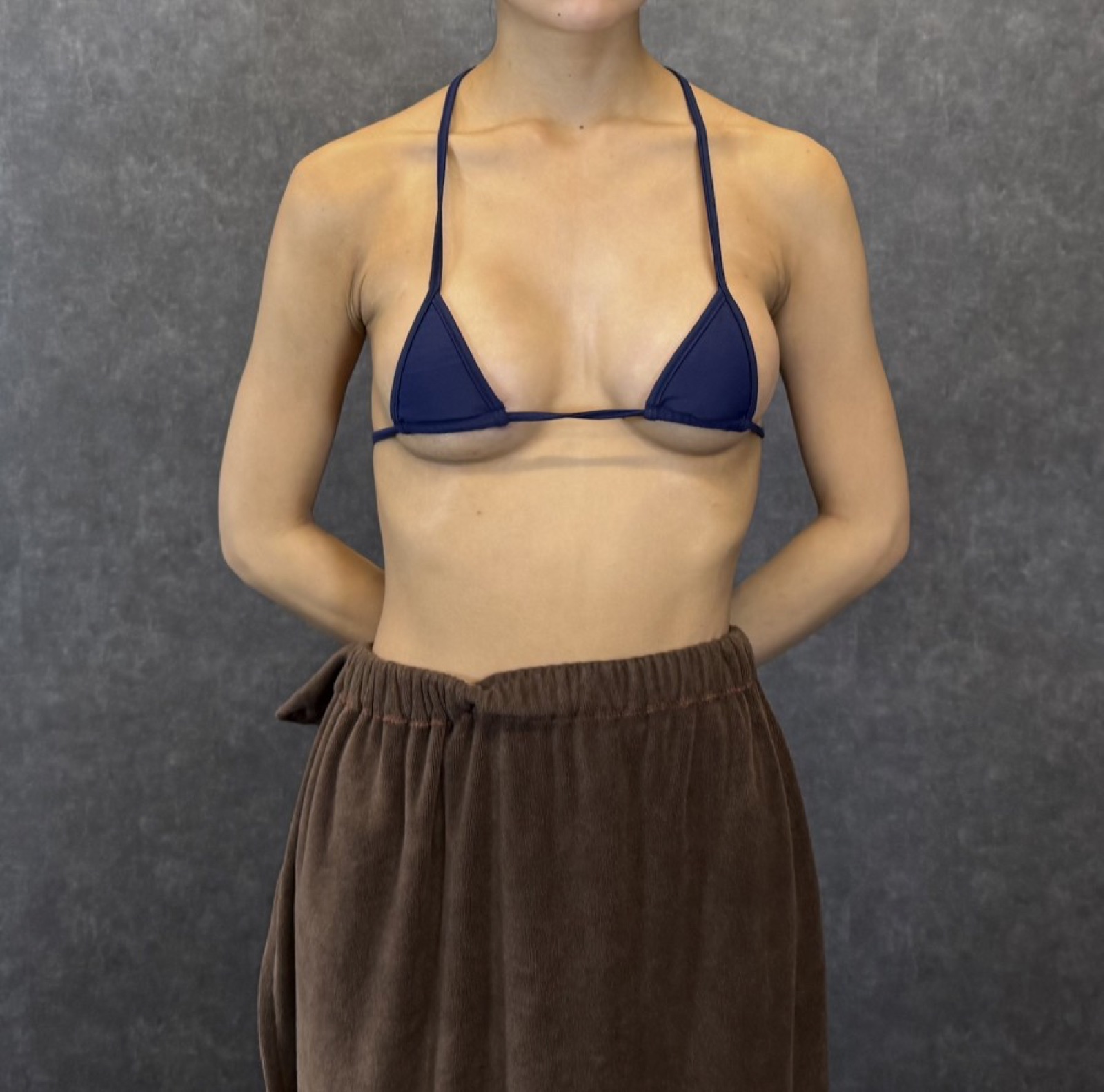
Treatment performed: a case of condense rich fat (CRF) breast augmentation in a woman in her twenties. Under general anesthesia, tumescent fluid was infiltrated into the circumferential thighs, buttocks, and calves to ankles, and approximately 1,600 ml of fat was aspirated in total. About 500 ml of higher-purity fat was separated, condensed by low-speed centrifugation to 350 ml, and injected with asymmetry correction — 210 ml into the right breast (170 ml subcutaneous, 40 ml intramuscular) and 140 ml into the left (140 ml subcutaneous).
Cost: fees for fat grafting and liposuction include donor sites, aspirated volume, anesthesia, compression garments, blood work, and other items, and are quoted individually. Please refer to our price page for details.
Main risks and side effects: bruising, swelling, pain, transient numbness, donor-site irregularity or step deformity, asymmetry, graft resorption, palpable nodules, calcification, oil cysts, port scars, infection, and rarely fat embolism syndrome or deep venous thrombosis have been reported.
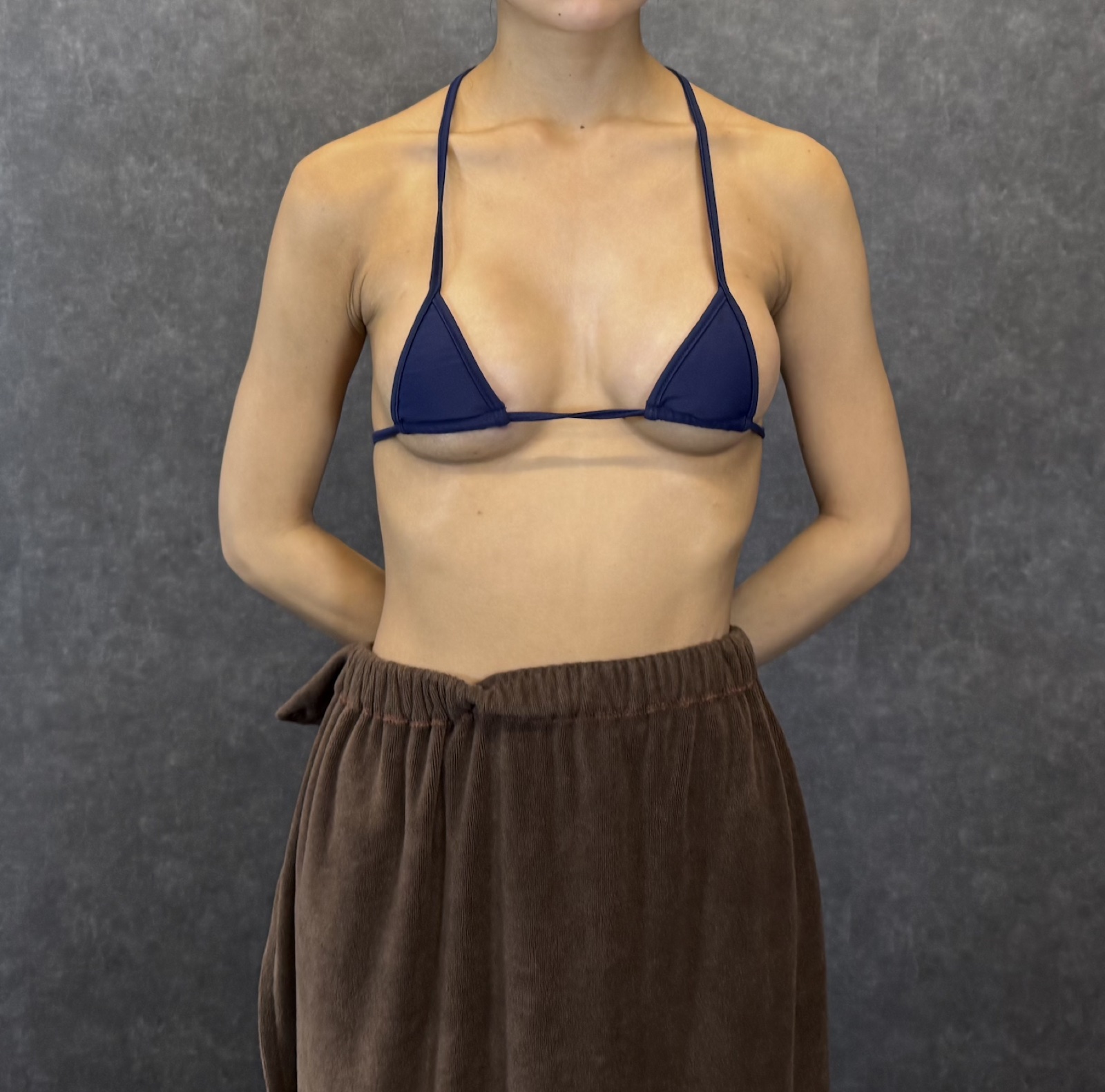
Effect, engraftment, and recovery vary between individuals, and these photos are only one example. Final size and shape are determined individually in consultation, drawing on body type, chest-wall shape, the pinch test, and breast ultrasound.
The six-month postoperative course
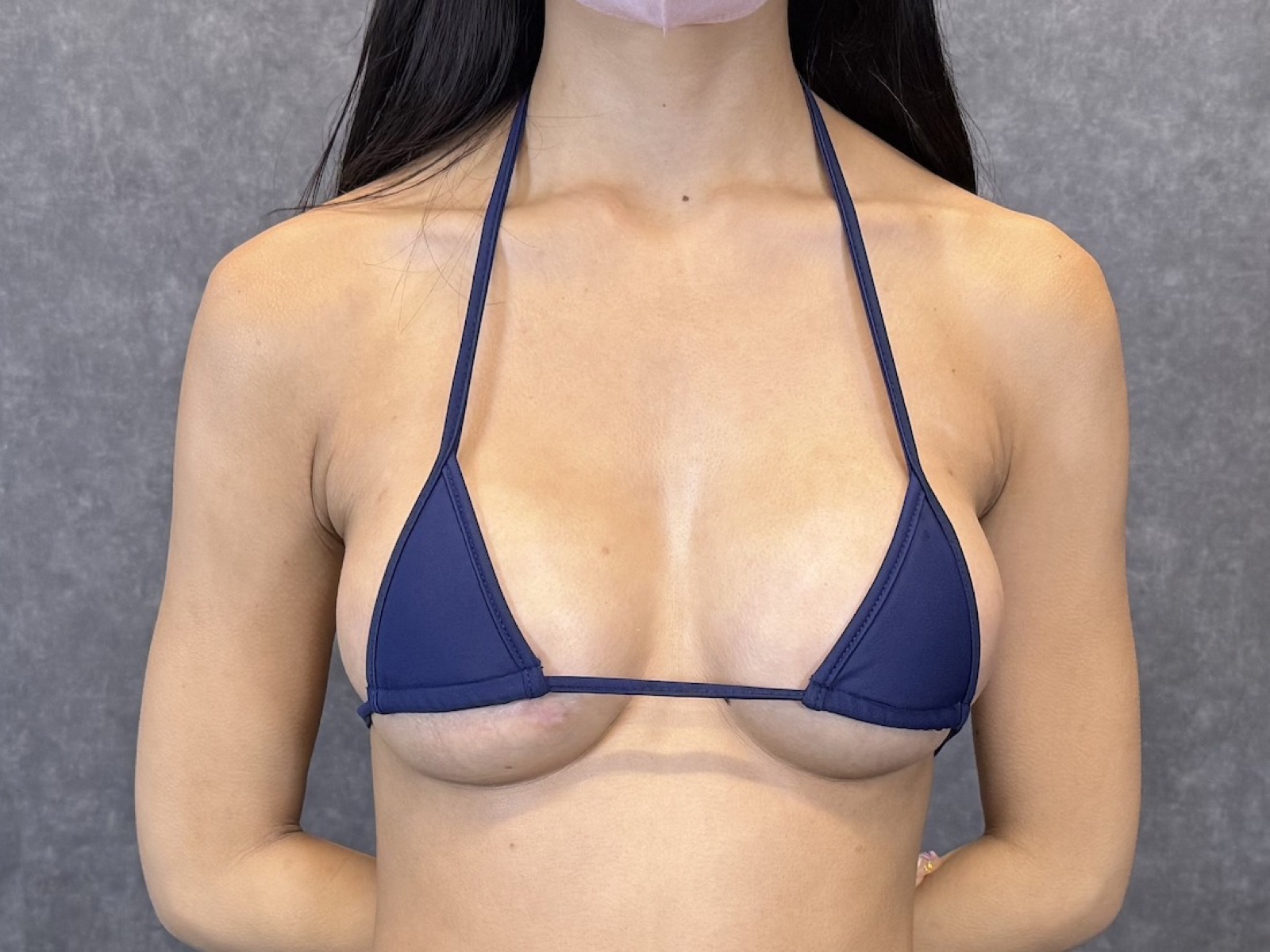
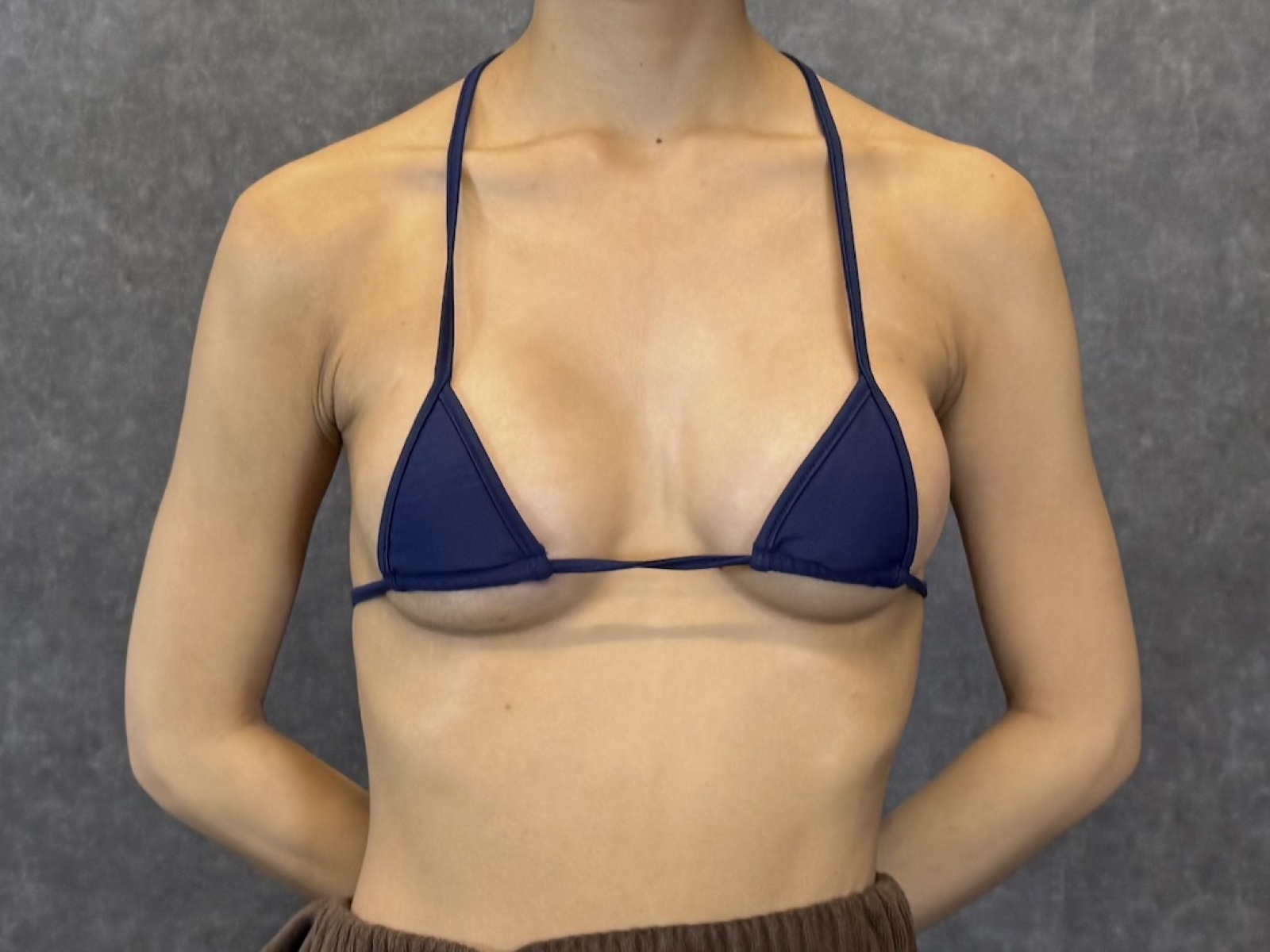
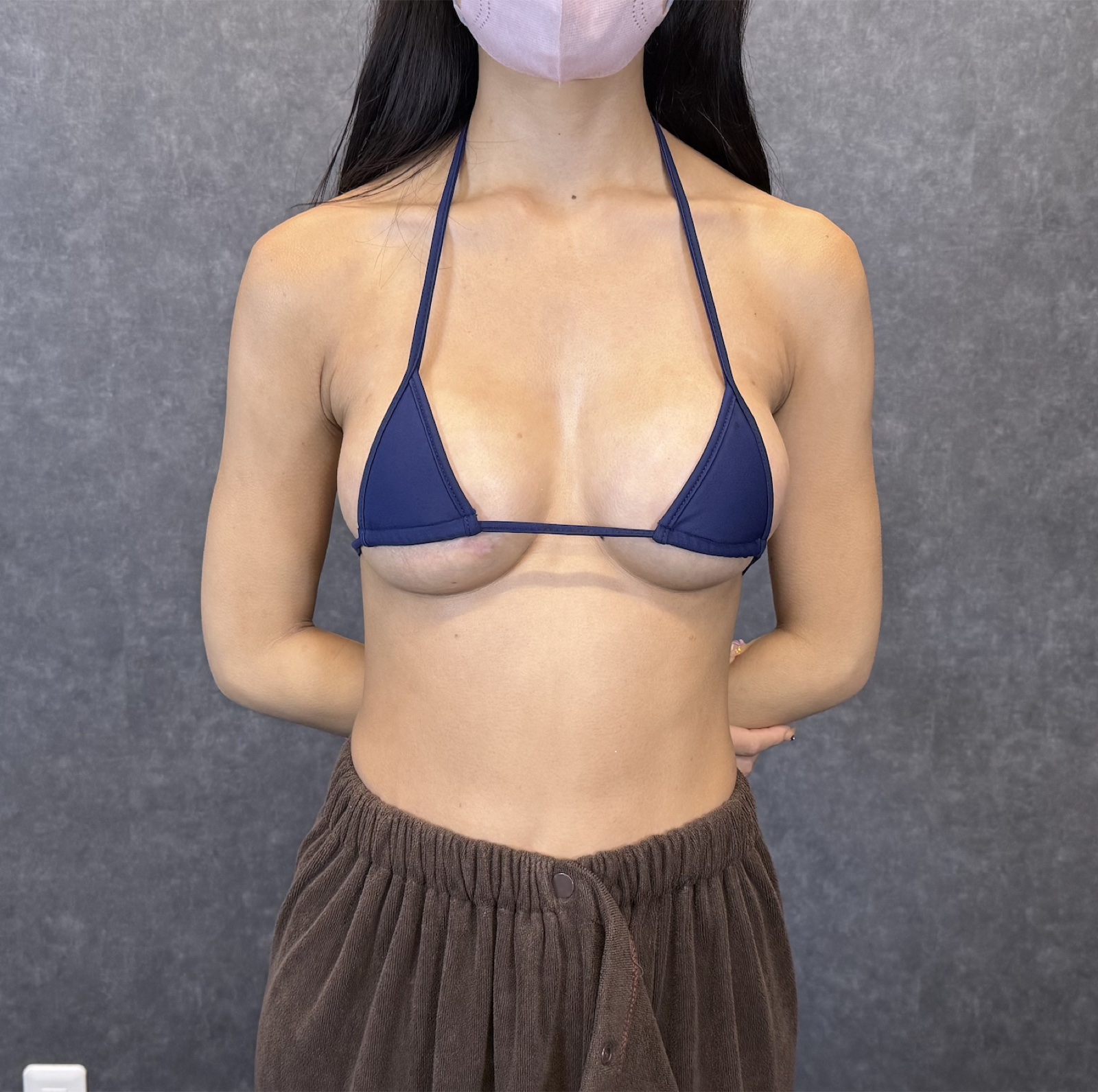
By six months postoperatively, the early resorption of grafted fat has settled and the engrafted fat has blended into the surrounding tissue. Volume immediately after surgery includes swelling and edema, which recedes over months one to three, with the final shape approaching between months three and six.
In this case, roundness from the decolletage to the upper breast, as well as curvature from the side to the lower pole, has persisted, and the frontal silhouette is more defined than preoperatively. Swelling and bruising at the lower-body donor sites have also subsided.
How the first three postoperative months shape engraftment
Not all injected fat remains immediately after surgery; it is engrafted gradually as blood supply is rebuilt from the surrounding tissue. Because most of that engraftment outcome is decided in the first three months, this window is especially important.
During this period, we avoid tightly compressive sports bras or wired bras, prone sleeping, and aggressive massage. Donor sites are kept under even compression with a garment to reduce dead space, lowering the risk of edema, seroma, and surface irregularity. Smoking and extreme dieting lower peripheral circulation and reduce engraftment, so both are avoided before and after surgery.
Risks and precautions in multi-site harvest
Multi-donor fat grafting means more small access incisions — one for every donor zone. In this case ports were placed in both groins, both anterior axillae, below the nipples, below the buttocks, and behind the knees. Positions are chosen to be inconspicuous, but the final appearance of these pinpoint scars still varies between individuals.
Because the surgical field is broad, the importance of general anesthesia management and preoperative evaluation grows. Preoperative blood work checks anemia, coagulation, liver and kidney function, confirming that the patient can safely undergo wide-field surgery. For general safety standards in cosmetic surgery, information from the Japan Society of Aesthetic Surgery (JSAS) can serve as a reference. For related reading on liposuction and fat grafting, see our liposuction column index.
Frequently asked questions
Q. Why isn’t the thigh enough for some patients?
Because the amount that can be safely harvested from any single site is capped relative to the injected volume the breast needs. Slim patients or those with a thin subcutaneous layer may not yield enough from the thigh alone, and in those cases we consider multi-donor fat grafting.
Q. Does harvesting from more sites mean more scars?
Yes — one small access port is added for every donor zone. We choose discreet locations such as the groin, axilla, and back of the knee, but the final appearance of each pinpoint scar still varies between individuals.
Q. Why does 1,600 ml aspirated yield only 350 ml injected?
Harvested fat contains tumescent fluid, blood, and damaged adipocytes, so the condensation step removes these so only injectable fat is used. It is common for the usable volume to be less than half of what was aspirated.
Q. Can fat grafting correct asymmetric breasts?
After evaluating the degree of baseline asymmetry and chest-wall shape, we can vary both injected volume and injection layer between the two sides to balance the result. Perfect symmetry cannot be guaranteed, however, and individual variation exists.
Q. Will the lower-body donor sites look sunken like extreme dieting?
Taking too much from any single site raises the risk of dents and steps, so we distribute the harvest across donors in small amounts. By designing suction layer, direction, and volume carefully, we also aim for a natural donor-side line.
──────────────
Supervising physician: Shin Moriwaki, MD
Member, Japan Society of Aesthetic Surgery (JSAS) / Member, American Academy of Aesthetic Medicine
ECFMG Certificate
──────────────
📍AVAN TOKYO GINZA LIPOSUCTION CLINIC
Support available in English / 中文 / Tiếng Việt
For bookings and consultations, please reach us via DM / LINE / Website / Phone.