


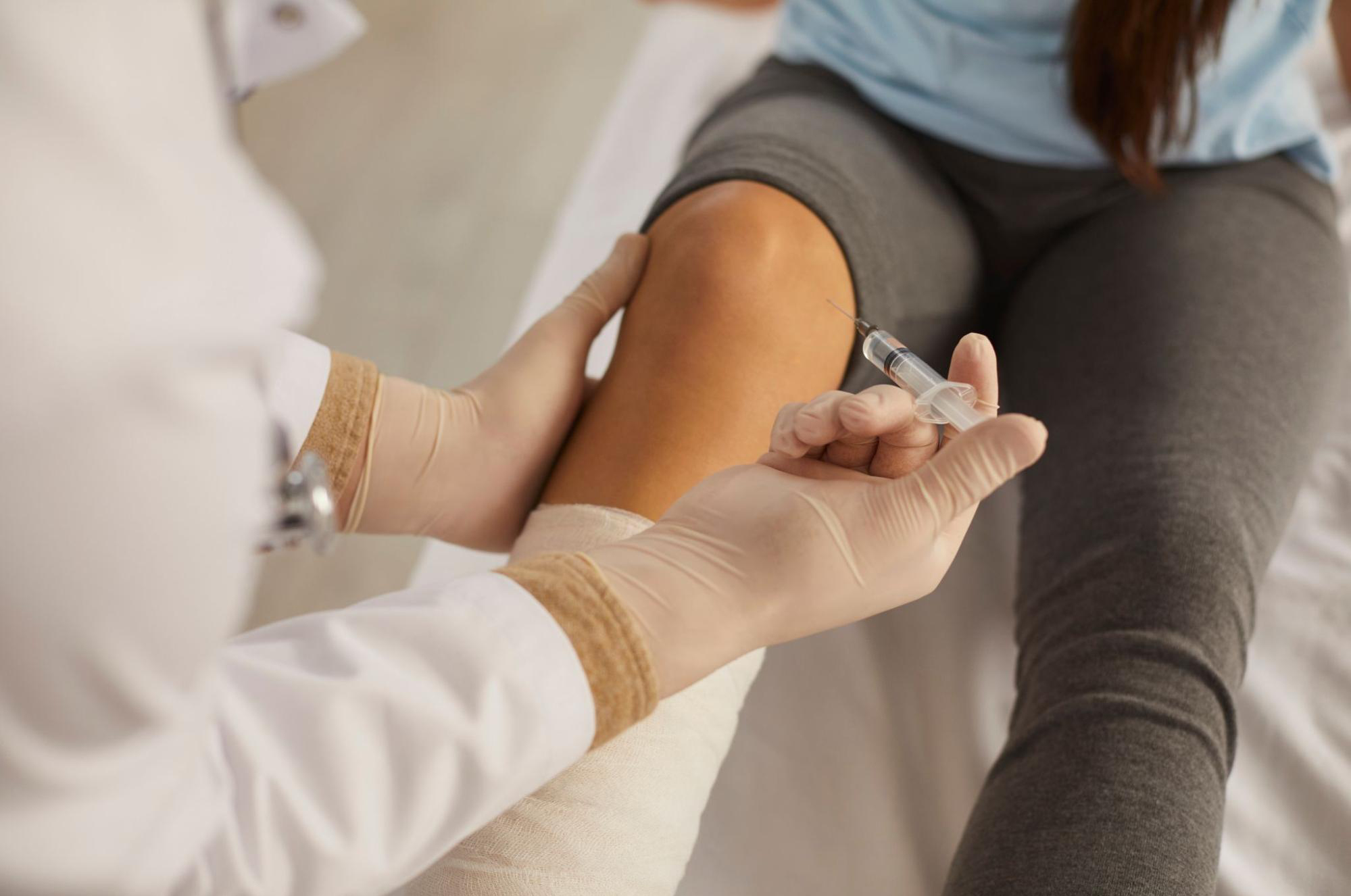
How to Use Extracorporeal Shock Wave Therapy and Stem Cell Conditioned Media Peri-Articular Injection for Chronic Achilles Tendinopathy, Plantar Fasciitis, and Tennis Elbow: Dr. Moriwaki Organizes the Indications, Limits, and Combination Design of Two Conservative Treatments for Enthesopathy That Share a Goal but Differ in Mechanism2026.08.09
The range of conservative treatment options for chronic enthesopathy has been expanding year by year. In addition to Extracorporeal Shock Wave Therapy (ESWT), which has long been used in orthopedics, an approach combining peri-articular injection of stem cell conditioned media as a form of regenerative medicine has recently attracted attention. However, extracorporeal shock wave therapy and stem cell conditioned media share the same goal of relieving tendon pain yet differ fundamentally in mechanism of action and in the situations to which they apply. In this column, Dr. Moriwaki of AVAN TOKYO Ginza Joint Regenerative Medicine organizes how to use these two treatments differently, focusing on three representative chronic enthesopathies: Achilles tendinopathy, plantar fasciitis, and tennis elbow.
Key Points of This Article
・Extracorporeal shock wave therapy and stem cell conditioned media are both conservative treatments for chronic enthesopathy, yet their mechanisms differ fundamentally.
・Extracorporeal shock wave therapy is a physical approach that uses mechanical pressure waves to reignite blood flow and healing responses in chronically damaged tissue.
・Peri-articular injection of stem cell conditioned media is a biochemical approach targeting correction of the inflammatory environment using biological signals such as growth factors, exosomes, and anti-inflammatory cytokines.
・For Achilles tendinopathy, plantar fasciitis, and tennis elbow, the indications of the two overlap in some areas and diverge in others, and the sequencing and interval design become important.
・Neither approach is effective for anatomical reconstruction of a complete tendon rupture or severe bony deformity; recognizing indications and limits is the most important step.
What Is Extracorporeal Shock Wave Therapy (ESWT)? Mechanical Stimulation Delivered by Pressure Waves
Extracorporeal shock wave therapy is a conservative treatment in which high-energy pressure waves are applied to the lesion from outside the skin. Originally developed as a device to fragment urinary tract stones from outside the body, this technology was later applied to orthopedic conditions and is now used for chronic enthesopathy, refractory plantar fasciitis, non-unions, and more.
Healing Responses Induced by Mechanical Stimulation
The mechanism of ESWT lies in inducing microscopic disruption and remodeling responses within tissue through mechanical stimulation. As pressure waves are transmitted, expression of local angiogenic factors (VEGF) and growth factors increases, aiming to reignite healing responses at chronically hypoperfused tendon insertions. In addition, desensitization of pain-transmitting nerve endings has been reported, temporarily suppressing pain signals themselves. However, response varies among individuals, and honest disclosure that ESWT is not effective for every case is essential.
Choosing Between Focused and Radial Types
Clinically, ESWT comes in two main forms: focused and radial. The focused type concentrates energy at a focal point and acts pinpoint on deep tissues, making it suitable for deeper lesions such as the Achilles tendon insertion and plantar fascia. The radial type acts more shallowly over a wider area and is often used for superficial enthesopathies such as tennis elbow and greater trochanteric pain syndrome. In either type, the total energy delivered per session and the number of pulses are adjusted according to the lesion site.

Extracorporeal Shock Wave Therapy and Stem Cell Conditioned Media — Breaking Down the Difference in Mechanism
Mechanical Stimulation and Biological Signals Work on Separate Layers
Meanwhile, peri-articular injection of stem cell conditioned media acts on tissue at an entirely different layer. Conditioned media contains multiple biological signaling molecules such as growth factors secreted by stem cells into the culture medium (VEGF, IGF-1, TGF-β, HGF), miRNAs contained in exosomes, and anti-inflammatory cytokines. By injecting these around the tendon insertion, we aim to interrupt the chronic inflammatory cycle and correct the metabolic environment of the extracellular matrix.
To organize the difference between extracorporeal shock wave therapy and stem cell conditioned media: the former is an “external trigger that induces a healing response through physical stimulation,” while the latter is a “biochemical input that supplements biological signals from outside to organize the tissue environment.” Toward the same goal of making a difficult-to-heal tendon easier to heal, they approach from completely different directions.
Overlap in the Concept of Organizing the Healing Environment
That said, the two are not entirely separate things. Both are not treatments to directly suture the anatomical rupture of a tendon; rather, they overlap in the concept of tilting the microenvironment surrounding tendon tissue toward repair. In this sense, unlike symptomatic analgesics or repeated steroid local injections, they share a common feature of aiming for gradual change over weeks to months against chronic enthesopathy.
Choosing Between the Two for Achilles Tendinopathy, Plantar Fasciitis, and Tennis Elbow
Achilles Tendinopathy
Achilles tendinopathy is a condition in which the midportion of the tendon or the calcaneal insertion undergoes chronic degeneration due to repetitive stress from running. For the midportion of the Achilles tendon, evidence for focused ESWT has accumulated relatively well, and both domestic and international guidelines list it as a conservative option. Meanwhile, peri-tendinous injection of stem cell conditioned media is positioned as an option aimed at correcting the inflammatory environment at the tendon insertion. The two form a combination well suited to a sequencing of “try ESWT first, then consider stem cell conditioned media for cases with poor response.” However, if partial or complete rupture of the Achilles tendon is suspected, neither conservative treatment applies, and MRI evaluation and orthopedic reassessment of the treatment plan take priority.
Plantar Fasciitis
Plantar fasciitis — in which the inner heel throbs with the first step in the morning — is also a representative condition with established ESWT indication. In particular, for chronic degeneration and microdamage at the calcaneal insertion, focused ESWT can be expected to be effective in chronic cases lasting six months or more. Peri-insertion injection of stem cell conditioned media is considered as a next step in refractory cases in which ESWT also produces poor improvement, or in cases where repeated steroid injections raise concerns about weakening the plantar fascia.
Tennis Elbow (Lateral Epicondylitis)
Tennis elbow is a classic enthesopathy (tendinosis) in which the extensor tendon insertion undergoes chronic degeneration. The chronic state is not “inflammation (-itis)” but “degeneration (-osis),” and it is known as a condition difficult to improve with anti-inflammatory treatment alone. ESWT, primarily radial, is widely indicated for tennis elbow. Peri-insertion injection of stem cell conditioned media is an option to be combined for the purpose of organizing the repair environment of the degenerated tendon tissue, on the premise that foundational conservative therapies such as ESWT, exercise therapy, stretching, and elbow bands are already in place.
For details of each treatment, please refer to the page on peri-articular injection of stem cell conditioned media for an overall picture. For other related cases, please also see our regenerative medicine column list.
Can Extracorporeal Shock Wave Therapy and Stem Cell Conditioned Media Be Combined? Sequencing and Interval Design
Framework for Sequencing
Extracorporeal shock wave therapy and stem cell conditioned media differ in mechanism and are therefore theoretically combinable. In practice, a sequencing of running ESWT first, observing the response over weeks to months, and then adding peri-articular injection of stem cell conditioned media in refractory cases with poor improvement is often easy to organize. Same-day combination is generally avoided because mechanical stimulation and biological stimulation overlap on the tissue; typically a several-week interval is left. Interval design between the two treatments is individually adjusted according to the response cycle of the tendon tissue and the patient’s daily activity load.
Recognizing When Not to Overtreat
On the other hand, it should be avoided to accumulate the two without careful thought. Both extracorporeal shock wave therapy and stem cell conditioned media have individual variation in effect and are not effective in every case. If improvement remains poor after the prescribed number of ESWT sessions, or if symptoms do not change after several peri-articular injections of stem cell conditioned media, that is a signal to reassess the diagnosis itself. There is a need to reconsider — from the standpoint of orthopedic reassessment — the possibility that a different pathology (radiating pain from cervical spondylosis, neuropathic pain, systemic inflammatory disease, etc.) is hidden behind the chronic pain. For general information on joint disease and enthesopathy, the website of the Japanese Orthopaedic Association is a useful reference.
Frequently Asked Questions
Q. Is it safe to receive extracorporeal shock wave therapy and stem cell conditioned media at the same time?
Because the two treatments differ in mechanism, they are theoretically combinable; however, in practice, it is common to conduct them sequentially with a several-week interval. Because same-day combination may cause mechanical stimulation and injection-site swelling to overlap, our clinic does not recommend it as a rule.
Q. How much do they differ in the time it takes for effects to appear?
Neither treatment is designed to produce dramatic change on the day of treatment or the next day; both are conservative therapies that pursue gradual change over weeks to months. The timing at which the effect is felt varies among individuals, and the course changes with the degree of tendon degeneration, age, and daily activity load.
Q. Are there differences in insurance coverage?
Extracorporeal shock wave therapy is covered by insurance for some indications, such as refractory plantar fasciitis. Peri-articular injection of stem cell conditioned media is regenerative medicine under free (out-of-pocket) treatment, and it is important to confirm the design of costs and follow-up observation in advance.
Q. Which should be tried first?
It depends on the disease, severity, and past treatment history. For diseases with established ESWT evidence (Achilles midportion tendinopathy, chronic plantar fasciitis, etc.), attempting ESWT first is common. Peri-articular injection of stem cell conditioned media is considered as the next step for cases with poor response to ESWT or with grey-zone indications.
Q. Are there cases in which neither should be received?
Yes. When partial or complete rupture of the Achilles tendon, septic arthritis, uncontrolled diabetes, or a tumorous lesion is suspected, neither conservative treatment applies. Orthopedic diagnosis and imaging evaluation take top priority first.
──────────────
[Medical Supervisor] Shin Moriwaki, MD (Supervising Physician)
Member, Japan Society of Aesthetic Surgery (JSAS) / Member, American Academy of Aesthetic Medicine
ECFMG Certificate
──────────────
📍AVAN TOKYO Ginza Joint Regenerative Medicine
AVAN TOKYO Ginza Joint Regenerative Medicine
English / 中文 / Tiếng Việt available
Inquiries welcome via DM / LINE / Website / Phone.