


Are NSAIDs Safe After Liposuction? Bleeding & Hematoma Risk vs. Acetaminophen | Dr. Moriwaki Explains2026.08.09
“NSAIDs after liposuction” is one of the most common concerns patients raise when preparing for the postoperative recovery period. From the day of surgery through the first few days, swelling and tightness can be significant, so it is only natural to reach for over-the-counter or prescribed pain medication. However, the very drugs taken to relieve pain can worsen bruising and subcutaneous hematoma, and, in cases combined with fat grafting, may even reduce graft survival. Here, Dr. Moriwaki of AVAN TOKYO GINZA LIPOSUCTION CLINIC explains from a medical standpoint how to distinguish NSAIDs (non-steroidal anti-inflammatory drugs) such as loxoprofen (Loxonin®), diclofenac (Voltaren®), and ibuprofen from the safer choice, acetaminophen (Calonal®/Tylenol®).
Key Points of This Article
・NSAIDs after liposuction inhibit cyclooxygenase-1 (COX-1), reducing platelet aggregation and potentially increasing the risk of postoperative bleeding and subcutaneous hematoma.
・Our clinic advises avoiding NSAIDs for the first 48 to 72 hours after surgery, using acetaminophen (Calonal®) as the first-line analgesic.
・When fat grafting is performed simultaneously, the strong anti-inflammatory action of NSAIDs may excessively suppress the mild inflammation required for graft take, so extra caution is recommended.
・After the acute phase (from postoperative week 1), short-term use of NSAIDs may be acceptable depending on pain severity, but always follow your surgeon’s instructions.
・Before self-medicating with over-the-counter drugs, make it a habit to check the ingredient list (loxoprofen, ibuprofen, aspirin, etc.).
Why NSAIDs After Liposuction Increase Postoperative Bleeding Risk
Common painkillers such as loxoprofen (Loxonin®), diclofenac (Voltaren®), and ibuprofen all belong to the NSAIDs (non-steroidal anti-inflammatory drug) class. These drugs suppress pain and inflammation by inhibiting cyclooxygenase (COX), the enzyme that produces prostaglandins (PGs) in the body.
The problem is that this inhibition affects not only COX-2 (the inflammatory pathway) but also COX-1 (the platelet and gastric mucosal pathway). COX-1 produces thromboxane A2 (TXA2) inside platelets and drives platelet aggregation. When NSAIDs reversibly inhibit COX-1, the primary hemostatic function of platelets is reduced for hours to days. Immediately after liposuction, the subcutaneous tissue contains numerous injured capillaries and small venules, and any reduction in platelet function during this period tends to exacerbate subcutaneous hematoma and widespread bruising.
The first 48 to 72 hours carry the highest bleeding risk
Microbleeding persists for roughly the first 72 hours after liposuction. During this window the vasoconstrictive effect of the tumescent fluid (local anesthetic combined with dilute adrenaline for hemostasis) gradually wears off, and the natural hemostatic response of platelets and the coagulation cascade becomes crucial. Heavy use of NSAIDs at this stage can extend subcutaneous bleeding that would otherwise resolve naturally, prolonging postoperative swelling and purpura (bruises).
Why Acetaminophen (Calonal®) Is the First-Line Choice
Acetaminophen, by contrast, acts primarily through central COX inhibition and has almost no effect on peripheral platelet COX-1. It therefore provides analgesic and antipyretic effects without increasing postoperative bleeding risk. It is internationally recommended as a first-line drug in the acute postoperative period, and at our clinic we position it as the first medication to prescribe, ahead of NSAIDs after liposuction.
Standard schedule for each analgesic
・Postoperative 0 to 72 hours: Acetaminophen (Calonal® 500 mg) taken every 6 to 8 hours on a regular schedule. Do not exceed 4 g total per day.
・Postoperative days 4 to 7: If pain remains strong, as-needed use of Loxonin® is acceptable after consulting your surgeon.
・From postoperative week 2 onward: Pain from contracture and skin tightness becomes dominant, and warming or gentle self-massage is often more effective than analgesics.
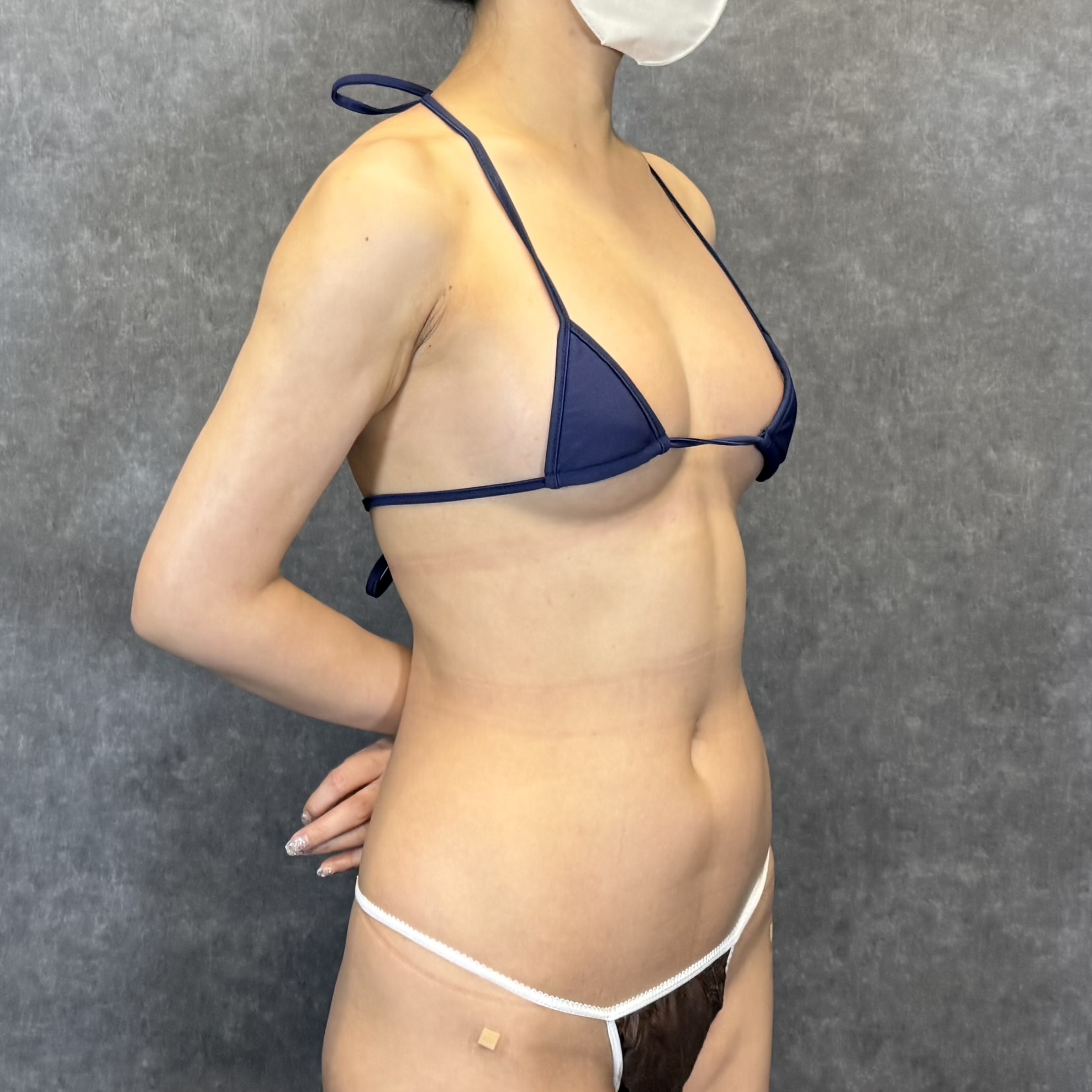
Extra Caution When Combined with Fat Grafting
When fat grafting (including hybrid breast augmentation) is performed at the same time as liposuction, an even more cautious approach to NSAIDs is required for two main reasons.
First, NSAIDs may excessively suppress the mild, early inflammatory response that is required for the injected fat to survive. Recent fat transplantation research shows that macrophage-driven clearance and angiogenesis, driven by physiological inflammation, are essential for graft take. The strong anti-inflammatory effect of NSAIDs may hinder this tissue remodeling process.
Second, when NSAIDs are used while the microvasculature around the graft is still injured, microbleeding and hematoma are more likely to form around the transplanted fat, creating an environment that promotes nodule formation and calcification. For cases involving fat grafting, our clinic recommends avoiding NSAIDs for 14 days after surgery.
Ingredients to Watch Out for in Over-the-Counter Medications
When the pain is difficult to bear, it can be tempting to reach for an over-the-counter painkiller, but many drugstore antipyretic-analgesics (such as Bufferin®, Loxonin® S, and Eve A®) contain NSAID components. The following ingredients carry the same risk as NSAIDs after liposuction and require caution:
・Loxoprofen (Loxonin® series)
・Ibuprofen (Eve® series, Naron® Ace, etc.)
・Aspirin (Bufferin® A, etc.)
・Diclofenac (Voltaren®)
・Ethenzamide, salicylamide
By contrast, the following ingredient is considered relatively safe even in the acute postoperative phase:
・Acetaminophen (Tylenol®, Calonal®, Bufferin® CII for children, etc.)
Always make it a habit to check the ingredient list on the back of the package before purchase. For safety standards in cosmetic surgery, please also refer to the Japan Society of Aesthetic Surgery.
Clinical Advice from Dr. Moriwaki
During consultations, whenever a patient expresses strong anxiety about postoperative pain, I make a point of discussing how to choose their painkillers. Pain and tightness after liposuction often last longer than patients expect, and misjudging analgesic choice during this window can compromise the surgical result with unnecessary bruising or nodules. Individual differences apply, but the general priority is: start with Calonal®, add Loxonin® only when needed, and be even more cautious when fat grafting is involved. For related articles on the postoperative course, please visit our liposuction column archive.
Frequently Asked Questions
Q. I already took Loxonin® right after surgery. Am I OK?
One or two doses will usually not cause a major problem. However, if you develop noticeable bruising or swelling, switch to acetaminophen from your next dose and contact your surgeon.
Q. Can I take my usual Loxonin® for menstrual pain before surgery?
We recommend avoiding it for 24 to 48 hours before surgery, because reduced platelet function may increase intraoperative bleeding. Use acetaminophen for menstrual pain during this period.
Q. Does taking Loxonin® after fat grafting make nodules more likely?
It does not automatically cause nodules, but there is evidence that hematoma formation around the graft is more likely. Our clinic advises avoiding NSAIDs for 2 weeks after fat grafting.
Q. What should I do if Calonal® does not control my pain?
First, ensure regular dosing, adequate cooling, and correct compression. If pain persists, contact your surgeon. Additional tramadol-class analgesics or short-term NSAID use may be considered.
Q. What about topical NSAID patches (Loxonin® tape, Mohrus® tape)?
Topical NSAIDs are absorbed transdermally to some extent. Avoid applying them for about one week after surgery, and consult your surgeon if you feel you need them.
──────────────
【Supervising Physician】Shin Moriwaki, MD (Supervisor)
Member, Japan Society of Aesthetic Surgery (JSAS) / Member, American Academy of Aesthetic Medicine
ECFMG Certificate (US Medical Licensing Qualification)
──────────────
📍AVAN TOKYO GINZA LIPOSUCTION CLINIC
English / 中文 / Tiếng Việt supported
Reservations and consultations are accepted via
DM / LINE / Website / Phone.