


Oblique View Hybrid Breast Augmentation: Motiva Mini 220cc With Upper Body Liposuction2026.10.27
Many patients want a breast augmentation that looks beautiful not only from the front but from the oblique 45-degree view they see most often in daily life. The oblique view hybrid augmentation is designed with this everyday perspective in mind. By combining a silicone implant that creates forward projection with fat grafting that softens the contour, we design a seamless line from the decolletage through the breast, armpit, and upper arm. In this article, I share the surgical thinking behind a case of a woman in her 30s who received Motiva Mini 220cc together with liposuction of the upper arm, shoulder, flank fat, and axillary breast tissue, with 6-month postoperative photos.
Key points of this article
– Oblique view hybrid augmentation uses the 45-degree perspective as the design baseline, aiming to connect the decolletage, breast apex, lower breast, and axilla as a continuous line
– Motiva Mini 220cc is a higher-profile implant suited to thin patients with a narrow thoracic width, inserted via axillary incision into the subglandular plane
– Donor fat was harvested from the upper arm, shoulder, flank, and axillary breast; 200 ml of refined graft was divided between both breasts
– Layering cover fat in the subcutaneous plane reduces visibility of the implant edge from the oblique angle and smooths the slope
– Risks include bruising, swelling, fibrosis, asymmetry, infection, capsular contracture, nodules, and individual variation in graft survival
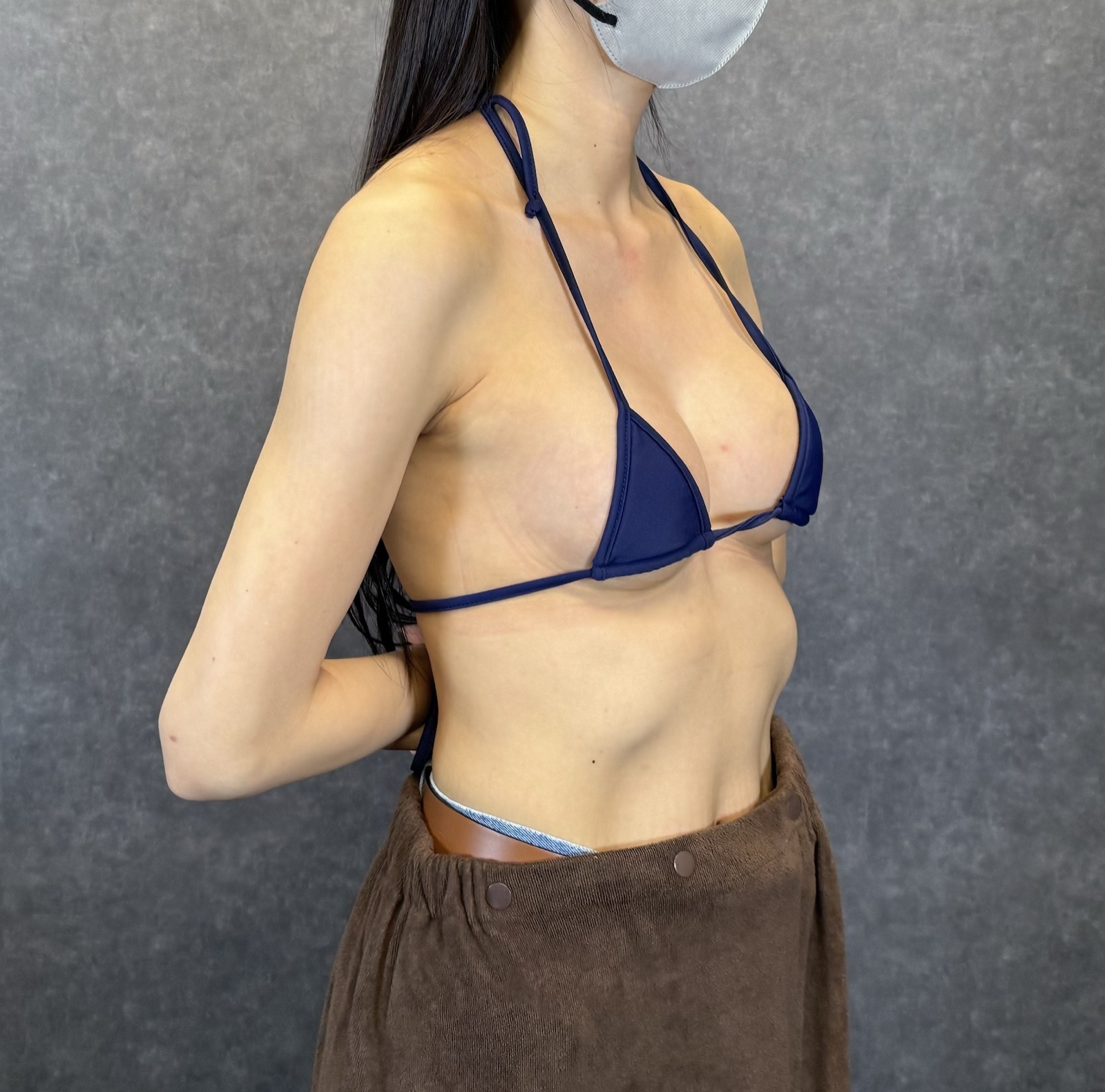
Why the oblique view defines your everyday impression
You almost always see your own bust from an oblique angle. Looking in the mirror, catching your reflection in a shop window, being photographed from the side, all of these are oblique views. Even if the front and lateral lines look balanced, a flat oblique projection or residual flank fullness can create a visual mismatch that is noticed by both the patient and others.
Three elements matter in the oblique view: the slope from the decolletage to the nipple, the curve from the nipple to the lower breast, and the continuity from the breast to the flank and arm. When these three segments connect as a single smooth curve, the oblique upper body gains both thickness and roundness at the same time.
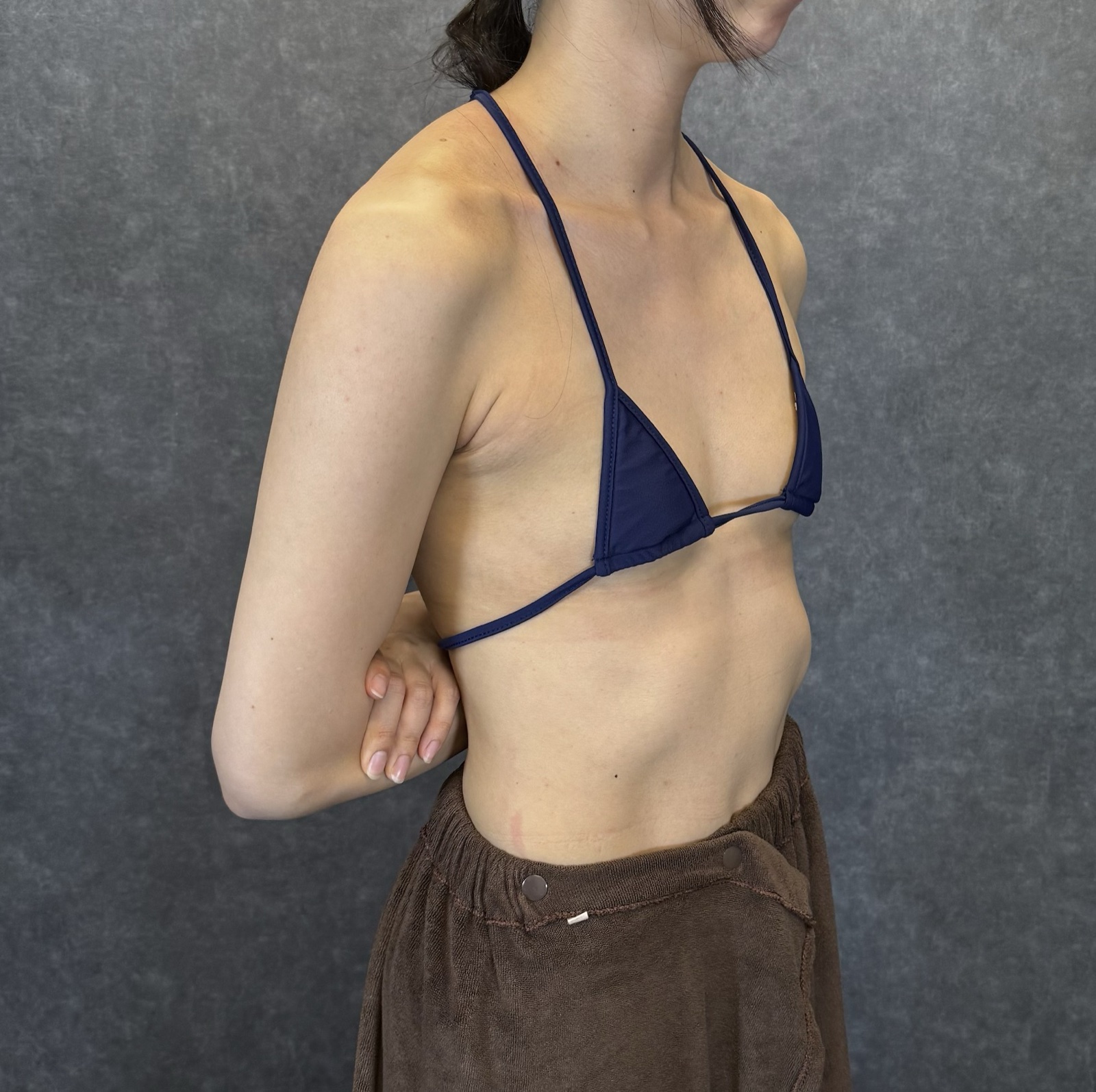
Why Motiva Mini 220cc was chosen for this oblique view hybrid augmentation
This patient in her 30s had a narrow thoracic width and limited breast tissue, a thin frame overall. A wide-base implant would risk projecting beyond the ribcage, producing an unnatural lateral line in the oblique view. Motiva Mini 220cc has a relatively high profile, giving forward thickness with a controlled base width, which makes it well suited to creating a natural slope from the decolletage to the breast apex in oblique view.
An axillary incision was used, hidden along the natural crease of the armpit, with minimal impact on future breastfeeding function. The pocket was dissected in the subglandular plane. For patients with sufficient breast parenchyma and adequate subcutaneous room for cover fat, the subglandular plane tends to move more naturally in the oblique view than the subpectoral plane.
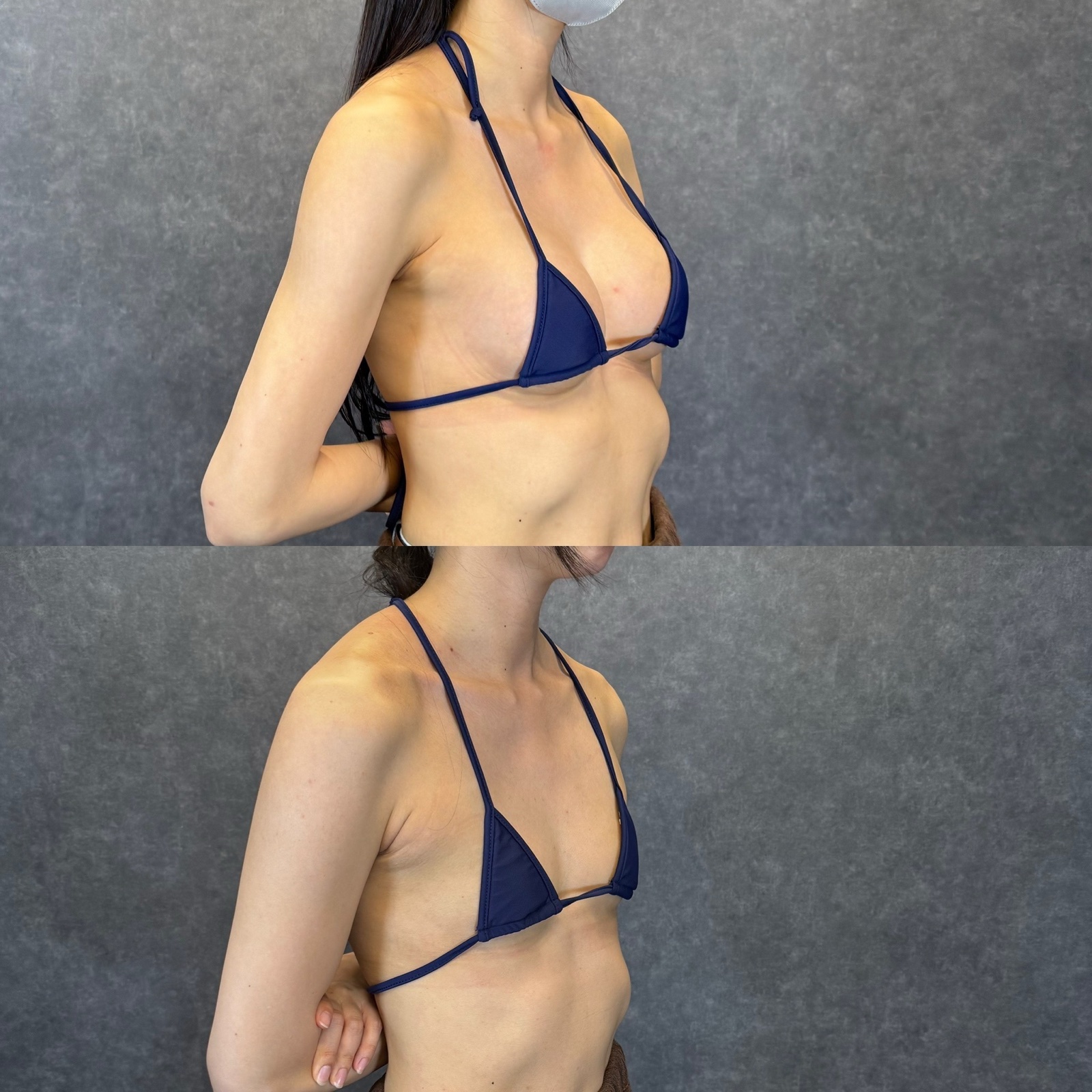
Why we liposuctioned the upper arm, shoulder, flank, and axillary breast together
All donor sites were in the upper body: upper arm, shoulder, flank fat, and axillary breast tissue. The border between the arm and the breast is where fullness becomes most visible in the oblique view, so treating this zone in the same session helps the upper body line stay continuous.
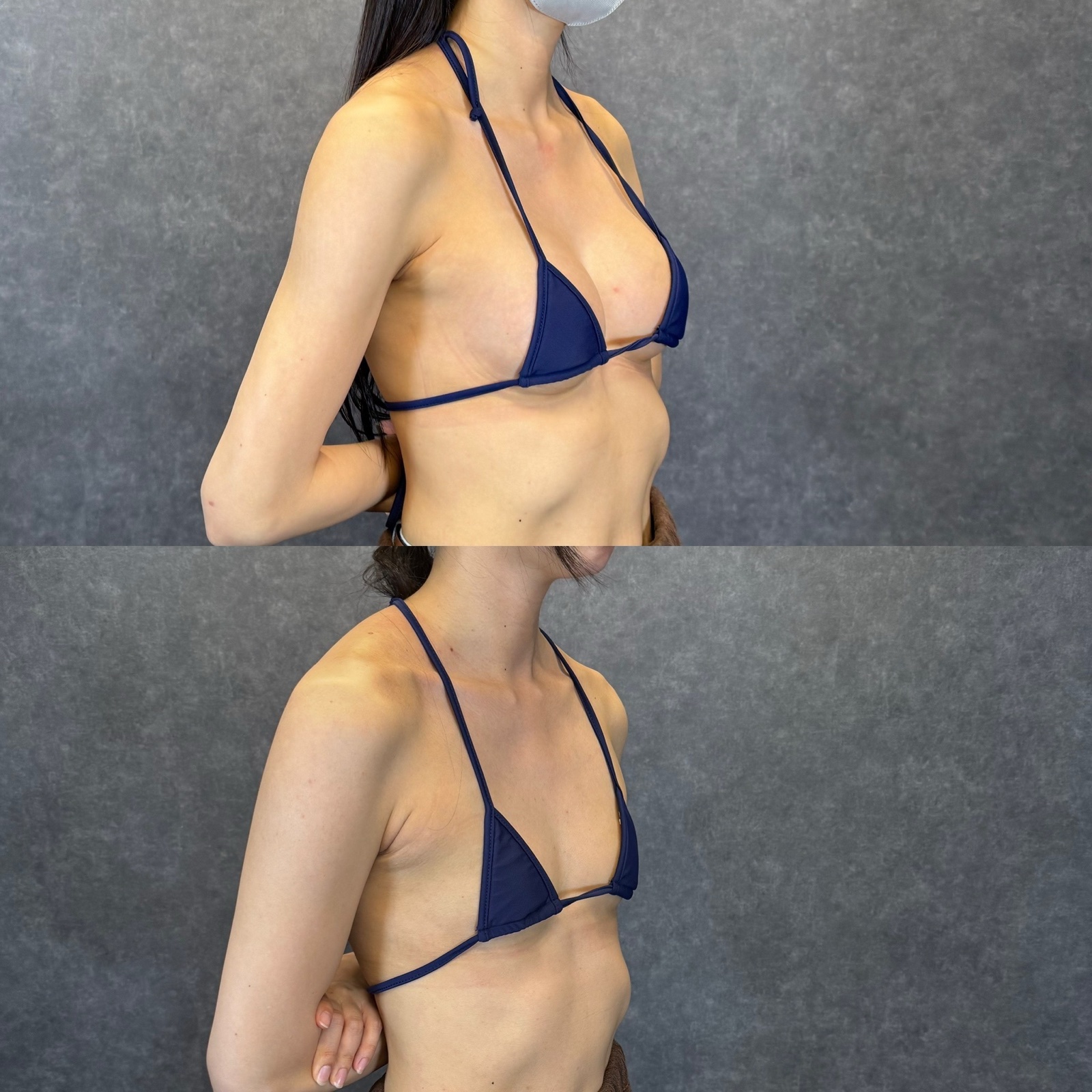
The subcutaneous fat from the proximal upper arm through the posterior and anterior axilla, axillary breast, and lateral chest is one continuous layer. Suctioning each site in isolation leaves step-offs at the junctions. We moved the cannula as a single sweeping path, matching the residual subcutaneous thickness across the cross-section. In oblique view hybrid augmentation, what you leave behind matters more than what you remove: the goal is to design the connecting line between the arm and the breast.
An ultrasound device (LSSA, Elsa) was used as needed to soften the fibrous fat in the axillary breast and flank before suction, protecting the viability of the adipocytes used for grafting. The total aspirated volume was approximately 400 ml.
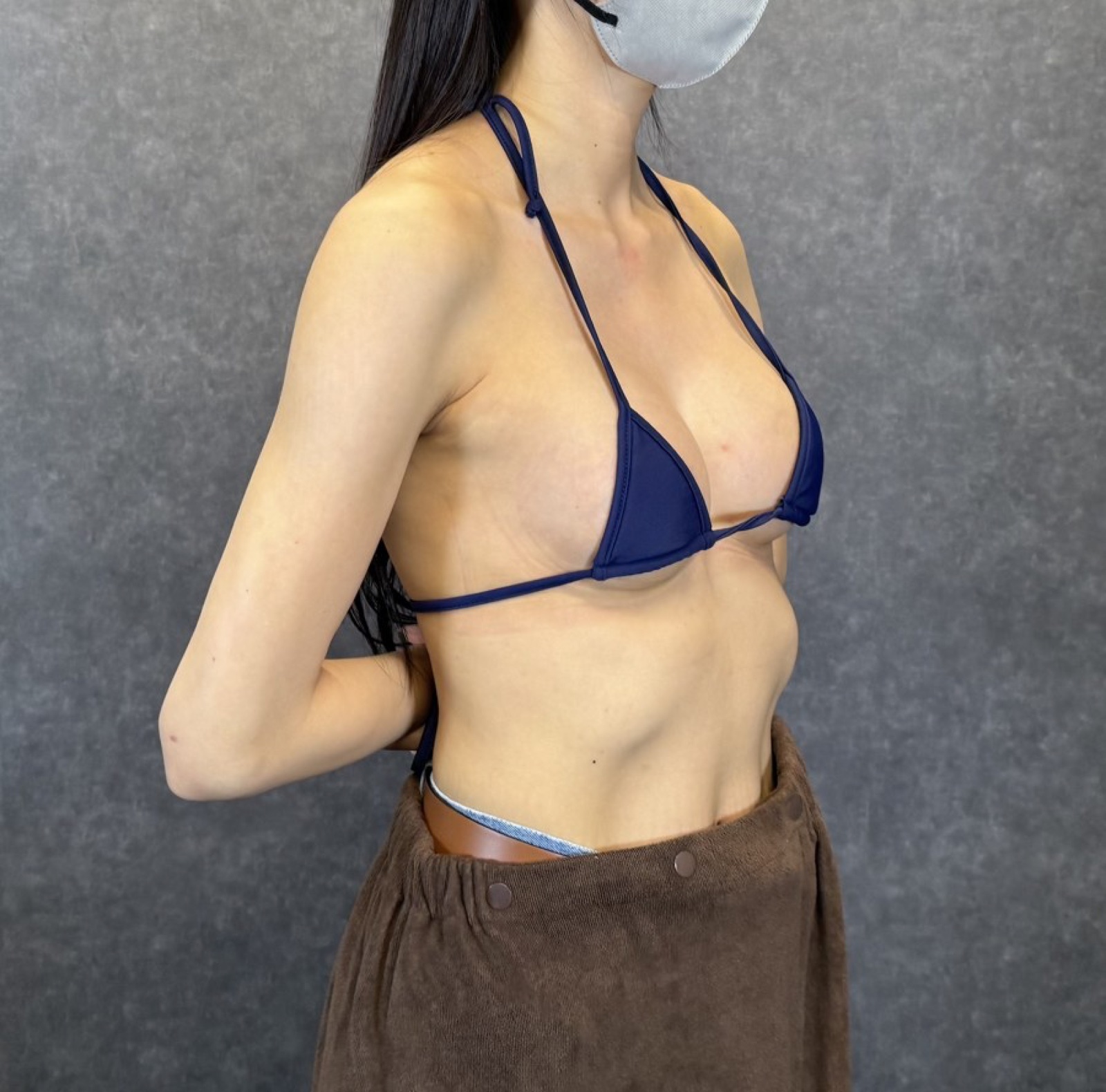
Fat injection design: separating the subcutaneous and intramuscular layers
The harvested fat was refined by centrifugation to yield 200 ml of injectable graft. Taking preoperative asymmetry into account, we grafted 130 ml on the right (110 ml subcutaneous, 20 ml intramuscular) and 70 ml on the left (subcutaneous only). We adjusted not just volume but also layer and position to balance both breasts in oblique view.
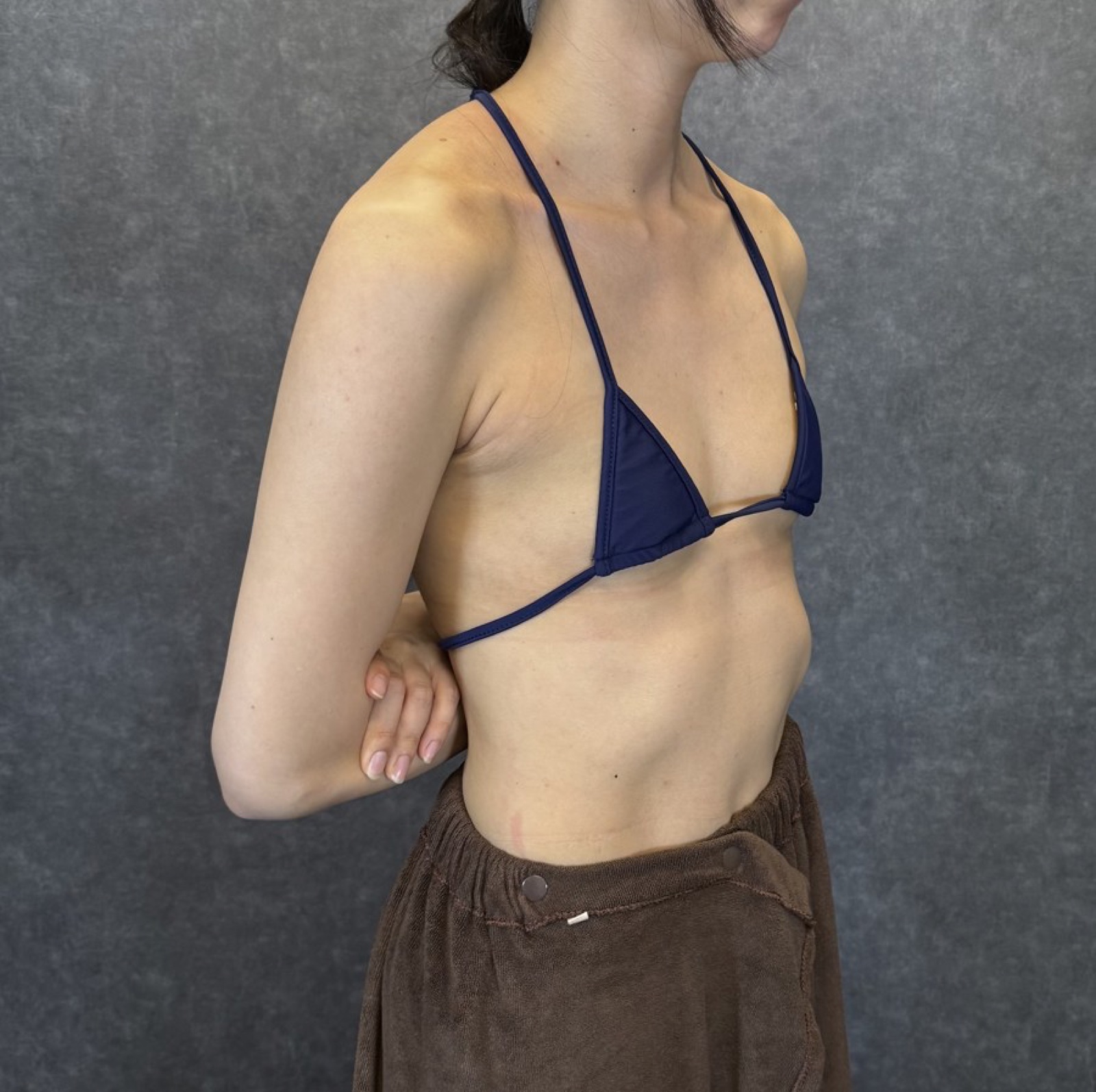
One priority of the oblique view hybrid augmentation is cover fat placement in the subcutaneous layer. In thin patients the subcutaneous tissue is thin, so the edge and upper outline of the implant can appear in the oblique view. Layering fat subcutaneously from the decolletage across the upper breast and along the lateral implant contour smooths the oblique slope.
Intramuscular grafting takes advantage of a well-vascularized layer to raise the overall volume. We separate the subcutaneous and intramuscular routes to avoid concentrating a large bolus along a single path, which prevents central necrosis of the grafted fat and leverages the vascular characteristics of each layer.
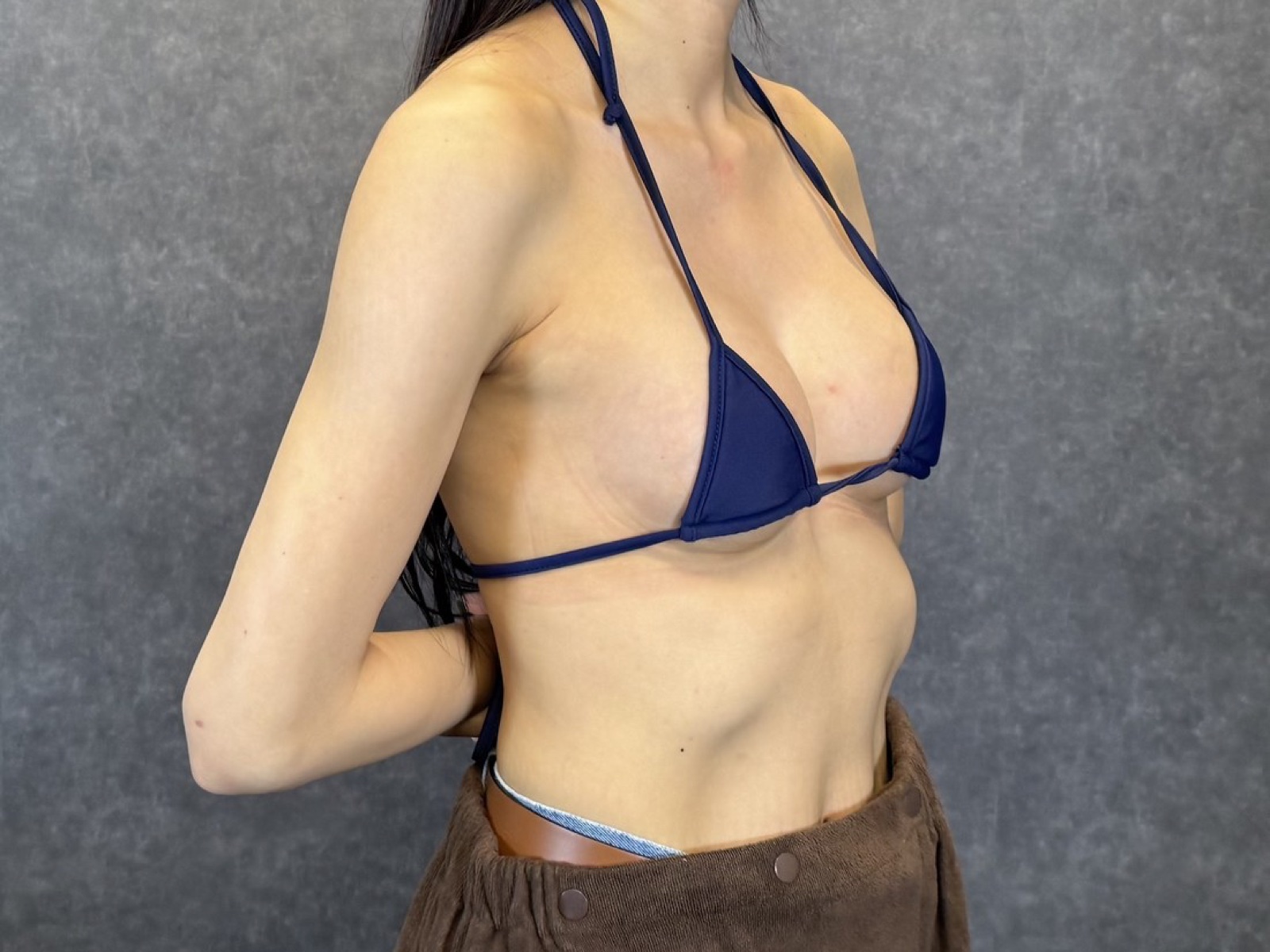
Treatment details, cost, and risks for this case
1) Procedure: Hybrid augmentation with Motiva Mini 220cc inserted via axillary incision into the subglandular plane, combined with same-day liposuction of the upper arm, shoulder, flank, and axillary breast. Aspirated volume approximately 400 ml, total injected fat 200 ml.
2) Cost: Please see our price page. Additional fees apply for preoperative blood tests, compression garments, and medications.
3) Main risks and side effects: bruising, swelling, induration, fibrosis, asymmetry, infection, nodules, oil cysts, capsular contracture, temporary changes in nipple sensation, individual variability in graft survival, and visible scars. Smoking, diabetes, and poor peripheral circulation reduce fat survival.
4) Results vary between individuals, and these photos represent one example. Not every patient will achieve the same outcome.
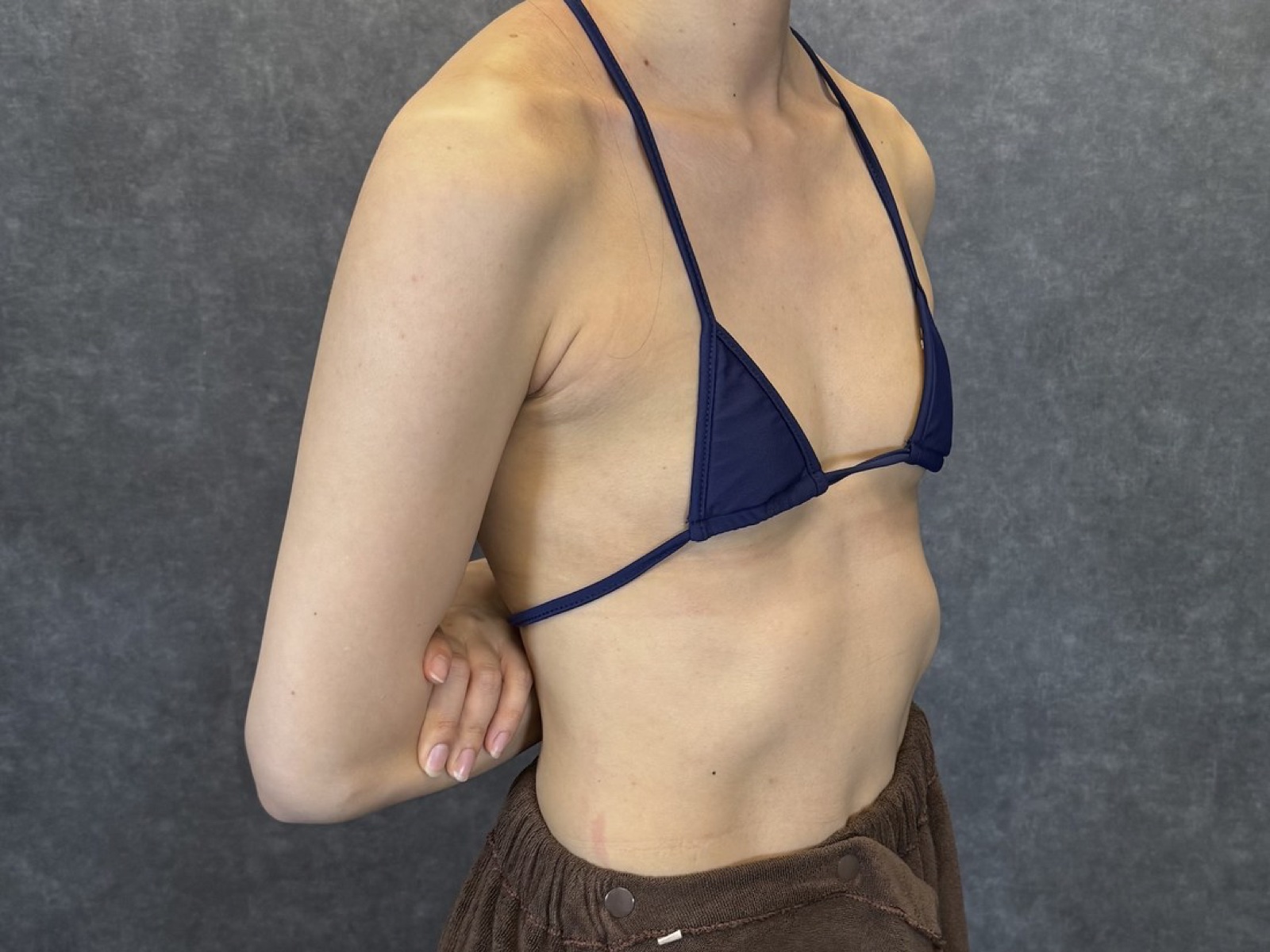
How the 6-month course looks and what to watch
Around the first month, swelling around the implant and in the grafted areas keeps the breast firm and full. In the oblique view the upper breast may look tight, but this is temporary. Over two to three months the swelling subsides and non-surviving fat is reabsorbed. By 6 months the implant and subcutaneous fat have integrated with the surrounding tissues, and the oblique slope and lower curve become more settled.
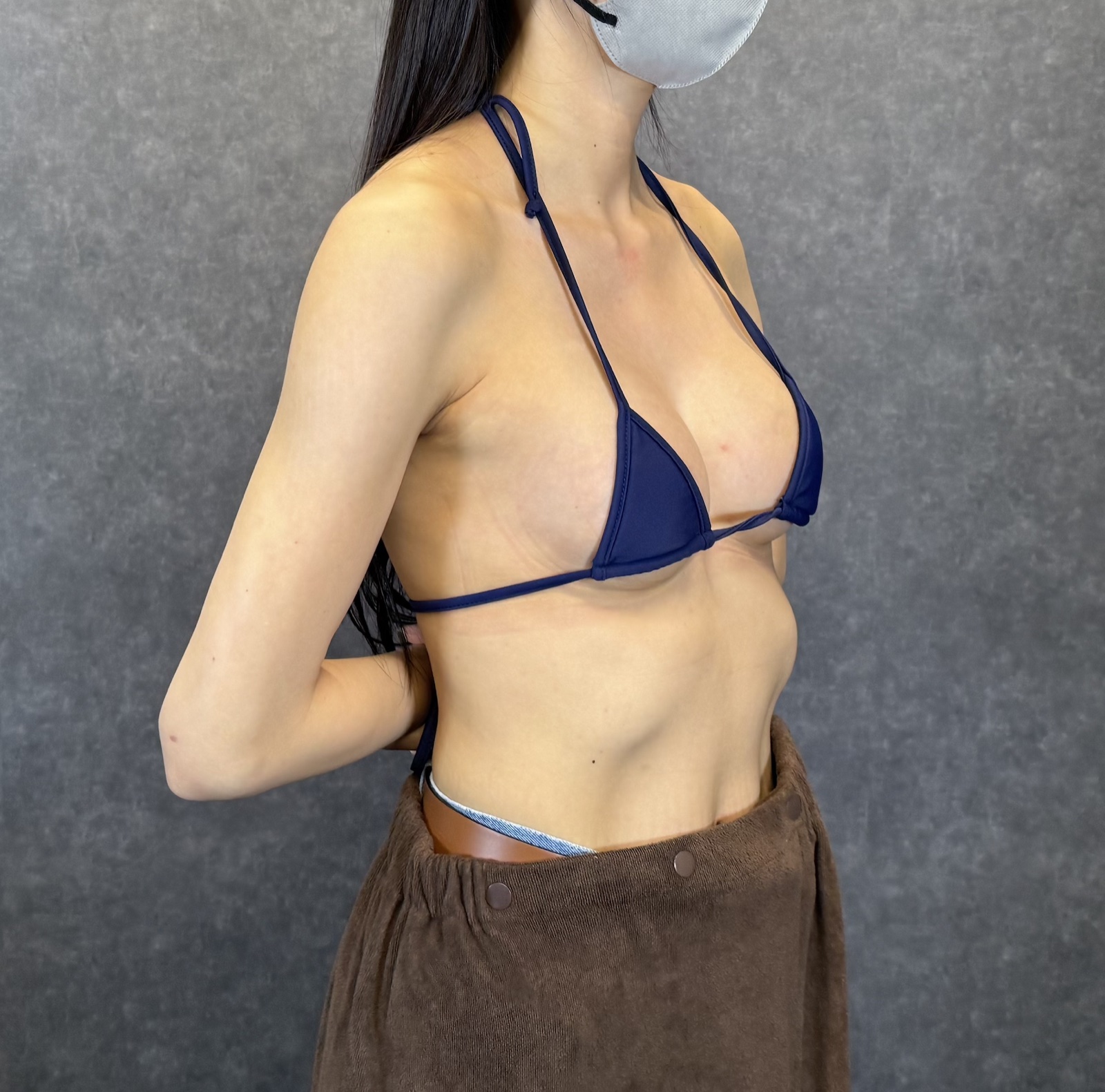
The arm appears swollen and bruised immediately after suction, resolves over 2 to 4 weeks, then enters a 1 to 3 month phase of fibrotic firmness as part of the healing process, with softness returning by 4 to 6 months. This fibrosis is a necessary step in tightening the line and is not pathological in itself.
During the recovery, compression garments are tailored to each region, such as an arm bolero and a sports bra. Smoking significantly lowers fat survival, so you need to stop smoking before and after surgery. Nutritionally, prioritize protein, iron, and vitamin C, and avoid aggressive dieting. Individual variation applies, and the oblique silhouette may continue to settle for 6 to 12 months.
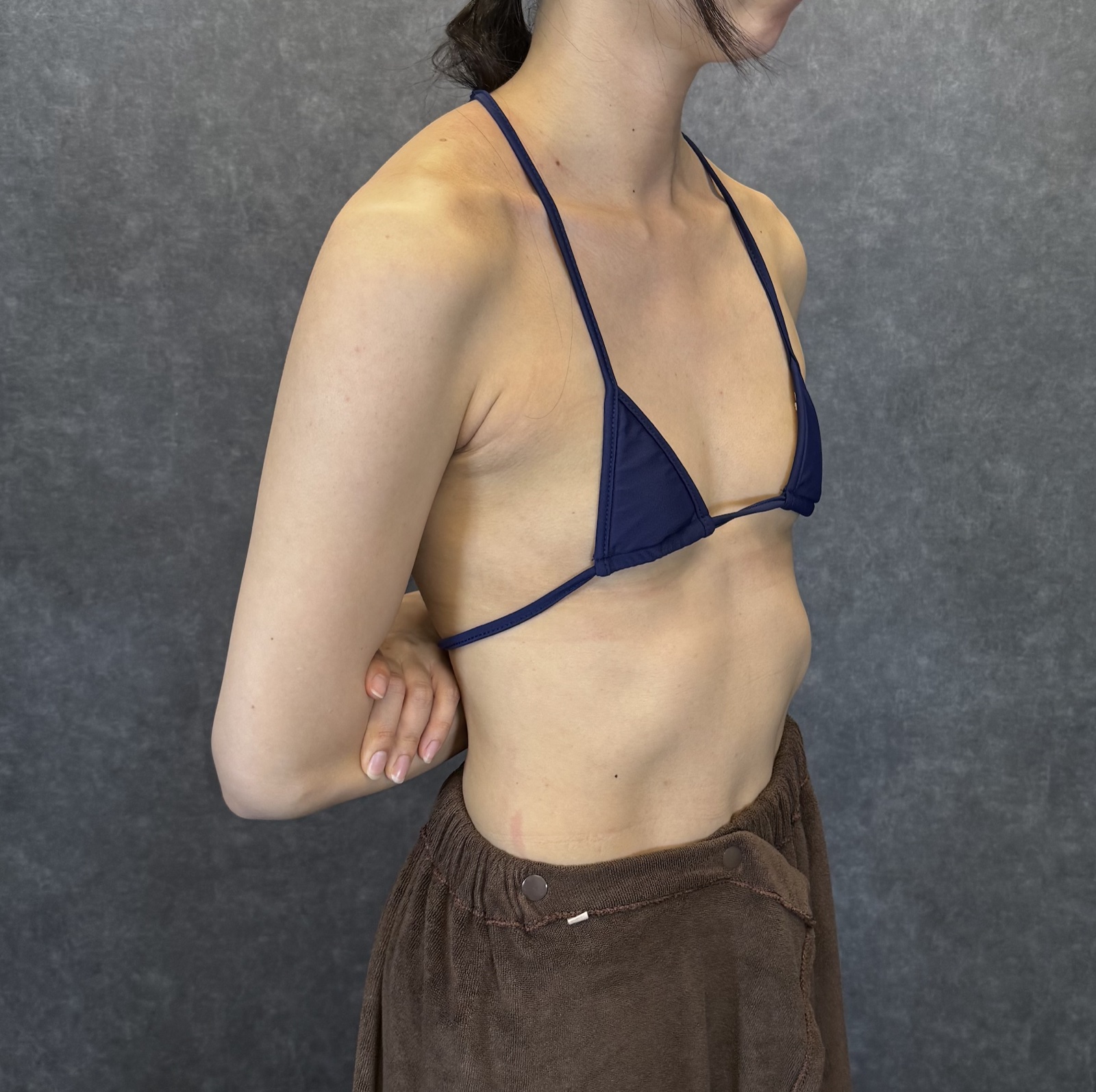
For aesthetic surgery safety standards, please refer to the guidelines of the Japan Society of Aesthetic Surgery (JSAS). Related articles can be found on our liposuction column index.
Frequently asked questions
Q. Can thin patients undergo oblique view hybrid augmentation?
Thin patients are often good candidates. When subcutaneous tissue is thin, the implant edge is visible in the oblique view, so layering fat on top to blend the border is especially useful. Because donor fat is limited, injection volumes are planned realistically to match the patient’s frame.
Q. Is combining arm and breast surgery too much for the body?
Liposuction of the upper arm, shoulder, flank, and axillary breast has a relatively small circulatory impact compared with abdominal or thigh procedures. Same-day combination is often feasible under general anesthesia, but we may recommend staging if medical history or preoperative tests suggest it.
Q. What makes an oblique result look unnatural?
An implant that is too wide for the thoracic width will project along the lateral oblique line, creating an unnatural edge. Placing an implant alone without subcutaneous cover fat can also leave the implant border visible as a step in the oblique view.
Q. When does the result stabilize?
A practical benchmark is 6 months postoperatively. The first month shows swelling and tightness, the third month reveals the contour, and by 6 months integration progresses. The final line may continue to settle through 9 to 12 months.
Q. How noticeable are the scars?
The axillary incision is a short cut along the natural armpit crease, with redness typically fading over 6 to 12 months. The suction ports on the arm and axillary breast are a few millimeters and heal as point-like scars. If a hypertrophic scar develops, we manage it with tape fixation or topical steroids.
──────────────
Supervised by Shin Moriwaki, MD (Supervising Physician)
Member, Japan Society of Aesthetic Surgery (JSAS) / Member, American Academy of Aesthetic Medicine
ECFMG Certificate
──────────────
📍AVAN TOKYO GINZA LIPOSUCTION CLINIC
English / 中文 / Tiếng Việt consultations available
For reservations and inquiries,
please contact us via DM / LINE / Website / Phone.